
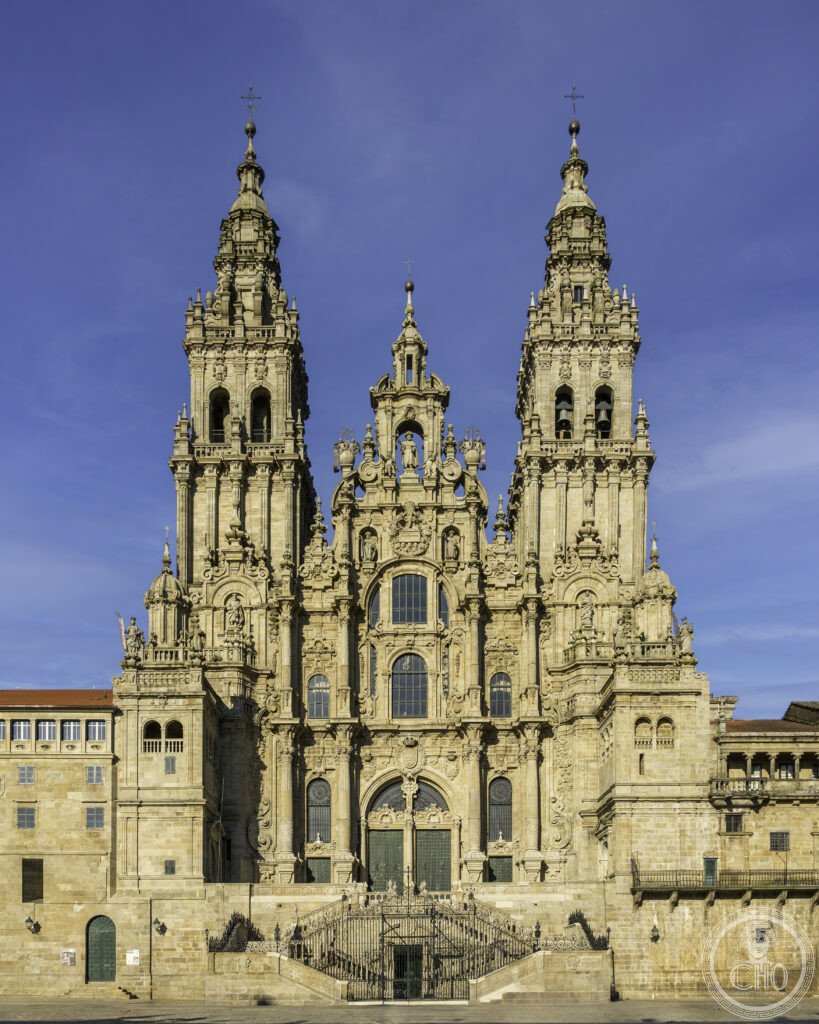
Santiago de Compostela
The third holiest city in Christendom after Jerusalem and Rome and the destination of the most famous pilgrimage route in the world — Santiago de Compostela (Galicia, Spain; UNESCO WHS 1985) has been the destination of the Camino de Santiago pilgrimage for over 1,000 years, drawing pilgrims to the tomb of Saint James the Apostle in its cathedral, one of the supreme achievements of Romanesque architecture.
At a glance
Santiago de Compostela (the most precisely SantiagoCompostelaSpain single third holiest city Christendom after Jerusalem Rome third great medieval pilgrimage Jerusalem Rome Santiago Tria Magna three great pilgrimages Camino de Santiago Way of Saint James pilgrimage route over 1000 years Compostela meaning Campus Stellae Field of the Star Latin Jacobus = James Santiago Spanish form 100000 pilgrims received Compostela certificate annually peak pre-COVID 347578 pilgrims 2019 CE 300000 average post-COVID Compostela certificate of completion Camino traditional minimum 100 km on foot or 200 km by bicycle Camino Francés French Way most popular from St Jean Pied de Port Pyrenees 780 km 5 6 weeks walking Camino Portugués coastal 265 km from Porto 2 3 weeks growing popular tradition Botafumeiro giant silver thurible incense censer 80 kg 1.60m swings across cathedral transept 5 people rope operated pulleys UNESCO heritage: the discovery of the tomb of Saint James (814 CE; the most consequential religious discovery of the medieval period): the tomb of Saint James the Apostle (one of the twelve apostles of Jesus, the brother of John the Evangelist; traditionally martyred in Jerusalem in 44 CE under Herod Agrippa) was discovered in 814 CE by Bishop Theodomirus of Iria; the discovery: a hermit named Pelayo reported seeing lights (stellae, “stars”) over a field (campus) at night; Bishop Theodomirus investigated and found a tomb; he identified the remains as those of Saint James; King Alfonso II of Asturias ordered the construction of a church over the site; the identification (the chain of evidence for the identification is theologically significant but historically weak: the tradition that James came to Hispania to preach Christianity before returning to Jerusalem (where he was martyred) is mentioned in a 7th-century CE text but is not in the New Testament; the tradition that his body was transported from Jerusalem to Galicia after his martyrdom by his disciples is also a post-biblical tradition; the Catholic Church regards the identification as authentic; the historical status is more uncertain)) — the most precisely SantiagoCompostelaSpain single third holiest Christendom Jerusalem Rome third Tria Magna Campus Stellae Campo Stellae Field Star Jacobus James Santiago 100000 Compostela certificate annually 347578 pilgrims 2019 CE Camino Francés 780 km 5 6 weeks St Jean Pied de Port Pyrenees Botafumeiro 80 kg 1.60m 5 rope operators 814 CE Bishop Theodomirus hermit Pelayo stellae stars campus campo tomb discovered King Alfonso II Asturias church ordered UNESCO heritage in any UNESCO world heritage site)).
Key facts
- The Botafumeiro (the great incense censer): the most precisely SantiagoCompostelaSpain single Botafumeiro O Botafumeiro Galician for the smoke thrower giant silver incense thurible censer 80 kg weight empty 160 cm tall when filled burning incense swings entire transept of cathedral pendulum swing arc cathedral transept 53m wide swings tip to tip 65m arc 68 km/hour speed at lowest point 5 tiraboleiros (incense swingers) pull rope system pulleys counterweights swing transept 8 rope operators historic tradition 12th century CE first recorded 1322 CE swings at Pilgrim Mass Jubilee year Holy Year any year July 25 Saint James Feast Day falls Sunday full swing at special masses any day large groups can hire (approximately €450-600 per swing) 18 giant silver Botafumeiro current 1851 CE previous stolen Napoleonic War French troops 1809 CE UNESCO heritage — the most dramatic liturgical object in the world and the defining experience of the Santiago Cathedral Mass: the Botafumeiro (Galician: “the smoke thrower”) is the largest incense censer in the world; at 80 kg empty, it swings across the full width of the cathedral transept (53m) on a rope-and-pulley system operated by 8 men called tiraboleiros; the maximum speed at the lowest point of the swing is approximately 68 km/h; the cloud of incense fills the entire transept; the historical origin of the tradition: the original practical purpose (in the medieval period, pilgrims who arrived at the cathedral after months of walking were filthy and infested with vermin; the incense clouds had a hygienic purpose as well as a liturgical one); the current censer was donated in 1851 CE (the previous one was stolen by Napoleon’s troops in 1809 CE); it swings at the Pilgrim Mass (in Jubilee Years and on Saint James’s Day, July 25; also available for hire for special groups)
- GPS: 42.8805° N, 8.5449° W
History
From Roman Asseconia to Christian pilgrimage capital to modern Camino destination (the most precisely SantiagoCompostelaSpain single Roman settlement Asseconia 2nd century CE Roman town 814 CE Bishop Theodomirus discovered tomb Saint James Alfonso II Asturias ordered church built first church 830 CE 997 CE Al-Mansur Moorish general sacked destroyed city church carried bells on shoulders slaves to Córdoba not tomb sacred bones left alone 1075 CE Bishop Diego Peláez Alfonso VI Castile began Romanesque cathedral 1075 1211 CE built Romanesque nave Bishop Diego Gelmírez 1100 1140 CE most powerful bishop Galicia first Archbishop Santiago 1120 CE Pope Callixtus II Codex Calixtinus 1130s CE first pilgrimage guidebook Chapter 5 describes route and shrines from France 1168 1188 CE Pórtico da Gloria Master Mateo greatest Romanesque sculpture Spain created condition agreement King Ferdinand II 1188 CE Master Mateo began 20 year contract completed 1188 CE Portico de Gloria three arched doorway Romanesque figures Christ central tympanum 200 sculpted figures polychromed originally 1492 CE Rodrigo de Haro Mayor Domingo 1492 CE Christopher Columbus ship crew sailed from Palos de la Frontera to Americas Columbus had just returned 1493 CE Baroque facade Obradoiro Fernando Casas Novoa 1738 1750 CE twin towers 74m 75m Churrigueresque façade Baroque 1984 2019 CE modern pilgrimage numbers grew from 690 pilgrims 1984 CE to 347578 2019 CE most Camino Francés 2021 CE COVID recovery UNESCO heritage: the Codex Calixtinus (ca. 1130-1140 CE; the first travel guidebook in history): the Codex Calixtinus is a 12th-century CE illustrated manuscript (225 pages; now in the Santiago Cathedral archive; a replica is on display in the Cathedral Museum) attributed to Pope Calixtus II (though scholarly consensus is that it was compiled by multiple authors, possibly under Abbot Aimery Picaud of Parthenay-le-Vieux); Book V of the Codex (the “Pilgrim’s Guide”; Latin: Guida del pellegrino) is the oldest surviving pilgrimage guidebook in existence; it describes the four main French routes to Santiago, the towns along the way, the shrines and relics to be venerated, the quality of the food and water, the character of the peoples encountered (not always charitable), the healing miracles reported at Santiago, and the geography of Galicia; it is the direct ancestor of every modern travel guide)) — the most precisely SantiagoCompostelaSpain single Roman Asseconia 814 CE Theodomirus discovered tomb Alfonso II church 830 CE 997 CE Al-Mansur sacked bells Córdoba not tomb 1075 1211 CE Romanesque cathedral Gelmírez first Archbishop 1120 CE Codex Calixtinus 1130 1140 CE first pilgrimage guidebook oldest travel guide history 1168 1188 CE Pórtico da Gloria Master Mateo 20 year contract 200 figures polychromed 1738 1750 CE Baroque Obradoiro facade Casas Novoa twin towers 74m 75m 690 pilgrims 1984 CE 347578 pilgrims 2019 CE UNESCO heritage in any UNESCO world heritage site)).
What you see
Cathedral, Praza do Obradoiro, and the Casco Antigo (the most precisely SantiagoCompostelaSpain single Praza do Obradoiro largest plaza Cathedral Romanesque granite nave 1075 1211 CE Pórtico da Gloria Master Mateo 1168 1188 CE three arches portal finest Romanesque sculpture Spain Christ central tympanum Daniel smiling Smiling Daniel first smile Western sculpture history 1188 CE restored removed from public 2018 CE conservation Baroque facade Churrigueresque Fernando Casas Novoa 1738 1750 CE twin towers 74m 75m overlay original Romanesque facade interior nave 22 chapels Golden altar Altar Mayor gilded Baroque 1658 CE silver incense Botafumeiro 80 kg 68 km/hour swing transept Crypt below high altar golden reliquary silver 1884 CE bones Saint James authenticated DNA tests 1879 CE bones discovered 1884 CE Pope Leo XIII confirmed relics authentic Platerías facade south door Romanesque 1103 CE oldest surviving Romanesque portal Santiago Azabachería north facade Hostal de los Reyes Católicos Fernando e Isabel Catholic Monarchs founded 1501 1511 CE pilgrims hospital now Parador 5-star hotel oldest hotel in world oldest continuously operating hotel world Casco Antigo old quarter Rua do Franco Rua da Raiña pedestrian granite streets tapas bars UNESCO heritage: the Praza do Obradoiro (the essential view): the Praza do Obradoiro is surrounded by four historic buildings from four different centuries: (1) the Cathedral (11th-18th century CE; the Baroque towers rising over the Romanesque nave); (2) the Hostal dos Reis Católicos (1501-1511 CE; the oldest hotel in the world); (3) the Pazo de Raxoi (the Rajoy Palace; 1766 CE; neoclassical; now the Town Hall; the Colosseum-style arcaded façade); (4) the Colegio de San Xerome (the College of Saint Jerome; 15th century CE; now the Rector’s Office of the University of Santiago de Compostela); the Praza is the endpoint of the Camino de Santiago for most pilgrims; the moment of arrival (when a pilgrim who has walked for weeks sees the cathedral façade for the first time) is one of the most emotionally powerful moments in travel)) — the most precisely SantiagoCompostelaSpain single Praza Obradoiro Romanesque nave 1075 1211 CE Pórtico da Gloria Master Mateo 1168 1188 CE Smiling Daniel first smile Western sculpture Baroque facade 1738 1750 CE Churrigueresque twin towers Botafumeiro 80 kg 68 km/hour Crypt bones reliquary 1884 CE Pope Leo XIII DNA 1879 CE Platerías south 1103 CE oldest Romanesque portal Hostal Reyes Católicos 1501 1511 CE oldest hotel world now Parador 5-star Casco Antigo Rua Franco Rua Raiña UNESCO heritage in any UNESCO world heritage site)).
Practical information
- Getting there: fly to Santiago de Compostela Airport (SCQ; direct flights from London, Frankfurt, Amsterdam, Paris, Rome, Madrid); or arrive by the Camino (most pilgrims enter the city on foot from the east via the Rúa de San Pedro and the Porta do Camiño; the last 100 km from Sarria on the Camino Francés is the minimum for receiving the Compostela certificate); by train from Madrid (Renfe Alvia 5h; €40-70); by AVE high-speed train from Madrid (under 3h via the Galicia high-speed line, 2024-2026 CE opening); the Cathedral (free entry to the cathedral nave; the Pórtico da Gloria (€5 extra; timed slot required; book at catedraldesantiago.es)); the Cathedral Museum (€10; includes access to the Botafumeiro when it’s not in use); the Compostela ceremony (the Pilgrim Mass is at noon daily; the Botafumeiro swings at major feast days — arrive early on July 25; Saint James’s Day); the best time (summer (June-September) is the busiest pilgrimage season; the Holy Year (Año Santo; any year when July 25 falls on Sunday; 2021, 2027 CE) is the most special and busiest time; winter (November-February) has the fewest pilgrims and the most atmospheric rainy Galician weather))
Getting there
SCQ airport (direct from London/Paris/Amsterdam). By train from Madrid: 5h Alvia (€40-70). Cathedral entry free; Pórtico da Gloria €5 (timed). Botafumeiro swings feast days (July 25 = Saint James’s Day). Best: Holy Year (2027 CE, next one) or winter for quiet. GPS: 42.8805, -8.5449.
Nearby
- Fisterra (Finisterre) — 90 km west (the westernmost point of mainland Spain and the traditional end-of-the-world destination for pilgrims who continue past Santiago; the Romans called this the “end of the earth” (finis terrae); the lighthouse (1853 CE) and the rocky headland over the Atlantic; the tradition of burning boots and clothes at the headland (a symbolic end to the journey); many pilgrims walk the additional 3 days (90 km) from Santiago to Fisterra after completing the Camino)
- Rias Baixas — 30 km south (the most beautiful coastline of Galicia: the four Atlantic estuaries (Ría de Pontevedra, Ría de Arousa, Ría de Vigo, Ría de Muros); the mussel and shellfish production (Galicia produces approximately 40% of Europe’s mussels); the Rías Baixas DO wine region (the Albariño white wine; the finest white wine produced in Spain; dry, mineral, with a fresh Atlantic character; pairs with the famous Galician pulpo á feira (boiled octopus with paprika and olive oil)))
Sources
- Wikipedia, Santiago de Compostela Cathedral; Camino de Santiago; Codex Calixtinus; Botafumeiro, accessed June 2026
- UNESCO, Santiago de Compostela (Old Town), WHS reference 347, inscribed 1985
Find it on the map
See this place and what’s around it →📷 Diventa un fotografo di Cultural Heritage Online
Condividi le tue foto dei luoghi: restano pubblicate con la tua firma come autore. Più vengono viste, più ti fai conoscere — e presto un concorso premierà le foto più apprezzate.
Accedi o registrati gratis per aggiungere una foto