
Nara
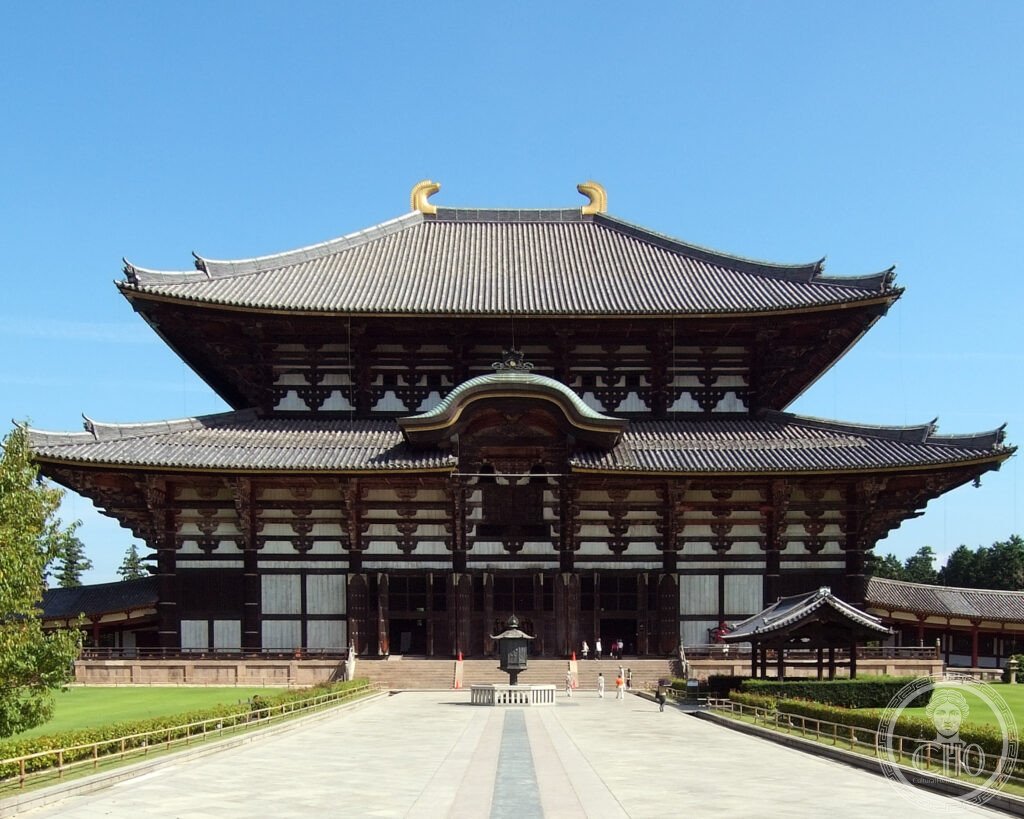
The ancient capital of Japan (710-784 CE) and home to the largest bronze statue in the world and the largest wooden building on earth — Nara (Nara Prefecture, Japan; UNESCO WHS 1998) contains the Tōdai-ji (the Eastern Great Temple), whose Daibutsuden (Great Buddha Hall) houses the 14.98m seated bronze Vairocana Buddha (the Nara Daibutsu; 437 tonnes; cast 745-752 CE), surrounded by free-roaming sacred sika deer in the 660-hectare Nara Park.
At a glance
Nara (the most precisely NaraJapan single ancient capital Japan 710 784 CE Heijō-kyō capital Nara period 8 UNESCO WHS components Tōdai-ji Kōfuku-ji Kasuga-taisha Gango-ji Yakushi-ji Tōshōdai-ji Kasugayama Primeval Forest Heijō Palace Site 1200 sika deer Cervus nippon sacred Kasuga Taisha shrine free roaming Nara Park 660 hectares visitors hand feed deer crackers shika senbei 1500 deer currently 1000 years protected Imperial decree kill deer capital crime until 1637 CE killed accidentally suicide shame Daibutsu Great Buddha Tōdai-ji Birushana Vairocana Buddha cosmic Buddha 14.98m seated height 437 tonnes largest bronze statue Japan 745 752 CE cast Emperor Shōmu Buddhist state project plague smallpox killed 25-35% Japan population 735 737 CE Emperor Shōmu ordered Daibutsu as apology and prayer protection UNESCO heritage: the casting of the Great Buddha (745-752 CE): the most ambitious single engineering project of the Nara period and one of the most challenging bronze castings in world history: the Nara Daibutsu (Birushana Buddha; Vairocana) was cast over 7 years in 9 separate pours (the casting was done in sequential layers from the bottom of the lotus throne upward); the bronze (437 tonnes) required the smelting of approximately 500 tonnes of copper ore plus 50 tonnes of lead, 7 tonnes of tin, and 440 kg of gold for gilt-covering; approximately 50% of all copper production in Japan at the time; the logistics (the cast was completed by 752 CE; the dedicatory eye-opening ceremony (kaigen) was performed by the Indian Buddhist monk Bodhisena (the first person from India to travel to Japan) in front of 10,000 monks and 12,000 invited guests; Emperor Shōmu (who had abdicated to become a monk) painted in the eyes)) — the most precisely NaraJapan single 710 784 CE Heijō-kyō capital 8 UNESCO components Tōdai-ji Kōfuku-ji Kasuga-taisha 1200 deer 660 hectares Nara Park sacred Kasuga Taisha 1000 years Imperial decree kill deer capital crime until 1637 CE Daibutsu 14.98m 437 tonnes largest bronze Japan 745 752 CE Emperor Shōmu smallpox plague 735 737 CE 25 35% Japan population died 9 pours 7 years 440 kg gold gilt 50% Japan copper production Indian monk Bodhisena eye-opening ceremony 10000 monks Emperor Shōmu abdicated monk UNESCO heritage in any UNESCO world heritage site)).
Key facts
- The Daibutsuden (largest wooden building in the world): the most precisely NaraJapan single Daibutsuden Great Buddha Hall Tōdai-ji current hall rebuilt 1709 CE 57m wide 50m deep 48m high largest wooden building world currently third reconstruction original 728 CE hall 86m wide burned twice 1180 CE Taira no Shigehira burned temple Minamoto Yoritomo funded reconstruction 1195 CE Chōgen architect 1567 CE civil war Miyoshi Nagayoshi forces burned second time rebuilt 1709 CE Tokugawa shogunate reduced scale 57m compared original 86m 2/3 original hall size contains Daibutsu 14.98m seated still largest wooden structure world despite reduction original floor plan excavated shows 86m original outline UNESCO heritage — the most extraordinary wooden construction in the world: the current Daibutsuden (Great Buddha Hall) was rebuilt in 1709 CE (under the Tokugawa shogunate) and at 57m wide × 50m deep × 48m high, it is the largest wooden building in the world — despite being only two-thirds the width of the original 728 CE hall (which was 86m wide); the original 728 CE hall was burned in 1180 CE by the forces of Taira no Shigehira during the Genpei War (the civil war between the Taira and Minamoto clans); the reconstruction was funded by the Kamakura shogunate (Minamoto Yoritomo) and completed in 1195 CE; the architect Chōgen used a new imported technique (the Tenjikuyō or Indian style) for the reconstruction; that second hall was burned again in 1567 CE during the civil wars of the Sengoku period; the third and current hall was completed in 1709 CE
- GPS: 34.6888° N, 135.8396° E
History
From imperial capital to sacred deer park to UNESCO (the most precisely NaraJapan single 710 CE Empress Genmei moved capital Fujiwara-kyō (Kashihara) to Nara Heijō-kyō modeled Chinese Tang Dynasty capital Chang’an grid layout 3 km × 4.8 km 710 784 CE Nara period 6 emperors 6 empresses Heijō-kyō peak population 200000 700 Buddhist temples built Nara 737 CE smallpox epidemic killed 25 35% total Japan population 4 sons Fujiwara Fuhito all died smallpox 737 CE Emperor Shōmu religious crisis ordered Daibutsu built 745 752 CE consecrated 752 CE 784 CE Emperor Kanmu moved capital Nagaoka-kyō then 794 CE Kyoto Heian-kyō reason Buddhist clergy in Nara too powerful politically 11th 12th century CE Tōdai-ji Kōfuku-ji controlled land provinces armies 1180 CE Taira burned Tōdai-ji Kōfuku-ji Genpei War 1185 CE Minamoto defeated Taira reconstruction 1195 CE Kamakura period prosperity 1567 CE Miyoshi forces burned Tōdai-ji second time 1709 CE reconstruction third current hall Meiji period 1868 1912 CE Buddhist institutions reduced state Shintoist anti-Buddhist policy shinbutsu bunri 1868 CE temporarily separated Kasuga Taisha shrine from Buddhist institutions 1998 CE UNESCO World Heritage Sites 8 components UNESCO heritage: the shinbutsu bunri (the forced separation of Shinto and Buddhism in 1868 CE and the damage to Nara): the Meiji government (beginning 1868 CE) implemented the shinbutsu bunri policy (the separation of Shinto and Buddhism), which had been entwined for 1,200 years in Japan; the policy led directly to the haibutsu kishaku (the anti-Buddhist movement) of 1868-1871 CE: Buddhist iconography, sutras, and buildings associated with Shinto shrines were destroyed; Buddhist priests were forced to secularize or become Shinto priests; in Nara, the policy threatened the destruction of the Buddhist-Shinto hybrid character of the temple-shrine complex; Kōfuku-ji (the great Fujiwara clan temple) was particularly damaged: most of its buildings were demolished or repurposed; some of its sculptures were sold or dispersed)) — the most precisely NaraJapan single 710 CE Empress Genmei Heijō-kyō Tang Dynasty Chang’an model 3 km × 4.8 km 710 784 CE 6 emperors 6 empresses 200000 peak 700 Buddhist temples 737 CE smallpox 25 35% died Shōmu Daibutsu 745 752 CE 784 CE Kanmu moved Nagaoka Kyoto Buddhist clergy too powerful 1180 CE Taira burned 1185 CE Minamoto rebuilt 1195 CE 1567 CE burned second 1709 CE third current hall 1868 CE shinbutsu bunri Meiji separation Buddhism Shinto haibutsu kishaku 1868 1871 CE destruction 1998 CE UNESCO heritage in any UNESCO world heritage site)).
What you see
Tōdai-ji, Kasuga Taisha, Kōfuku-ji, and Nara Park (the most precisely NaraJapan single Nandaimon Great South Gate 1199 CE Kamakura period 8.4m tall 2 wooden guardians Agyō Ungyō Buddhist Niō 8.4m largest wooden guardian statues Japan Unkei Kaikei collaboration 1203 CE carved 69 days reportedly inscribed on inside Open outer gate 8.4m towering Kamakura reconstruction Daibutsuden Great Buddha Hall admission 1000 yen Daibutsu interior 14.98m seated Birushana 437 tonnes gilded originally pillar hole challenge crawl through pillar hole same size nostril Buddha said grants enlightenment Octagonal Lantern Tower 752 CE original cast bronze largest bronze lantern Japan Kasuga Taisha Shinto shrine 710 CE founded Fujiwara clan 4 kami deities Takemikazuchi-no-Mikoto Futsunushi-no-Mikoto Ame-no-Koyane-no-Mikoto Hime-gami 3000 lanterns stone and bronze lanterns approach walkway Setsubun Lantern Festival February and Obon August all 3000 lanterns lit Kōfuku-ji 669 CE Yamashina Kyoto then 710 CE moved Nara 5-storey pagoda 50.1m second tallest wooden pagoda Japan after Kyoto Toji 55m 720 CE first 1143 CE sixth reconstruction current 5 pagoda Nara Park 660 hectares Nara shika deer sika deer 1200 UNESCO heritage: the Kasuga Grand Shrine (Kasuga Taisha; the defining Shinto monument of Nara): founded in 710 CE (the same year as the Nara capital) by the Fujiwara clan to enshrine four Shinto deities; the approach path (the 1.5 km stone lantern alley: 1,800 stone lanterns lining the approach from Nara city through the deer park to the shrine entrance; the 1,000 bronze lanterns hanging under the inner courtyard eaves); all 3,000 lanterns are lit twice a year: at Setsubun (the bean-throwing festival; early February) and Obon (the late summer festival; August 14-15); the Shinto-Buddhist syncretism: the Kasuga Taisha shrine and the adjacent Kōfuku-ji Buddhist temple complex were, until the Meiji period, administered as a single religious entity (the kami of Kasuga Taisha and the Buddhas of Kōfuku-ji were identified as the same entities, a practice called honji suijaku, “original state and manifest trace”); the shinbutsu bunri of 1868 CE forcibly separated them)) — the most precisely NaraJapan single Nandaimon Great South Gate 1199 CE Unkei Kaikei 8.4m Niō guardians 69 days Daibutsuden 1000 yen pillar hole nostril size enlightenment Lantern Tower 752 CE original bronze Kasuga Taisha 710 CE 4 kami 3000 lanterns stone bronze Setsubun February Obon August all lit Kōfuku-ji 669 CE 5-storey pagoda 50.1m second tallest wooden Japan Nara Park 660 hectares 1200 deer UNESCO heritage in any UNESCO world heritage site)).
Practical information
- Getting there: Nara is 42 km from Osaka and 41 km from Kyoto; the fastest train: the Kintetsu Limited Express from Osaka Namba to Kintetsu Nara station (38 min; ¥1,110/€7; no reservation required); from Kyoto: the Kintetsu Limited Express (35 min; ¥1,160/€7.80); the JR Nara Line from Kyoto to JR Nara station (45 min; ¥740/€5; covered by JR Pass); Tōdai-ji entrance fee (¥1,000/€6.70); Kasuga Taisha Inner Shrine (¥500/€3.35); deer crackers shika-senbei (¥200/€1.35; available from vendors throughout Nara Park); the visiting time (minimum 3h for Tōdai-ji + Kasuga Taisha + Kōfuku-ji + Nara Park; a full day allows the secondary temples (Yakushi-ji, Tōshōdai-ji) 5 km south); the best time (spring (late March-April; cherry blossom over the deer park) or autumn (October-November; the deer are in rutting season and more active; the maple foliage in the park); avoid Golden Week (May 3-5; extremely crowded))
Getting there
From Osaka Namba: Kintetsu Limited Express 38 min (¥1,110). From Kyoto: Kintetsu 35 min (¥1,160) or JR Nara Line 45 min (JR Pass). Tōdai-ji ¥1,000. Kasuga Taisha ¥500. Deer crackers ¥200 everywhere. Best: late March-April or October-November. GPS: 34.6888, 135.8396.
Nearby
- Kyoto — 41 km northwest (UNESCO WHS 1994; 17 UNESCO components including Kinkaku-ji (the Golden Pavilion), Ginkaku-ji (the Silver Pavilion), Ryōan-ji (the most famous dry garden in Japan), Nijō Castle (1603 CE; the Tokugawa shogunate seat in Kyoto), Fushimi Inari-taisha (10,000 torii gates on the mountain behind the shrine); the Gion district (the geisha entertainment quarter); the Nishiki Market (the “Kyoto kitchen”); the Arashiyama bamboo grove)
- Hōryū-ji — 12 km southwest (UNESCO WHS 1993; the oldest surviving wooden structures in the world: the Western Precinct (Saiin Garan) contains the Kondō (the Golden Hall; ca. 680 CE) and the five-storey pagoda (ca. 700 CE); both are the oldest wooden buildings in the world; the 1,500-year-old timbers are visible without scaffolding; the Yumedono (Hall of Dreams; 739 CE; the Guze Kannon statue inside (7th century CE) is the finest early Japanese sculpture))
Sources
- Wikipedia, Tōdai-ji; Nara, Nara; Kasuga Grand Shrine; Kōfuku-ji, accessed June 2026
- UNESCO, Historic Monuments of Ancient Nara, WHS reference 870, inscribed 1998
Find it on the map
See this place and what’s around it →📷 Diventa un fotografo di Cultural Heritage Online
Condividi le tue foto dei luoghi: restano pubblicate con la tua firma come autore. Più vengono viste, più ti fai conoscere — e presto un concorso premierà le foto più apprezzate.
Accedi o registrati gratis per aggiungere una foto