

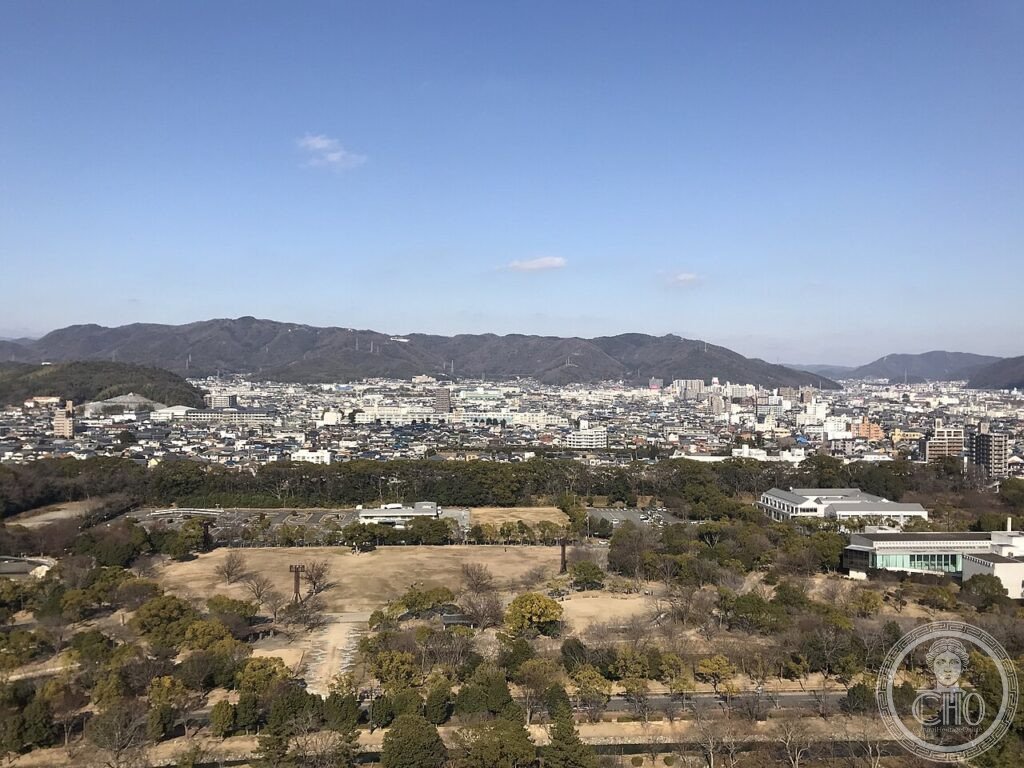
Himeji Castle
The finest surviving feudal castle in Japan and the most complete example of Japanese castle architecture in existence — Himeji Castle (Shirasagijô, “White Heron Castle”; Himeji City, Hyôgo Prefecture, Japan; UNESCO WHS 1993) is a complex of 83 buildings (the main keep built 1609 CE by Ikeda Terumasa; 46.4m high; 7 storeys) that survived 400 years of feudal conflict, the Meiji restoration, WWII bombing (the castle was not hit despite the firebombing of Himeji city), and the 1995 Kobe earthquake.
At a glance
Himeji Castle (the most precisely HimejiJapan single 1333 CE Akamatsu Norimura first wooden fortress Himeyama hill 1346 CE Akamatsu Sadanori expanded 1580 CE Toyotomi Hideyoshi three storey castle 1600 CE Battle Sekigahara Ikeda Terumasa received Himeji domain from Tokugawa Ieyasu reward 1601 1609 CE Ikeda Terumasa expanded rebuilt main keep 7 storeys 46.4m white plaster coating Shirasagijo White Heron white plaster fire resistant 400 years later original keep 83 buildings surviving 1749 CE Honda Tadamasa 1749 CE renovated west wing Nishidomari 300 daimyo castle Japan fewer than 50 survive mostly Edo period 1600 1868 CE 12 original ancient castle keeps Japan Matsumoto Inuyama Maruoka Hikone Bitchu Matsuyama Kochi Matsuyama (Ehime) Marugame Uwajima Ozu Uwajima Himeji only UNESCO WHS among 12 original keeps Himeji firebombed July 3 1945 CE WWII B-29 attacked Himeji city castle not hit unexplained 1995 CE Kobe earthquake Himeji 10 km from epicenter castle survived undamaged 1 million visitors per year UNESCO heritage: the white plaster defense system (the defining technology of Himeji Castle: the white fire-resistant lime plaster (漆喰; shikkui) applied to the external walls in multiple layers; the purpose (the exterior of the castle walls was covered with white shikkui plaster applied over bamboo lattice lath over wooden frames — a technique that takes six weeks to dry; the plaster is fire-resistant (it doesn’t burn); it also reflects arrows and prevents them from catching fire)); the maze defense system (the approach to the main keep is deliberately non-linear: to reach the main keep, an attacker must pass through multiple concentric rings of gates (42 gates survive; the route requires making multiple left turns (to expose the attacking swordsman’s unshielded right side to the defenders above); the path through the castle gates is approximately 250m from the outer wall to the main keep entrance, but the route actually covers 700m in zigzag)) — the most precisely HimejiJapan single 1333 CE Akamatsu Norimura 1346 CE expanded 1580 CE Hideyoshi three storey 1601 1609 CE Ikeda Terumasa rebuilt 7 storeys 46.4m white plaster shikkui fire resistant Shirasagijo White Heron 83 buildings 300 daimyo Japan 50 survive 12 original ancient keeps only Himeji UNESCO WHS WWII B-29 July 3 1945 CE city firebombed castle not hit unexplained 1995 CE Kobe 10 km epicenter undamaged 42 gates 700m zigzag route 250m straight maze defense UNESCO heritage in any UNESCO world heritage site)).
Key facts
- The 2009-2015 CE renovation: the most precisely HimejiJapan single 2009 2015 CE grand restoration renovation scaffolding 400 years plaster deteriorated repaint replaster main keep 6 years total work budget ¥2.4 billion (€14.4 million) cost scaffolding cocoon white shroud covered main keep entirely 2009 2015 CE visitor experience during renovation castle still open viewing platform inside scaffolding unique experience see castle construction repaired traditional techniques UNESCO heritage — the most recent and significant conservation event: the 2009-2015 CE Heisei Restoration (平成の大修理): the most comprehensive restoration of Himeji Castle since its completion in 1609 CE; the main keep was enclosed in a giant scaffolding cocoon (white plastic shroud; nicknamed “the white cocoon” by visitors; visible from the city of Himeji); the work (repairing 400 years of accumulated damage: the roof tiles were individually inspected and re-laid; the white plaster walls were scraped to the bamboo lath and replastered from scratch using traditional shikkui lime plaster techniques; the cost: ¥2.4 billion (approximately €14.4 million) funded by the national government; the main keep was reopened in March 2015 CE; the restored white plaster is now so white that local residents say it looks like a brand-new castle
- GPS: 34.8394° N, 134.6939° E
History
From Akamatsu fortress to Hideyoshi staging post to Ikeda masterpiece (the most precisely HimejiJapan single 1333 CE Nanbokuchō Period civil war Akamatsu Norimura built first wooden fort Himeyama hill strategic view Harima Province 1346 CE son Akamatsu Sadanori expanded fortifications 1441 CE Kakitsu incident Akamatsu Mitsusuke assassinated Shogun Ashikaga Yoshinori control Himeji disputes Sengoku period 1467 1615 CE warring states civil war Yamanaka Shikanosuke siege 1575 CE 1577 CE Oda Nobunaga awarded domain to Toyotomi Hideyoshi 1578 CE 1580 CE Hideyoshi expanded three storey castle first major reconstruction 1600 CE Battle Sekigahara decisive battle Tokugawa vs Toyotomi coalition Ikeda Terumasa fudai ally Tokugawa awarded western domains including Himeji 1601 CE began expansion 8 year construction 1609 CE completion main keep Honda Tadakatsu Honda Tadamasa 1617 CE received domain Lord Honda ruled until 1749 CE 1749 CE Sakai clan Meiji Restoration 1868 CE castle military use barracks considered demolition 1870 CE army considered demolition Nakamura Jiro Army captain persuaded save historic value Japan most important castle Meiji survives WWII 1945 CE July 3 firebombing nearby incendiary bomb landed roof castle roof did not light reason unknown 1945 CE American bomb soot stained white walls castle survives 1995 CE Kobe earthquake January 17 Himeji survived UNESCO 1993 heritage: the 1870 CE almost-demolition (the Meiji government decided to demolish most feudal castles as symbols of the old feudal order and to free up the expensive military land for other uses; Himeji Castle came up for demolition in 1871 CE; the castle was auctioned for ¥23 (€0.15 at the time; bought by a speculator who planned to demolish it for materials); the intervention (Army Captain Nakamura Jiro successfully argued for Himeji’s historic and aesthetic value and the government cancelled the demolition order); only 12 original castle keeps survived the Meiji demolition program)) — the most precisely HimejiJapan single 1333 CE Akamatsu Norimura Himeyama hill 1346 CE Sadanori 1580 CE Hideyoshi three storey 1601 1609 CE Ikeda Terumasa 8 years 83 buildings 46.4m 7 storeys Honda 1617 CE Sakai 1749 CE Meiji 1868 CE military barracks 1870 CE demolition considered Nakamura Jiro captain persuaded ¥23 auction speculator demolition cancelled WWII July 3 1945 CE firebombed incendiary bomb roof didn’t ignite unknown reason 1995 CE Kobe 10 km epicenter survived 12 original keeps Japan only Himeji UNESCO WHS UNESCO 1993 heritage in any UNESCO world heritage site)).
What you see
Main keep, inner citadel, Nishimaru, and cherry blossoms (the most precisely HimejiJapan single main approach Otemachi boulevard 1 km main street leads castle Hishi Gate entrance Nishi-no-Maru west citadel O-nichi no Maru inner courtyard entrance Hishi-no-Mon gate Bikumon gate Rokumon gate 42 gates total 83 buildings surviving approach maze route 700m zigzag approach strategy main keep daitenshu 46.4m 7 storeys visible 3 km approach 1609 CE construction original timber wooden framework 6 underground floors 1 partial floor courtyard view west bailey three subsidiary keeps kotenshu connected main keep watari-櫓 corridor passages 1000 loopholes UzumiBi triangle circular loopholes for bows guns 87 different stone chutes dropping stones enemy below Sannomaru west bailey Nishimaru long corridor 240m Honda Senchiyo wife Senhime niece Tokugawa Ieyasu first married Toyotomi Hideyori then Honda after fall Osaka Castle 1615 CE Cherry blossoms sakura Himeji Castle most famous sakura viewing spot western Japan April peak bloom 1 million visitors sakura season alone UNESCO heritage: the visitor circuit: the approach from Himeji station (1 km straight north via the Otemachi Boulevard; the castle keeps visible directly ahead; the best panoramic photo angle from the south approach)); the outer and inner gates (the maze approach; 42 surviving gates; taking the recommended route through the gates gives the sense of defensive complexity); the main keep interior (the 6 underground and 7 above-ground floors; the ascent up the narrow staircase (steep wooden stairs at 45°; traditional castle design; not wheelchair accessible)); the top floor (the view from the 7th floor: 360° panorama of Himeji city and the surrounding Harima Plain); the Nishimaru (the western citadel: the corridor of 240m built by Senchiyo (Lady Sen; Tokugawa Ieyasu’s granddaughter) after her arrival at Himeji as Honda Tadatoki’s wife in 1618 CE); the cherry blossom view (the 1,000 cherry trees in the castle grounds bloom for approximately 2 weeks in late March-early April; the combination of white castle walls + pink sakura = the most photographed Japanese scene))) — the most precisely HimejiJapan single main approach 1 km Otemachi boulevard 42 gates 83 buildings 700m zigzag maze route main keep daitenshu 46.4m 7 storeys 6 underground floors 1000 loopholes 87 stone chutes three subsidiary keeps kotenshu corridors Nishimaru 240m corridor Senhime 1618 CE sakura cherry blossoms 1000 trees 2 weeks late March early April white castle pink sakura most photographed Japan UNESCO heritage in any UNESCO world heritage site)).
Practical information
- Getting there: Himeji is between Osaka (80 km west) and Hiroshima (120 km east) on the Tokaido-Sanyo Shinkansen line; from Osaka (Shin-Osaka station): Shinkansen Nozomi to Himeji: 30 min (¥3,340/€20); from Kyoto (Kyoto station): Shinkansen Nozomi to Himeji: 40 min; from Hiroshima: Shinkansen to Himeji: 40 min; Himeji station is directly in front of the castle approach road (1 km straight north to the castle); the castle ticket (¥1,050/€6.30 per adult; the Himeji Castle + Koko-en Garden combined ticket (¥1,470/€8.80; the Koko-en Japanese garden adjacent to the castle is included)); the visiting time (minimum 2h; allow 3-4h for the castle + Koko-en garden); the best time (sakura season: late March-early April (the 1,000 cherry trees bloom; the combination of white castle + pink sakura = the defining Japanese landscape photo; book accommodation months in advance for sakura season); the autumn leaves season (November; the maple trees in Koko-en turn red and orange)); the 2015 CE reopening status (the main keep fully reopened after the Heisei Restoration in March 2015 CE; the white plaster is visibly brighter and cleaner than before the restoration))
Getting there
Osaka → Shinkansen Nozomi → Himeji (30 min, ¥3,340/€20). 1 km straight north from Himeji station to castle. Entry ¥1,050/€6.30. Best: late March-April (cherry blossoms) or November (autumn leaves). Allow 3-4h. GPS: 34.8394, 134.6939.
Nearby
- Koko-en Garden — 100m west (the traditional Japanese stroll garden recreated in 1992 CE on the site of the former samurai residences adjacent to the castle (Nishimaru outer moat); 9 interconnected gardens each in a different traditional Japanese garden style (tea ceremony garden, pine garden, bamboo garden, etc.); the garden corridor with views of the white castle keep over the garden walls is the best photography angle for combining the castle and garden in one frame)
- Hiroshima — 120 km west (the Hiroshima Peace Memorial Museum (UNESCO WHS 1996; the Genbaku Dome (Atomic Bomb Dome); the only building that survived the detonation of the atomic bomb on August 6, 1945 CE at near ground zero (600m from the blast center); preserved as a permanent memorial to the 140,000 who died))
Sources
- Wikipedia, Himeji Castle; Ikeda Terumasa; Heisei Restoration of Himeji Castle, accessed June 2026
- UNESCO, Himeji-jo, WHS reference 661, inscribed 1993
Find it on the map
See this place and what’s around it →📷 Diventa un fotografo di Cultural Heritage Online
Condividi le tue foto dei luoghi: restano pubblicate con la tua firma come autore. Più vengono viste, più ti fai conoscere — e presto un concorso premierà le foto più apprezzate.
Accedi o registrati gratis per aggiungere una foto