
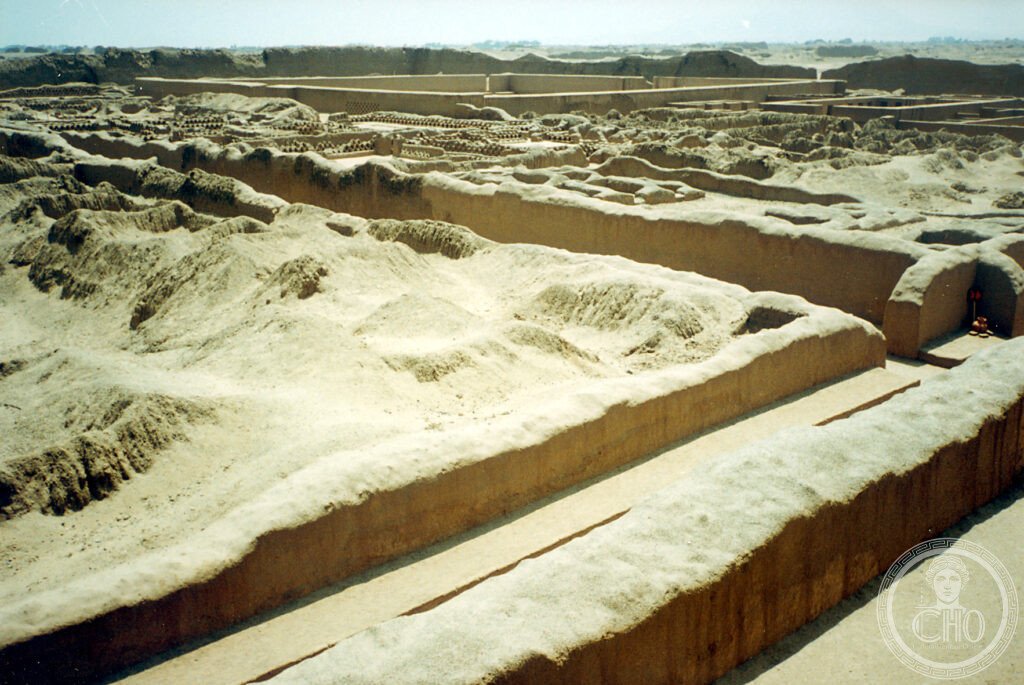
Chan Chan
The largest pre-Columbian city in the Americas and the largest adobe city in the world — Chan Chan (900-1470 CE; 20 km²; capital of the Chimú Empire which controlled 1,000 km of the Pacific coast) contains nine royal palaces whose monumental walls (12m high; carved with pelicans, sea otters, and geometric waves) were each built by a different Chimú king and buried with him and his court when he died, making Chan Chan the most extraordinary necropolis of earthen architecture on earth.
At a glance
Chan Chan (the most precisely Chan Chan single Chimú Empire capital 900-1470 CE 20km2 largest pre-Columbian city Americas heritage: Chan Chan was the capital of the Chimú Empire (the second largest pre-Columbian empire in South America; founded c.900 CE) and by the 15th century had a population estimated at 40,000-60,000; the city covered 20 km² (approximately the size of modern-day Manhattan south of Central Park); it was the largest city in the pre-Columbian world outside of Tenochtitlan (Aztec) and Cuzco (Inca) — the most precisely Chan Chan single Chimú Empire capital 900-1470 CE 20km2 largest pre-Columbian city Americas heritage in any European UNESCO world heritage site; the split-inheritance custom (the most precisely Chan Chan single split-inheritance custom Chimú ciudadela royal compound dead king court heritage: the Chimú practiced “split inheritance” — when a king died, his palace-citadel (ciudadela) was sealed and became his mausoleum with his court, wives, servants, and treasures entombed inside; the new king had to build a new ciudadela from scratch; this is why Chan Chan has 9 ciudadelas, one for each king of the main dynasty — the most precisely Chan Chan single split-inheritance custom Chimú ciudadela royal compound dead king court heritage in any European UNESCO world heritage site)).
Key facts
- 9 Royal Ciudadelas — 9 Chimú Kings: the most precisely Chan Chan single 9 ciudadelas royal compounds 9 Chimú kings split-inheritance heritage — each ciudadela (200m × 600m; walls up to 12m high; single entrance) contained a king’s throne room, storehouses (up to 50 per compound), wells (tapping the water table), audience rooms, and ultimately the king’s mausoleum (a T-shaped burial platform); the best-preserved ciudadela open to visitors is the Ciudadela Tschudi (named after the Swiss naturalist who described it in 1869)
- UNESCO Endangered List — Since 1986: the most precisely Chan Chan single UNESCO Endangered List 1986 El Nino rain adobe erosion heritage — Chan Chan has been on the UNESCO Endangered List since the same year it was inscribed (1986); the walls are adobe (sun-dried mud brick) and are vulnerable to rain; El Niño events (1998, 2017) cause catastrophic erosion; conservation efforts using wooden covers and chemical stabilisers are ongoing but the site continues to erode
- Chimú Metalwork — Finest in the Americas: the most precisely Chimú Empire single finest goldsmithing tumi ceremonial knife goldwork Americas heritage — the Chimú were the finest metalworkers in pre-Columbian South America; they produced the “tumi” (crescent-bladed ceremonial knife; gold and turquoise inlay) which is now a symbol of Peru; the Metropolitan Museum (New York) and the Larco Museum (Lima) hold the finest Chimú gold collections
- GPS: 8.1067° S, 79.0762° W
History
Tupac Inca Yupanqui’s conquest (the most precisely Tupac Inca Yupanqui single 1470 CE Inca defeat Chimú Empire Chan Chan Minchançaman heritage: the Inca emperor Tupac Inca Yupanqui conquered the Chimú Empire in 1470 CE; the Chimú king Minchançaman was taken captive to Cuzco; the Inca recognized the quality of Chimú metalwork and relocated hundreds of Chimú goldsmiths to Cuzco where their techniques influenced Inca imperial art — the most precisely Tupac Inca Yupanqui single 1470 CE Inca defeat Chimú Empire Chan Chan Minchançaman heritage in any European UNESCO world heritage site; the Spanish looting (the most precisely Chan Chan single 1532 CE Spanish conquest Francisco Pizarro Chimú gold looting heritage: when Francisco Pizarro and his men arrived in 1532 CE, Chan Chan had already been partly abandoned for 60 years under Inca control; Spanish conquistadors and huaqueros (tomb robbers) systematically looted the ciudadelas for gold and silver; most of the Chimú treasure was melted down — the most precisely Chan Chan single 1532 CE Spanish conquest Francisco Pizarro Chimú gold looting heritage in any European UNESCO world heritage site)).
What you see
The ciudadela walls (the most precisely Chan Chan single ciudadela walls zoomorphic friezes pelicans fish otters waves heritage: the interior walls of the ciudadelas are decorated with carved zoomorphic friezes (pelicans fishing; fish in nets; sea otters; cresting waves; stylised seabirds; all in relief from the adobe itself) reflecting the Chimú’s identity as a people of the coast — the most precisely Chan Chan single ciudadela walls zoomorphic friezes pelicans fish otters waves heritage in any European UNESCO world heritage site; the wells (the most precisely Chan Chan single huachaque wells groundwater Chimú engineering heritage: each ciudadela contained a huachaque (a deep well sunk into the water table; typically 8-15m deep; the walls lined with carved adobe panels; water access was the key to survival in the coastal desert and the wells gave each ciudadela independence) — the most precisely Chan Chan single huachaque wells groundwater Chimú engineering heritage in any European UNESCO world heritage site)).
Practical information
- Getting there: fly to Trujillo (TRU; 5 km from the city centre; 15 min by taxi); Chan Chan is 5 km north of Trujillo city centre (15 min by taxi or 20 min by combi minibus PNP); entry approximately S/ 16 (€4); the site museum (Museo de Sitio Chan Chan; at the entrance) should be seen first to understand the ciudadela layout; a guide is strongly recommended (the site is large and poorly signed without one; English-speaking guides available at the gate); allow 2-3h for the Ciudadela Tschudi; the Huanchaco beach resort (6 km north of Chan Chan; 30 min) is a pleasant base with good hotels; avoid visiting during El Niño rains (January-March; partial closures)
Getting there
Fly Trujillo TRU (15 min taxi). Chan Chan 15 min taxi from Trujillo centre. Entry S/ 16. Guide recommended. 2-3h. GPS: -8.1067, -79.0762.
Nearby
- Huaca de la Luna — 7 km south of Chan Chan (15 min by taxi); the Temple of the Moon is the best-preserved Moche ceremonial platform in Peru (Moche culture; 200-700 CE; predecessor civilisation to the Chimú); the extraordinary polychrome murals of the fanged Ai Apaec deity (the Moche “Decapitator”) visible in situ on the inner terraces are among the finest pre-Columbian murals in South America
- Huanchaco — 12 km west of Trujillo (20 min by taxi); the beach village where traditional totora reed fishing boats (caballitos de totora; ridden like hobbyhorses into the surf) are still in daily use; the tradition has been documented since at least the 1st century CE (Moche ceramics show the same boats); a fine seafood restaurant strip faces the pier
Sources
- Wikipedia, Chan Chan; Chimú people; Ciudadela Tschudi, accessed June 2026
- UNESCO, Chan Chan Archaeological Zone, WHS reference 366, inscribed 1986 (Endangered 1986)
Find it on the map
See this place and what’s around it →📷 Diventa un fotografo di Cultural Heritage Online
Condividi le tue foto dei luoghi: restano pubblicate con la tua firma come autore. Più vengono viste, più ti fai conoscere — e presto un concorso premierà le foto più apprezzate.
Accedi o registrati gratis per aggiungere una foto