
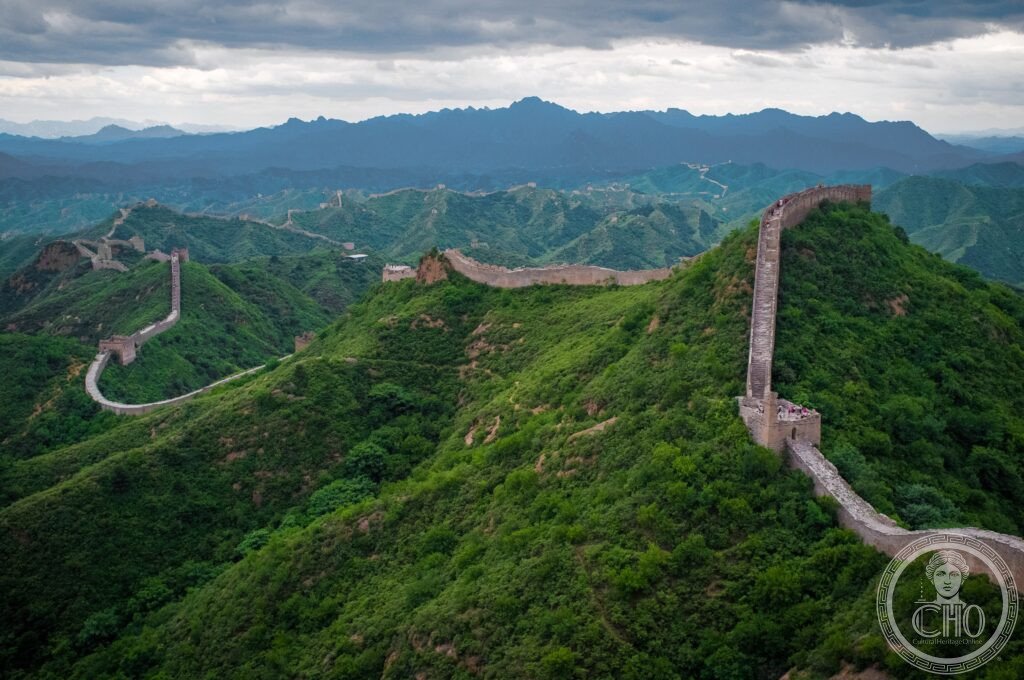
The largest military engineering project in human history and the defining symbol of Chinese civilisation — the Great Wall of China, built and rebuilt over 2,000 years by successive dynasties from the Qin to the Ming, stretches across 21,196 km of northern China, from the Yellow Sea in the east to the Gobi Desert in the west, following the contours of mountains so steep that sections of wall still have no road access and can only be reached on foot.
At a glance
The Great Wall of China (UNESCO WHS 1987; the total length of all wall sections built by all dynasties combined: approximately 21,196 km (the 2012 National Cultural Heritage Administration survey; this figure includes all walls of all dynasties and all states; the Ming dynasty walls alone total 8,851 km — the most commonly quoted figure and the section most people visit); the construction history: the wall was not built in a single period by a single emperor — it was built, abandoned, rebuilt, extended, and maintained by at least eight different Chinese states and dynasties over approximately 2,000 years (the first walls: the northern states of the Warring States period (475–221 BCE) each built defensive walls along their frontiers; the most important of these were the walls of Zhao, Yan, and Qin states); the first “Great” Wall: Qin Shi Huang (221–210 BCE; the first Emperor of China; ordered the connection and extension of the existing northern walls into a single continuous barrier; his general Meng Tian (蒙恬) supervised the construction — a project employing approximately 300,000 soldiers and 500,000 forced labourers over 10 years; the Qin wall was built primarily of rammed earth and does not survive in recognisable form; the Han dynasty walls (202 BCE–220 CE; the most extensive walls in Chinese history by length — extending further west than the Ming walls into Central Asia along the Silk Road); the Ming dynasty walls (1368–1644; the period of the most famous and best-preserved walls; the Ming walls were built of fired brick and cut stone (not rammed earth) which explains why they have survived better than the earlier walls; the Ming walls are the ones that most visitors see at Badaling, Mutianyu, Jinshanling, and Simatai); the myth that the Great Wall is visible from space: the myth is false — the Wall is approximately 5–8 m wide and invisible to the naked eye from the ISS orbit; the myth has been repeated so often that many Chinese schoolchildren believe it; it was definitively dispelled by the Chinese astronaut Yang Liwei (the first Chinese person in space; 2003) who reported that he could not see it from orbit.
Key facts
- The Ming Wall in detail: the most impressive military engineering of pre-industrial China — the Ming walls (the key statistics: the width at the base (6–7 m); the width at the top (4–5 m; wide enough for 5 soldiers to march abreast or 2 horses to ride side by side — the most important defensive design requirement; the wall was a highway as much as a barrier); the height (5–8 m; varies by terrain; in mountain sections the wall follows the contour of the ridge and the effective height above the valley floor is much greater); the construction materials (the lower courses: granite blocks up to 1.5 tonnes; the upper courses: fired brick (the most important material in Ming wall construction; the bricks were fired in kilns along the wall route and stamped with the kiln name and date — the most comprehensive brick-production record in Chinese history; the mortar (the Ming builders used a mortar of sticky rice flour mixed with calcium carbonate (from limestone) — glutinous rice mortar; the strongest pre-industrial mortar in Chinese construction history; chemical analysis has confirmed the rice content; some Ming wall sections held together by this mortar for 600 years); the watchtowers (the most important architectural element of the Ming wall; spaced at 300–600 m intervals; on average 12 m × 12 m in plan × 7–10 m high above the wall top; total approximately 30,000 watchtowers along the Ming wall system); the garrison (the Ming garrison of the northern wall: approximately 1 million soldiers (the most expensive single military commitment of any dynasty in Chinese history; the annual grain supply for the garrison was the largest single item in the Ming imperial budget; the most logistically demanding operation in Chinese history until the 20th century))
- The four main visitor sections: Badaling vs. Mutianyu vs. Jinshanling vs. Simatai — Badaling (八达岭; the most visited wall section in the world; 80 million total visitors since opening; fully restored, wheelchair accessible (partly), crowds are extreme in summer; the view is spectacular but the experience is commercial; the cable car (2 sections; reduces the climb but removes the best views); the best reason to choose Badaling: it is the section that Mao Zedong, Nikita Khrushchev, and President Nixon visited, and the political symbolism is inseparable from the physical experience); Mutianyu (慕田峪; 90 km north of Beijing; the most balanced choice for most visitors (crowd level between Badaling and Jinshanling; well-restored; scenic; cable car and chairlift)); Jinshanling (金山岭; 130 km from Beijing; the least restored major section; the most photogenic (the uneven battlements, the crumbling towers, the wild vegetation); the 3h drive from Beijing is the main deterrent; but the 10-km hike to Simatai across the wall is the finest single day walk accessible from Beijing); Simatai (司马台; connects to Jinshanling; the steepest section; some segments so steep they require ropes; the night visit (the Simatai section can be visited in the evening; the wall illuminated by floodlights against the night sky above the Miyun Reservoir is the most dramatic single Wall experience))
- The mythology and the reality of the Wall: what it actually did — the effectiveness of the Wall (the Wall did not “keep out” nomadic invasions — the Mongols breached it multiple times; the Jurchen crossed it to found the Qing dynasty; the function of the wall was not to be an impenetrable barrier but to: slow down raiding parties (the wall was enough to delay a raiding party long enough for mounted troops to respond; the most important practical function); provide the garrison network with elevated positions from which to observe and report; serve as a highway for the rapid movement of troops and supplies along the northern frontier (the most underappreciated function — the wall top was the fastest road in northern China); project imperial power and signal the extent of the Chinese civilised world vs. the nomadic “outer” world); the tourist myth (the claim that “the mortar was made of human bones” — the best-documented myth about the construction; the actual mortar was glutinous rice as described above; the “bones” myth derives from the legend of Meng Jiangnu (the wife who wept at the wall until it collapsed, revealing her husband’s bones inside — the most famous Chinese folk story associated with the Wall; first recorded in the Han dynasty; the folk narrative of the human cost of the Wall’s construction))
- Heritage: UNESCO World Heritage Site, Great Wall, inscribed 1987
- GPS: 40.3588° N, 116.0152° E (Badaling)
History
The pre-Qin walls (the Warring States period (475–221 BCE); the individual states of Zhao, Yan, and Qin each built walls against the Xiongnu nomads and against each other); the Qin unification and the first Great Wall (221–210 BCE; Qin Shi Huang; general Meng Tian; the first unified northern wall; the most famous statement in Chinese history about the Wall: the 2nd-century BCE Confucian criticism of the project as a waste of life and resources — the Wall has been controversial from the moment of its construction); the Han extension (202 BCE–220 CE; the most westward extension of the Wall, along the Silk Road, is Han dynasty; the watchtowers of the Han western wall preserved in the Gobi Desert are the best-preserved Han dynasty structures in China); the Northern Wei and Northern Qi walls (the 5th–6th centuries CE; substantial wall construction south of the Han lines); the Ming reconstruction (1368–1644; the most important period; the Juyongguan Pass (the “Gateway” in the wall 50 km north-west of Beijing; the most strategically important pass; the most elaborate fortifications on the entire Wall); the Jiayuguan Fort (the western terminus of the Ming Wall; the most remote and dramatic fortress on the Wall; the “First and Greatest Pass Under Heaven”); UNESCO WHS 1987.
What you see
The practical Beijing visit: Badaling (the easiest (direct high-speed train (S2 line from Qinghe station; 1h 18min; approximately CNY 25 (USD 3.50)); cable car available; essential for first-time visitors); Mutianyu (the best balanced experience; shuttle bus from Dongzhimen bus station (1h 30min) or private tour; the chairlift down (the toboggan run down is the most fun way to descend the Wall in China)); the wild wall alternative (Jinshanling/Simatai requires organised transport from Beijing; the investment is repaid by the solitude; the 10 km Jinshanling–Simatai hike traverses 32 towers and includes sections where the wall has largely collapsed back to rubble; the finest visual record of what the Wall looks like when the restorations end and the original remains).
Practical information
- Getting there from Beijing: Badaling (the S2 light rail from Beijing Qinghe Station to Badaling station; daily trains; 1h 18min; the cheapest and most reliable option; the train station is a 10-min walk from the wall entrance); Mutianyu (shuttle bus from Dongzhimen Transport Hub (daily; 1h 30min); or book via hostel/hotel; ticket CNY 65 (USD 9); the most popular choice among independent travellers); Jinshanling (private car or organised tour; 3h each way; the least convenient but most rewarding section for photographers)
- The Beijing heritage day: the Forbidden City, Tiananmen Square, and the Summer Palace — the Forbidden City (故宫; Gùgōng; the Imperial Palace; UNESCO WHS 1987 (jointly inscribed with the Great Wall in the same session); the largest palace complex in the world (72 ha; 980 surviving buildings; approximately 9,000 rooms; the most complete imperial palace in Asia); the collections (1 million objects of art and culture; the most important holdings: the bronze ritual vessels (the most important collection of ancient Chinese bronze in the world); the imperial robes (the finest collection of Chinese imperial textiles); the painting collection (Song, Yuan, Ming, and Qing dynasty paintings; the most important collection of Chinese court painting); the palace was home to 24 emperors (14 Ming and 10 Qing dynasties) from 1420 to 1912 (492 years of continuous imperial occupation — the most continuous imperial residence in world history); the Summer Palace (颐和园; Yíhéyuán; UNESCO WHS 1998; 15 km north-west of the city centre; the imperial garden retreat of the Qing emperors; the Kunming Lake (the artificial lake that covers 3/4 of the total garden area; the Long Corridor (the 728-m painted corridor (the longest painted corridor in the world; 14,000 paintings depicting landscapes, flowers, birds, and scenes from Chinese history and mythology; the most comprehensive gallery of Chinese folk painting in any garden setting))
- The Chinese imperial table: Beijing cuisine — the Beijing culinary tradition (distinct from the other major Chinese regional cuisines; defined by: the imperial court cooking tradition (the Manchu Han Imperial Feast — the most elaborate meal in Chinese culinary history; up to 108 dishes served over 3 days; the court dishes that entered the common Beijing restaurant tradition: Peking Duck (北京烤鸭; the defining dish of Beijing cuisine; the technique (the duck is inflated under the skin to separate the skin from the fat; slow-roasted in a traditional oven (the fruit wood (date, peach, or pear) gives the skin its specific fragrance and colour); the result (the skin is a translucent amber crisp that shatters on biting; the fat has entirely rendered out; the most technically demanding duck preparation in any culinary tradition); served in pancakes (春饼; chūnbǐng) with hoisin sauce and julienned spring onion and cucumber); the hot pot (涮羊肉; Shuàn yángròu; the Beijing mutton hot pot (the Mongolian-influenced tradition; thinly-sliced mutton dipped in boiling broth at the table; the sauce (sesame paste + fermented bean curd + chilli oil + spring onion — the most complex dipping sauce for hot pot in northern China))
Getting there
Beijing Capital Airport (PEK) or Daxing Airport (PKX). S2 train from Qinghe to Badaling 1h18, CNY 25. Mutianyu: shuttle bus from Dongzhimen 1h30. GPS (Badaling): 40.3588, 116.0152.
Nearby
- Ming Tombs (UNESCO WHS 2003) — 50 km north of Beijing (40 min by car from Badaling; routinely combined on the same tour day); the most important imperial mausoleum complex in China — the Ming Tombs (十三陵; Shísān Líng; “Thirteen Mausoleums”; the burial sites of 13 of the 16 Ming emperors in a valley at the foot of the Tianshou Mountains; the geomantic design (the valley was chosen by the court geomancers (风水; fēngshuǐ; geomancy) for its perfect feng shui: enclosed by mountains on three sides with the mouth of the valley opening to the south; the Imperial Spirit Way (神道; shéndào; the 7-km ceremonial approach road lined with 36 stone sculptures of animals and officials: camels, elephants, lions, qilins (mythical creatures), and officials in court dress; the most impressive ceremonial approach road in China); the accessible tomb (the Dingling — the underground palace of the Wanli Emperor (r. 1572–1620 CE; the most important Ming emperor after Yongle); excavated 1956–1958; the only Ming imperial tomb to have been opened and displayed; the three burial chambers (the most important objects: the emperors’ gold crown (the finest goldwork object from any Ming tomb) and the empress’s phoenix crown (the most elaborate headdress in Ming court history)))
- Chengde Mountain Resort (UNESCO WHS 1994) — 250 km north-east of Beijing (2h by high-speed train to Chengde); the Qing imperial summer retreat with the largest surviving imperial garden in China — Chengde (承德; the “Mountain Resort” (避暑山庄; Bìshǔ Shānzhuāng; “Mountain Estate for Escaping the Heat”); the garden (the largest remaining imperial garden in the world at 5.64 km²; constructed from 1703–1792 for the Qing emperors as a summer residence and as a diplomatic venue (the Qing emperors received Central Asian and Tibetan allies at Chengde rather than at Beijing, to make them feel at home in a landscape that resembled their own homeland; the most politically sophisticated imperial garden in Chinese history); the Outer Temples (the Eight Outer Temples; the most important: the Putuo Zongcheng Temple (the “Little Potala”; a reduced-scale replica of the Potala Palace in Lhasa, built to impress Tibetan religious leaders visiting Chengde; the most explicitly political religious building in Chinese imperial history)))
- Xi’an and the Terracotta Warriors — 1,200 km south-west of Beijing (4h 30min by high-speed G-class train); the site of the greatest archaeological discovery of the 20th century — described in the CHO place card for the Mausoleum of the First Qin Emperor; the most important combination in any single-week China itinerary: Beijing (Forbidden City + Great Wall) + Xi’an (Terracotta Warriors + Tang dynasty Muslim Quarter) + Chengdu (Giant Pandas + Sichuan hot pot).
Sources
- Wikipedia, Great Wall of China; Ming Great Wall; Badaling, accessed June 2026
- UNESCO, Great Wall, WHS reference 438, inscribed 1987
- David Spindler, The Battleground: A Military History of the Ming Great Wall, Naval Institute Press, 2021
Find it on the map
See this place and what’s around it →Historical events at this place (2)
📷 Become a Cultural Heritage Online photographer
Share your photos of places: they stay published under your name as the author. The more they're seen, the more you get noticed — and soon a contest will reward the most appreciated photos.
Log in or sign up free to add a photoIs this page about you?
This page is read by travellers and heritage enthusiasts who find it on Google. Tell us how you are connected to this place and we will take it from there.