

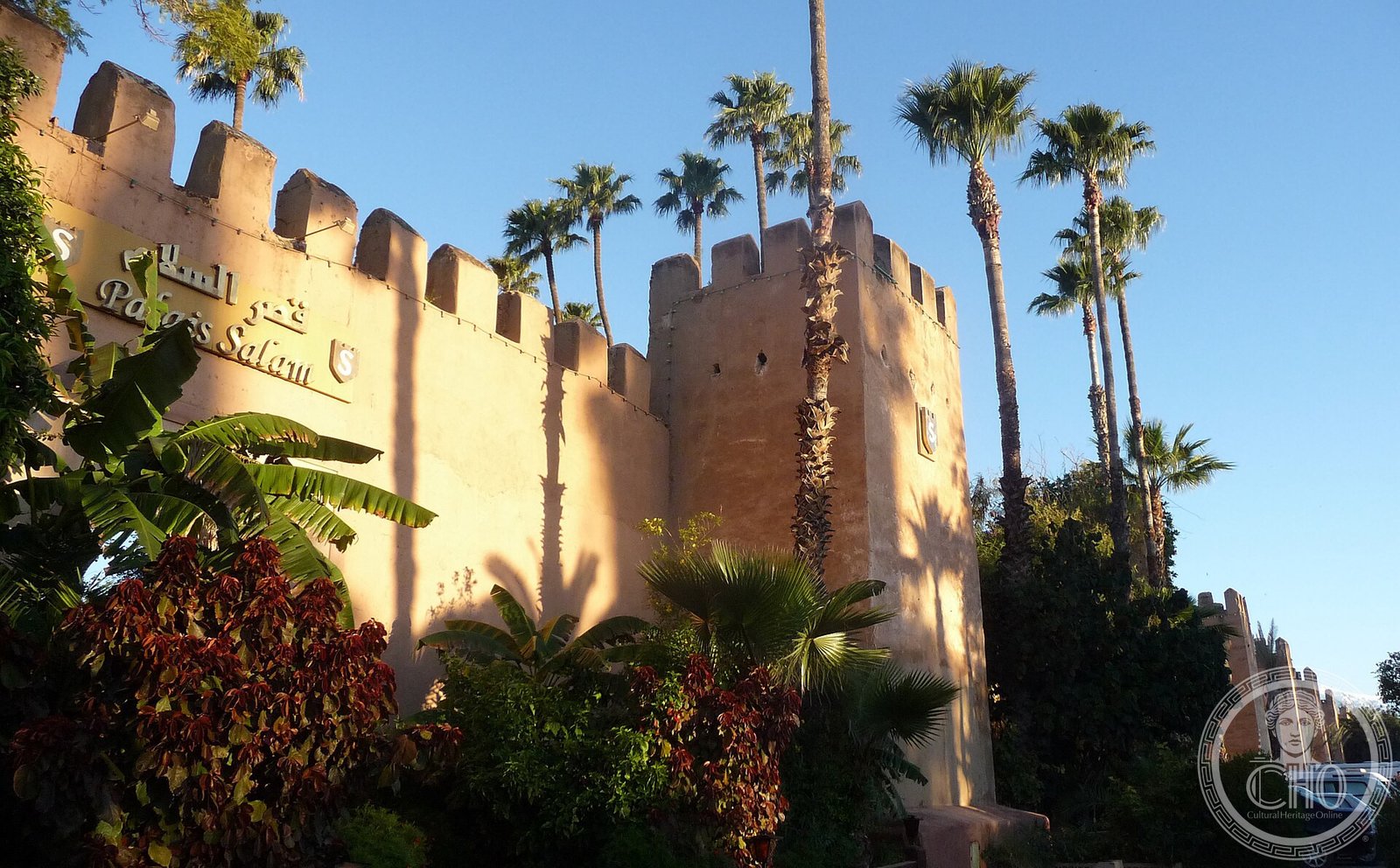
A fortified market town in Morocco’s Sous Valley, Taroudant served as capital of the Saadi dynasty and retains the character of a caravan-route settlement within nearly intact defensive walls.
At a glance
Taroudant stands in southern Morocco between Agadir and the Sahara, often called the “Grandmother of Marrakesh” for its resemblance to that larger city. Nearly the entire historic settlement lies within ramparts approximately 6 kilometres long, punctuated by nine operational gates and studded with bastions. The town functions as a regional market hub, known for traditional crafts, textiles and metalwork.
History
The Almoravids occupied Taroudant in 1056, establishing an early foothold in the Sous Valley. The city’s golden age arrived under the Saadi dynasty, particularly during the reign of Mohammed ash-Sheikh in the sixteenth century. He ordered construction of the city walls and commissioned the great mosque with its minaret in 1528, transforming Taroudant into a regional power base.
As Saadi capital, the town flourished through agricultural wealth—sugar cane, cotton, rice and indigo from the fertile Sous plain sustained commerce and prosperity. The Saadians used Taroudant to mount attacks against Portuguese forces in nearby Agadir before eventually relocating their seat to Marrakesh. In 1687, Moulay Ismail inflicted a devastating massacre on the population. Under subsequent Alaouite rule, the town resisted central authority, its citizens forming alliances with dissident members of the royal family.
What you see
The defensive walls remain the dominant architectural feature—nearly 6 kilometres of fortification enclosing the medina, with nine gates still in active use and bastions positioned for military advantage. Mohammed ash-Sheikh’s great mosque and minaret (1528) stand as primary religious monuments within the walled town.
Two principal squares anchor the medina: Assarag and Talmoklate, each adjacent to a souk. The Arab souk specializes in handicrafts—terracotta, wrought iron, pottery, brass, copper, leather, carpets and jewellery. The Berber market, Jnane al-Jaami, trades spices, dried fruits and household goods. Outside the walls, a small tannery produces traditional travel equipment for camel caravans: goat skin, camel hide sandals, leather bags and belts.
Cultural significance
Taroudant represents a preserved example of a sixteenth-century Islamic fortified town and market centre. Its intact walls and gates, functioning souks and traditional crafts maintain the character of a caravan-route settlement largely unchanged in essential form. The city embodies Moroccan Berber and Arab commercial culture and demonstrates the architectural strategies of Saadi-era urban planning.
Key facts
- Location: Souss-Massa region, Sous Valley, southern Morocco
- Coordinates: 30.479271, -8.8760809
- Foundation date: Occupied by Almoravids 1056; rebuilt under Saadi dynasty 16th century
- Walls: Nearly 6 kilometres in length with nine gates and multiple bastions
- Great mosque and minaret: Constructed 1528 under Mohammed ash-Sheikh
- Official website: https://www.visitmorocco.com/it/corsa/taroudant
Practical information
Taroudant functions as an active town with resident populations, markets and commerce. Opening hours for souks and markets vary seasonally; a weekly souk operates outside the city walls near the university district. Contact the official tourism website for current visiting conditions and local services.
Getting there
Taroudant lies in the Sous Valley east of Agadir and south of Marrakesh, positioned on the route toward Ouarzazate and the Sahara. Road access connects the town to both cities and regional centres. Consult a current map or GPS for routing from your starting point.
See the place
Sources & resources
Find it on the map
See this place and what’s around it →📷 Become a Cultural Heritage Online photographer
Share your photos of places: they stay published under your name as the author. The more they're seen, the more you get noticed — and soon a contest will reward the most appreciated photos.
Log in or sign up free to add a photoIs this page about you?
This page is read by travellers and heritage enthusiasts who find it on Google. Tell us how you are connected to this place and we will take it from there.