
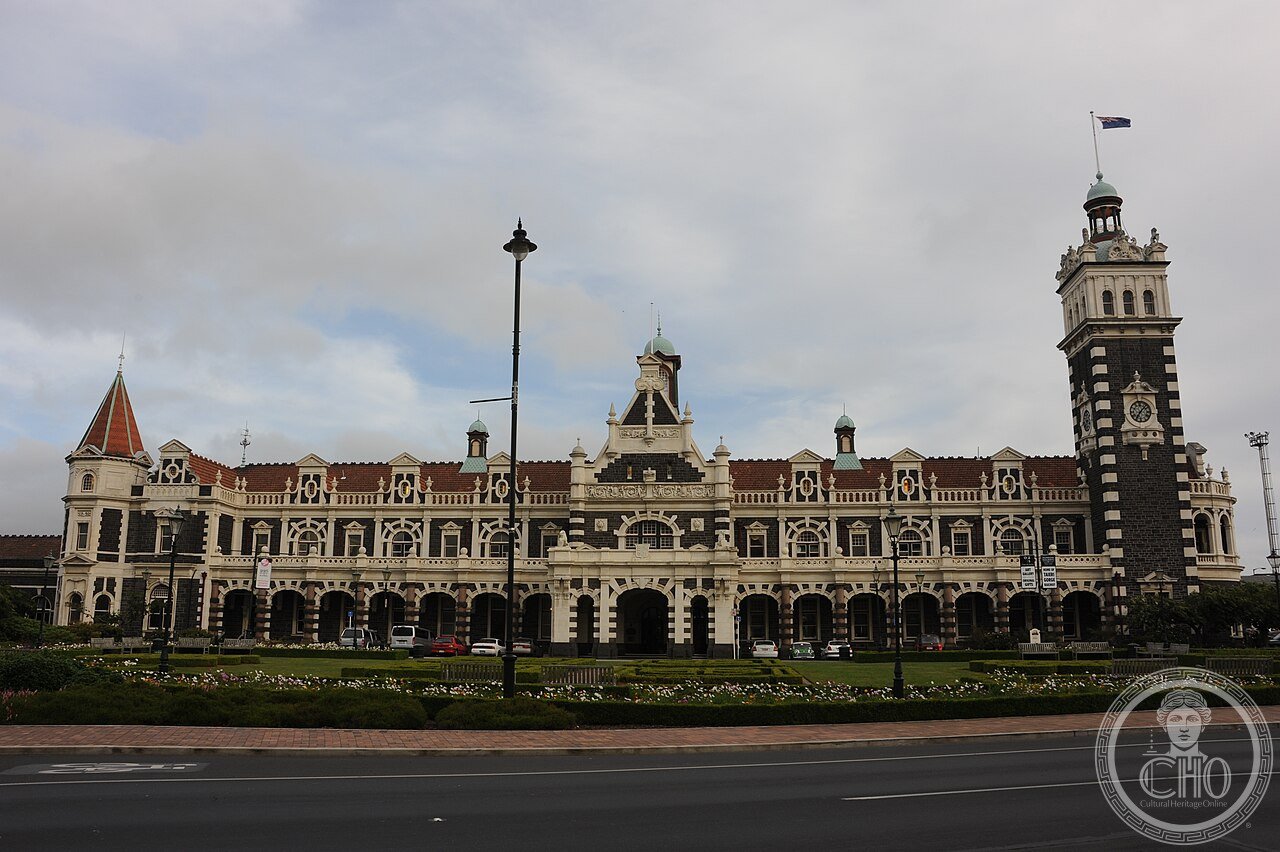
Gingerbread George’s masterpiece – basalt and limestone stripes, a mosaic floor of 725,000 tiles, and the most photographed building in New Zealand.
At a glance
- Type
- Railway station
- Period
- 1903-1906
- Style
- Flemish Renaissance Revival
- Location
- Anzac Square, Dunedin, New Zealand
- Coordinates
- -45.8742, 170.5079
- Architect
- George Troup
Overview
Dunedin’s station of 1906 earned architect George Troup his knighthood and his nickname – Gingerbread George – with a Flemish Renaissance confection of dark basalt banded in white Oamaru limestone, a 37-metre clocktower, and a booking hall whose Royal Doulton mosaic floor sets 725,725 porcelain tiles into locomotives and wheels.
History
Gold-rush Dunedin was then New Zealand’s commercial capital, and its station handled the country’s densest traffic – 100 trains a day through gardens that won national prizes. Rail’s retreat left the palace to weddings, the farmers’ market, the national sports hall of fame, and the Taieri Gorge tourist trains; full restoration keeps it, by repute, the most photographed building in the country.
Architecture and Design
Troup’s elevations layer turrets, dormers, and arcades on the bluestone body; the hall’s Doulton frieze of cherubs and the stained-glass locomotives steaming toward the viewer complete the railway iconography. The platform’s 1-kilometre canopy was the empire’s longest.
Cultural significance
The station crowns Dunedin’s Victorian-Edwardian ensemble – the Scottish-gothic university, churches, and warehouses of the south’s golden age – and anchors the city’s heritage identity and festivals on Anzac Square.
Visiting today
The hall, balcony, and Saturday market are free; scenic trains depart seasonally. The Otago Settlers Museum adjoins for the gold-rush story.
Getting there
The station stands at the Octagon’s harbour end, ten minutes’ walk through the exchange district.
Sources and resources
Find it on the map
See this place and what’s around it →📷 Become a Cultural Heritage Online photographer
Share your photos of places: they stay published under your name as the author. The more they're seen, the more you get noticed — and soon a contest will reward the most appreciated photos.
Log in or sign up free to add a photoIs this page about you?
This page is read by travellers and heritage enthusiasts who find it on Google. Tell us how you are connected to this place and we will take it from there.