
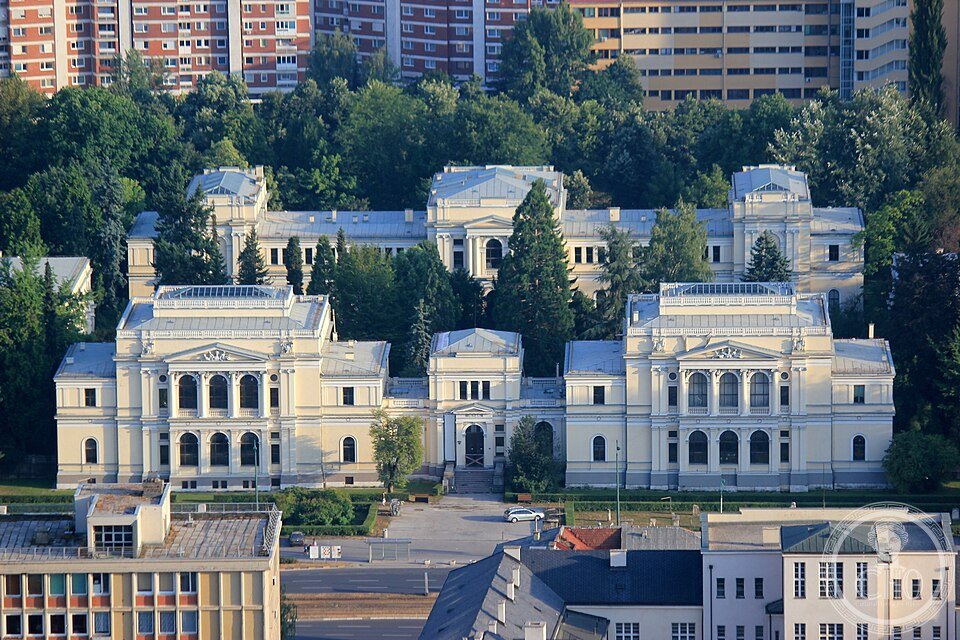
The National Museum of Bosnia and Herzegovina — Zemaljski muzej — is the oldest and most important institution of scientific heritage in the country, and one of the finest museums in the former Austro-Hungarian sphere. Founded in 1888 and housed in its current four-pavilion complex since 1913, it stands at the heart of Sarajevo around a tranquil botanical garden. The museum safeguards collections spanning archaeology, ethnography, and natural history accumulated across more than a century. Its greatest treasure is the Sarajevo Haggadah, a 14th-century illuminated Hebrew manuscript that survived the Spanish Inquisition, the Nazi occupation of World War II, and the siege of Sarajevo from 1992 to 1995, when curators hid it in a bank vault under sniper fire. Closed for three years between 2012 and 2015 amid political disputes over funding, its reopening was celebrated as a civic and cultural triumph for the country.
At a glance
- Type
- Museum complex (four pavilions)
- Period
- Founded 1888; present building completed 1913
- Style
- Austro-Hungarian Baroque with Moorish Revival elements
- Location
- Zmaja od Bosne 3, Sarajevo, Bosnia and Herzegovina
- Coordinates
- 43.8580° N, 18.4015° E
- Architect(s)
- Karl Pařík
Overview
Established under Austro-Hungarian administration in 1888, the Zemaljski muzej is both a scientific institution and a monument to Habsburg cultural ambitions in the Balkans. Its four symmetrical pavilions — dedicated to archaeology, ethnography, natural history, and a research library — surround an interior botanical garden. Classified as a National Monument of Bosnia and Herzegovina, the museum holds Bronze and Iron Age artefacts from the Glasinac plateau, medieval stećci tombstones, and an unbroken record of Bosnian flora assembled through a century of fieldwork. The Sarajevo Haggadah, its most celebrated object, draws visitors and scholars from around the world.
History
The museum was established in 1888 under Austro-Hungarian administration, three years after the formal annexation of Bosnia-Herzegovina. Architect Karl Pařík designed the current four-pavilion complex, completed in 1913. During World War II, director Jozo Petrović concealed the Sarajevo Haggadah from Nazi looting. During the 1992–1995 siege, museum staff maintained their posts while curators moved the Haggadah to a National Bank vault under fire. Post-Dayton political disputes over funding caused the museum to close from 2012 to 2015 — a closure that prompted international outcry. Domestic civic activism and diplomatic pressure finally secured its reopening in September 2015, celebrated across Bosnia and abroad as a symbol of reconciliation through shared heritage.
Architecture & Design
Karl Pařík arranged four symmetrical neoclassical pavilions around a central botanical garden — an interior green space that serves both aesthetic and scientific purposes. The facades blend formal Austro-Hungarian civic architecture with Moorish Revival ornamental details, a deliberate gesture toward Bosnia’s Islamic heritage. A colonnaded portico and arched windows mark the main entrance, echoing Romanesque forms. Interior halls feature high vaulted ceilings suited to large ethnographic displays. The botanical garden retains specimens of medicinal plants historically cultivated across the former Yugoslav federation, still maintained as a working scientific collection today.
Cultural significance
The museum embodies Bosnian identity across successive political ruptures — Ottoman, Austro-Hungarian, Yugoslav, and post-war. The Sarajevo Haggadah has become a universal symbol of coexistence: a Jewish manuscript preserved by Muslim scholars under the Inquisition, hidden from Nazi occupiers by a Catholic director, and protected by Bosnian curators during an ethnic war. The museum’s closure and reopening mirrored the broader struggle of post-Dayton Bosnia, and international solidarity during those years helped crystallise cultural heritage as common ground beyond ethnicity.
Visiting today
The museum opens Tuesday through Sunday; verify current hours on the official website before your visit. Admission is charged, with reduced rates for students and pensioners. The Sarajevo Haggadah is displayed in a dedicated gallery and is the centrepiece of any visit. The botanical garden is accessible from the inner courtyard and is especially pleasant in spring. Photography without flash is permitted in most areas. English-language guided tours can be arranged in advance through the information desk.
Getting there
The museum stands on Zmaja od Bosne, a 15-minute walk from the Baščaršija historic bazaar. Tram lines 1, 2, and 3 stop at the Zemaljski muzej stop directly outside. From Sarajevo International Airport, the journey by taxi or rideshare takes approximately 20 minutes. Long-distance buses from Mostar and Banja Luka arrive at the main bus terminal, a 25-minute walk or short taxi ride from the museum.
Sources & resources
Find it on the map
See this place and what’s around it →📷 Become a Cultural Heritage Online photographer
Share your photos of places: they stay published under your name as the author. The more they're seen, the more you get noticed — and soon a contest will reward the most appreciated photos.
Log in or sign up free to add a photoIs this page about you?
This page is read by travellers and heritage enthusiasts who find it on Google. Tell us how you are connected to this place and we will take it from there.