
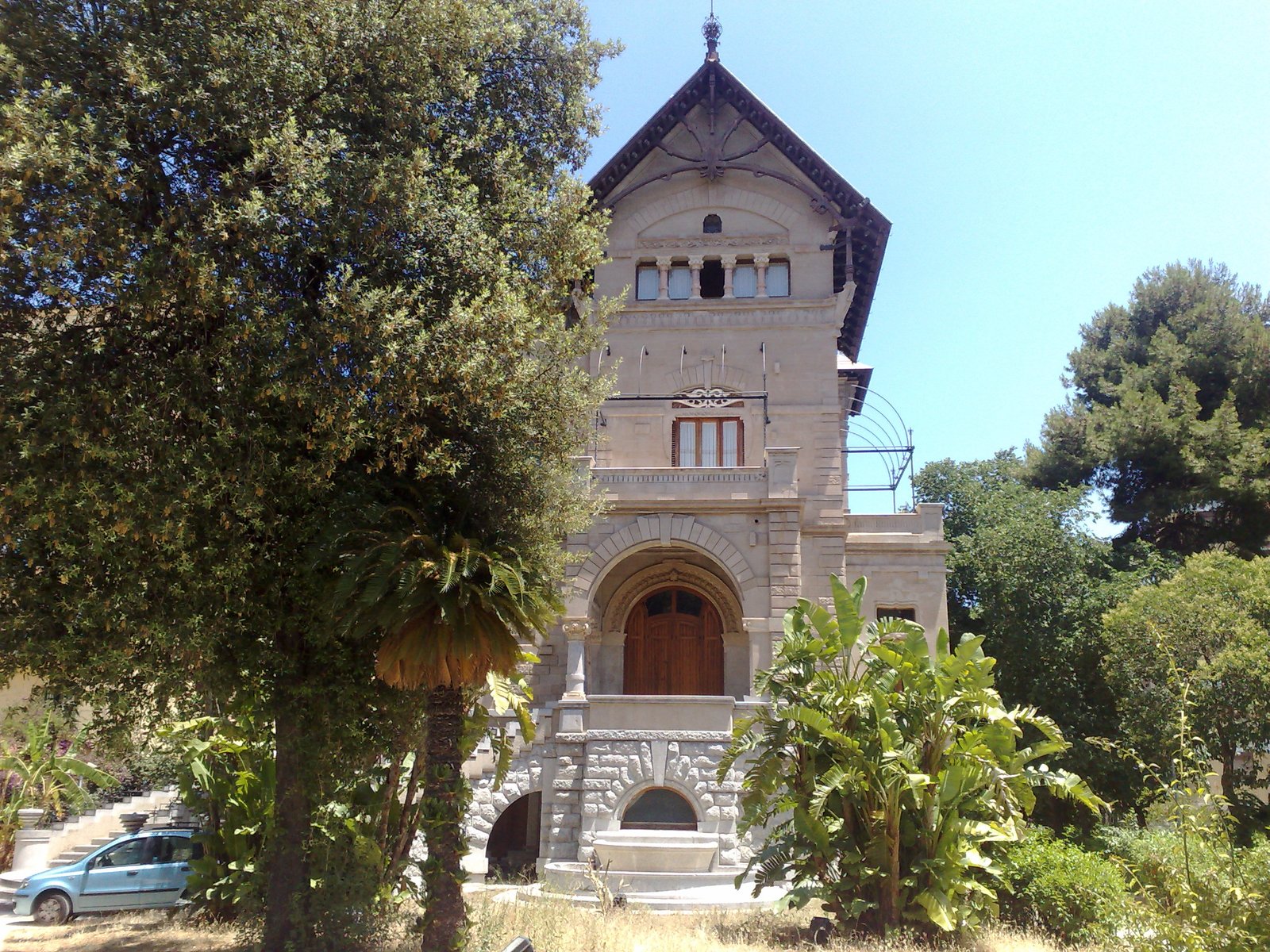
Palermo did not borrow Italian Liberty — it built its own. Between roughly 1895 and 1914 the architect Ernesto Basile and the Florio dynasty created Sicilian Liberty: sharper, warmer, and folded together with the island’s Norman and Catalan-Gothic past, all of it facing the Mediterranean light. This guide is part of CHO’s complete guide to Italian Liberty.
Basile and the Florio money
Ernesto Basile (1857–1932) is to Palermo what Sommaruga is to Milan: the architect through whom a city found its modern face. He did it on Florio money. The Florio family — whose fortune ran through tuna canning, Marsala wine, steamships, and the Targa Florio motor race — were the most powerful dynasty in southern Italy, and they funded the Liberty experiment in Palermo as a statement of their own arrival. Basile’s achievement was a hybrid grammar: Art Nouveau fluency braided with medieval, Norman, and Catalan-Gothic references particular to Sicily.
Villa Igiea: the finest Liberty interior in Sicily
Villa Igiea stands on the rocky Acquasanta promontory north of the historic centre. Basile reworked it from an earlier structure and completed it in 1900 for Ignazio Florio Jr., and it remains the finest surviving Liberty building on the island. Its jewel is the Sala Basile, a dining room sheathed in sinuous botanical frescoes by Ettore De Maria Bergler — among the most complete surviving Liberty interiors in Italy. The villa operates today as a luxury hotel under the Rocco Forte collection, which means its public rooms can still be seen.
Villino Florio all’Olivuzza
If Villa Igiea is the grand hotel, Villino Florio all’Olivuzza is the jewel box. Basile began it in 1899 for Vincenzo Florio — “Vincenzino” — on Viale Regina Margherita, and it is one of the defining statements of the Sicilian style, blending Art Nouveau ironwork with medieval and Norman-Gothic echoes. A deliberate act of arson in 1962 nearly destroyed the interior; subsequent restoration brought the villino back to life. It opens for cultural events and guided visits rather than on a fixed daily schedule, so check ahead before travelling.
Kursaal Biondo: Liberty as pleasure complex
For the public, civic side of Basile’s Liberty, the Kursaal Biondo is the building to find. Inaugurated on 19 September 1914 at the corner of Via Emerico Amari and Piazza Ruggero Settimo, it was Palermo’s most ambitious Belle Époque entertainment venue: a 4,520-square-metre complex weaving a cinema-theatre, a landscaped garden, a café, a restaurant and an open-air concert loggia into one Liberty vision for the Biondo brothers. Two sinuous Allegories of Dance once stood as acroteria above the entrance — ornament and entertainment designed as a single gesture.
Villino Favaloro, where it began
The Liberty story in Palermo has an earlier root. Villino Favaloro on Piazza Virgilio 32 began in 1889 as a villa by Giovan Battista Filippo Basile — Ernesto’s father — and was extended with Liberty interventions by the son between 1903 and 1914, including the octagonal tower of 1913–14. Its polychrome ceramic facades and wrought-iron details make it one of the earliest Liberty buildings in Sicily. It now houses the Regional Museum of Photography, which makes it the most accessible of the city’s Liberty interiors.
Walk the route on the map
CHO documents each building with a sourced editorial card. The city’s full Liberty profile — Basile, the Florio dynasty, and the walking route between the sites — is gathered in the Liberty Palermo hub. To plan the visit, open the interactive map and trace the line from the Acquasanta waterfront to the Olivuzza quarter.
Open the interactive Art Nouveau map →
Frequently Asked Questions
What is Sicilian Liberty?
Sicilian Liberty is the Palermo branch of Italian Art Nouveau, led by architect Ernesto Basile and funded by the Florio industrial dynasty between roughly 1895 and 1914. It folds Norman, Catalan-Gothic and Renaissance motifs into Art Nouveau ironwork and ceramic, giving the style a warmer, Mediterranean character.
What are the main Liberty buildings in Palermo?
Villa Igiea (1898–1900), a Basile hotel on the Acquasanta waterfront with frescoes by Ettore De Maria Bergler; Villino Florio all’Olivuzza (from 1899), built for Vincenzo Florio; the Kursaal Biondo (1914), Basile’s Belle Époque entertainment complex; and the Villino Favaloro, now the regional photography museum.
Can you visit Liberty buildings in Palermo?
Yes. Villa Igiea operates as a luxury hotel and its public rooms can be seen. The Villino Favaloro houses the Regional Museum of Photography. Villino Florio opens for cultural events and guided visits rather than on a fixed daily schedule, so check ahead before travelling.
Sources used in this article
- CHO place_card Villa Igiea — Ernesto Basile (1857–1932), 1898–1900, Ignazio Florio Jr., Sala Basile by De Maria Bergler, now Rocco Forte hotel.
- CHO place_card Villino Florio all’Olivuzza — Basile, begun 1899 for Vincenzo Florio, Viale Regina Margherita, 1962 arson and restoration.
- CHO place_card Kursaal Biondo — Basile, inaugurated 19 September 1914, Via Emerico Amari / Piazza Ruggero Settimo, for the Biondo brothers.
- CHO place_card Villino Favaloro — Giovan Battista Filippo Basile 1889, Ernesto Basile additions 1903–1914, Piazza Virgilio 32, now Regional Museum of Photography.


