
A masterwork of Italian Art Deco and rationalist design, this pavilion showcases the decorative vision of Tito Chini through majolica, marble, and orchestrated light.
At a glance
Built between 1936 and 1941 to the design of the engineer Diego Corsani, with decoration by Tito Chini, the Party Pavilion stands as an outstanding example of Art Deco combined with Liberty-style finishes. The structure exemplifies Italian rationalism—an architectural language that flourished in the early twentieth century. Constructed primarily of brick with innovative heating systems engineered by Diego Corsani, the pavilion was designed as a continuous, immersive space celebrating light, color, and leisure.
History
Commissioned during the interwar period, the pavilion emerged from a moment when rationalist principles dominated Italian architectural discourse. The engineer Diego Corsani designed the building; Tito Chini directed its decoration with meticulous attention to majolica, painting and ceramics throughout. The heating systems—a technical achievement by Diego Corsani—enabled year-round use, a notable innovation for the era.
What you see
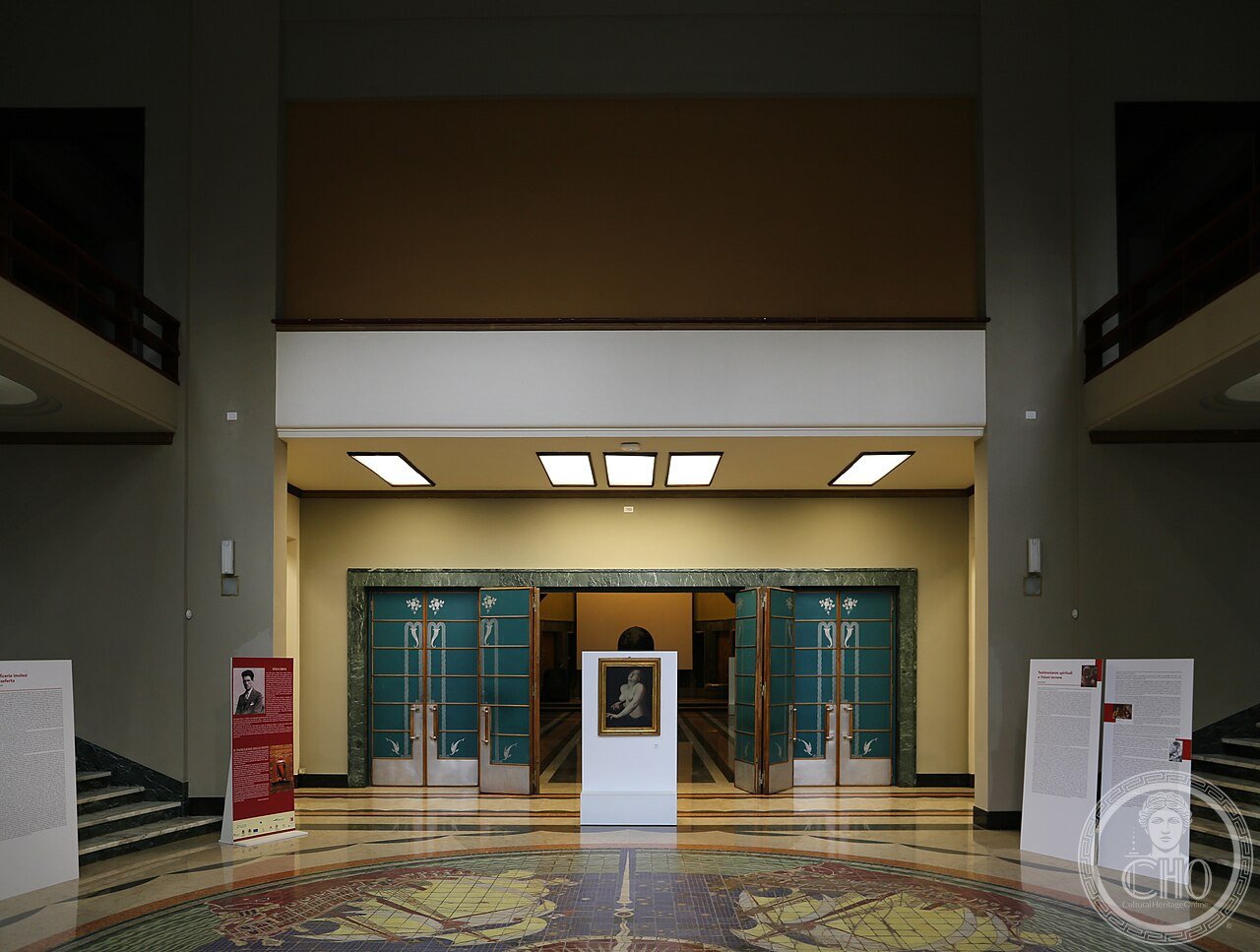
The entrance commands immediate attention: a circular floor of large ceramic tiles surrounded by marble bands decorated with amphora motifs, crowned by a light dome with three concentric bands of illumination. White and gold tones frame celestial imagery—constellations and zodiac signs—in elegant contrast.
Two golden-walled corridors flank the entrance like precious caskets. The ground floor unfolds in a sequence of leisure spaces: a bar once adorned with harvest scenes; a smoking room with playful amorous themes; a reading room with rural landscapes and decorated ceiling; and a game room where Tito Chini extended a playing-card motif across three walls. A billiard room completes the opposite wing.
The pavilion’s main framework consists of brick “theatrical portal” frames—a rationalist expression of functional elegance.
Cultural significance
The pavilion represents a pinnacle of interwar Italian design, merging rationalist structure with decorative exuberance. Its conception as a total environment—where architecture, ornament, and spatial experience unite—reflects the ambitions of early twentieth-century modernism to transform everyday leisure into art.
Key facts
- Address: Viale Guglielmo Marconi, 32, 47011 Castrocaro Terme
- Engineer: Diego Corsani (1938)
- Decoration: Tito Chini
- Coordinates: 44.17286662316578, 11.949541568756104
- Capacity: 400 seated guests plus standing audience
- Website: http://www.termedicastrocaro.it/grand-hotel-castrocaro/il-padiglione/
- Phone: 0543 767114
Practical information
The pavilion functions as a cultural and events venue, hosting exhibitions, conventions, congresses, banquets, fashion shows, and cultural events. A stage and 30 m² screen support flexible programming. The space can be subdivided into multiple rooms and is surrounded by park greenery. Beatrice Sansavini oversees cultural activities.
Getting there
The pavilion is located in Castrocaro Terme in the Emilia-Romagna region. For directions and current opening hours, consult the official website or contact the venue directly by phone.
See the place
Sources & resources
- Official website: Terme di Castrocaro
- Pro Loco Castrocaro Terme; e-borghi — Padiglione delle Feste
Find it on the map
See this place and what’s around it →Record researched and written by Stefano Vigolo for Cultural Heritage Online, 2026.
Historical events at this place (1)
📷 Become a Cultural Heritage Online photographer
Share your photos of places: they stay published under your name as the author. The more they're seen, the more you get noticed — and soon a contest will reward the most appreciated photos.
Log in or sign up free to add a photoIs this page about you?
This page is read by travellers and heritage enthusiasts who find it on Google. Tell us how you are connected to this place and we will take it from there.