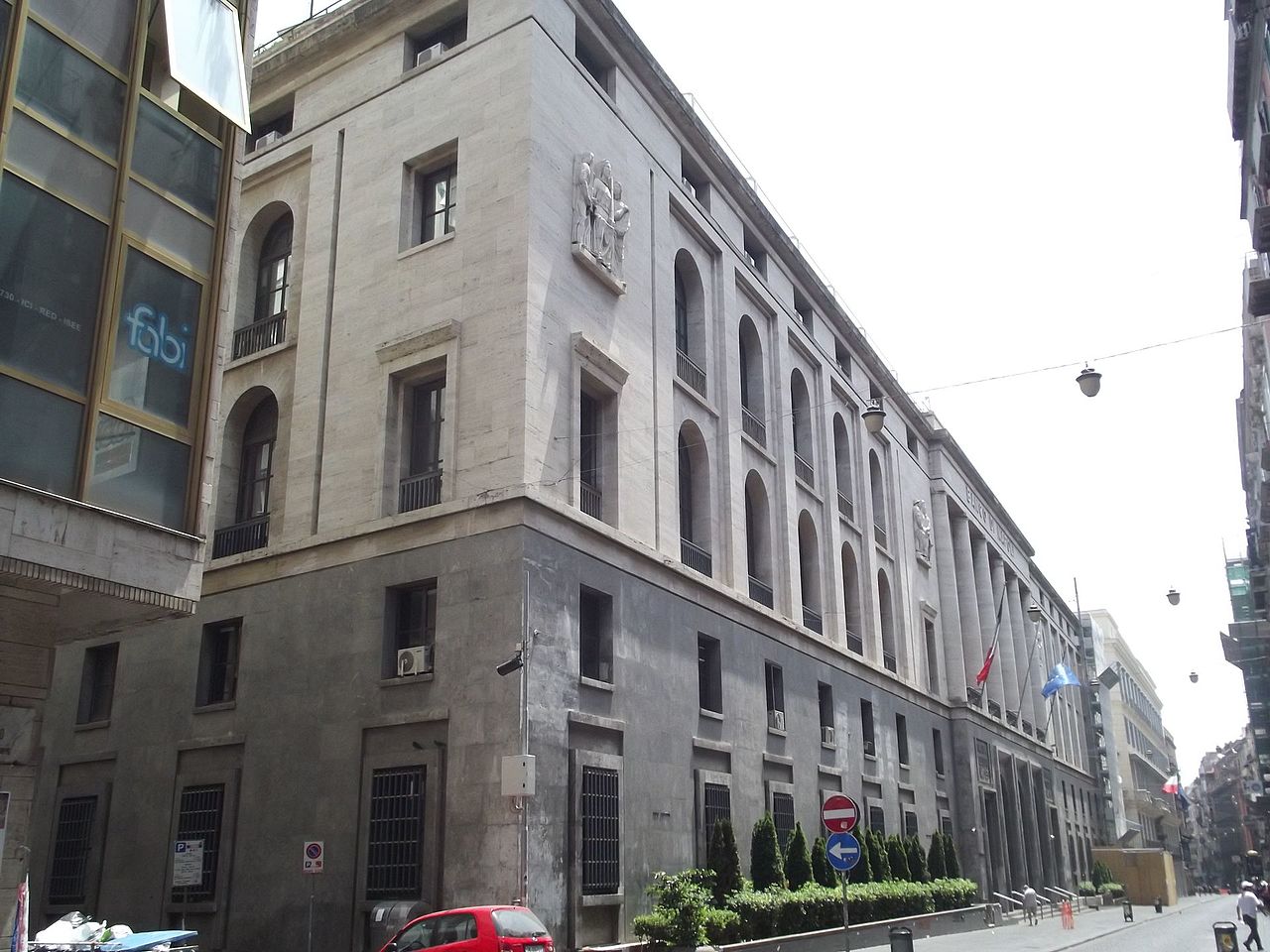
The Palazzo del Banco di Napoli is a Rationalist palazzo designed by Marcello Piacentini in 1939–40, located on Via Toledo in central Naples.
The building stands on the site of the earlier Palazzo San Giacomo, constructed in the early nineteenth century by Stefano Gasse as the seat of ministries for the Bourbon Kingdom. That predecessor structure, quadrangular in form, featured an internal iron and glass gallery connecting Piazza Municipio to Via Toledo on its northern and southern fronts. The new palazzo was commissioned during the 1930s under the direction of Giuseppe Frignani, marking the four-hundredth anniversary of the Bank’s foundation.
From 2022 onwards, the palazzo has served as the headquarters of the Galleries d’Italia, the museum of the Intesa Sanpaolo group, relocated from the nearby Palazzo Zevallos. The museum collection occupies approximately 4,000 square metres of exhibition space within the building.
About Marcello Piacentini
Marcello Piacentini was a leading Italian architect of the twentieth century, instrumental in shaping Rationalist design and urban planning during the interwar decades.
Details
- Architect: Marcello Piacentini
- Date: 1939–40
- Location: Via Toledo, Naples
- Style: Rationalism
- Current use: Galleries d’Italia (Intesa Sanpaolo)
On the heritage map: Palazzo del Banco di Napoli
Frequently asked questions
Who designed the Palazzo del Banco di Napoli?
The palazzo was designed by Marcello Piacentini, a leading architect of twentieth-century Italian Rationalism, and constructed in 1939–40.
Where is the building located?
The palazzo stands on Via Toledo in the historic centre of Naples, having replaced the nineteenth-century Palazzo San Giacomo.
What does the building house today?
Since 2022, the palazzo has been the seat of the Galleries d’Italia, the museum of the Intesa Sanpaolo banking group, with approximately 4,000 square metres of exhibition space.