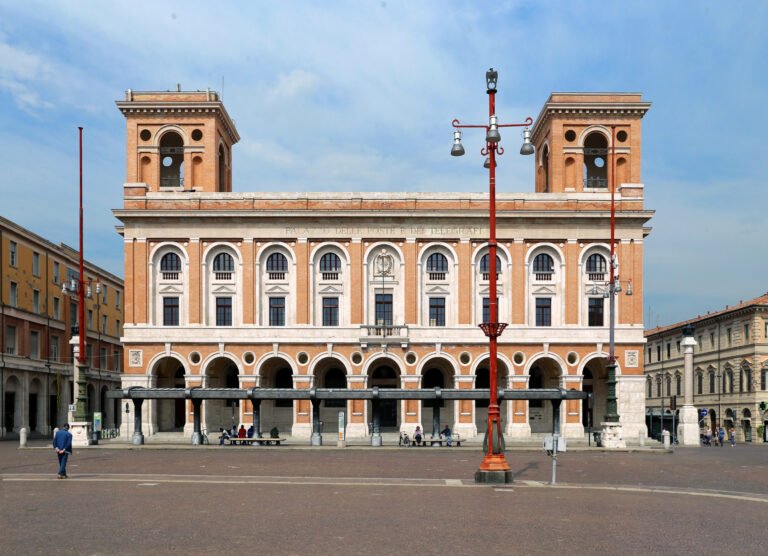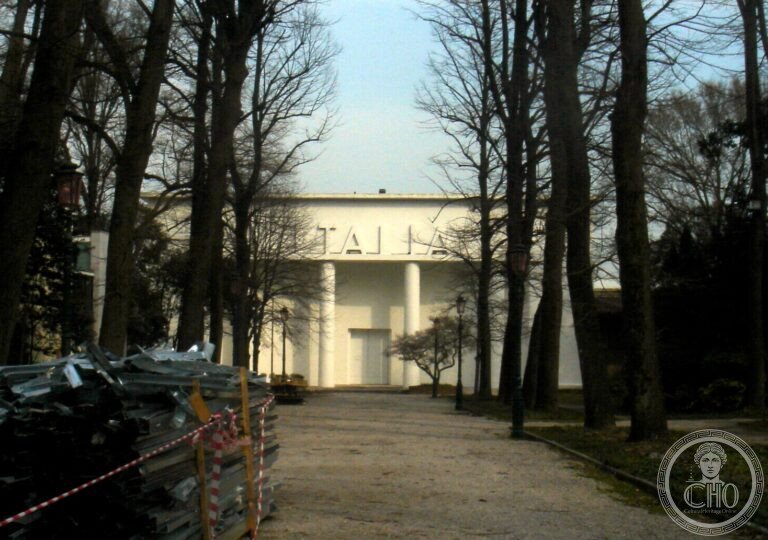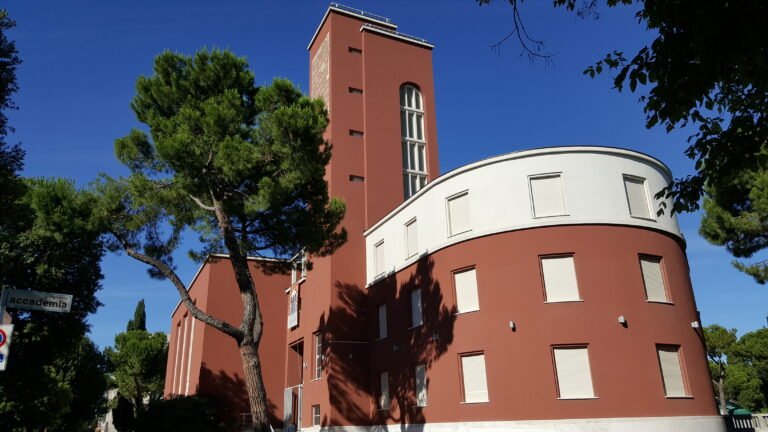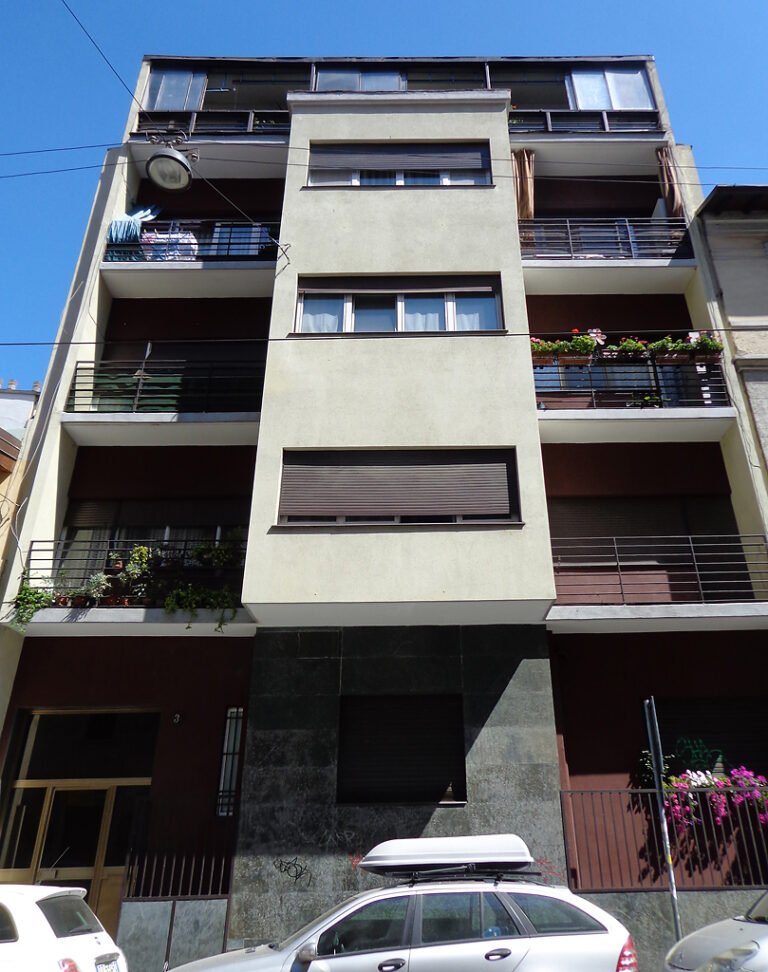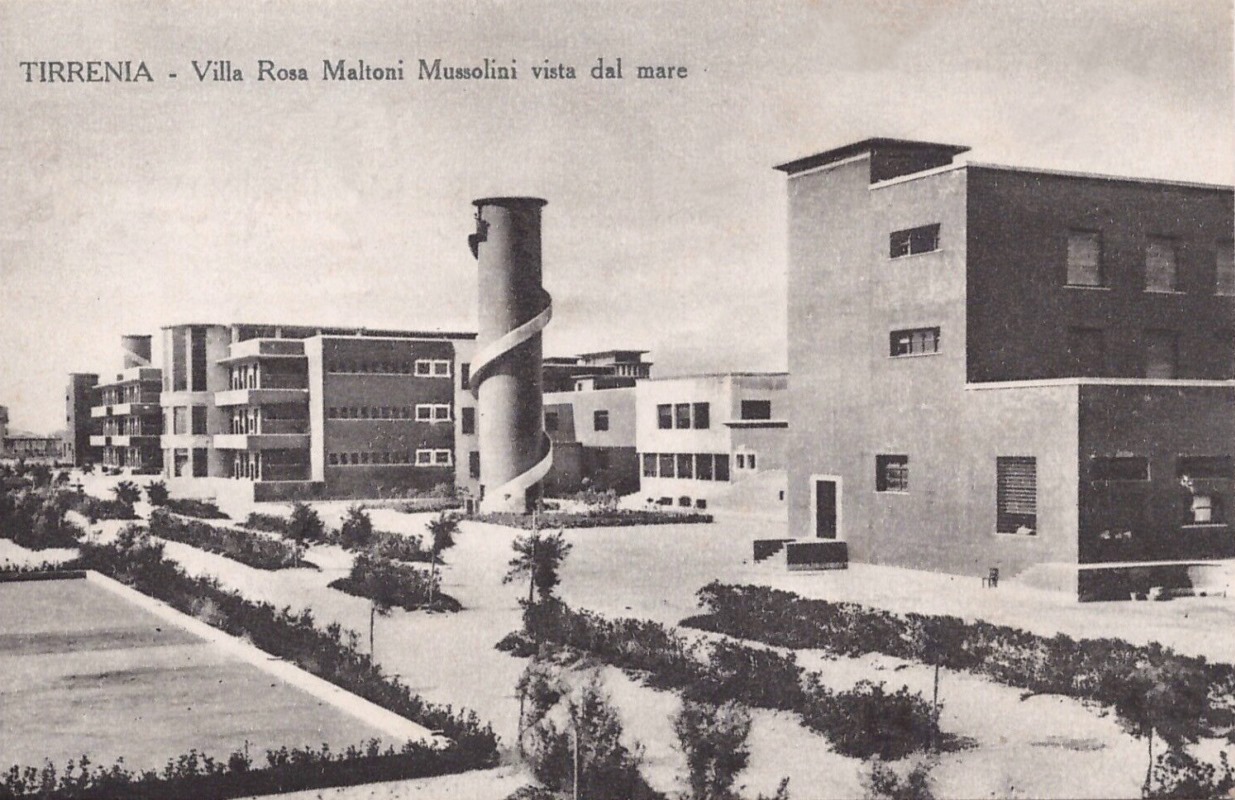
The Colonia Marina Rosa Maltoni Mussolini is a seaside colony building designed by architect Angiolo Mazzoni in 1933 and located in Tirrenia, near Calambrone, Pisa, Tuscany.
Mazzoni (1894–1979) was a Bologna-born architect and engineer who served as state architect during Italy’s interwar period, designing hundreds of public buildings, post offices, and railway stations. Trained under Marcello Piacentini and employed by the Ministry of Communications from 1924 onward, Mazzoni became chief architect for the State Railways and played a central role in shaping the architectural expression of the 1920s and 1930s in Italy. His work reflected the Rationalist movement that dominated Italian modernist design of the era.
The Colonia Marina Rosa Maltoni Mussolini represents the public works initiatives undertaken during this period. As a seaside colony—a building type common to interwar Italy—it documents both architectural practice and social infrastructure of the time.
About Angiolo Mazzoni
Mazzoni rose to prominence through his technical training and professional position within state institutions. Between 1926 and the late 1930s, he produced significant independent architectural works that established him as a leading modernist practitioner. His prolific output and institutional role made him one of the defining figures of Italian Rationalism during the interwar decades.
Details
- Architect: Angiolo Mazzoni
- Year: 1933
- Location: Tirrenia, Calambrone, Pisa, Tuscany
- Building type: Seaside colony
- Architectural movement: Rationalism
Frequently asked questions
Who designed this building?
Angiolo Mazzoni, the Italian state architect of the 1920s and 1930s, designed the Colonia Marina Rosa Maltoni Mussolini in 1933.
Where is it located?
The building stands in Tirrenia, near Calambrone, in the province of Pisa, Tuscany.
What architectural style does it represent?
The structure exemplifies Rationalism, the dominant modernist movement in Italian architecture during the interwar period.
Sources
- S1 — Ciucci, Giorgio. Gli architetti e il fascismo: architettura e città 1922-1944. Einaudi, 2002. ISBN 978-88-06-16310-5.
- S2 — Nicoloso, Paolo. Mussolini architetto: Propaganda e paesaggio urbano nell'Italia fascista. Einaudi, 2008. ISBN 978-88-06-19086-6.
Spotted an error? Write to editorial@culturalheritageonline.com and we correct it the same day.