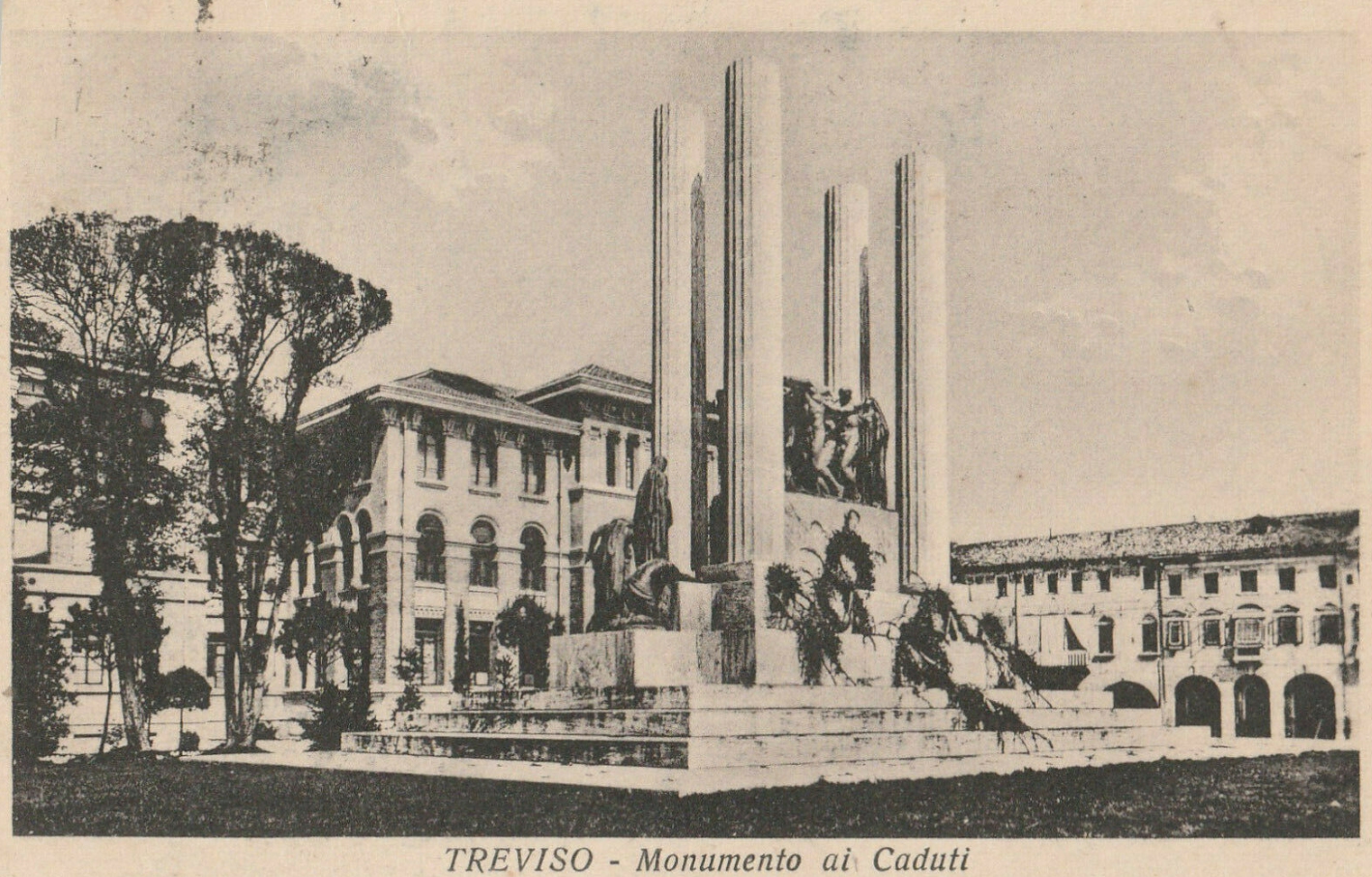
The Monumento ai Caduti in Treviso was designed by Italian sculptor and painter Arturo Stagliano and completed in 1931. Known locally as “Gloria,” the monument has become an important civic symbol of the city.
Stagliano (1867–1936) was trained at the Regio Istituto di Belle Arti in Naples under Domenico Morelli, initially pursuing painting before turning to sculpture. His encounter with sculptor Leonardo Bistolfi in Anacapri proved formative, directing him toward monumental work. Stagliano executed several major public memorials across northern Italy during the interwar period, including monuments at Novara (1925–1926) and Cuneo, as well as commemorative medals. He collaborated closely with Bistolfi in Turin until the latter’s death in 1933.
The Treviso memorial exemplifies the commemorative sculpture tradition of early twentieth-century Italy, serving as both artistic statement and historical witness to the city’s experience of war.
About Arturo Stagliano
Arturo Stagliano was born in Guglionesi in 1867 and died in Turin in 1936. After formal training in Naples, he developed his artistic practice across southern and northern Italy, becoming known for large-scale public sculptures and medallic work.
Details
- Creator: Arturo Stagliano, Italian sculptor and painter
- Year: 1931
- Location: Treviso, Veneto, Italy
- Local name: Gloria
- Type: War memorial
Explore more: 69 heritage places in Treviso
Frequently asked questions
Who designed the monument?
Arturo Stagliano (1867–1936), an Italian sculptor and painter trained in Naples who worked primarily in northern Italy and collaborated with Leonardo Bistolfi in Turin.
When was the monument completed?
The monument was completed in 1931 as a memorial to the fallen.
What significance does it hold for Treviso?
Known as “Gloria,” the monument is recognized as an important symbol of the city, representing Treviso’s civic identity and collective memory.
Sources
- S1 — Panzetta, Alfonso. Dizionario degli scultori italiani dell'Ottocento e del primo Novecento. Umberto Allemandi, 2003. ISBN 978-88-422-1158-7.
- S2 — Bossaglia, Rossana. I maestri della scultura italiana del primo Novecento. Electa, 1997. ISBN 978-88-435-6178-0.
Spotted an error? Write to editorial@culturalheritageonline.com and we correct it the same day.