
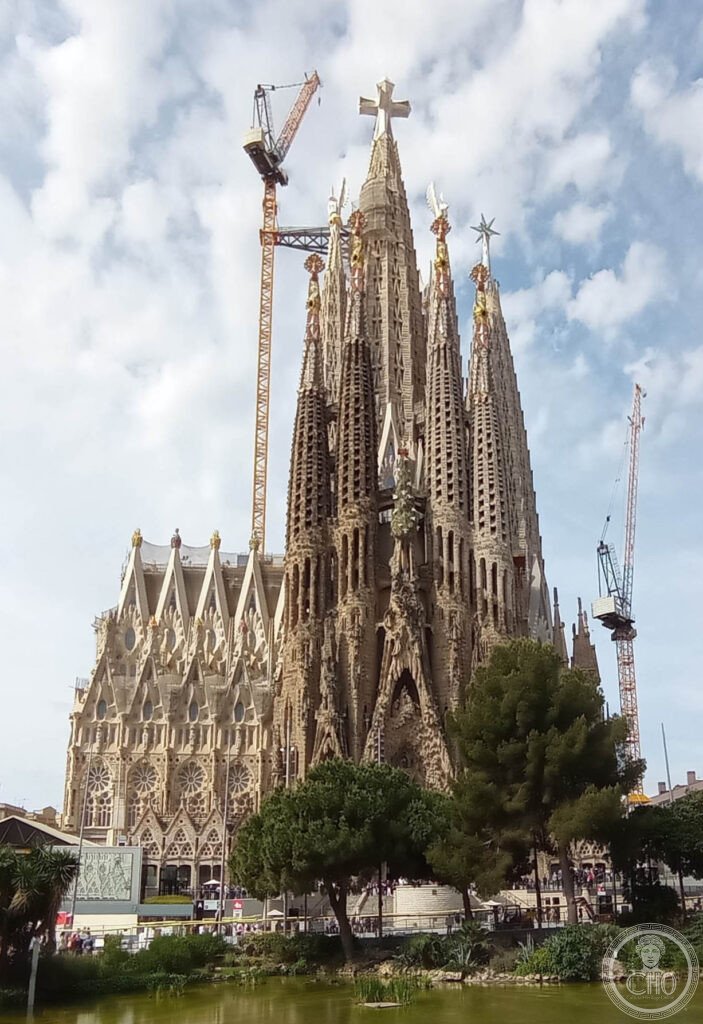
Antoni Gaudí spent the last 43 years of his life on this basilica, and it is still not finished. Begun in 1882 and worked on for well over a century, the Sagrada Família replaces flying buttresses with parabolic arches and branching columns modelled on trees, producing a building unlike anything else in European church architecture.
At a glance
The Sagrada Família is a basilica in Barcelona that has been under construction since 1882 and remains unfinished. It was inscribed on the UNESCO World Heritage List in 2005 as part of the Works of Antoni Gaudí, a listing that covers seven properties: the Sagrada Família itself, Park Güell, Casa Milà, Casa Batlló, Casa Vicens, Palau Güell and the Crypt at Colònia Güell. The inscription took place while the building was still incomplete.
Gaudí based the structure entirely on natural forms. He rejected traditional flying buttresses in favour of parabolic arches, hyperboloids and helicoids, so the building supports itself without external buttressing.
Key facts
- Begun: 1882, under architect Francisco de Paula del Villar; taken over by Antoni Gaudí in 1883
- Towers: eighteen are planned in total, twelve for the Apostles now complete, four for the Evangelists in progress, one for the Virgin Mary completed in 2021, and the tallest, for Jesus Christ, designed to reach 172.5 metres
- Facades: the Nativity facade is the only one Gaudí supervised directly; the Passion facade was designed by Josep Maria Subirachs between 1987 and 2018 in a deliberately angular style; the Glory facade remains unfinished
- Heritage status: UNESCO World Heritage Site since 2005, listed under Works of Antoni Gaudí
- Structural system: parabolic arches, hyperboloids and helicoids replace conventional flying buttresses
History
The Association of Devotees of St Joseph commissioned a neo-Gothic church in 1882. Francisco de Paula del Villar began work on the crypt before Antoni Gaudí took over the project in 1883. Gaudí devoted himself to the building for the rest of his life, eventually giving up all other commissions to work on it exclusively, and in his final years he lived in the crypt itself. He died in June 1926, three days after being struck by a tram.
In 1936, during the Spanish Civil War, Catalan anarchists set fire to Gaudí’s workshop and destroyed many of his models. These were later reconstructed from surviving photographs, allowing construction to continue according to his design intentions. The Sagrada Família was inscribed as a UNESCO World Heritage Site in 2005, before the building was complete.
What you see
The basilica has three facades. The Nativity facade, facing east, is densely carved with figures of plants, animals and angels and is the only one Gaudí saw built under his own supervision. The Passion facade, facing west, was designed decades later by Josep Maria Subirachs in an angular, geometric style that contrasts sharply with Gaudí’s organic naturalism. The Glory facade, facing south, is still unfinished.
Inside, branching stone columns spread overhead like the canopy of a forest, supporting the vaulted ceiling. Stained glass on the west side is set in cold blues and greens, while the east windows glow in warm yellows and reds, changing the light in the nave through the day. A lift in the Nativity tower rises to an observation terrace at 65 metres, giving views over Barcelona’s street grid, the hills of Collserola and, in the distance, the Mediterranean.
Practical information
- Booking: entry regularly sells out, so tickets should be booked in advance through the basilica’s official website
- Tower visit: the Nativity tower lift to the observation terrace is a separate, popular addition to the standard visit
- Best time for the interior: visiting around midday brings out the strongest colour from the stained glass
Getting there
The basilica has its own metro stop, served by lines L2 and L5. From Barcelona El Prat Airport, the Aerobús or the L9 Sud metro line, with a change onto another line, both run into the city centre.
Nearby
- Park Güell — about 3 km north-west, reachable by Metro L3 to Lesseps followed by a short walk; Gaudí’s mosaic-covered garden city, including the tiled dragon on the main staircase, part of the same UNESCO listing and requiring timed entry to the monumental zone
- Casa Batlló and Casa Milà (La Pedrera) — about 2 km west, near Metro L2 Passeig de Gràcia; two further Gaudí buildings, one with a dragon-scaled facade and one with an undulating stone front and helmeted rooftop chimneys, also part of the Works of Antoni Gaudí listing
- Montserrat Monastery — about 55 km north-west, reached by Renfe train from Plaça Espanya; home to the Black Madonna, patron saint of Catalonia
Sources
- Wikipedia
- UNESCO
- Rainer Zerbst, Antoni Gaudí: The Complete Works, Taschen
Find it on the map
See this place and what’s around it →Record researched and written by Luigi De Marchi for Cultural Heritage Online, 2026.
📷 Become a Cultural Heritage Online photographer
Share your photos of places: they stay published under your name as the author. The more they're seen, the more you get noticed — and soon a contest will reward the most appreciated photos.
Log in or sign up free to add a photoRequest to use these images
Each photograph is offered by the person who took it — the seller is the photographer named on the image; Cultural Heritage Online runs the payment and delivers the file on their behalf. Buying gives you the right to use the image in your own project — a website, an article, a presentation — with the file and a written licence. Read the Terms of Sale.
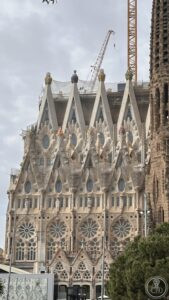
Basílica de la Sagrada Família — The gabled stonework of the façade in close detail.
Photo: Luigi De Marchi
€3.00
843 × 1500 px
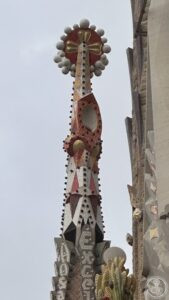
Basílica de la Sagrada Família — A finished spire crowned with its coloured Venetian-glass pinnacle.
Photo: Luigi De Marchi
€3.00
843 × 1500 px
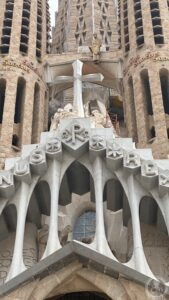
Basílica de la Sagrada Família — The white pinnacles of the newer towers.
Photo: Luigi De Marchi
€3.00
843 × 1500 px
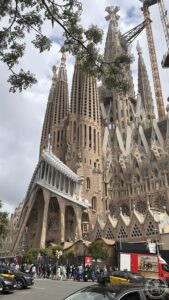
Basílica de la Sagrada Família — The Nativity façade, encrusted with carved stone.
Photo: Luigi De Marchi
€3.00
843 × 1500 px
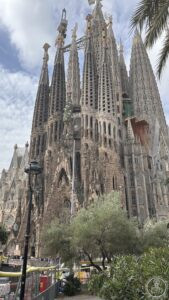
Basílica de la Sagrada Família — The Passion façade and its bundle of spires.
Photo: Luigi De Marchi
€3.00
843 × 1500 px
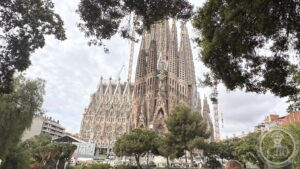
Basílica de la Sagrada Família, Barcelona
Photo: Luigi De Marchi
€3.00
2200 × 1237 px
Is this page about you?
This page is read by travellers and heritage enthusiasts who find it on Google. Tell us how you are connected to this place and we will take it from there.