
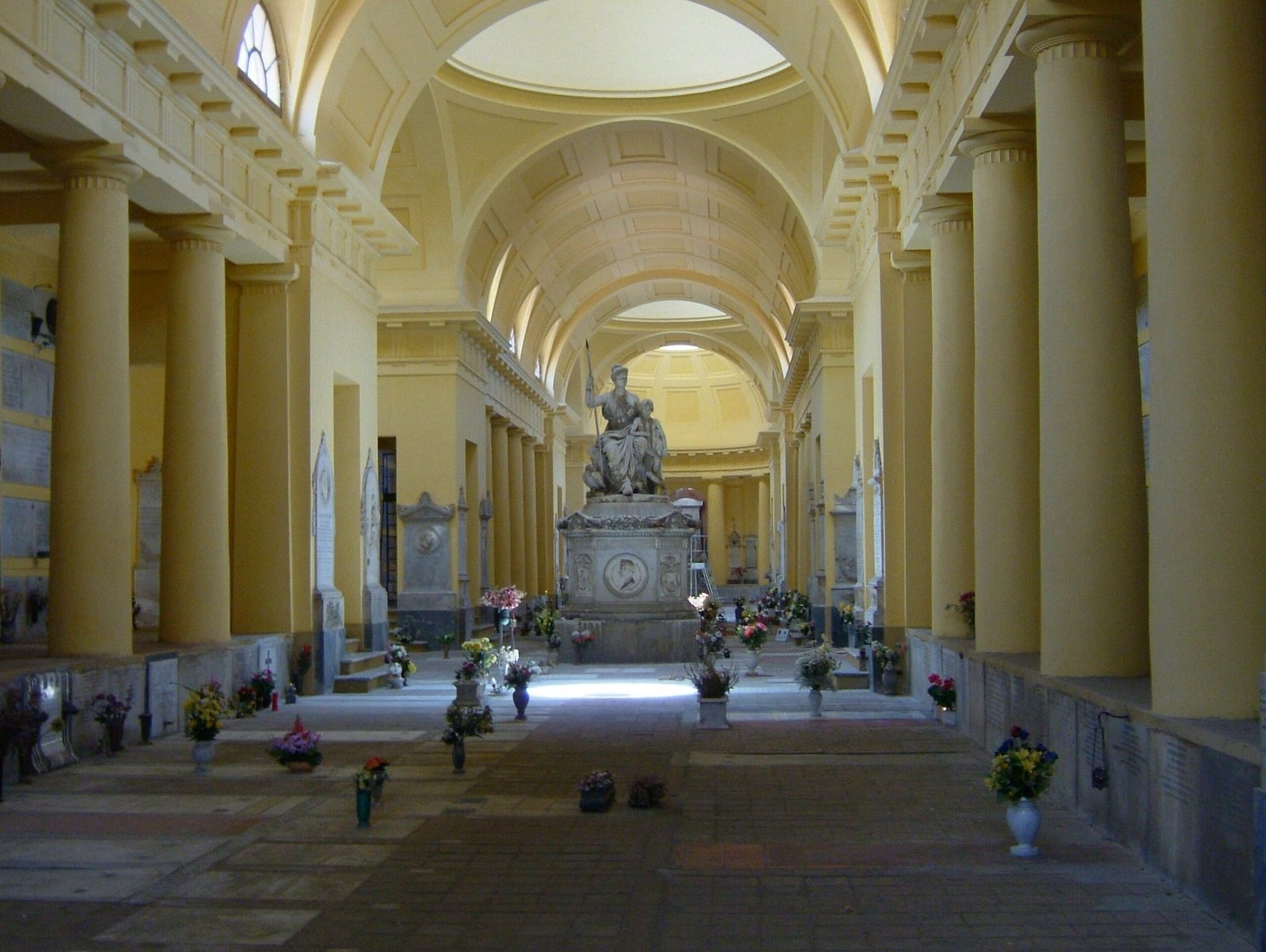
This sculptural detail of a young soldier forms part of Ercole Drei’s Monument to the Fallen, created in 1933 within Cloister VI of the Certosa di Bologna.
The work occupies a significant place within the cemetery’s monumental landscape. The Certosa di Bologna, originally founded as a Carthusian monastery in 1334 and suppressed in 1797, became the city’s Monumental Cemetery in 1801. Within this sacred precinct, Drei’s war memorial stands as testimony to the fallen, rendered through the sculptor’s characteristically direct approach to figurative form.
The young soldier depicted here exemplifies the human scale at which Drei conceived his commemorative work—a personalized rather than abstract approach to collective mourning. The sculptural fragment preserves the formal clarity typical of early twentieth-century Italian memorial sculpture.
About Ercole Drei
Ercole Drei (1886–1973) was an Italian sculptor whose practice spanned the early decades of the twentieth century. His work achieved international recognition, including selection for the sculpture competition at the 1932 Summer Olympics.
Details
- Creator: Ercole Drei
- Year: 1933
- Location: Cloister VI, Certosa di Bologna, Bologna
- Type: Sculptural detail, war memorial
- Current setting: Monumental Cemetery
Frequently asked questions
Who created this sculpture?
Ercole Drei, an Italian sculptor born in 1886, designed and executed the Monument to the Fallen of which this young soldier is a detail.
Where is it located?
The sculpture is situated in Cloister VI of the Certosa di Bologna, the city’s Monumental Cemetery since 1801.
When was it made?
The Monument to the Fallen was completed in 1933.
Sources
- S1 — Bossaglia, Rossana. Il Déco italiano: fisionomia dello stile 1925. Rizzoli, 1988. ISBN 978-88-17-24017-8.
- S2 — Pontiggia, Elena. Il Novecento Italiano. Abscondita, 2003. ISBN 978-88-8416-048-5.
Spotted an error? Write to editorial@culturalheritageonline.com and we correct it the same day.


