The Historic City of Vigan, inscribed in 1999, is the best-preserved example of a Spanish colonial city in Asia — a trading settlement on the northwest coast of Luzon where Chinese merchants, Spanish administrators, and indigenous Ilocano craftsmen created a unique architectural fusion whose cobblestone streets and stone-and-brick bahay na bato houses have survived intact from the seventeenth and eighteenth centuries. The Rice Terraces of the Philippine Cordilleras extend the Philippine heritage itinerary into the mountain highlands 100 km east.
Historic City of Vigan: Spanish-Filipino-Chinese Colonial Fusion City centre, Ilocos Sur
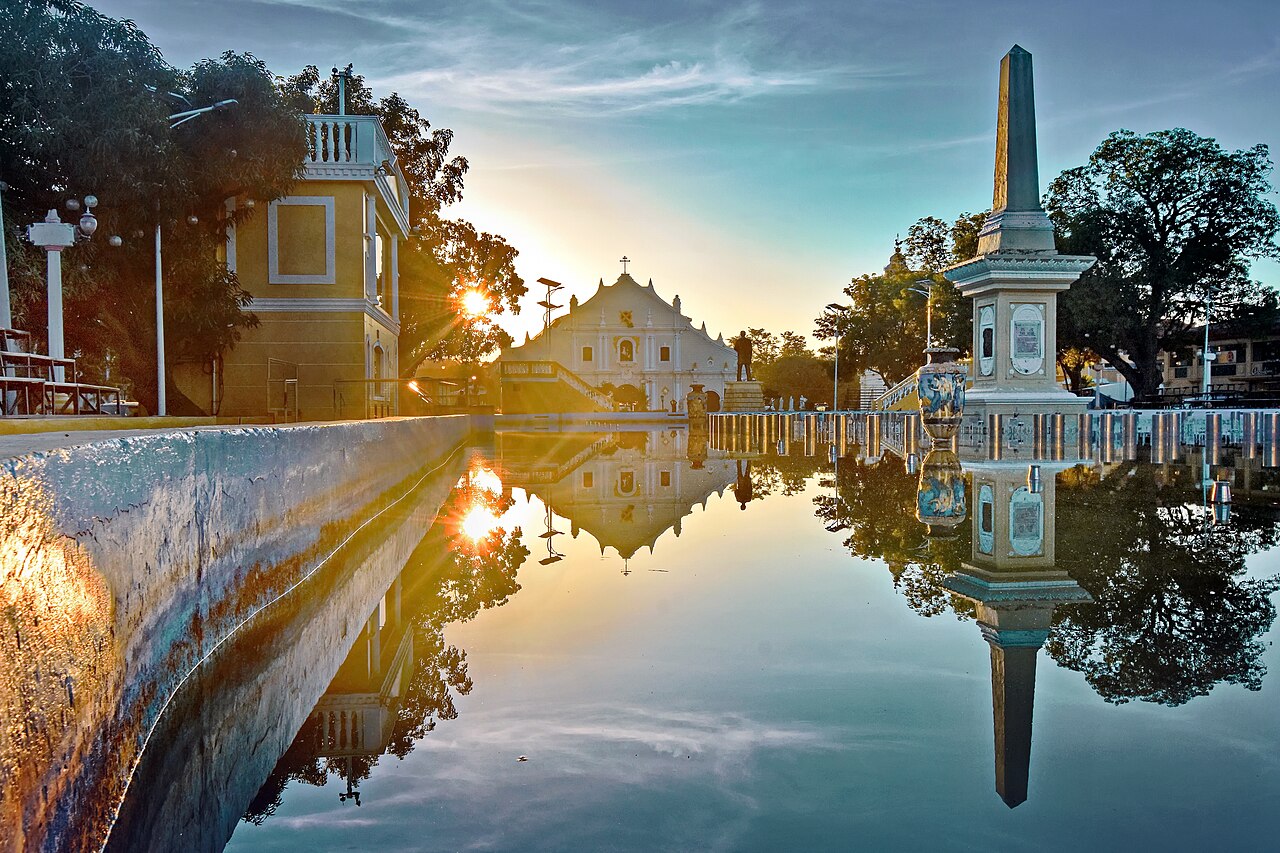
The Historic City of Vigan, inscribed in 1999 under criteria (ii) and (iv), is the only colonial city in Asia to preserve the complete townscape of its founding period — a settlement established in 1574 by conquistador Juan de Salcedo (a grandson of Miguel López de Legazpi, founder of Manila) on the Mestizo River, which became the centre of trade between the Philippines, China, and New Spain (Mexico) in the sixteenth and seventeenth centuries. The unique character of Vigan’s architecture reflects a three-way cultural fusion: the Spanish colonial stone-and-lime construction system; the Chinese merchant tradition of building storerooms and living quarters around a central courtyard (the “bahay na bato” or “stone house” that combines Chinese structural logic with Spanish facade ornament); and the Ilocano Catholic tradition of the Church of St. Paul (Saint Paul Metropolitan Cathedral, the oldest cathedral in the Philippines, founded 1574, the current Baroque facade dating from 1800). The Calle Crisologo, the main cobblestone street of the Mestizo quarter, is lined with 183 preserved bahay na bato houses; the carriages (calesas) that carry tourists along the stone street are the same conveyance that transported merchants in the eighteenth century. The Plaza Salcedo and Plaza Burgos, with their colonial administrative buildings, complete the formal civic spaces of the Spanish colonial city.
Burnay Pottery and Ilocano Craft Traditions Pagburnayan district, Vigan
The Pagburnayan district of Vigan (Burnay comes from burnay, the Ilocano word for the locally distinctive clay pottery) is one of the few remaining sites in the Philippines where traditional burnay pottery is still produced using pre-Hispanic techniques: a foot-powered kick wheel, unglazed clay from local riverbeds, and open-air wood-fire kilns. The Burnay jars — large storage vessels used for vinegar, fermented shrimp paste (bagoong), and fish sauce (patis) — document a ceramic tradition that predates the Spanish period and has been maintained continuously for over 2,000 years in the Ilocos region. The pottery district is within walking distance of the historic centre; several workshops allow visitor observation of the wheel-throwing and kiln-firing process.
Rice Terraces of the Philippine Cordilleras: Living Engineering Wonder 🚌 ~3 hrs east to Banaue
The Rice Terraces of the Philippine Cordilleras, inscribed in 1995 under criteria (iii), (iv), and (v), preserve a 2,000-year-old agricultural landscape of hand-carved irrigation terraces on the steep mountain slopes of the Cordillera Central — the creation of the Ifugao people, who built approximately 10,360 square kilometres of terraces over two millennia using no mechanical equipment, no draft animals, and no written plans. The terraces of Banaue (a non-inscribed town) and the inscribed clusters of Batad, Bangaan, Hungduan, and Mayoyao maintain the irrigation system that moves water from mountain forest catchments through a network of earthen channels and bamboo pipes to the terraces 1,000–1,500 metres above sea level; the system functions because of traditional land-use agreements (muyong, individually owned forest plots that each family maintains as the catchment for their own terrace section) that represent one of the oldest continuously operated private conservation systems in the world.
Paoay Church: Earthquake Baroque Architecture 🚗 ~20 mins north
The Church of Saint Augustine of Paoay (Paoay Church), inscribed in 1993 as part of the Baroque Churches of the Philippines (criteria (ii), (iv)), is 18 km north of Vigan — the most distinctive of the four inscribed Baroque churches of the Philippines, with massive exterior buttresses built in a stepped zigzag pattern designed to resist the earthquakes that devastated standard Baroque construction in the Philippine archipelago. The Paoay buttress system (built 1694–1710 by Augustinian missionaries and Ilocano builders using coral stone, egg white mortar, and kiln-fired bricks in a method that combines European structural engineering with indigenous construction materials) created a distinctively Filipino variant of Baroque that has no parallel in the Spanish colonial world. The church bell tower, built at a structural angle away from the main nave to avoid collapse in an earthquake pulling the tower onto the congregation, documents the active seismic design thinking that shaped Philippine colonial religious architecture throughout the seventeenth century.
Practical information
Vigan is 408 km north of Manila on the Pan-Philippine Highway (Luzon); buses from Cubao (Manila) take 8–10 hours. Ilocos Norte regional buses and vans connect to Laoag (1 hour north) and Baguio (6 hours east). The historic centre is best explored on foot or by calesa (horse-drawn carriage); the Calle Crisologo is pedestrian-only. Banaue (gateway to the rice terraces) is 5–6 hours east of Vigan by road; the inscribed Batad amphitheatre terraces require a 45-minute jeepney ride from Banaue plus a 30-minute hike. Paoay Church is 20 km north of Vigan by bus or trike. The best season for Vigan is December–May (dry season); the Viva Vigan Binatbatan Festival (May, first week) celebrates the Ilocano weaving tradition. The rice terraces are most photogenic during the growing season (July–September for the northern highlands’ main crop).
Frequently Asked Questions
Is Vigan a UNESCO World Heritage Site?
Yes. The Historic City of Vigan was inscribed in 1999 under criteria (ii) and (iv). It is one of five UNESCO World Heritage Sites in the Philippines, alongside the Rice Terraces of the Philippine Cordilleras (1995), the Baroque Churches of the Philippines (1993), the Tubbataha Reef Natural Park (1993, 2009), and the Puerto-Princesa Subterranean River National Park (1999).
What is a bahay na bato?
Bahay na bato (Tagalog for “stone house”) is the Filipino term for the colonial-era townhouse that developed in Vigan and other Philippine cities from the seventeenth century — a hybrid building type combining a stone or brick lower floor (the commercial ground level, with shuttered storefronts and storerooms) and a lighter wood or bamboo upper floor (the residential family apartment, with ventilation screens of capiz shells — the thin translucent shells of a Philippine bivalve that diffuse light without glass). The building form reflects a compromise between the Spanish desire for durable masonry construction and the Philippine need for earthquake-resistant lightness in the upper stories — lessons learned after multiple colonial-period earthquakes collapsed heavy European stone upper floors onto their occupants.
How old are the Banaue Rice Terraces?
The rice terraces of the Ifugao Cordillera are estimated at 2,000–2,500 years old, though precise dating is difficult because the terraces have been in continuous use and successive generations have rebuilt and extended the earlier work. The earliest terraces were likely carved during the Iron Age, using stone and wooden tools; the sophisticated gravity-fed irrigation system that now waters approximately 10,000 square kilometres of terraces developed over centuries of accumulated traditional ecological knowledge (the Ifugao term for this knowledge is Muyong — the privately managed forest catchment that each family tends to ensure water flow to their own terrace section).
Sources
- S1 — Zialcita, Fernando N., and Martin I. Tinio. Philippine Ancestral Houses: 1810-1930. GCF Books, 1980. ISBN 978-971-10-0012-7.
- S2 — Galende, Pedro G. Angels in Stone: Architecture of Augustinian Churches in the Philippines. San Agustin Museum, 1996. ISBN 978-971-91571-0-6.
Spotted an error? Write to editorial@culturalheritageonline.com and we correct it the same day.