Botswana holds two UNESCO World Heritage Sites — the rock-art sanctuaries of Tsodilo Hills and the vast inland wetland of the Okavango Delta — both reachable from Gaborone within a day of travel. This guide covers what to expect at each site and how to get there. From Cultural Heritage Online.
Tsodilo Hills ~450 km northwest — 9–10 hr by road/4WD or light aircraft
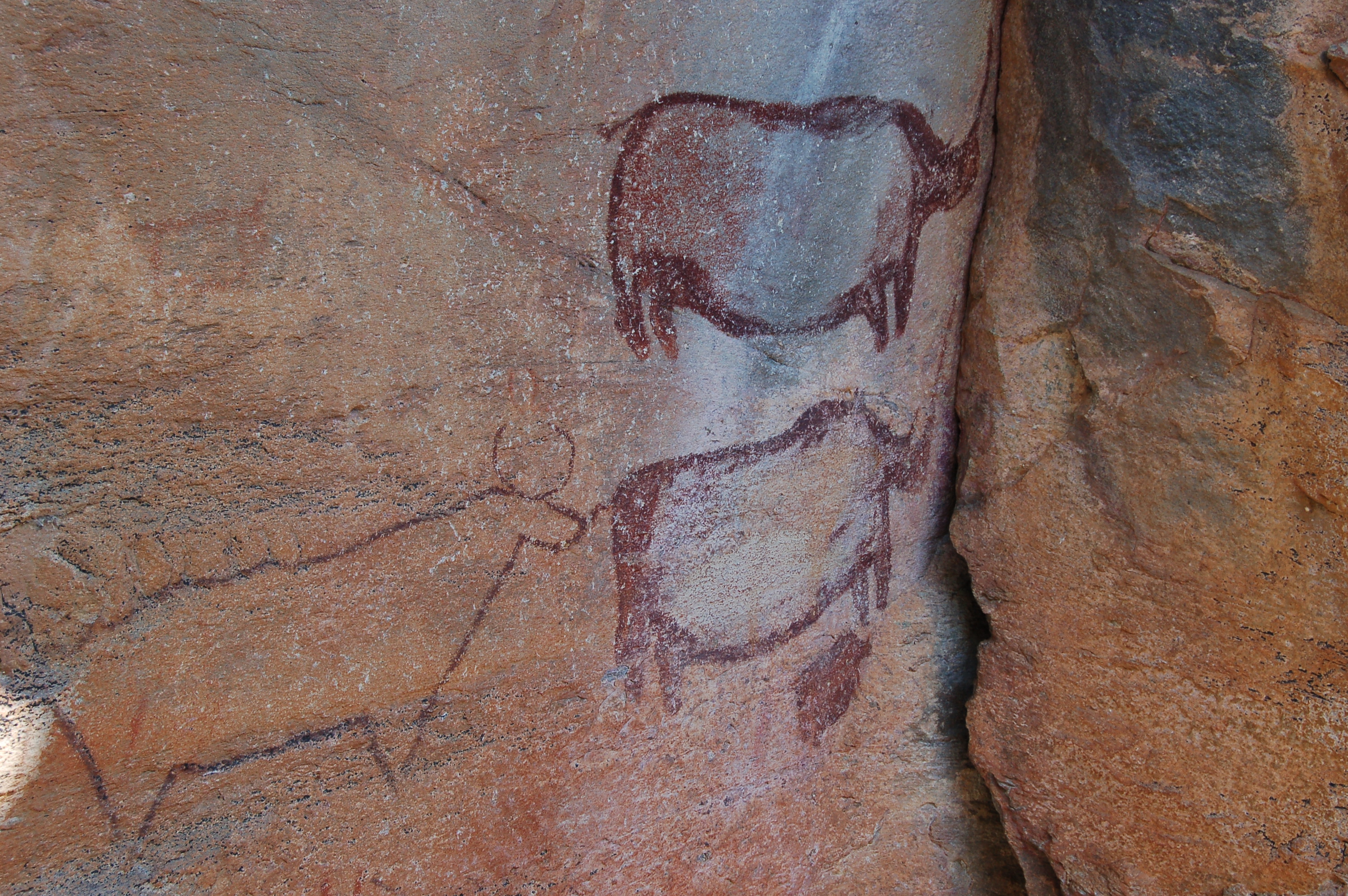
Four rocky outcrops rise from the flat Kalahari sands of northwestern Botswana with an abruptness that the surrounding landscape does nothing to prepare you for. The San people name them the Male Hill, the Female Hill, the Child Hill, and a fourth that carries no name — a hierarchy that reflects the hills’ place in San cosmology as the site of creation. The Hambukushu people share this sacred geography, and both communities continue to perform rituals here and leave offerings at sites that have been places of worship for millennia.
Tsodilo Hills contain approximately 4,500 rock paintings spread across 400 sites, the greatest concentration of rock art on the African continent. The paintings range in subject from precise depictions of eland, giraffe, and rhinoceros to human figures, fish, and geometric forms whose meaning remains contested. Some panels date to the Later Stone Age, tens of thousands of years ago; others were added in historical times, layers of meaning accumulated over generations. UNESCO inscribed Tsodilo in 2001 for its outstanding cultural and spiritual significance and as a record of human interaction with the southern African environment across a span of time that written history cannot match.
The site is managed jointly with San community guides whose knowledge of the paintings and the surrounding landscape goes beyond what signage can convey. Walking the Female Hill trail — the most accessible and most densely painted — takes two to three hours at a measured pace. The Male Hill requires a longer scramble and rewards visitors with panoramic views across the Kalahari. Bring water: there is no shade at altitude and the sand retains heat.
Getting there: From Gaborone, drive north on the A3/A35 to Maun (approximately 5 hours), then continue on a 4WD track northward for a further 4 hours; or fly from Sir Seretse Khama International Airport to Maun (1.5 hours domestic flight), then arrange 4WD transfer or charter a light aircraft directly to the Tsodilo airstrip. The road track north of Maun is sandy and rutted — a high-clearance 4WD with sand recovery gear is essential. Allow: A minimum of two full days on-site to walk the main trails and visit the community museum. Best for: Travellers with a specific interest in rock art, San cultural history, or remote wilderness; not suited to day-trippers from Gaborone.
Okavango Delta ~1,000 km northwest — 1.5 hr domestic flight from Gaborone to Maun
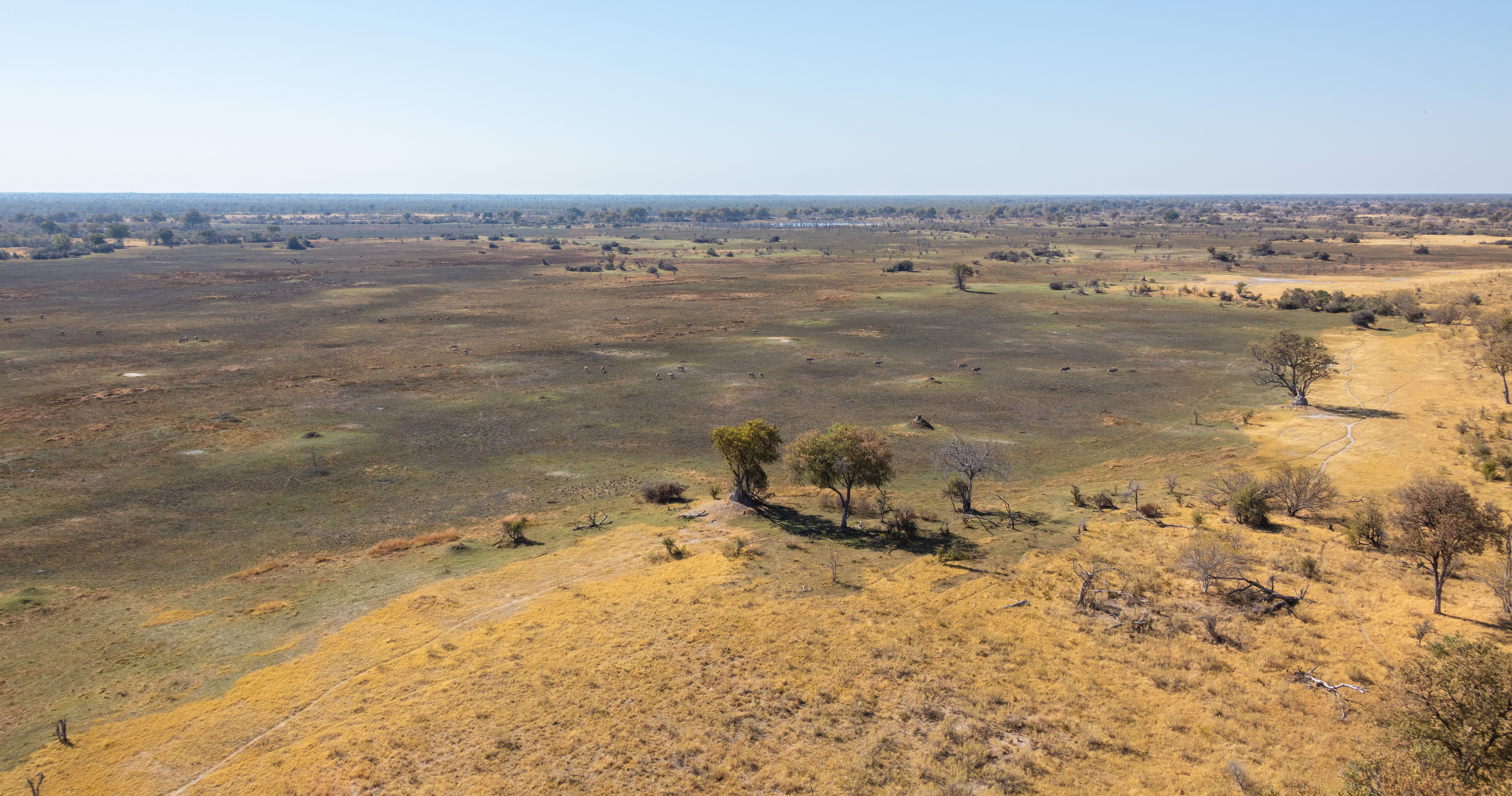
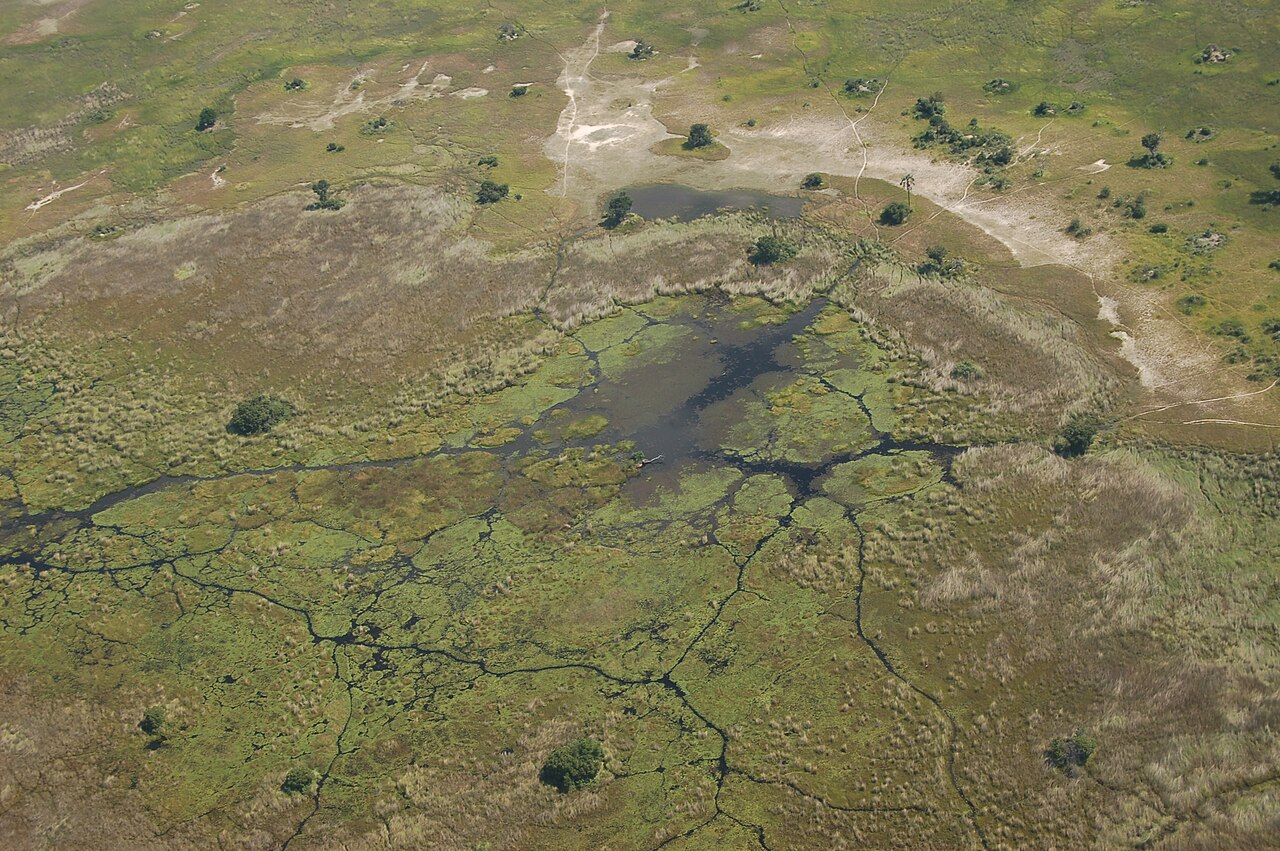
The Okavango River rises in the Angolan highlands, flows southeast for more than 1,000 kilometres, and then does something rivers are not supposed to do: instead of reaching the sea, it spreads into the interior of the Kalahari Desert and disappears. The result is an inland delta of approximately 20,000 square kilometres that swells and retreats with an annual flood cycle originating from Angolan rains far to the north. The peak flood reaches the delta’s southern reaches between June and August, months after the rains that caused it — a temporal displacement that gives the system its distinctive seasonal rhythm.
UNESCO inscribed the Okavango Delta in 2014, recognising it as one of the largest inland deltas in the world and an ecological anomaly of exceptional importance. The delta supports approximately 400,000 large mammals, including one of Africa’s largest elephant populations, substantial herds of Cape buffalo and hippo, and predator assemblages that include lion, leopard, cheetah, and African wild dog. Twenty-four antelope species use the delta’s mosaic of permanent water, seasonal floodplains, and dry-land forest. The water itself — clean, clear, and filtering slowly through papyrus and reed beds — sustains a diversity of aquatic life and birdlife that draws ornithologists and naturalists from around the world.
Access is almost entirely by light aircraft. The delta’s interior has no roads; movement between camps is by small plane, mokoro (dugout canoe), or motorboat. The gateway town of Maun, on the delta’s southern edge, is a 1.5-hour domestic flight from Gaborone’s Sir Seretse Khama International Airport, with multiple daily departures on Air Botswana and Wilderness Air. From Maun, fly-in safari camps in the permanent delta — the Moremi Game Reserve, Chief’s Island, and the concessions to the north and west — are 20 to 45 minutes by light aircraft. Budget options exist in the Moremi area accessible by 4WD, though the most biodiverse zones remain fly-in territory.
Getting there: Fly Gaborone (GBE) to Maun (MUB) with Air Botswana; journey time approximately 1 hour 30 minutes. From Maun, onward charter flights to delta camps take 20–45 minutes. Road access to the Moremi Game Reserve eastern entrance (South Gate) is possible via 4WD from Maun (approximately 1 hour). Allow: A minimum of three nights in the delta to experience both dry-land and water-based ecosystems; five to seven nights for a meaningful wildlife safari. Best for: Wildlife photographers, safari travellers, and naturalists; fly-in camps suit independent travellers willing to budget for the premium access; self-drive Moremi suits budget overlanders with appropriate vehicles.
Frequently Asked Questions
How many UNESCO World Heritage Sites are near Gaborone?
Botswana has two UNESCO World Heritage Sites — Tsodilo Hills (inscribed 2001) and the Okavango Delta (inscribed 2014). Both are located in the northwest of the country, several hundred kilometres from Gaborone. Neither is a day trip from the capital; each requires dedicated travel of at least two to three days.
What is the best way to get from Gaborone to the Okavango Delta?
The most practical route is a domestic flight from Sir Seretse Khama International Airport in Gaborone to Maun (approximately 1 hour 30 minutes), then a charter flight into your chosen delta camp. Air Botswana operates scheduled services; Wilderness Air and other charter operators handle the final leg into the delta. Driving the full distance from Gaborone takes over 10 hours on good roads and adds significant time before you reach delta access points.
When is the best time to visit the Okavango Delta and Tsodilo Hills?
The Okavango Delta is at its most spectacular between June and August, when the annual flood peaks and wildlife concentrates around water on the floodplains — this coincides with the dry season and cool, clear days ideal for game viewing. Tsodilo Hills can be visited year-round, though the austral summer (November to March) brings intense heat and occasional heavy rain; the cooler dry months of May to September are more comfortable for walking the rock art trails. Combining both sites in a single trip from Gaborone is feasible by flying Gaborone–Maun and then travelling to both locations from the Maun base.
Who created the rock paintings at Tsodilo Hills, and do people still visit them for spiritual purposes?
The paintings at Tsodilo Hills were created over tens of thousands of years by ancestors of the San people — the oldest continuous inhabitants of southern Africa. Successive communities added to the painted surfaces from the Later Stone Age through to historical times. The hills remain an active sacred site: San and Hambukushu communities perform rituals there today and regard the hills as inhabited by the spirits of the dead. Visitors are asked to behave respectfully and to follow the guidance of community guides, who accompany all groups onto the painted trails.
Sources
- S1 — Campbell, Alec. Tsodilo: Hills of the Gods. Botswana Society, 2001. ISBN 978-99912-60-44-0.
- S2 — Lewis-Williams, J. David. San Spirituality: Roots, Expressions, Consequences. AltaMira Press, 2004. ISBN 978-0-7591-0432-7.
Spotted an error? Write to editorial@culturalheritageonline.com and we correct it the same day.