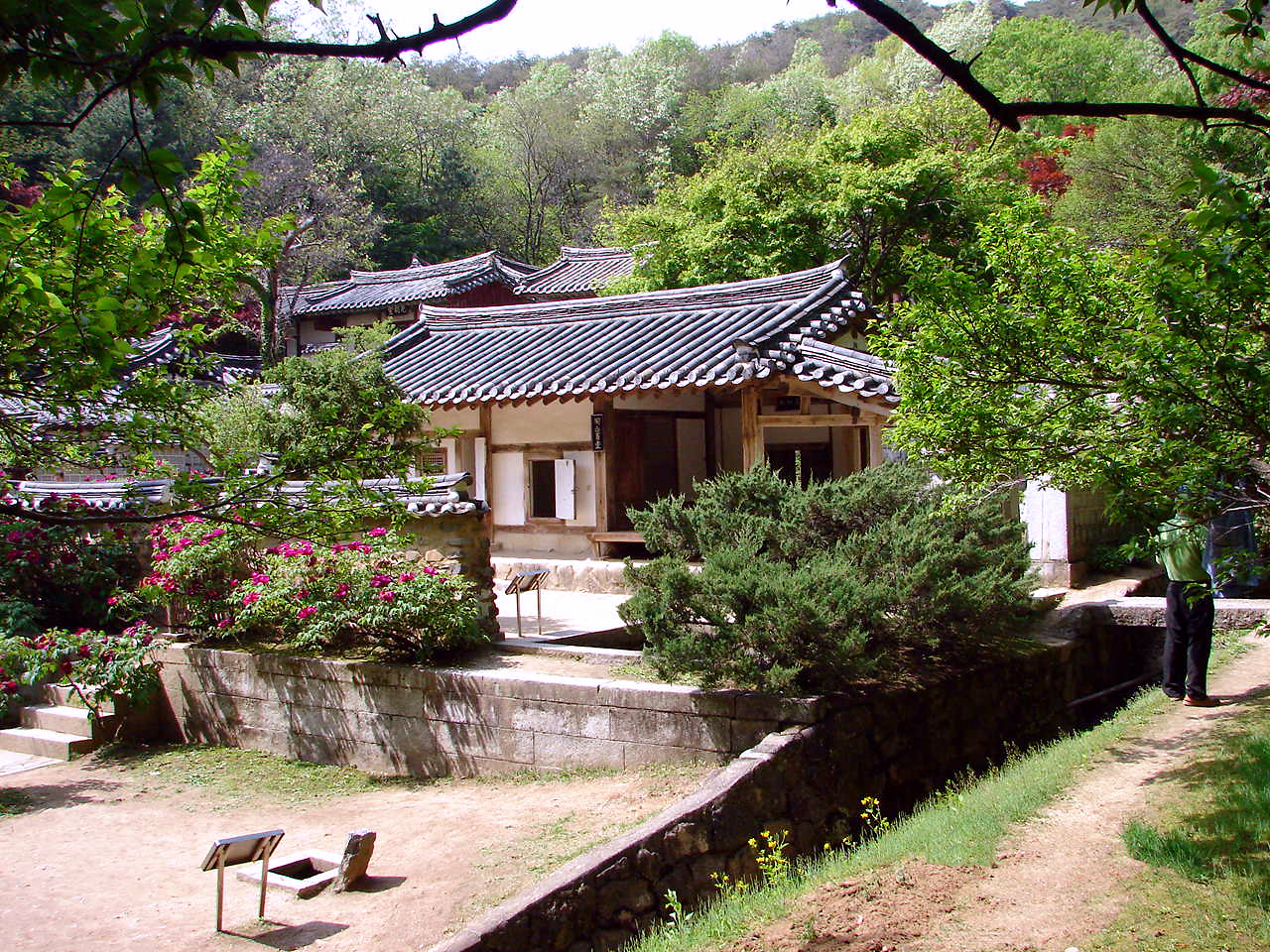
The Seowon, Korean Neo-Confucian Academies were inscribed by UNESCO in 2019 as a serial property of nine private Confucian academies established during the Joseon dynasty (1392–1897). Between 1741 and 1871 CE, Joseon kings issued successive edicts reducing the number of officially recognised seowon from roughly 650 to 47 and, under King Gojong’s regent Heungseon Daewongun in 1871, closing 600 in a single sweep and retaining only 47 sites of national historical significance; all nine of the currently inscribed seowon were among the survivors. Yi Hwang (1501–1570 CE), the Joseon scholar known by his pen name Toegye whose portrait appeared on the South Korean 1,000-won note for decades, founded Dosan Seowon in 1574 after his death at the instruction of his disciples, and is commemorated there with a portrait ceremony (jeongsijae) where each participant’s name is read aloud in classical Chinese before the ceremony can begin.
The nine academies: distribution, founding dates and what each preserves Sosu to Dosan 60 km; Oksan to Dosan 80 km; Dodong to Bingsan 160 km
Sosu Seowon in Yeongju, North Gyeongsang Province, is the oldest of the nine inscribed academies, established in 1542 CE by Jusaeng (the local administrator Zhou Se), making it the first private Confucian academy in Korea. It was built at the site of a former Buddhist monastery, Sudeoksa, which itself had been abandoned during the early Joseon suppression of Buddhism, and was initially named Baegyundong Seowon; it received the royal name “Sosu” (meaning “to renew learning”) by royal grant in 1550 CE from King Myeongjong, the first such royal recognition given to any seowon. Sosu holds a portrait of An Hyang, the Goryeo-period Confucian scholar (1243–1306 CE) who introduced Neo-Confucian texts from Yuan China to Korea, which is the object of the academy’s enshrinement ceremonies. From Yeongju city, Sosu Seowon is 5 kilometres by taxi or local bus (15 minutes).
Dosan Seowon and Byeongsan Seowon are both in Andong, North Gyeongsang Province, separated by approximately 20 kilometres by road. Dosan Seowon, established posthumously in 1574 to honour Yi Hwang (Toegye), sits on the bank of the Nakdong River, 28 kilometres north of Andong city centre (40 minutes by local bus). Yi Hwang was the most influential Korean Neo-Confucian philosopher of the 16th century; his interpretation of Chinese thinker Zhu Xi’s Neo-Confucian system, particularly his emphasis on the primacy of li (principle) over qi (material force), defined the dominant school of Korean Confucianism known as the Yeongnam School. Byeongsan Seowon, 25 kilometres west of Andong city (40 minutes by car; no direct public bus), was moved to its current riverside cliff site in 1604 CE and commemorates the statesman Liu Seongryong (1542–1607 CE), who served as Prime Minister during the Japanese invasions and organised diplomatic contact with Ming China. Its open-front lecture hall, Mandaeru, facing the river and cliffs, is considered the finest example of seowon landscape architecture among the nine inscribed sites. Oksan Seowon, in Gyeongju, North Gyeongsang Province (20 kilometres west of Gyeongju city centre, 30 minutes by taxi), was established in 1572 CE to honour Yi Eon-jeok (Hoeje, 1491–1553 CE), a Neo-Confucian philosopher who influenced Yi Hwang.
Dodong Seowon (Dalseong County, near Daegu, 30 minutes by bus from central Daegu), Namgye Seowon (Hamyang, South Gyeongsang, 2 hours by bus from Busan), and Museongseo Seowon (Jeong-eup, North Jeolla, 40 minutes by bus from Jeonju) represent the southern geographic spread. Pilam Seowon in Jangseong County, South Jeolla, is 30 kilometres south of Gwangju; Bingsan Seowon, in Andong area, completes the nine. The nine academies collectively hold the largest surviving archive of seowon architecture and educational material from the Joseon period, including original lecture halls, dormitories for students, enshrinement halls for portrait ceremonies and libraries—though most original books and woodblocks are now held in national museums rather than on-site.
Nearby Korean UNESCO sites reachable from the Seowon clusters 15 km–200 km from the Andong cluster by road and rail
The Historic Villages of Korea—Hahoe and Yangdong (UNESCO 2010)—are the UNESCO inscriptions most immediately adjacent to the Seowon. Hahoe village is 15 kilometres west of Andong city centre (25 minutes by local bus from Andong terminal, then shuttle bus to village) and has been continuously occupied since the 14th century by the Pungsan Ryu clan, which produced Liu Seongryong, the statesman commemorated at Byeongsan Seowon. This is not a coincidence: the seowon system and the clan village system were interdependent institutions of Joseon society, and in the Andong area—which was the cultural heartland of the Yeongnam Neo-Confucian school centred on Yi Hwang—academies, clan villages and ancestral shrine complexes form an interlocking network. Hahoe village preserves the 14th-century layout of earthen-walled yangban (aristocratic) residences, a commoner quarter, the Byeongsan Seowon visible from the village ferry crossing, and the Hahoe Byeolsingut Talnori mask dance tradition, an intangible heritage element listed separately by UNESCO. Yangdong village near Gyeongju (6 kilometres north of the Oksan Seowon, 30 minutes by car) is the other inscribed village; it was founded in the 15th century by the Wolseong Son and Yeogang Yi clans and preserves a hierarchically arranged townscape with the highest-ranking residences on ridge lines and lower-status dwellings descending toward the valley floor.
The Gyeongju Historic Areas (UNESCO 2000) lie directly adjacent to Oksan Seowon: the seowon is 20 kilometres west of Gyeongju city, meaning a visit to Oksan Seowon is naturally combined with Gyeongju’s Silla-period monuments. The Gyeongju bus terminal offers connections west to Oksan (local bus, 30 minutes) and east to Bulguksa Temple (local bus, 20 minutes). For visitors basing themselves in Gyeongju, a routing of Oksan Seowon plus Yangdong Village in the morning, returning to Gyeongju for the Daereungwon tumuli and National Museum in the afternoon, is feasible in a single full day. The Bulguksa Temple and Seokguram Grotto (UNESCO 1995), 15 kilometres east of Gyeongju, add a further half-day and represent the 8th-century Buddhist high point of Silla cultural life that preceded the Neo-Confucian Joseon period by 700 years.
Haeinsa Temple with the Tripitaka Koreana (UNESCO 1995) is approximately 80 kilometres west of the southern seowon cluster (Dodong in Dalseong County, near Daegu; Namgye in Hamyang, South Gyeongsang). From Daegu, the bus to Haeinsa takes approximately 1 hour 20 minutes. The intellectual relationship between the seowon tradition and Haeinsa is oppositional: the Joseon dynasty that founded the seowon system as an instrument of Neo-Confucian education simultaneously demoted Buddhism from state religion to a tolerated practice restricted to mountain monasteries. Visiting Haeinsa and one of the Daegu-area seowon on the same trip physically enacts this historical tension.
The Baekje Historic Areas (UNESCO 2015) in Gongju, Buyeo and Iksan are approximately 150–200 kilometres west of the Andong cluster (intercity bus from Andong to Daejeon, 2 hours; Daejeon to Gongju by local bus, 30 minutes; Gongju to Buyeo, 50 minutes), making a combined itinerary ambitious but achievable over four to five days: Andong (Dosan + Byeongsan Seowon + Hahoe village) on days one and two; train or bus west to the Baekje corridor (Magoksa Sansa monastery + Gongju + Buyeo) on days three to five.
Practical information
Andong is the most productive single base for the Seowon inscription: it contains two of the nine academies (Dosan and Byeongsan), immediate access to Hahoe village (15 km west), and express bus connections south to Gyeongju (1.5 hours), north to Sosu Seowon in Yeongju (50 km, 1 hour by bus), and west toward Daegu for Dodong Seowon. The KTX does not serve Andong directly; the fastest public transit from Seoul is the express bus from Dong Seoul terminal or Gangnam terminal (2.5 hours).
All nine academies are open to visitors; most charge a small admission fee (2,000–3,000 KRW). The principal enshrinement ceremonies at each academy are held twice annually—in spring (typically late March or early April) and autumn (typically late September or early October)—and include the name-reading ritual that precedes the offering ceremony. Visitors are permitted to observe ceremonies from the courtyard. At Dosan Seowon, the National Civil Service Examination—a modern recreation of the Joseon gwageo examination that Yi Hwang’s students would have prepared for—is held annually in late autumn and draws several thousand participants. The best general visitor conditions are autumn (September–October), when foliage along the Nakdong River valley around Dosan is at its most photogenic and the temperature is consistently comfortable for the outdoor site visits.
Frequently Asked Questions
Why were 600 seowon closed in 1871, and how did the nine inscribed sites survive?
The 1871 closure was ordered by Heungseon Daewongun, the regent acting on behalf of the young King Gojong, as part of a broader reform programme aimed at consolidating state authority and reducing the political influence of powerful aristocratic clans (yangban). By the 19th century, seowon had evolved well beyond their original educational function: they had become tax-exempt landholding institutions that sheltered aristocratic families from taxation, pressed local commoners into labour obligations, and in many cases operated as local political power bases that rivalled the authority of the district magistrates. The regent’s consolidation edict identified 47 seowon of undisputed historical significance—those commemorating scholars and statesmen of national importance, with a clear documentary record of their original founding purpose—and ordered all others demolished and their lands confiscated. The nine currently inscribed sites all fell within the surviving 47: each commemorates a scholar whose work was considered foundational for Korean Neo-Confucianism (Yi Hwang at Dosan, Yi I at other sites, An Hyang at Sosu), or a statesman of national significance (Liu Seongryong at Byeongsan). Their survival was therefore a function of the historical weight of the individuals they commemorated, not of their local political power. The 1871 edict generated significant resistance from Confucian scholars across the country, and Daewongun eventually rescinded his regency in 1873; but the closed seowon were not rebuilt, and the landscape of Korean private education was permanently changed by the action.
What was a seowon’s daily educational routine during the Joseon period?
The seowon combined two functions: a Confucian shrine for ritual commemoration of the honoured scholar, and a private school (seodang) preparing students for the civil service examinations (gwageo) that determined access to government office. Students—all male, typically from yangban families, ranging from their mid-teens to their late twenties—lived in on-site dormitories during study periods, which followed a seasonal rhythm: intensive study from mid-autumn through winter, a break in early spring, then resumed study through summer. The core curriculum was the Four Books (the Great Learning, Analects, Mencius and Doctrine of the Mean) and the Five Classics of Confucianism, studied in the editions annotated by Zhu Xi, the 12th-century Chinese philosopher whose synthesis of Neo-Confucian thought the Korean Yeongnam and Kiho schools both traced. Morning began before dawn with the chanting of classical texts; afternoons involved written composition and debate. The seowon’s head teacher (wondang or gyoji) was typically a scholar of regional repute; instruction was tutorial in character rather than lecture-based, with individual students presenting their reading and the teacher questioning their understanding line by line. Twice a year the shrine ceremony interrupted the academic cycle: the enshrinement hall was opened, offerings were made, the portraits of the commemorated scholars were formally addressed, and the names of all present students and teachers were read aloud in the ceremony that the UNESCO inscription documentation specifically identifies as a distinctive ritual feature of the seowon tradition.
What is the significance of Yi Hwang (Toegye) and why does his portrait still appear on South Korean currency?
Yi Hwang (1501–1570 CE), known by his pen name Toegye (“retreating to the stream”), was the leading Neo-Confucian philosopher of the Joseon dynasty and the central figure in the Yeongnam School of Korean Confucianism. His significance rests on two contributions: his systematisation of Neo-Confucian metaphysics in the Korean context, and his practical influence on the educational institutions he founded or shaped. On the metaphysical side, Yi Hwang developed what scholars call the “mutual issuance” (hogi hobal) theory, arguing against his contemporary Yi I (Yulgok) that both li (principle/reason) and qi (material force) can issue independently—a position that influenced Korean Confucian philosophy for the next three centuries and generated a philosophical debate, the “Four-Seven Debate” (on the nature of the four moral feelings and seven emotions in Confucian psychology), that is still taught in Korean philosophy departments. On the institutional side, Yi Hwang reformed the curriculum at Dosan and wrote educational guides that were adopted at multiple seowon. His portrait appeared on the South Korean 1,000-won note from 1975 to 2006 and then on the redesigned 1,000-won note issued in 2007, making him the most visually familiar historical figure in South Korean daily life for several generations. The choice of Yi Hwang rather than a political or military figure for the 1,000-won note reflected the importance of the Confucian scholarly tradition in South Korean national identity construction in the post-war decades. He is buried near Dosan Seowon; the tomb is accessible from the academy.
Sources
- S1 — UNESCO World Heritage Centre — Seowon, Korean Neo-Confucian Academies (Ref. 1498) — https://web.archive.org/web/20230601000000/https://whc.unesco.org/en/list/1498/
- S2 — Korea Heritage Service Official Portal — https://whc.unesco.org/en/list/1498/
- S3 — Seth, Michael J. <em>A History of Korea: From Antiquity to the Present</em>. Rowman & Littlefield, 2010. ISBN: 978-0-8248-3563-7.
Spotted an error? Write to editorial@culturalheritageonline.com and we correct it the same day.