Within two hours of Vienna, five UNESCO World Heritage Sites trace an arc of human achievement from Baroque imperial splendour and a Roman-era city core to a vine-terraced Danube valley, a nineteenth-century mountain railway, and a Renaissance city shaped by centuries of Habsburg ambition. From Cultural Heritage Online.
Historic Centre of Vienna City centre — U-Bahn lines 1 and 3
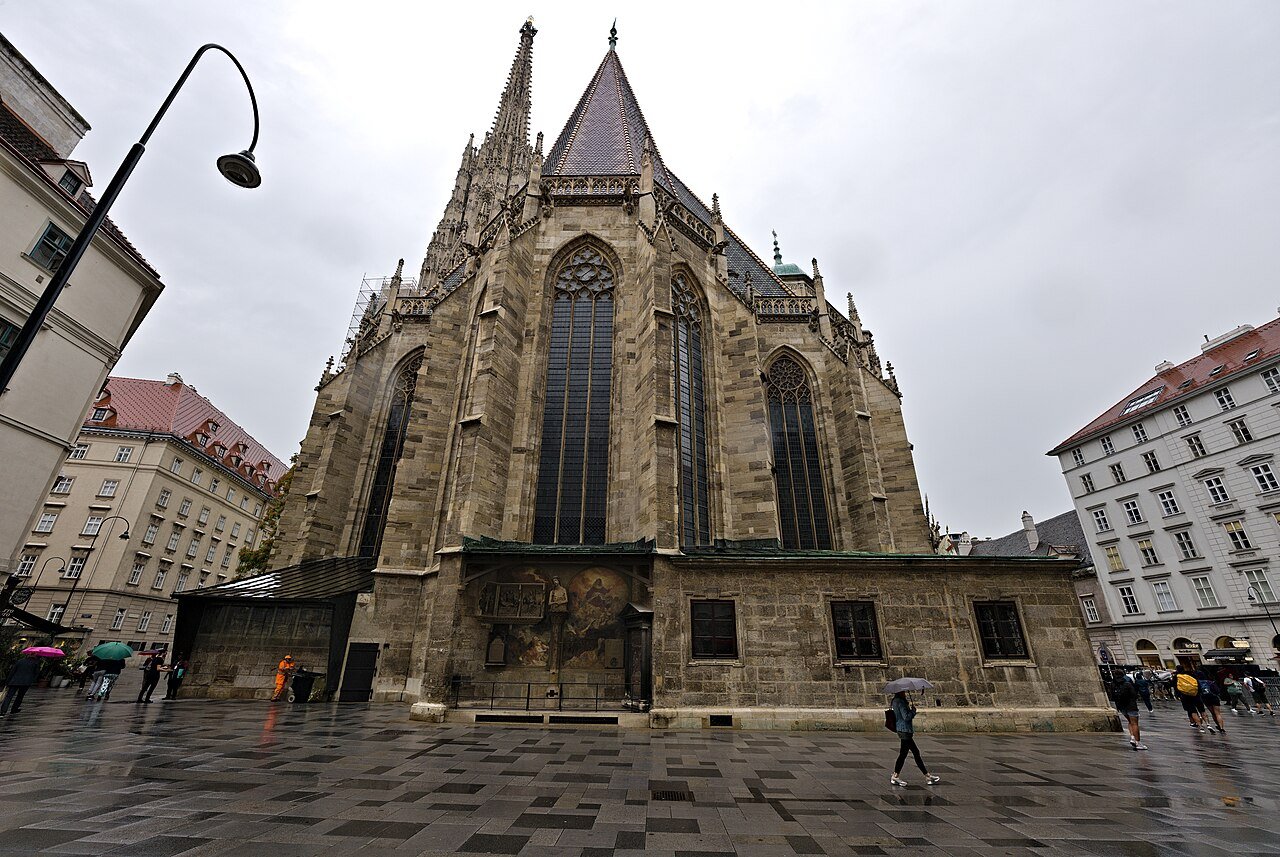
Inscribed in 2001, Vienna’s Innere Stadt preserves the compact core of a city whose origins reach back to the Roman legionary camp of Vindobona. The site has been listed as in danger since 2017, a designation reflecting tension between contemporary high-rise development and the historic roofscape. St. Stephen’s Cathedral (Stephansdom), whose south tower rises 136 metres above the pavement and took more than a century to complete (1359–1433), anchors the visual identity of the district. The Ringstrasse — the grand boulevard commissioned by Emperor Franz Joseph I from 1857 onwards — lines the outer edge of the old town with neogothic, neoromanesque, and neobaroque civic monuments built in the space of a single generation. Walking from the cathedral to the Kunsthistorisches Museum, the scale shifts from the medieval tightness of the Graben to the operatic width of the boulevard. Every major art museum and concert hall in Vienna’s first district is reachable on foot.
Getting there: U-Bahn lines U1 and U3 stop at Stephansplatz in the city centre; no travel time from central Vienna. Allow: a full day. Best for: travellers who want to use the UNESCO district as both a destination and the day-trip base for every other site on this list.
Palace and Gardens of Schönbrunn 10 min by U4 from Karlsplatz
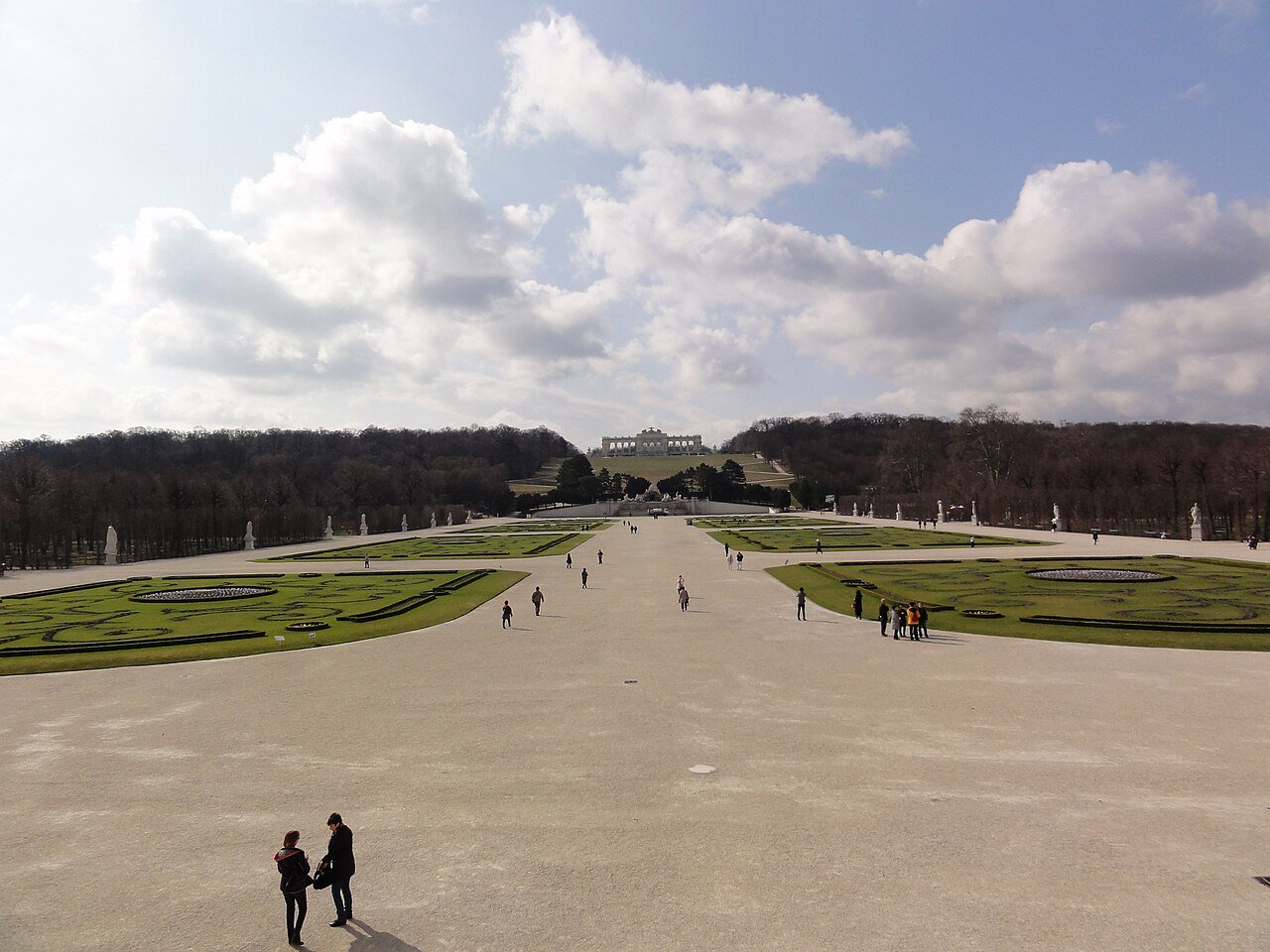
Inscribed in 1996, Schönbrunn stands as the most complete surviving expression of Habsburg imperial taste. Empress Maria Theresa, who received the property as a wedding gift, oversaw its transformation in the 1740s and 1750s into a palace of 1,441 rooms set within 160 hectares of formal gardens. The ochre-yellow facade that greets visitors from the main forecourt is a deliberate theatrical statement — a colour since known as “Schönbrunn yellow” — that dissolves into the pale gold of the Gloriette colonnade crowning the hill behind. Emperor Franz Joseph I, Austria’s longest-reigning monarch, was born here in 1830 and died here in November 1916. The gardens draw roughly four million visitors each year and remain open without charge, making the grounds accessible to those who prefer to take in the landscape rather than the palace rooms. The view from the Gloriette back over the palace, the city, and the Vienna Woods on a clear morning is one of the most unhurried panoramas within any European capital.
Getting there: U4 to Schönbrunn station, 10 minutes from Karlsplatz. Allow: 2–3 hours (longer with all palace rooms). Best for: a morning excursion that pairs Baroque architecture with an expansive park walk, all within the city boundary.
Wachau Cultural Landscape 1 hr 15 min by Westbahn to Melk
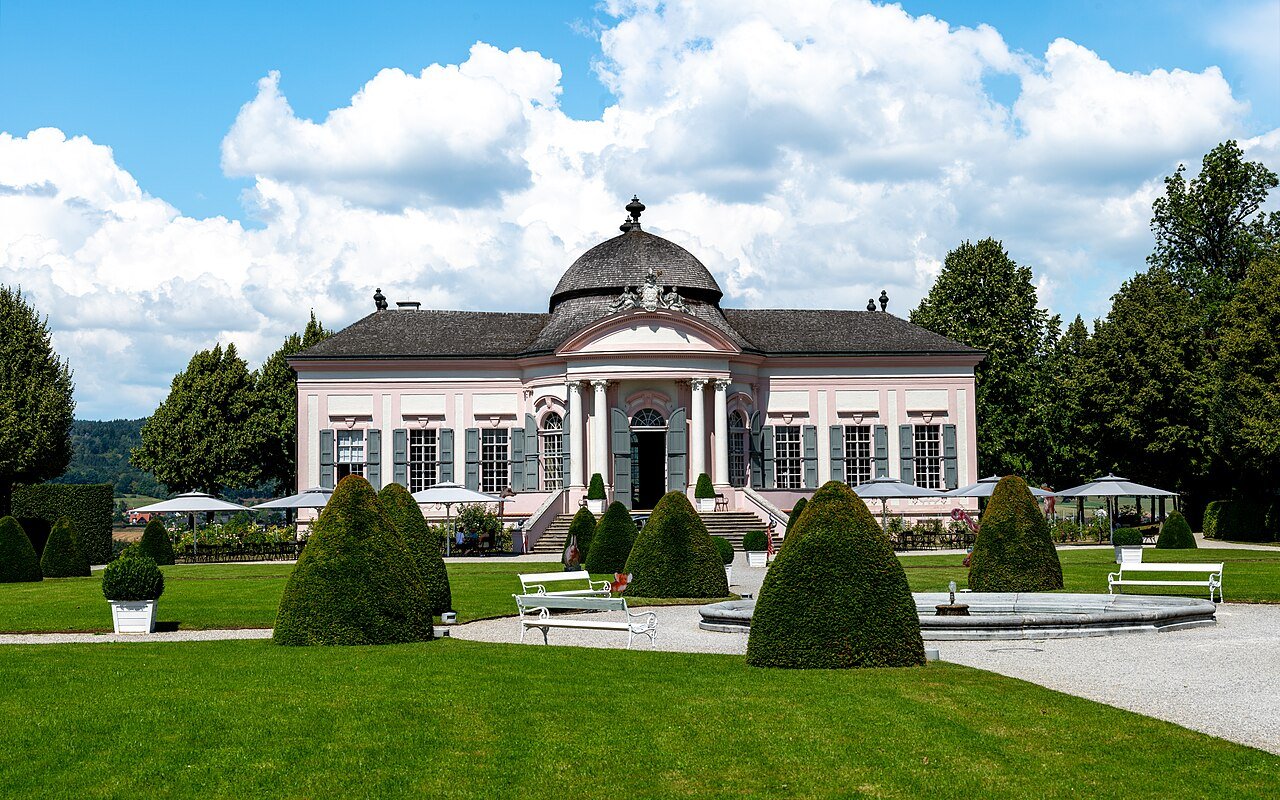
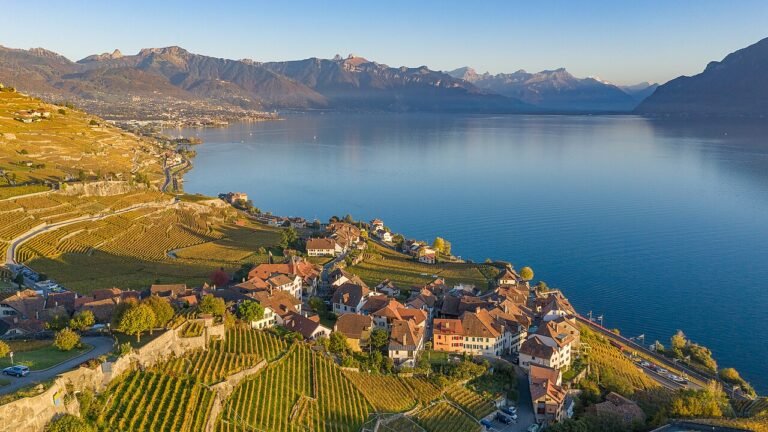
Inscribed in 2000, the Wachau is a 36-kilometre stretch of the Danube between Melk and Krems, where terraced vineyards of Riesling and Grüner Veltliner climb directly from the river to sheer rock faces. Human settlement here goes back at least 26,000 years — the Venus of Willendorf, carved around 25,000 BCE, was found in the soil near the village of Willendorf. Melk Abbey, the Benedictine monastery that Jakob Prandtauer rebuilt in Baroque form between 1702 and 1736, rises on a granite promontory 60 metres above the river with the inevitability of something that has always been there. Downstream, the ruined Dürnstein Castle marks the spot where Duke Leopold V of Austria held King Richard I of England captive in 1192–93. The valley is best experienced by a combination of train to Melk, a walk through the abbey and its formal gardens, and — if time allows — the riverboat back to Krems along the water.
Getting there: Westbahn from Wien Westbahnhof to Melk in approximately 1 hour 15 minutes. Allow: half a day minimum. Best for: travellers who want landscape, wine country, and medieval history within a single morning or afternoon from Vienna.
Semmering Railway 1 hr 45 min by train to Semmering
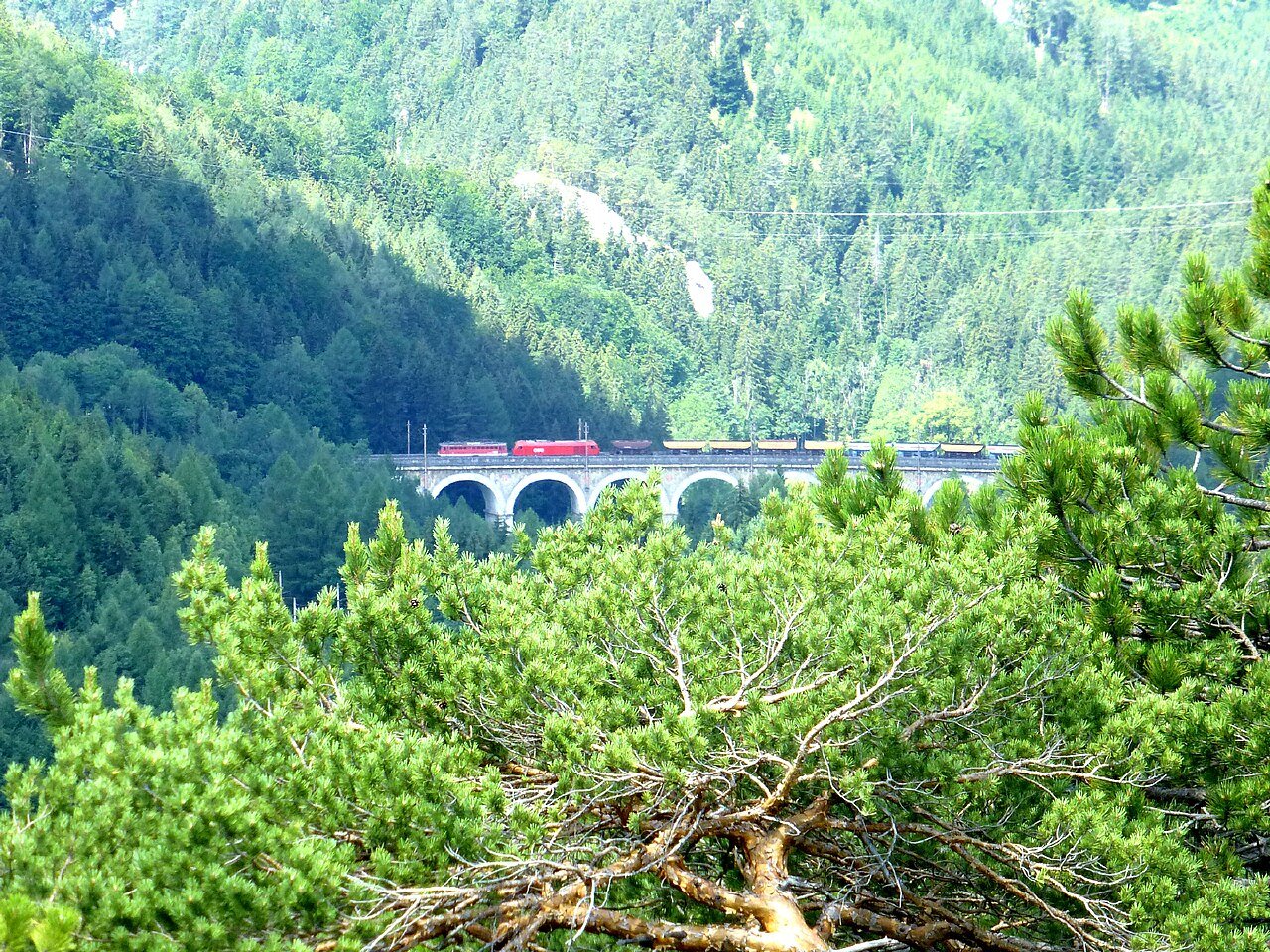
Inscribed in 1998 — the first railway anywhere to receive World Heritage status — the Semmering line was built between 1848 and 1854 under the direction of engineer Carl von Ghega, a Venetian-born Austrian who surveyed and designed the route through some of the most demanding terrain in the Alps. The 41-kilometre line climbs 460 metres across 16 viaducts (several of them two-storey stone structures), through 14 tunnels including an 1,431-metre summit bore, and over more than 100 stone arch bridges. Gradients reach 2.5 per cent — considered impossible for steam traction by most engineers of the 1840s. The result is a corridor of Victorian-era industrial masonry threading through alpine meadows and forest at a pace slow enough to take it in from the window. The Ghega railway is still in active daily use, which means the journey itself is the site.
Getting there: Direct regional train from Wien Hauptbahnhof to Semmering station, approximately 1 hour 45 minutes. Allow: 2–3 hours for the scenic ride each way. Best for: travellers who want a World Heritage experience that requires no museum admission — the train journey through the viaducts is the entire point.
Historic Centre of Graz 2 hrs 30 min by Railjet to Graz Hbf
Inscribed in 1999, Graz preserves more than 1,000 historic buildings spanning Gothic, Renaissance, Baroque, and early modern periods within a walkable centre where each century’s additions sit alongside those of the last. From the fourteenth century, the city served as the residence of the Inner Austrian Habsburgs, and Italian influence arrived early and stayed: the Landhaus, seat of Styria’s provincial parliament, was built between 1557 and 1565 by the Mantuan architect Domenico dell’Allio and remains one of the finest Renaissance arcaded courtyards north of the Alps. Immediately above the old town, the Schlossberg — a 475-metre-high sandstone bluff — holds the Uhrturm, the clock tower that survived Napoleon’s 1809 demand for demolition only because the citizens of Graz raised the ransom themselves. The Landeszeughaus armoury, preserved in full since 1551, contains over 30,000 pieces of late medieval weaponry — the largest such collection anywhere in the world — still arranged as if the soldiers have simply not returned yet.
Getting there: ÖBB Railjet from Wien Hauptbahnhof to Graz Hauptbahnhof, approximately 2 hours 30 minutes. Allow: 3–4 hours in the old town. Best for: travellers who want a full-day excursion combining Renaissance architecture, a working armoury, and the Schlossberg panorama — Graz rewards the longest day trip on this list.
Frequently Asked Questions
How many UNESCO World Heritage Sites are near Vienna?
Five UNESCO World Heritage Sites are accessible from Vienna within approximately two and a half hours by public transport: the Historic Centre of Vienna, the Palace and Gardens of Schönbrunn, the Wachau Cultural Landscape, the Semmering Railway, and the Historic Centre of Graz. Vienna itself contains two of the five inscriptions within or immediately adjacent to the city.
What is the closest UNESCO World Heritage Site to Vienna?
Schönbrunn Palace is the closest, reachable in around ten minutes by U4 from Karlsplatz in central Vienna. The Historic Centre of Vienna is itself a World Heritage Site, meaning that visitors already standing in the Innere Stadt are already inside the inscribed zone.
Can you visit the Wachau as a day trip from Vienna?
Yes. The Westbahn reaches Melk in about 1 hour 15 minutes, leaving enough time to tour Melk Abbey and its gardens and return the same evening. Adding a riverboat leg from Melk to Krems makes for a fuller day but requires checking timetables in advance, as boat services are seasonal.
Do you need a car to see the Semmering Railway?
No. The railway is a working line served by regular ÖBB regional trains from Wien Hauptbahnhof, and the ride itself — across the viaducts and through the tunnels — is the heritage experience. A car is unnecessary and would mean missing the point of the site entirely.
Sources used in this article
- UNESCO World Heritage Centre — World Heritage List.
- Wikipedia — Palace and Gardens of Schönbrunn.
- Wikipedia — Semmering railway.
- Wikipedia — Wachau.
- Wikipedia — Historic Centre of Graz.
- CHO — Interactive heritage map.
Sources
- S1 — Schorske, Carl E. Fin-de-Siècle Vienna: Politics and Culture. Vintage Books, 1981. ISBN 978-0-394-74478-0.
- S2 — Beller, Steven. A Concise History of Austria. Cambridge University Press, 2006. ISBN 978-0-521-47886-1.
Spotted an error? Write to editorial@culturalheritageonline.com and we correct it the same day.