Within three and a half hours of Paris, six UNESCO World Heritage Sites span the spectrum from a Renaissance hunting lodge to a tidal island abbey, from a medieval fair town preserved in amber to the longest royal garden in France. From Cultural Heritage Online.
Palace and Park of Versailles 35 min by RER C
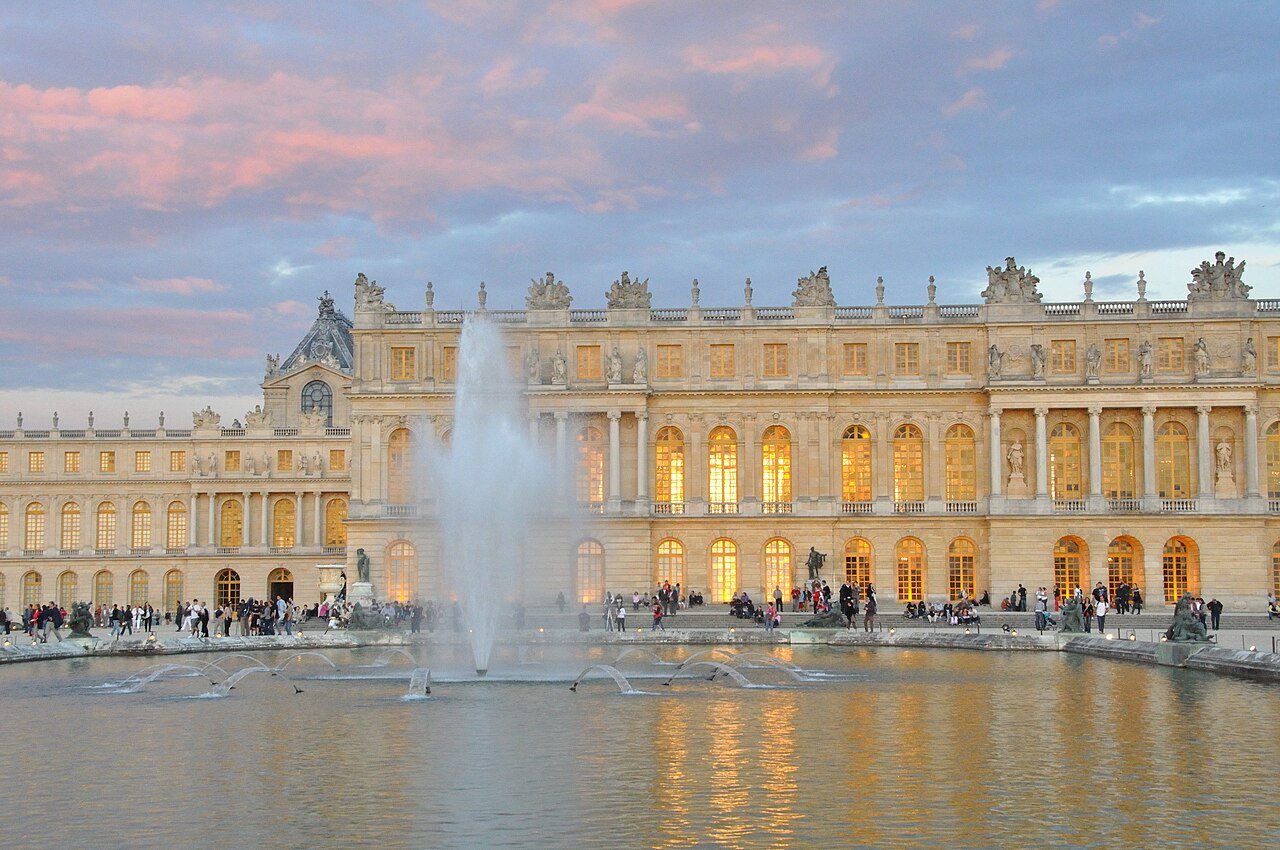
Inscribed in 1979, the Palace and Park of Versailles is the most visited royal complex in France and one of the most ambitious building projects in European history. Louis XIV — the Sun King — ordered its transformation from a hunting lodge into a seat of government in 1661, employing architect Jules Hardouin-Mansart and landscape designer André Le Nôtre over five decades of construction. The resulting ensemble covers 800 hectares, with the Grand Canal alone stretching 1.5 kilometres from the palace façade. Inside, the Hall of Mirrors extends 73 metres along the garden front, its 357 mirrors amplifying the afternoon light into something closer to theatre than architecture. The fountains — fed by a hydraulic machine that once pumped water from the Seine at Marly — still perform on weekend afternoons between April and October, their jets arcing above basins sculpted by Antoine Coysevox and Jean-Baptiste Tuby.
Getting there: RER C from Paris-Austerlitz to Versailles-Château-Rive Gauche, 35 minutes. Allow: 4–6 hours. Best for: Visitors who want to read French royal history in stone and garden geometry without leaving the Île-de-France.
Château de Fontainebleau 40 min by Transilien R
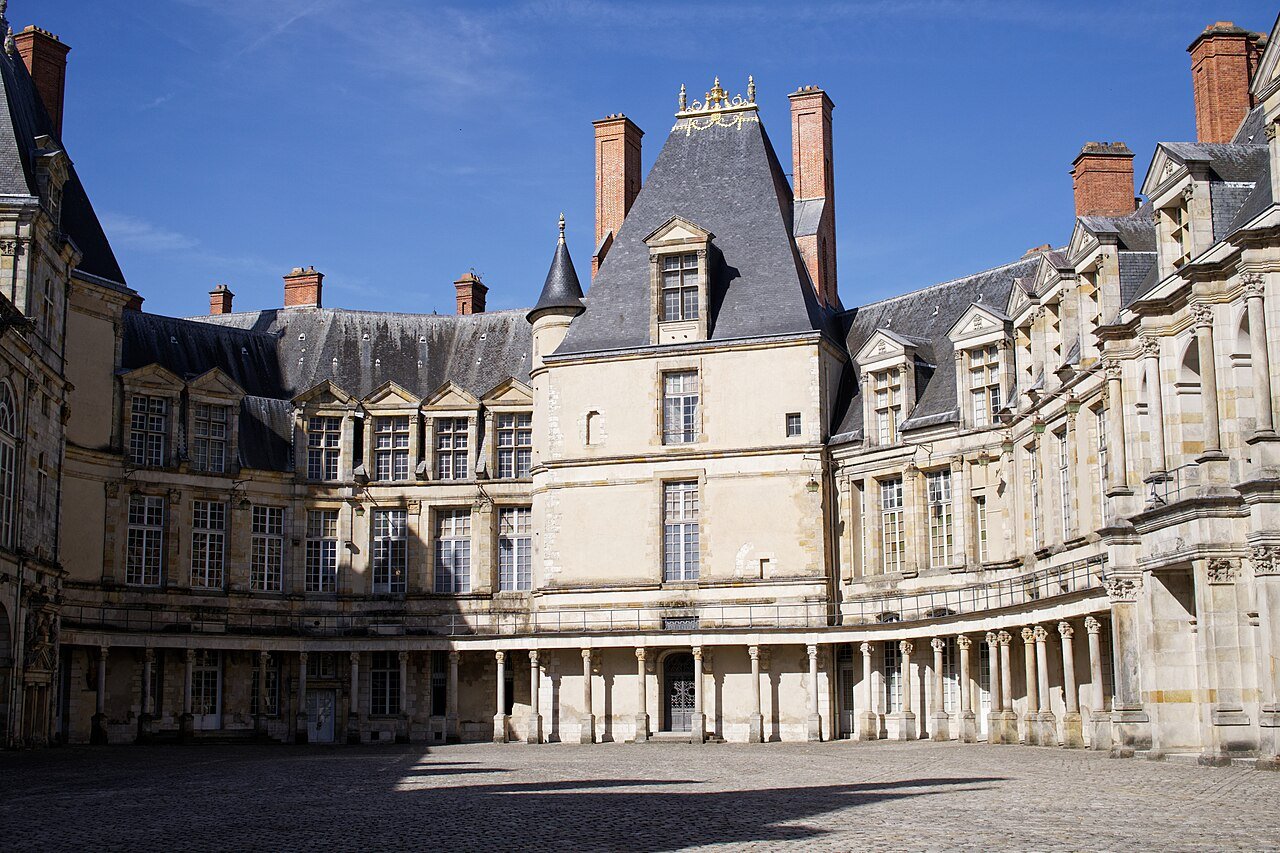
Where Versailles is formal and absolute, Fontainebleau is accumulated and human-scaled. Inscribed in 1981, the palace 55 kilometres southeast of Paris grew across seven centuries as successive monarchs left their mark on its fabric. Francis I commissioned the Italianate Cour Ovale in the 1520s, bringing artists Rosso Fiorentino and Francesco Primaticcio north to create the School of Fontainebleau — the first sustained encounter between French royal patronage and Italian Mannerist painting. Napoleon I used the palace as his preferred residence and signed his first abdication here in April 1814, in the room still known as the Salon Rouge. The horseshoe staircase descending to the Cour du Cheval Blanc — where Napoleon bid farewell to his Guard — remains the most theatrical space in the complex. Thirty-four French monarchs slept at Fontainebleau. None left it unchanged.
Getting there: Transilien R from Paris Gare de Lyon to Fontainebleau-Avon, then 2 km by bus or taxi, 40 minutes total. Allow: 3–4 hours. Best for: Those who prefer a palace with visible layers of history over a single coherent architectural vision.
Chartres Cathedral 1 hr by Intercités from Montparnasse
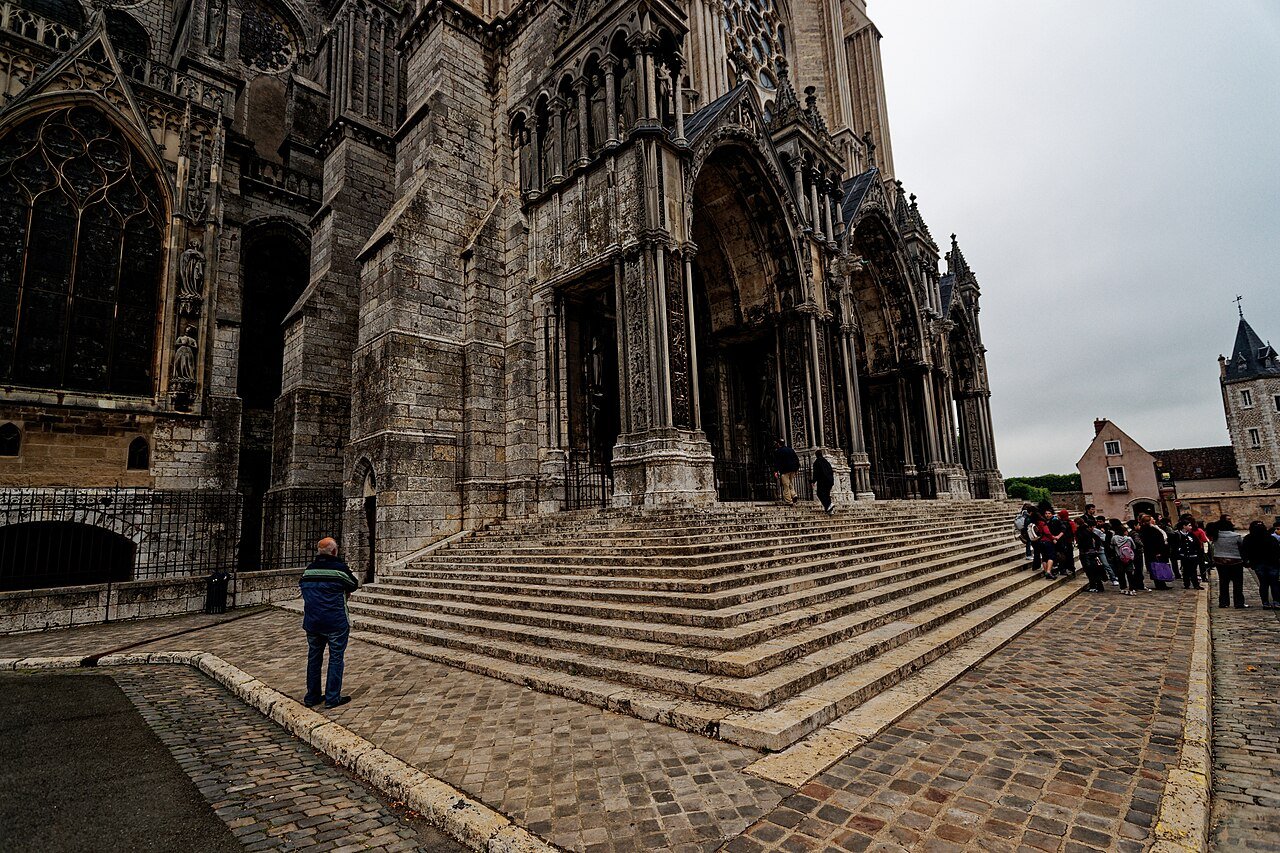
Inscribed in 1979, Chartres Cathedral is widely regarded as the most complete surviving example of High Gothic architecture in Europe. The current structure was built in concentrated haste between 1194 and 1220 after fire destroyed its Romanesque predecessor — a speed of construction that preserved a rare stylistic unity across the entire nave. The cathedral retains 176 original stained-glass windows, covering 2,600 square metres; their cobalt blues, produced using manganese and potash glass formulas that have not been fully replicated, cast pools of coloured light across the stone floor on any bright morning. Two asymmetrical towers define the skyline of the Beauce plain for kilometres in every direction: the Romanesque south tower dates to around 1160; the Flamboyant Gothic north tower was added between 1507 and 1513 by Jehan de Beauce. Together, they make the cathedral visible long before the train reaches the station.
Getting there: Intercités from Paris-Montparnasse to Chartres, approximately 1 hour. Allow: 2–3 hours. Best for: Anyone interested in medieval stained glass at a scale and quality that no museum collection can replicate.
Loire Valley Châteaux (Chambord and Chenonceau) 1 hr 10 min TGV + local transport
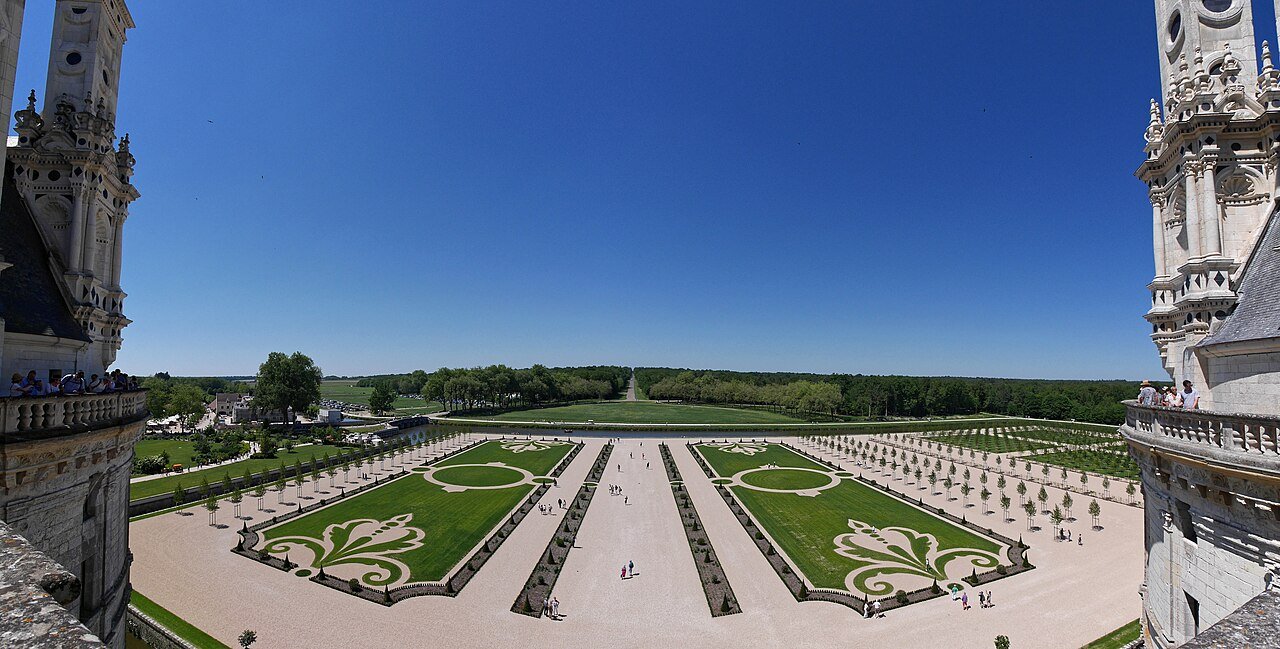
The central Loire Valley was inscribed in 2000 as a cultural landscape of exceptional importance, spanning 280 kilometres of river banks studded with royal châteaux, walled towns, and vineyards. Two sites anchor any day trip from Paris. Château de Chambord, commissioned by Francis I in 1519 and built over twenty-eight years, stands as the largest château in the Loire: 440 rooms, 365 fireplaces, and a double-helix staircase at its core whose design has long been attributed to Leonardo da Vinci, who spent his final years at the nearby Château du Clos Lucé. Fifteen kilometres away, Château de Chenonceau stretches on arches directly over the River Cher — a Renaissance bridge-palace begun in 1514 under Thomas Bohier and completed under Diane de Poitiers, mistress of Henry II, who added the formal gardens in 1551. The two châteaux lie within 20 kilometres of Tours and repay a full day without repetition.
Getting there: TGV from Paris Montparnasse or Austerlitz to Tours (1 hr 10 min), then local bus or hire car to Chambord (60 km) and Chenonceau (34 km). Allow: Full day. Best for: The full sweep of French Renaissance ambition — a royal hunting palace and a river château built by and for remarkable women in the same landscape.
Provins, Town of Medieval Fairs 1 hr 25 min by Transilien P
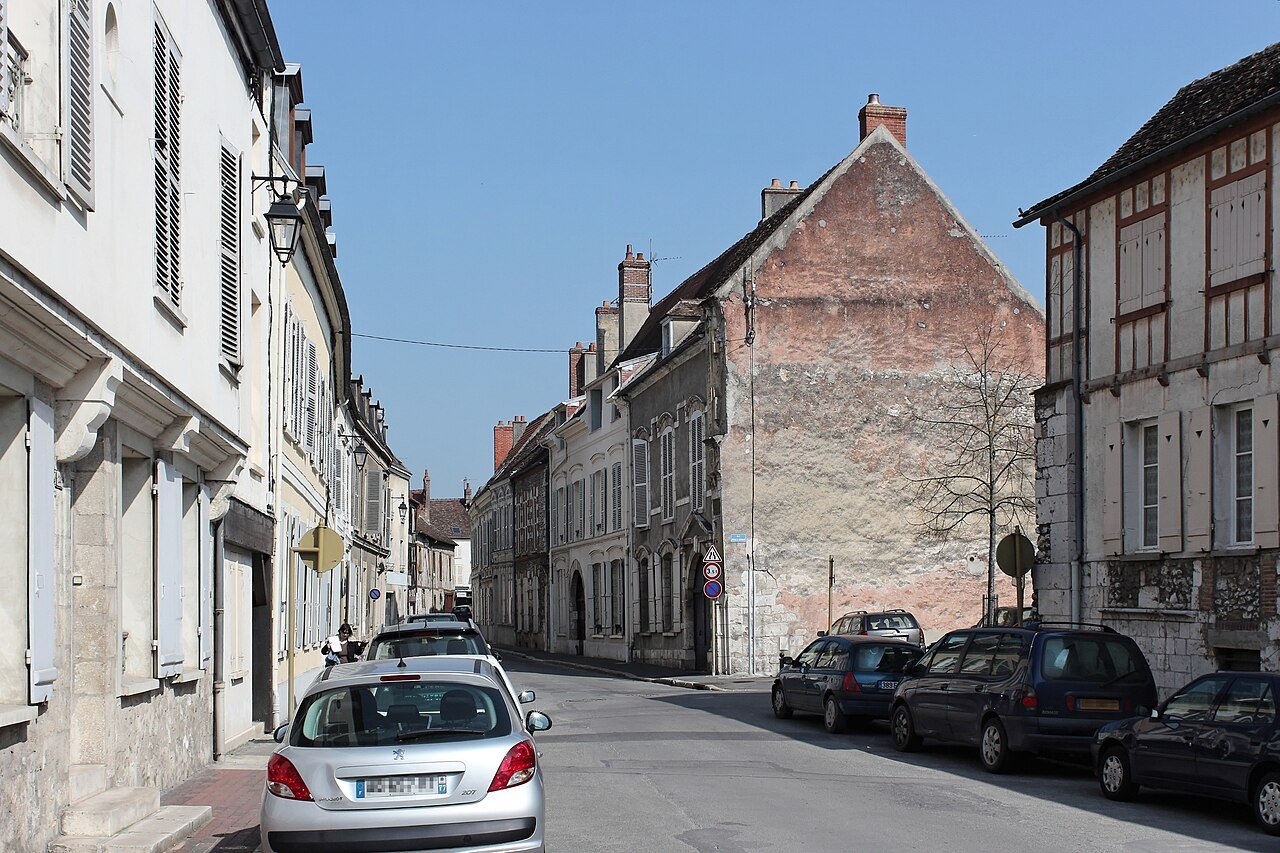
Inscribed in 2001, Provins preserves the physical infrastructure of the great Champagne fairs that made it one of the most important trading centres in 12th- and 13th-century Europe. Cloth merchants, moneylenders, and spice traders from Flanders, Italy, and the Levant gathered here twice a year under a commercial framework regulated by the Counts of Champagne, who guaranteed safe passage and contract enforcement across political borders. The Tour César — a 12th-century cylindrical keep rising 44 metres above the upper town — still dominates the skyline as it did when it anchored the fair’s security perimeter. Below it, a network of underground galleries once served as workshops, cellars, and storage vaults during the fair season; 600 metres are open to visitors. Provins also cultivated roses brought back from Syrian Damascus by Count Thibault IV following the Crusades in the 13th century — the Rosa gallica officinalis, known as the Rose of Provins, became a symbol of the town and a source of medicinal production into the 19th century.
Getting there: Transilien P from Paris Gare de l’Est to Provins, approximately 1 hour 25 minutes. Allow: 3–4 hours. Best for: Visitors seeking a medieval town without the tourist infrastructure of Carcassonne or Mont-Saint-Michel — Provins rewards walking slowly.
Mont-Saint-Michel and Its Bay 3 hrs 30 min TGV + coach
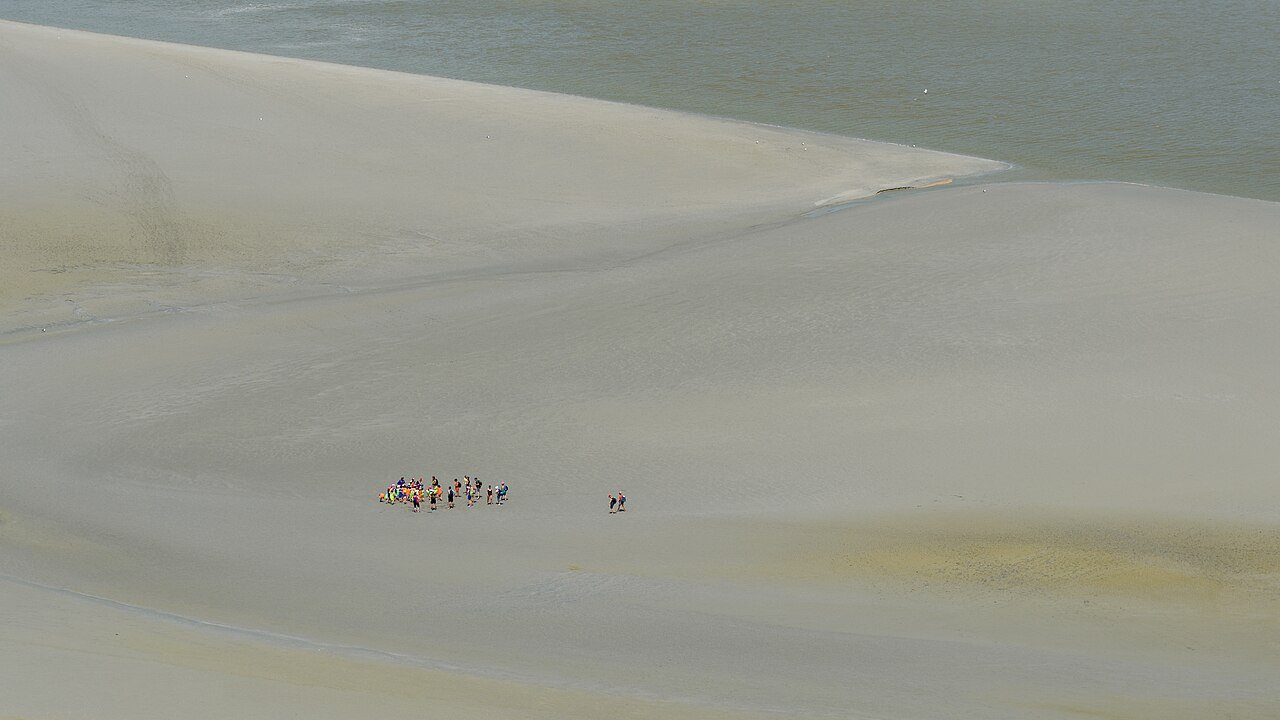
Inscribed in 1979 — and extended to include the full bay in 1979 — Mont-Saint-Michel stands on a granite tidal island 600 metres off the Normandy coast, connected to the mainland by a causeway replaced in 2014 with a slim pedestrian bridge designed to restore natural tidal flow after decades of sediment accumulation had begun silting the bay. The Benedictine abbey at its summit was founded in 708 by Bishop Aubert of Avranches following, according to tradition, an apparition of the Archangel Michael. Construction of the present abbey church began around 1017 under the patronage of Richard II, Duke of Normandy; the Merveille — a triple-tiered Gothic complex housing the refectory, knight’s hall, and cloister — was added between 1211 and 1228. At spring tides, the sea advances across the bay at speeds that local guides describe as fast as a galloping horse. The island receives over 3 million visitors annually, making an early morning or evening arrival strongly preferable to midday.
Getting there: TGV from Paris Montparnasse to Rennes (1 hr 30 min), then Keolis coach to Mont-Saint-Michel (1 hr); or TGV to Pontorson followed by shuttle bus. Allow: 3–4 hours on site. Best for: The single most dramatic natural and architectural setting reachable from Paris in a long day — plan to arrive early or stay overnight.
Frequently Asked Questions
How many UNESCO World Heritage Sites are near Paris?
Six UNESCO World Heritage Sites are reachable from Paris within approximately three and a half hours: the Palace and Park of Versailles, the Château de Fontainebleau, Chartres Cathedral, the Loire Valley cultural landscape (including Chambord and Chenonceau), the medieval town of Provins, and Mont-Saint-Michel and its Bay. Several more sites — including the banks of the Seine in Paris itself — lie within or adjacent to the city.
What is the closest UNESCO World Heritage Site to Paris?
The Palace and Park of Versailles is the closest, at approximately 20 kilometres southwest of central Paris. It is reachable in about 35 minutes on the RER C line from Paris-Austerlitz to Versailles-Château-Rive Gauche, making it the most accessible of the six sites on this list without a car.
Can you visit multiple UNESCO sites from Paris in one day?
Two sites can reasonably be combined in a single long day if they share a transport corridor. Versailles and Fontainebleau are both straightforward half-day visits, though they lie in opposite directions from Paris. The Loire Valley châteaux — Chambord and Chenonceau — are designed for a paired visit and are best reached together with a hire car from Tours. Chartres and Provins are each manageable as stand-alone day trips by train.
Is a car necessary to visit the Loire Valley châteaux from Paris?
A car is not strictly required, but it makes the visit significantly more flexible. Château de Chambord is served by seasonal shuttle buses from Blois and Amboise; Château de Chenonceau has a direct train connection from Tours. Without a car, visiting both in a single day requires careful timetable planning. Organised day-tour coaches from Paris are also available, though they limit independent exploration of the landscape between sites.
Sources used in this article
- UNESCO World Heritage Centre — World Heritage List.
- Wikipedia — Palace of Versailles.
- Wikipedia — Chartres Cathedral.
- Wikipedia — Mont-Saint-Michel.
- CHO — Interactive heritage map.
Sources
- S1 — Spawforth, Antony. Versailles: A Biography of a Palace. St. Martin's Press, 2008. ISBN 978-0-312-35785-6.
- S2 — Horne, Alistair. Seven Ages of Paris. Alfred A. Knopf, 2002. ISBN 978-0-679-45481-6.
Spotted an error? Write to editorial@culturalheritageonline.com and we correct it the same day.