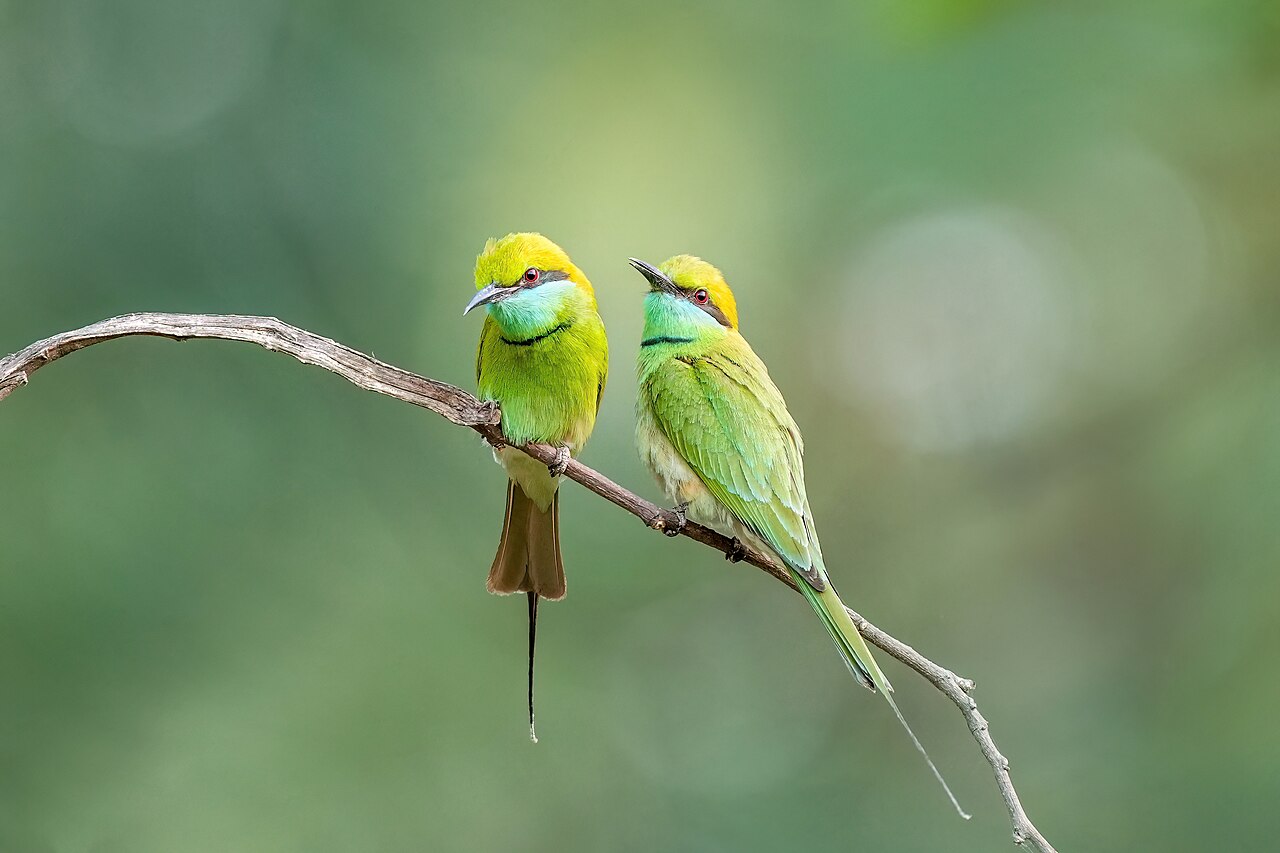
Keoladeo National Park (केवलादेव राष्ट्रीय उद्यान, formerly Bharatpur Bird Sanctuary), inscribed by UNESCO in 1985, is a 28.73 km² artificial wetland, grassland, and mixed woodland reserve near Bharatpur, Rajasthan, India — created from a natural depression in the 1760s CE when the Maharaja Suraj Mal of Bharatpur built a dam to divert water from the Gambhira and Banganga rivers, creating a shallow flood plain that rapidly became one of the most productive waterfowl habitats in South Asia, and that has since developed into one of the most ornithologically significant sites in the Indian subcontinent: home to approximately 364 bird species (230 resident, 130 migratory), including globally threatened species such as the Sarus crane (Grus antigone, the world’s tallest flying bird, resident breeding pairs in the park), the greater spotted eagle (Aquila clanga, vulnerable), the imperial eagle (Aquila heliaca, vulnerable), and historically the Siberian crane (Leucogeranus leucogeranus, critically endangered — for decades Keoladeo was the primary wintering ground for the Central Asian migratory population of the Siberian crane, but the last sightings of more than one or two individuals date from the early 2000s, and the Central Asian Siberian crane population is now considered functionally extinct as a Keoladeo wintering population). The park takes its formal name from the Keoladeo (Shiva) temple at its centre, which predates the Maharaja’s creation of the wetland.
Keoladeo’s wetland bird landscape and the Rajasthan heritage corridor Wetland zone · Dry grassland · Agra Taj Mahal · Fatehpur Sikri · Bharatpur — 0 to 50 km
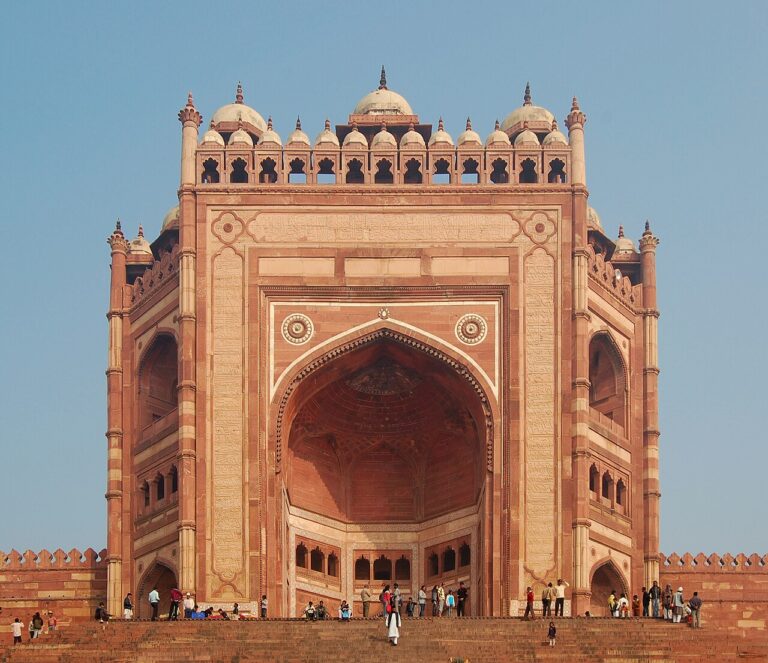
Keoladeo National Park is divided ecologically into the central wetland zone (the shallow seasonal marsh that fills October–March through managed water supply, and which is the core habitat for wading birds, waterfowl, and the heronries that are the park’s most spectacular wildlife feature) and the surrounding dry grassland and woodland area where resident species (Indian peafowl, painted francolin, sandgrouse) and terrestrial migrants (raptors, passerines) concentrate. The heronries (nesting colonies of mixed species of herons, storks, spoonbills, ibis, cormorants, and anhingas that nest communally in the dense acacia woodland around the wetland edges) are Keoladeo’s defining ornithological spectacle: from October to February, the woodland canopy above the wetland periphery can hold hundreds of nesting pairs of painted stork (Mycteria leucocephala), open-billed stork (Anastomus oscitans), grey heron (Ardea cinerea), purple heron (Ardea purpurea), Indian cormorant (Phalacrocorax fuscicollis), and darter (Anhinga melanogaster) simultaneously, with the noise and visual density of the mixed heronry a wildlife experience with few parallels on the Indian subcontinent. The park is best explored on foot or by cycle-rickshaw on the vehicle-free road that traverses the wetland — the rickshaw wallahs (licensed by the Forest Department) double as knowledgeable bird guides, identifying species by call and directing attention to nesting sites and unusual visitors. The park’s bicycle/rickshaw system means that even non-birdwatchers can reach the deeper wetland areas that would require 3–4 km of walking from the entrance gate. The 50 km proximity to Agra (Taj Mahal and Agra Fort, both UNESCO 1983) and the 35 km proximity to Fatehpur Sikri (UNESCO 1986) make Keoladeo a standard addition to the “Golden Triangle” tourist circuit of Delhi–Agra–Jaipur, and it can realistically be combined with a morning at Fatehpur Sikri and an afternoon Keoladeo walk in a single day excursion.
The Bharatpur Royal Palace complex (within Bharatpur city, approximately 2 km from the park entrance — the Lohagarh Fort, “Iron Fort”, one of the few forts in India that the British East India Company failed to capture despite four siege attempts in 1805, 1806, 1823, and 1825; its 12-metre-thick earthen ramparts absorbed British cannon fire while Maharaja Ranjit Singh’s artillery replied) is the cultural heritage complement to the natural heritage of Keoladeo — the same Bharatpur ruling house that created the artificial wetland as a duck-shooting reserve also built the fort that successfully resisted British military power. The annual vice-regal duck shoots at Bharatpur (the most famous took place in 1938, when the Viceroy of India Lord Linlithgow and his party shot 4,273 ducks in a single day — a figure that now stands as evidence of the scale of aristocratic wildlife consumption in the colonial period and the recovery significance of the park’s current protected status) are historically documented in the Forest Department records.
Practical information
Keoladeo National Park is 2 km from Bharatpur city centre (Rajasthan). By train: Bharatpur Railway Station is a major junction on the Delhi–Mumbai and Delhi–Chennai main lines, with direct trains from Delhi (approximately 2.5 hours), Agra (40 minutes), and Jaipur (approximately 2 hours). By road: 50 km from Agra, 180 km from Delhi, 170 km from Jaipur. Hired cars from Agra (Taj Mahal visit in the morning, Keoladeo afternoon) are the most common day-trip pattern for international visitors. The park is open daily approximately 06:00–18:00; admission fees apply (foreign visitor rates). Vehicles (except Forest Department and bicycle/rickshaw) are not permitted beyond the entry zone. Cycle-rickshaws with licensed guide-drivers are available at the entrance gate (bargain firmly, rates are standardised by Forest Department; the rickshaw fare is separate from the guide tip). Hiring a licensed bird guide (available from the guides’ association at the gate) is strongly recommended for non-birdwatchers who want to understand what they are seeing — the park’s species diversity is overwhelming without assistance. Best visiting months: October–February (the peak migratory season when the wetland is flooded and at maximum bird density; October for the early arrivals; December–January for the largest numbers of raptors; February for crane and stork peak). The park is partially closed in summer (May–July). Accommodation in Bharatpur ranges from budget guesthouses near the park gate to mid-range hotels in the city.
Frequently Asked Questions
What happened to the Siberian crane population at Keoladeo and why did it disappear?
The Siberian crane (Leucogeranus leucogeranus, also known as the snow crane — a large white migratory crane from Siberia that wintered historically in three main areas: the Caspian Sea coast in Iran, the Yangtze River in China, and the Indian subcontinent at Keoladeo) was the globally celebrated “star species” of Keoladeo National Park for decades — the Indian wintering population (the “Central Asian flyway” population, distinct from the Eastern population that winters in China’s Poyang Lake) numbered approximately 200 individuals in the 1960s and 1970s, and the sight of the white cranes feeding in the Keoladeo shallows was the primary international calling card of the park. The decline was rapid and now appears irreversible for the Indian wintering population: from approximately 200 birds in the 1960s, numbers fell to 42 in 1985, 13 in 1993, 6 in 2000, 1 in 2002, and none confirmed since approximately 2005. The causes of the collapse are multiple and have been debated among ornithologists since the 1980s: the hunting pressure on the Central Asian flyway (in Afghanistan, Pakistan, Iran, and the Caspian states, where migratory cranes were legally or illegally shot during the migration) was identified as the primary cause by most field researchers (the crane’s flight path from western Siberia to Keoladeo passes through approximately 5,000 km of migration terrain including the war zones of Afghanistan during the Soviet invasion period, 1979–1989, when hunting restrictions were non-existent and armed populations with guns and ammunition were ubiquitous); the water management changes at Keoladeo in the 1980s (when a state water dispute between Rajasthan and Haryana reduced the seasonal water supply to the park) that reduced habitat quality at the wintering site have also been cited; and human encroachment on the Siberian breeding grounds in western Siberia has been identified as a secondary long-term pressure. The International Crane Foundation (ICF) and the Russian conservation organisation conducted a “Crane Ambassadors” programme in the 1990s in which hand-raised Siberian cranes were fitted with ultralight aircraft-led flight training (similar to the “Operation Migration” programme for whooping cranes in North America) and released on the Central Asian flyway to attempt to re-establish the migration route — the programme was unsuccessful in establishing a self-sustaining wild population. The current global Siberian crane situation is: the Eastern population (Poyang Lake, China) numbers approximately 3,000–3,500 individuals and is considered moderately stable; the Western population (Caspian Sea coast, Iran, Fereydounkenar, Iran) numbers approximately 3,000 individuals; the Central Asian population (formerly Keoladeo, India) is considered functionally extinct as a wintering population, with no confirmed individuals in the traditional Indian wintering range since approximately 2005.
Why was Keoladeo National Park created as a duck-shooting reserve and how did it become a UNESCO site?
The creation of the Keoladeo wetland is a specific case of aristocratic hunting infrastructure that inadvertently produced one of the most important bird sanctuaries in Asia. The Bharatpur ruling house (Maharajas of Bharatpur, Jat rulers who had built the Lohagarh Fort and successfully resisted British military force in the early 19th century) created the initial water-management structure in the 1760s CE, damming a natural depression to create a flood-irrigation system that also produced seasonal shallow-water habitat ideal for waterfowl. The connection between the British colonial administration and Bharatpur for duck hunting developed in the 1850s–1860s, when the vice-regal connection made Bharatpur one of the premier shooting destinations in India. The scale of the colonial-era shoots is documented in the Forest Department records: the single largest shoot on record (November 12, 1938, Viceroy Lord Linlithgow’s party) killed 4,273 waterfowl in one day; the records of 19 shoots between 1902 and 1964 show an average of approximately 2,000 birds killed per shoot day, with the species composition dominated by ducks (pintail, gadwall, common teal, shoveler) and geese. The transition from hunting reserve to protected area occurred in stages: in 1956, the Maharaja of Bharatpur received increased legal protection for the wetland from the Government of Rajasthan (the independent Indian government had abolished the princely states’ hunting rights in 1949 but negotiated continuing management by the Maharaja’s household for natural heritage conservation); in 1981, the Indian government declared the area a national park under the Wildlife Protection Act 1972, banning all hunting (which created considerable local conflict, as the surrounding villages had customary grazing rights within the park area that were abruptly extinguished); in 1985, the UNESCO inscription recognised the park’s Outstanding Universal Value as a wetland of global significance for migratory waterbirds. The transformation from one of the world’s most productive duck-shooting reserves to a UNESCO World Heritage site within approximately 50 years — driven partly by the same natural waterbird productivity that had made it attractive to hunters in the first place — is one of the more ironic conservation success stories in South Asian natural heritage.
EXCERPT: Keoladeo National Park, UNESCO-inscribed in 1985, is a 28.73 km² artificial 18th-century wetland near Bharatpur that holds 364 bird species — painted stork heronries, Sarus crane breeding pairs, and the ghost of the Siberian crane (functionally extinct from its Indian wintering range since approximately 2005) — 50 km from the Taj Mahal.
META: UNESCO World Heritage Sites near Keoladeo National Park Bharatpur Rajasthan India: Taj Mahal and Agra Fort 50 km northeast (UNESCO 1983), Fatehpur Sikri 35 km west (UNESCO 1986), Jaipur City 170 km west (UNESCO 2019) — Rajasthan UNESCO heritage circuit from Bharatpur through Agra to Fatehpur Sikri and Jaipur, the Golden Triangle plus Keoladeo bird sanctuary.
Sources
- S1 — UNESCO World Heritage Centre — Keoladeo National Park (Ref. 340) — https://web.archive.org/web/20230601000000/https://whc.unesco.org/en/list/340/
- S2 — UNESCO World Heritage Centre — Statement of Outstanding Universal Value (Ref. 340) — https://whc.unesco.org/en/list/340/
Spotted an error? Write to editorial@culturalheritageonline.com and we correct it the same day.