Malta concentrates three UNESCO World Heritage Sites on a single island — the Baroque capital built by crusading knights, prehistoric temples that predate the Egyptian pyramids, and the only known underground prehistoric sanctuary in the world. All three are within a day’s travel of Valletta. From Cultural Heritage Online.
City of Valletta within the city — no travel required
Valletta is both the starting point and the destination. The Knights of St John founded the city in 1566, the year after the Great Siege drove the Ottoman fleet from Malta’s harbours, and they built with deliberate permanence. On a peninsula barely 0.6 km² in area, they laid out a strict grid plan and filled it with 320 monuments — a density unmatched by any European capital of comparable size. UNESCO inscribed the city in 1980.
The grid logic is easy to read on foot. Republic Street runs the full length of the peninsula from City Gate to Fort St Elmo; everything of significance sits within a five-minute walk on either side. St John’s Co-Cathedral, completed in 1577, presents a plain exterior that conceals one of the most intensely ornamented Baroque interiors in Europe. Every inch of the side chapels was commissioned by a different langue — the territorial divisions of the Knights — and the floor is a continuous pavement of marble tombstones. In the oratory hangs Caravaggio’s The Beheading of Saint John the Baptist (1608), the only canvas he signed, and at roughly 3.6 × 5.2 metres his largest. The Grandmaster’s Palace anchors the city’s administrative heart; Fort St Elmo, rebuilt after the Siege, guards the peninsula’s tip and houses the National War Museum.
Valletta held the European Capital of Culture designation in 2018, which accelerated the restoration of several public spaces including the open-air City Gate theatre designed by Renzo Piano. The city functions simultaneously as a working capital and a living monument — government offices, restaurants, and residential buildings share the same streets as the heritage sites.
Getting there: Valletta is the arrival hub; all ferries, buses, and most accommodation connect through it. Allow: At least one full day; two if you want time inside the Co-Cathedral, the Palace State Rooms, and Fort St Elmo without rushing. Best for: History travellers, architecture enthusiasts, and anyone interested in the military history of the Mediterranean.
Ħal Saflieni Hypogeum 6 km south — 20 min by bus or taxi from Valletta
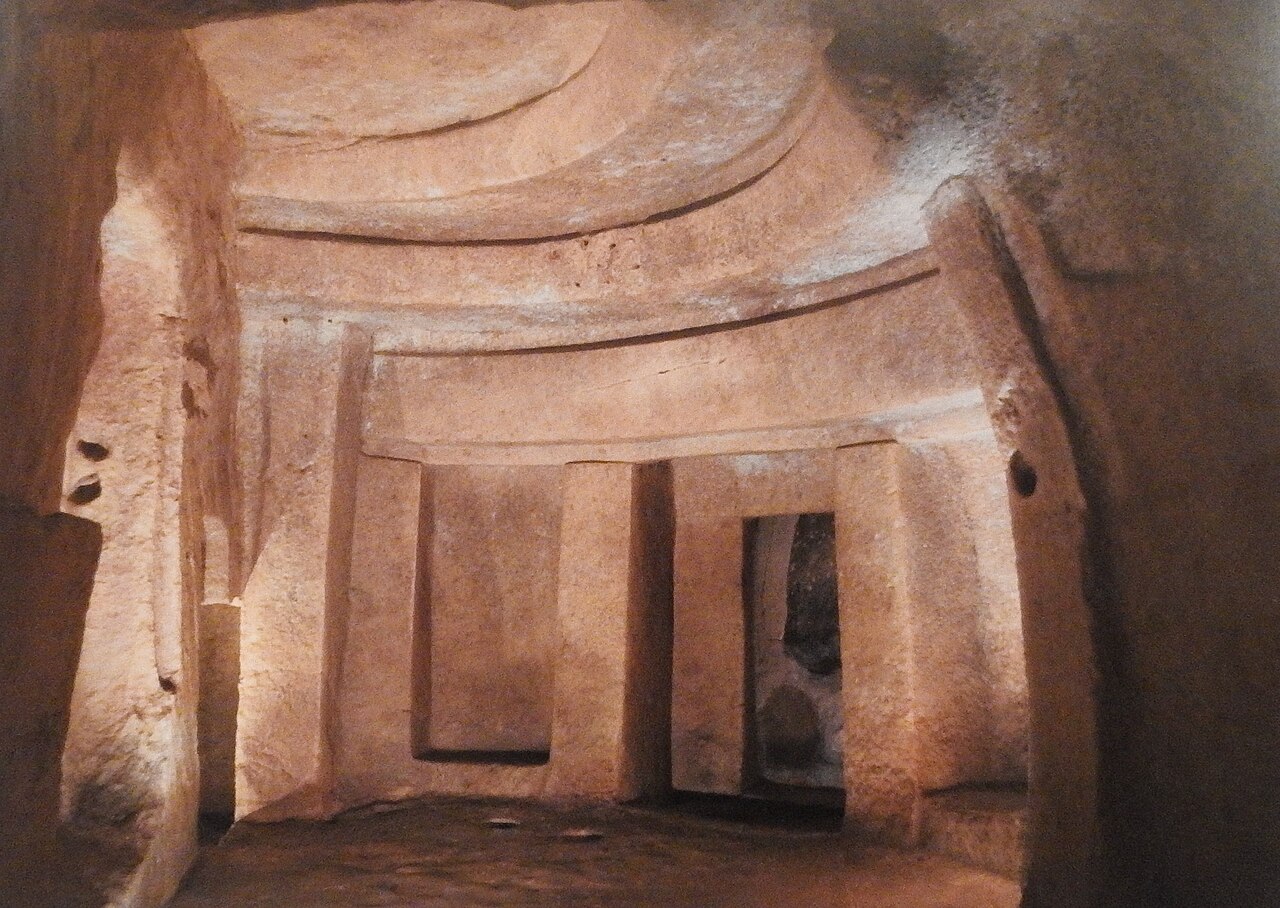
The Ħal Saflieni Hypogeum in Paola is the only prehistoric underground temple known to exist anywhere in the world. Builders carved it entirely from solid limestone between approximately 3600 and 2500 BC — the same broad period as the surface temples — descending through three levels to a depth of around 10 metres. UNESCO inscribed it in 1980 alongside the Megalithic Temples and Valletta.
What makes the space extraordinary is not just its age but its sophistication. The chambers at the middle level replicate above-ground temple architecture in carved stone: corbelled ceilings that echo the rooflines of surface temples, doorways framed with trilithon forms, red ochre spirals painted onto the ceiling of the Decorated Room. The Oracle Chamber contains a small niche carved into the wall at a precise angle; a voice spoken into it resonates through the entire structure with an acoustic effect that researchers have measured at around 110 Hz — a frequency that may have altered consciousness during ritual use. The remains of more than 7,000 individuals were recovered from the site over decades of excavation.
The Hypogeum operates under strict access controls. Only 80 visitors per day are permitted inside, divided into small timed groups, and the booking system typically fills months in advance. The site museum at street level provides context through artefacts and scale models, but the underground tour — about 50 minutes — is what the visit is for. Book well before travelling.
Getting there: Bus routes 82 and 84 connect Valletta to Paola in approximately 20 minutes; taxis take around 15 minutes. The Tarxien Temples (part of the same UNESCO inscription) are a 10-minute walk from the Hypogeum entrance. Allow: Half a day for the Hypogeum plus Tarxien. Best for: Travellers prepared to plan ahead; the experience rewards patience and advance organisation.
Megalithic Temples of Malta 6–65 km from Valletta depending on site
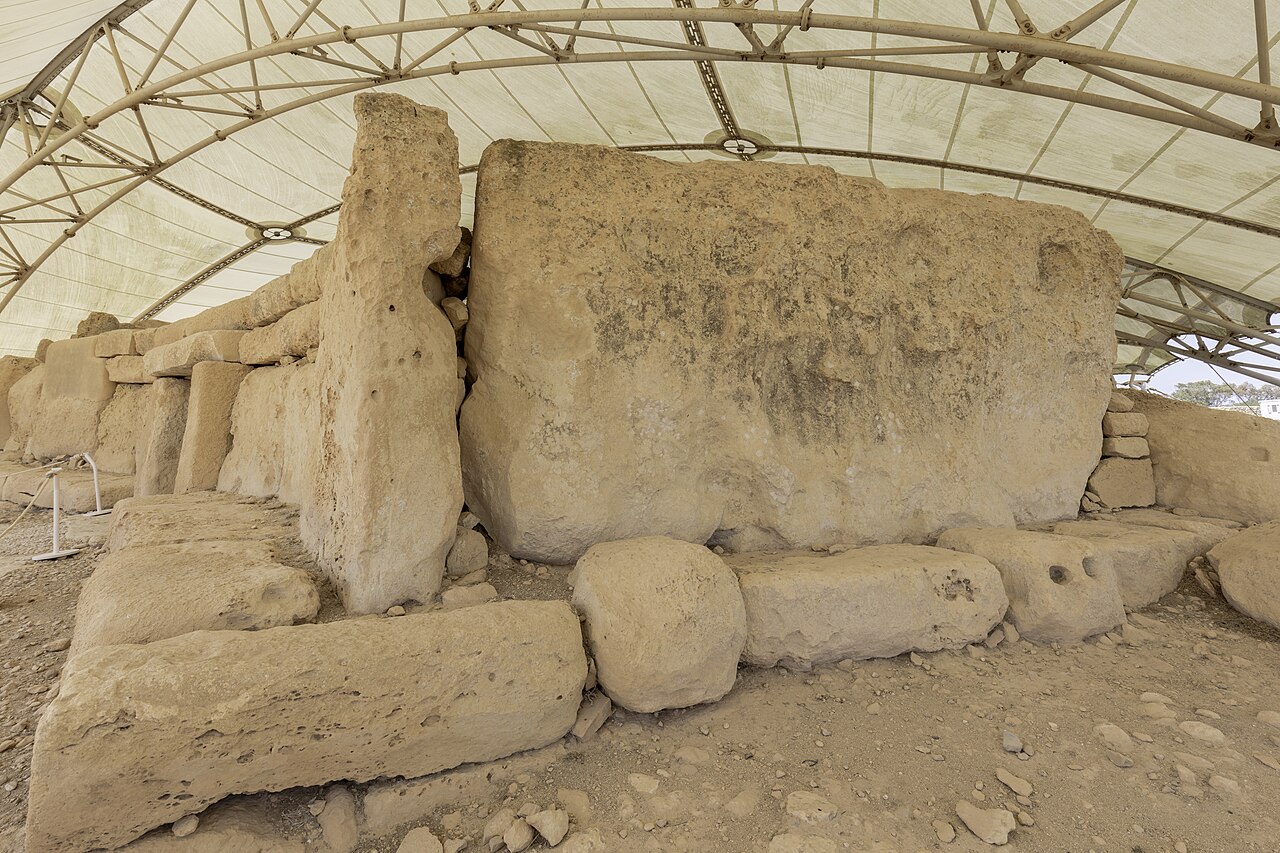
Seven temples scattered across Malta and Gozo carry a single UNESCO designation — first inscribed in 1980, extended in 1992 to include additional structures. All were built between 3600 and 2500 BC, making them among the earliest free-standing stone structures on Earth. They predate the construction of the Egyptian pyramids by roughly five centuries. No written record explains why or how they were built; the civilisation that raised them vanished without traceable descendants around 2500 BC.
The most accessible temples for visitors based in Valletta are Ħaġar Qim and Mnajdra on the southern coast, about 13 kilometres from the capital. Both sit on a clifftop above the sea, and Mnajdra in particular is precisely aligned: at the spring and autumn equinoxes, the rising sun illuminates the central axis of the South Temple exactly from the doorway to the back wall. Tarxien, in Paola adjacent to the Hypogeum, contains the lower portion of a monumental female figurine originally over two metres tall — the largest known prehistoric statue in Malta. On Gozo, Ġgantija (3600–3000 BC) is the oldest of the seven, a pair of temples whose outer walls still stand to nearly six metres, built from coralline limestone blocks weighing up to fifty tonnes each. The name derives from the Maltese word for giantess; local tradition held that no ordinary human could have raised such walls. Ta’Ħagrat and Skorba in northwest Malta are smaller and less visited but also included in the inscription.
Protective tented canopies now cover Ħaġar Qim and Mnajdra to limit weathering from wind and salt; the structures beneath remain fully visible. A visitor centre at the clifftop site provides geological and historical context before the walk to the temples themselves.
Getting there: Bus 201 from Valletta connects to Ħaġar Qim and Mnajdra in around 45 minutes (change at Rabat/Żurrieq). Tarxien is reachable by buses 82 or 84 in 20–25 minutes. Gozo (Ġgantija) requires the Ċirkewwa ferry to Mġarr (25 minutes crossing, then 20 minutes by bus to Victoria/Rabat). Allow: Half a day for Ħaġar Qim and Mnajdra; a full day if combining with Gozo and Ġgantija. Best for: Archaeology travellers, prehistoric landscape enthusiasts, visitors who want to combine coastal scenery with ancient sites.
Frequently Asked Questions
How many UNESCO World Heritage Sites are near Valletta?
Malta has three UNESCO World Heritage Sites, all on the island: the City of Valletta (inscribed 1980), the Ħal Saflieni Hypogeum in Paola (1980), and the Megalithic Temples of Malta — seven prehistoric temples on Malta and Gozo (1980, extended 1992). All are reachable from Valletta in a single day or less.
How far is the Ħal Saflieni Hypogeum from Valletta, and do I need to book in advance?
The Hypogeum is in Paola, about 6 km south of Valletta — roughly 15–20 minutes by bus (routes 82 or 84) or taxi. Advance booking is essential: only 80 visitors per day are admitted in small timed groups, and availability typically fills weeks or months ahead. Book via Heritage Malta’s official website before you finalise your travel dates.
Can I visit all three UNESCO sites in one day from Valletta?
Combining all three in a single day is possible but rushed. A practical two-day split works well: day one for Valletta itself (the Co-Cathedral alone warrants two to three hours) and the Hypogeum plus Tarxien in the afternoon; day two for Ħaġar Qim and Mnajdra on the southern coast, with an optional ferry crossing to Gozo for Ġgantija. Late spring and autumn offer the best conditions — summer heat on the exposed clifftop sites is intense, and the Ġgantija alignment is most dramatic at the equinoxes.
What makes the Megalithic Temples of Malta significant compared to other prehistoric sites in Europe?
The Maltese temples are the oldest free-standing stone structures in the world, predating Stonehenge by around a thousand years and the Egyptian pyramids by roughly five centuries. They were built by a population that lived in isolation on Malta and Gozo and developed a distinctive temple-building culture entirely independently. The builders used coralline and globigerina limestone with considerable engineering precision, incorporating astronomical alignments at several sites. The civilisation disappeared abruptly around 2500 BC, leaving no direct cultural descendants — which makes the temples a genuinely closed chapter rather than a continuous tradition.
Sources
- S1 — Trump, David H. Malta: Prehistory and Temples. Midsea Books, 2002. ISBN 978-99932-39-03-1.
- S2 — Blouet, Brian. The Story of Malta. Progress Press, 1989. ISBN 978-99909-3-081-8.
Spotted an error? Write to editorial@culturalheritageonline.com and we correct it the same day.