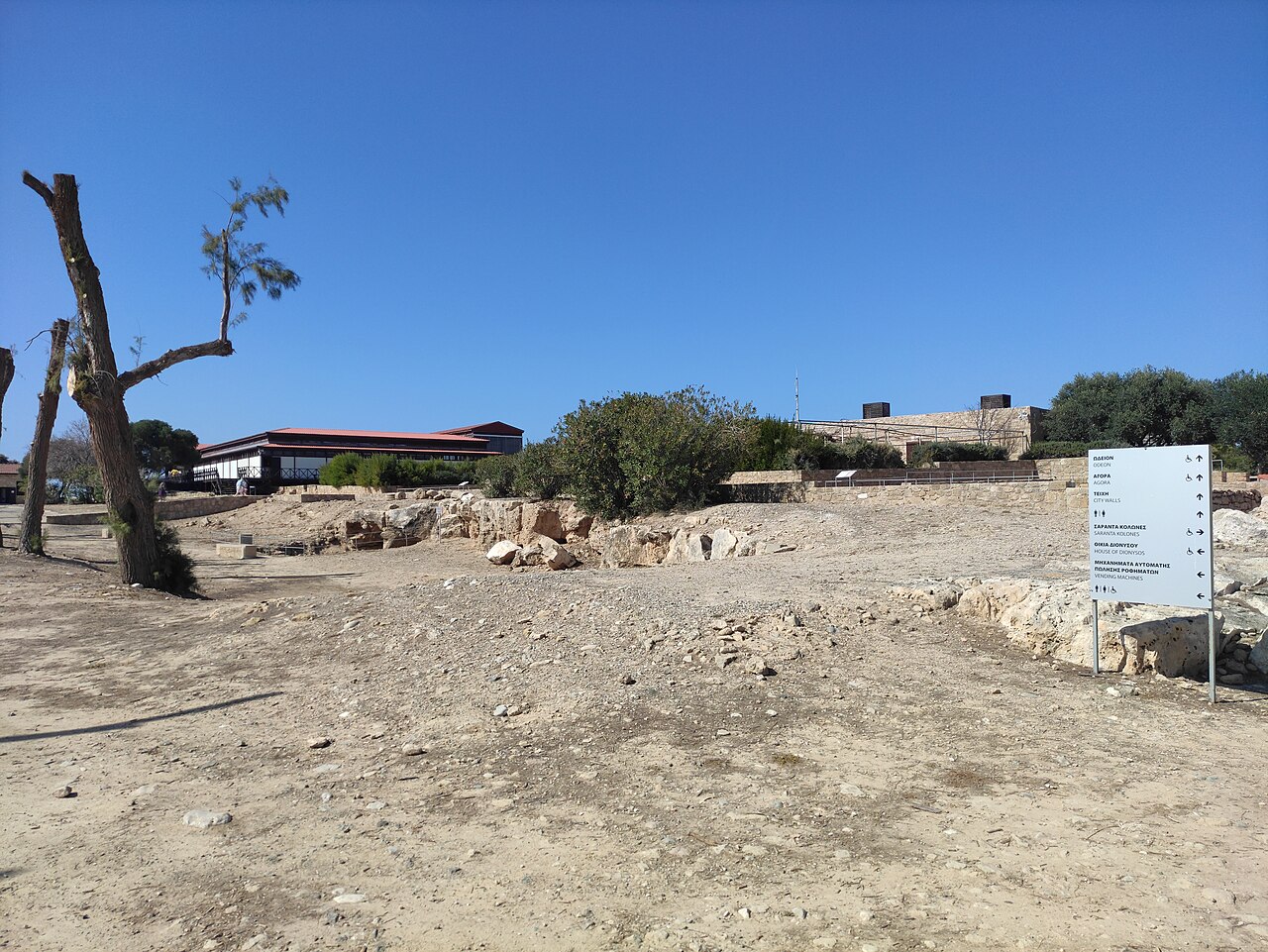
All three of Cyprus’s UNESCO World Heritage Sites lie within reach of Nicosia — a Neolithic settlement 28 kilometres away, a mountain region of Byzantine churches less than an hour’s drive, and a Roman-era archaeological park on the southwest coast. From Cultural Heritage Online.
Choirokoitia (Khirokitia) 28 km southwest — 40 min by road
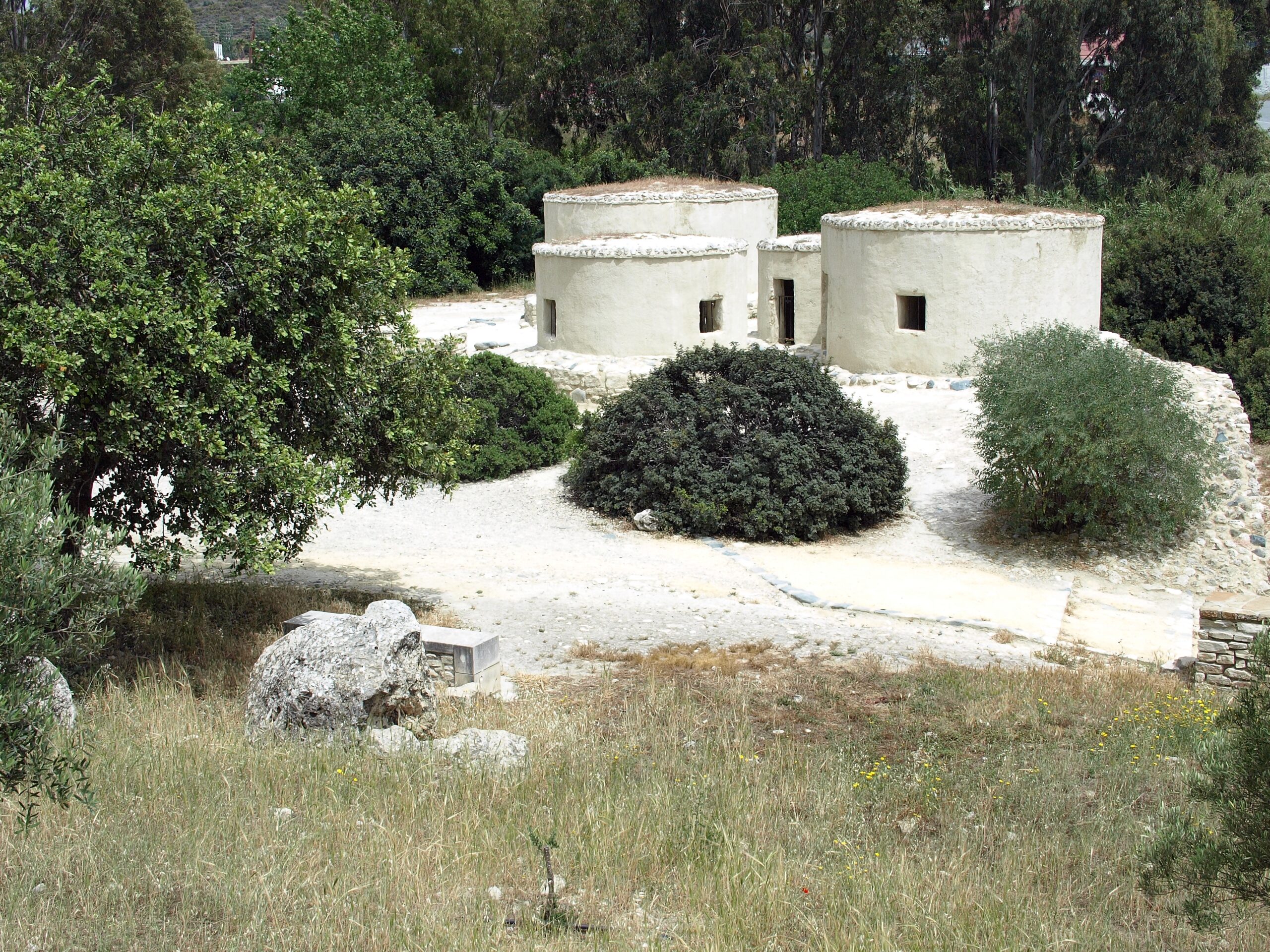
Choirokoitia is the easiest UNESCO excursion from Nicosia and, for its age, one of the most legible. The site preserves a Neolithic settlement occupied between approximately 7000 and 4000 BC, making it among the earliest evidence of permanent human habitation in the eastern Mediterranean. What makes it unusual is how much remains readable: circular mud-brick houses called tholoi cluster along a stone-paved lane, enclosed by a perimeter defensive wall — a spatial logic that feels almost urban despite predating pottery by several centuries.
UNESCO inscribed Choirokoitia in 1998 for the exceptional completeness of its record. The inhabitants grew crops, kept animals, and buried their dead beneath the floors of their homes. Several tholoi have been partially reconstructed on site, which helps visitors understand the original scale — the structures were just tall enough to stand in, with thick walls that kept interiors cool in summer. The surrounding landscape of low scrub and limestone rises gives the site a quiet, unpopulated feel even in peak season.
Getting there: A1 motorway south from Nicosia toward Larnaca, exit at Choirokoitia, well signposted. No public bus serves the site directly; a hire car or taxi from Nicosia is practical. Allow: 1.5–2 hours including the reconstructed village loop. Best for: Travellers interested in prehistory and those combining the site with a drive to Larnaca or Limassol.
Painted Churches in the Troodos Region 40–70 km southwest — 1–1.5 hr by road
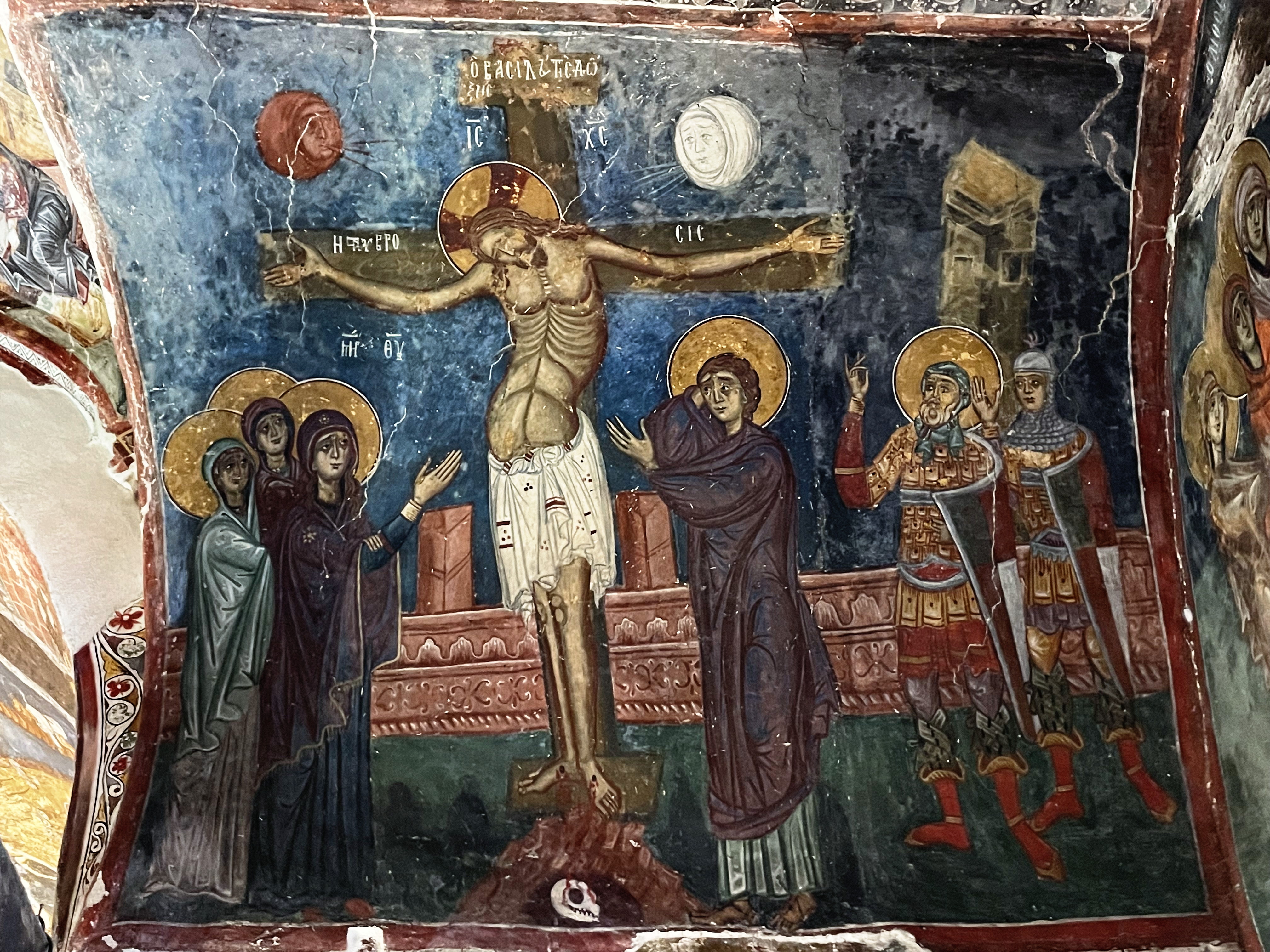
From outside, the nine Byzantine churches scattered through the Troodos Mountains could be mistaken for agricultural outbuildings — low stone structures with steep, timber-pitched roofs extending almost to the ground, built to shed snow and deflect attention during centuries of uncertain rule. Step through a heavy wooden door and the scale inverts. The interiors hold some of the most complete cycles of Byzantine fresco painting anywhere in the world, spanning five centuries from the 11th to the 16th.
UNESCO first inscribed ten of these churches in 1985 and extended the listing in 2001. Each building is distinct. Asinou Church (Panagia Forviotissa), near the village of Nikitari, contains 12th-century frescoes with a warmth of colour that survived because the thick walls maintained stable humidity for 900 years. Agios Nikolaos tis Stegis outside Kakopetria layers painting from the 11th to the 14th century on the same walls, so an observant visitor can track the stylistic shift from flat Byzantine formalism toward greater naturalism in a single room. The Church of Panagia tou Arakou at Lagoudera, dated to 1192, is widely regarded as the finest single ensemble, its dome portrait of Christ Pantokrator still intact and intensely present.
The churches are spread across an area of roughly 30 kilometres. Not all are open every day; a few require asking at the nearest village for the key-holder. Morning visits reward the effort — summer afternoons can be very warm in the mountains, and the low-angle morning light enters the small windows at the right angle to illuminate the frescoes without artificial lighting.
Getting there: Private car is essential; no scheduled bus serves the church circuit. From Nicosia take the B9 toward Troodos then branch roads to individual churches. A GPS device is useful as signage varies. Allow: A full day to visit three or four churches at a meaningful pace. Best for: Art historians, Orthodox heritage travellers, and those who want mountain landscapes combined with cultural visits.
Paphos 144 km southwest — 1.5 hr via A6 motorway
Kato Paphos Archaeological Park occupies a stretch of the southwest coastline where four Roman villas were excavated to reveal floor mosaics of extraordinary quality and size. The mosaics were laid in the 3rd and 4th centuries AD and remained buried until a farmer’s plough struck one in 1962. UNESCO inscription followed in 1980, and the park now protects several hectares of in-situ decoration under purpose-built shelters that allow visitors to walk directly above the mosaic floors on raised walkways.
The House of Dionysos is the most visited structure, its floors covering roughly 2,000 square metres with narrative scenes from Greek mythology — the first wine press, the myth of Narcissus, Pyramus and Thisbe — rendered in tesserae of limestone, glass, and terracotta. The House of Theseus contains a circular portrait of Theseus striking down the Minotaur, identifiable as one of the earliest securely dated depictions of the legend in floor mosaic form. The House of Aion and House of Orpheus complete the quartet. Each villa represents a different patron and iconographic programme, which makes the park a comparative study as much as a spectacle.
A short distance north of the park, the Tombs of the Kings are carved from solid rock — underground chambers dating from the 3rd century BC to the 4th century AD, arranged around open peristyle courtyards. No kings were actually buried here; the name derives from the scale of the excavations. The painted plaster that once covered the walls survives in patches.
Getting there: A6 motorway from Nicosia direct to Paphos; follow signs to Kato Paphos and the Archaeological Park, which is within walking distance of the harbour. Intercity buses run Nicosia–Paphos several times daily; the park is then a 20-minute walk or short taxi ride from the bus station. Allow: 3–4 hours for the park alone; a full day to include the Tombs of the Kings and the medieval castle at the harbour. Best for: Anyone with an interest in Roman art, classical archaeology, or Mediterranean coastal landscapes.
Frequently Asked Questions
How many UNESCO World Heritage Sites are near Nicosia?
Cyprus has three UNESCO World Heritage Sites, all reachable from Nicosia: Choirokoitia (inscribed 1998), the Painted Churches in the Troodos Region (1985, extended 2001), and Paphos (1980). Together they span roughly 9,000 years of human history on the island.
What is the easiest UNESCO site to visit from Nicosia?
Choirokoitia is the closest at 28 kilometres and around 40 minutes by road via the A1 motorway. The site is well signposted and can be visited in under two hours, making it realistic as a half-day trip. A hire car or taxi is the practical option; no direct public bus serves the site.
Can you visit Paphos and the Troodos Churches in the same trip from Nicosia?
Combining both in a single day is possible but rushed. The most comfortable approach is two days: one in the Troodos Mountains visiting two or three churches in the morning before they close midday, and a second day on the coast at Paphos. Alternatively, Paphos works well as a standalone day trip using the A6 motorway, while the Troodos churches suit a different excursion focused on the mountain villages.
Why are the Troodos churches built with such unusual pitched wooden roofs?
The outer timber roofs, which extend steeply to near ground level over the original Byzantine stone structure, were added in the medieval period — most likely between the 12th and 16th centuries — as Cyprus passed through Lusignan and then Venetian rule. The practical effect was to protect the stone walls and interior frescoes from snow accumulation in the Troodos winters, but the roofs also lowered the visual profile of the churches at a time when conspicuous Orthodox architecture carried social and political risk. The arrangement created a stable microclimate inside that helped preserve the frescoes over nine centuries.
Sources
- S1 — Karageorghis, Vassos. Early Cyprus: Crossroads of the Mediterranean. Getty Publications, 2002. ISBN 978-0-89236-679-8.
- S2 — Stylianou, Andreas, and Judith A. Stylianou. The Painted Churches of Cyprus: Treasures of Byzantine Art. Trigraph, 1985. ISBN 978-0-9508026-1-9.
Spotted an error? Write to editorial@culturalheritageonline.com and we correct it the same day.