
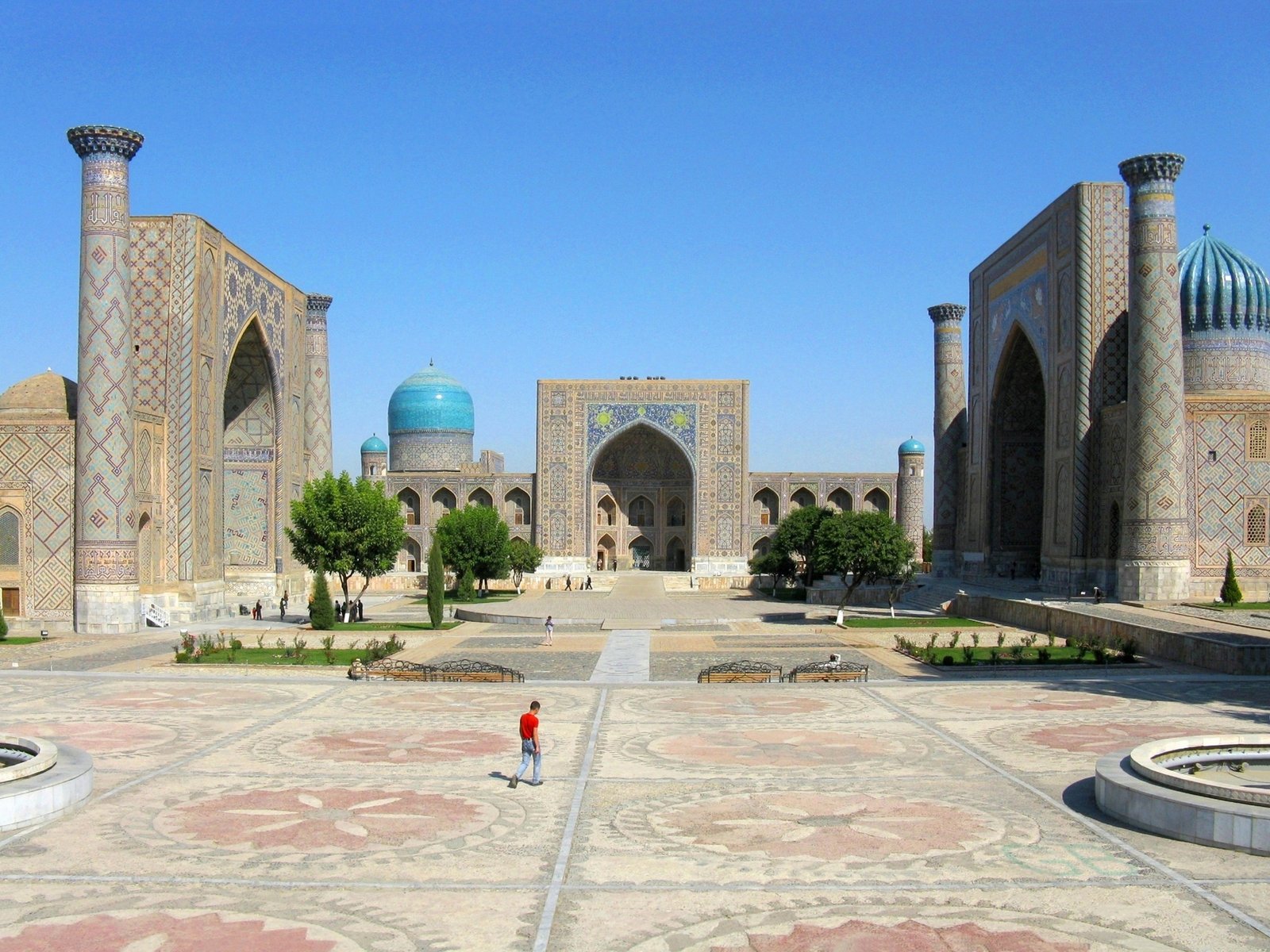
Within a few hours of Tashkent by train or road, Uzbekistan concentrates four UNESCO World Heritage Sites — Samarkand, Bukhara, Khiva and Shahrisabz — that span a thousand years of Islamic architecture, Silk Road commerce and Timurid dynastic ambition. Each city rewards a full day; together they form one of the densest corridors of inscribed heritage anywhere in Central Asia. From Cultural Heritage Online.
Samarkand — Crossroads of Cultures 320 km · 2 hr by Afrosiyob high-speed train
Inscribed in 2001 under the designation “Crossroads of Cultures,” Samarkand is Uzbekistan’s most visited UNESCO site and the fulcrum around which Timurid civilisation turned. Timur — known in the West as Tamerlane — chose the city as his imperial capital in the late 14th century and set his court architects to work on a scale that still staggers visitors six centuries later.
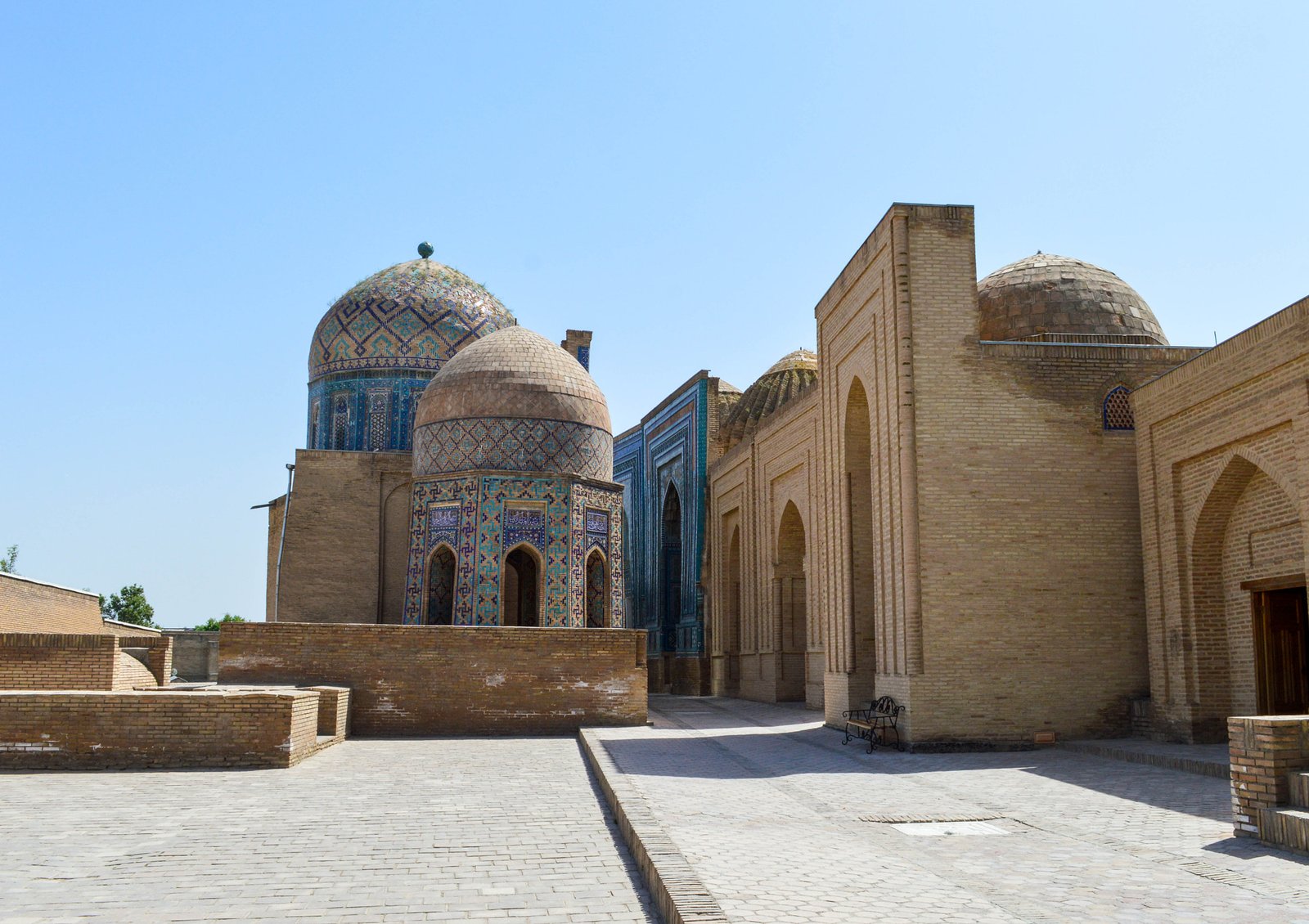
Registan square arranges three madrasahs — Ulugbek (1417–1420), Tilya-Kori (1646–1660) and Sher-Dor (1619–1636) — around a paved courtyard large enough to hold an army review. Stand at the centre at mid-morning and the tilework catches the low sun at an angle that turns every blue mosaic tile into a slightly different shade: turquoise, cobalt, lapis, grey-green. The mosaics were not glazed uniformly; the artisans calibrated the surface to scatter light rather than reflect it. A short walk north, the Shah-i-Zinda necropolis runs as a narrow lane between royal mausolea, their ceramic-tiled facades pressing close on either side. The air there is cooler, dimmer, and faintly perfumed by the offerings left at the tombs.
The Gur-e-Amir mausoleum (completed 1404), where Timur is buried beneath a slab of dark nephrite jade, is quieter than Registan and better for understanding the dynasty’s aesthetic logic: geometric terracotta brickwork on the drum, muqarnas vaulting inside, the tomb chamber lit by narrow windows that slice the space into gold and shadow. The Bibi-Khanym Mosque, begun in 1399 for Timur’s senior wife after his Indian campaign, was the largest mosque in the Islamic world at the time of its construction; it took structural damage from earthquakes but stands substantially restored.
Getting there: Afrosiyob high-speed train from Tashkent, approximately 2 hours; book in advance through UzRailway. Allow: Full day, two days if including the Afrosiab museum and outlying mausolea. Best for: Travellers with a strong interest in Islamic architecture, Timurid history, and decorative tilework.
Historic Centre of Bukhara 570 km · 4.5 hr by high-speed train
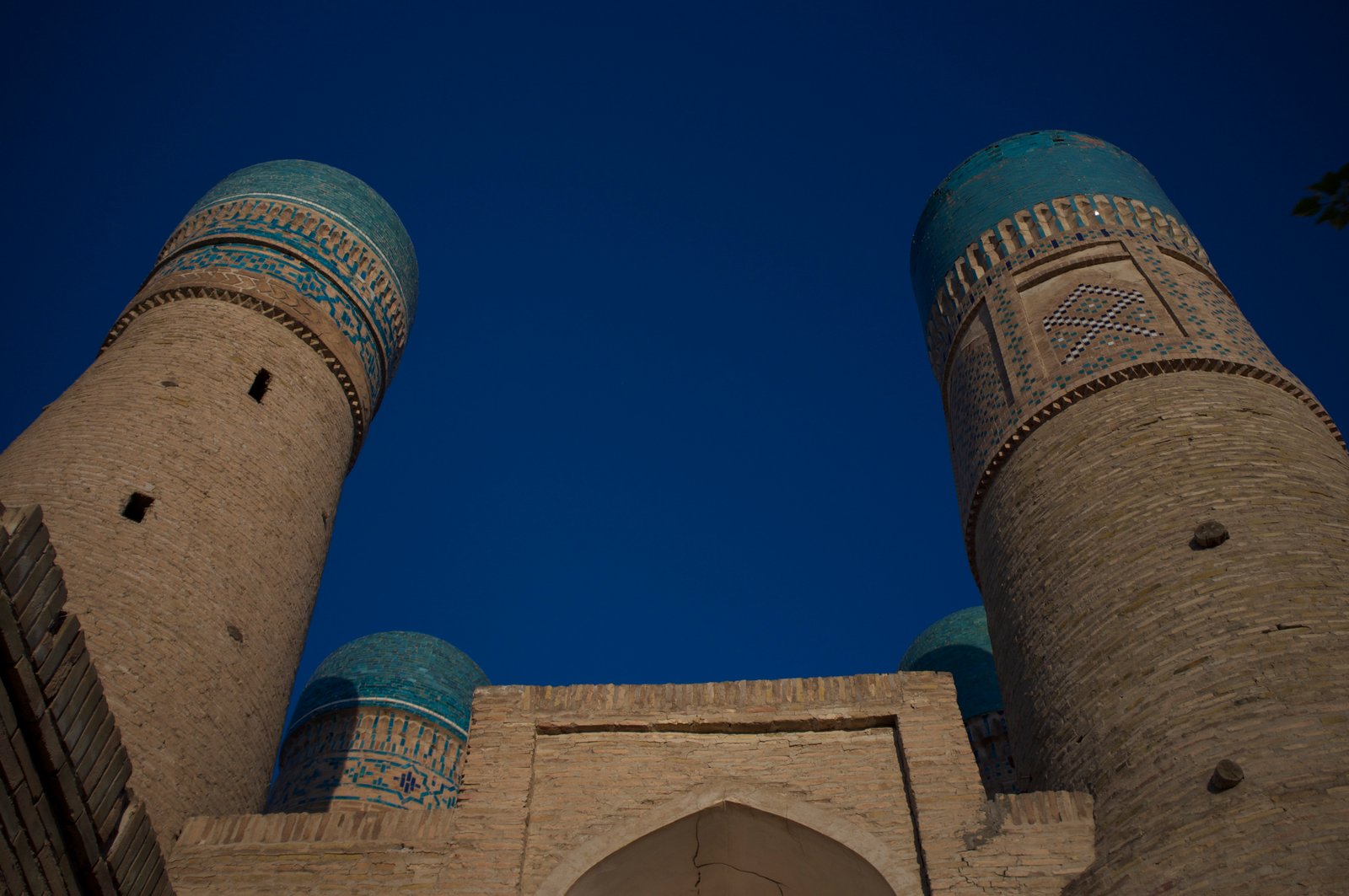
Bukhara’s Historic Centre received its UNESCO inscription in 1993 as one of the best-preserved examples of a medieval Central Asian city. Where Samarkand overwhelms with scale, Bukhara works through accumulation: its lanes between the covered trading domes — Tim Abdullah Khan, Toqi Zargaron, Toqi Telpakfurushan — feel genuinely inhabited, with craft workshops occupying the same niches where merchants traded silk and spices along the Silk Road.
The Kalon Minaret, built in 1127 under the Kara-Khanid ruler Arslan Khan, is the city’s spine. At 47 metres it was tall enough to serve as a landmark for caravans approaching across the desert; its brickwork is laid in sixteen ornamental bands, each different, and at close range the surface has a rough warmth that photographs entirely fail to capture. Genghis Khan reputedly ordered the city burned in 1220 but spared the minaret — impressed, the story goes, by its height. The Samanid Mausoleum, built around 943 CE, predates the Kalon by nearly two centuries and is the oldest surviving Islamic mausoleum in Central Asia. Its baked-brick exterior is a single surface of interlocking geometric bonding: no tile, no glaze, only the pattern shadows cast by the sun moving across the wall.
The Ark fortress, a citadel whose origins reach to the 5th century CE, rises above the western edge of the old city. It served as the palace of the emirs of Bukhara until the Soviet Red Army shelled and captured it in 1920. The interior now houses a museum; the ramparts give the best view over the rooftops toward the minaret.
Getting there: Afrosiyob high-speed train from Tashkent, approximately 4.5 hours, or via Samarkand on the same line. Allow: Full day minimum; overnight recommended to see the old city in the evening, when the Kalon complex is lit. Best for: Those interested in Silk Road urban history, early Islamic architecture, and working craft traditions.
Historic Centre of Shakhrisabz 90 km south of Samarkand · road over the Takhta Karacha pass
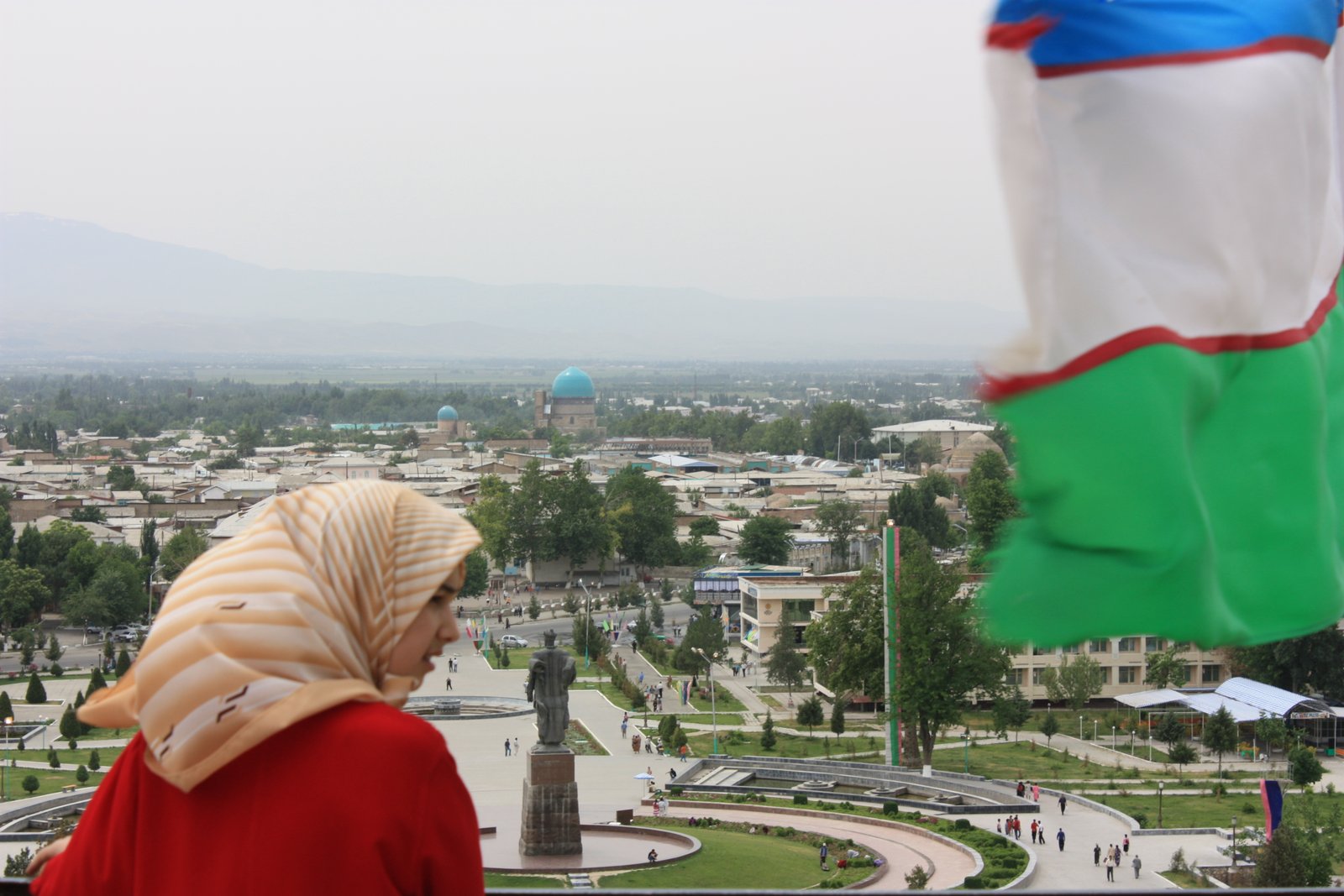
Timur was born in Shakhrisabz in 1336, and he spent decades attempting to transform his hometown into a second imperial capital. UNESCO inscribed the Historic Centre in 2000. The city is reached from Samarkand by a mountain road that climbs through the Zarafshan range and descends into the green Kashkadarya valley — a 90-kilometre drive that takes about two hours and delivers you into a smaller, quieter place than either Samarkand or Bukhara.
The Ak-Saray palace, begun in 1380, was designed to be the largest building in Central Asia. What remains are two colossal portal towers — roughly 40 metres tall — from a structure whose original gateway bore the inscription “If you challenge our power — look at our buildings.” Even in ruin, the towers are disorienting in their scale; they stand at the end of a pedestrianised boulevard and are visible from most of the town. The glazed tile mosaic on the surviving sections, predominantly turquoise and dark blue on a white ground, is detailed enough to show the tile-cutters working at the limits of their technique.
The Dor-us Saodat mausoleum complex nearby was intended as a dynastic burial site. Timur’s son Jahangir is interred there; Timur himself was ultimately buried in Samarkand. The complex is compact and often uncrowded — a contrast to the tourist pressure at Registan — and the tilework in the burial chambers is among the least-restored Timurid work you will see anywhere.
Getting there: From Samarkand by shared taxi or private car, approximately 2 hours over the Takhta Karacha pass (road may be closed in winter; confirm conditions in advance). Not directly accessible by train from Tashkent; combine with a Samarkand stop. Allow: Half-day from Samarkand. Best for: Travellers who want to see Timurid architecture away from crowds, and those interested in the personal biography of Timur.
Itchan Kala, Khiva 450 km west · 6 hr by road or 1 hr flight from Tashkent to Urgench
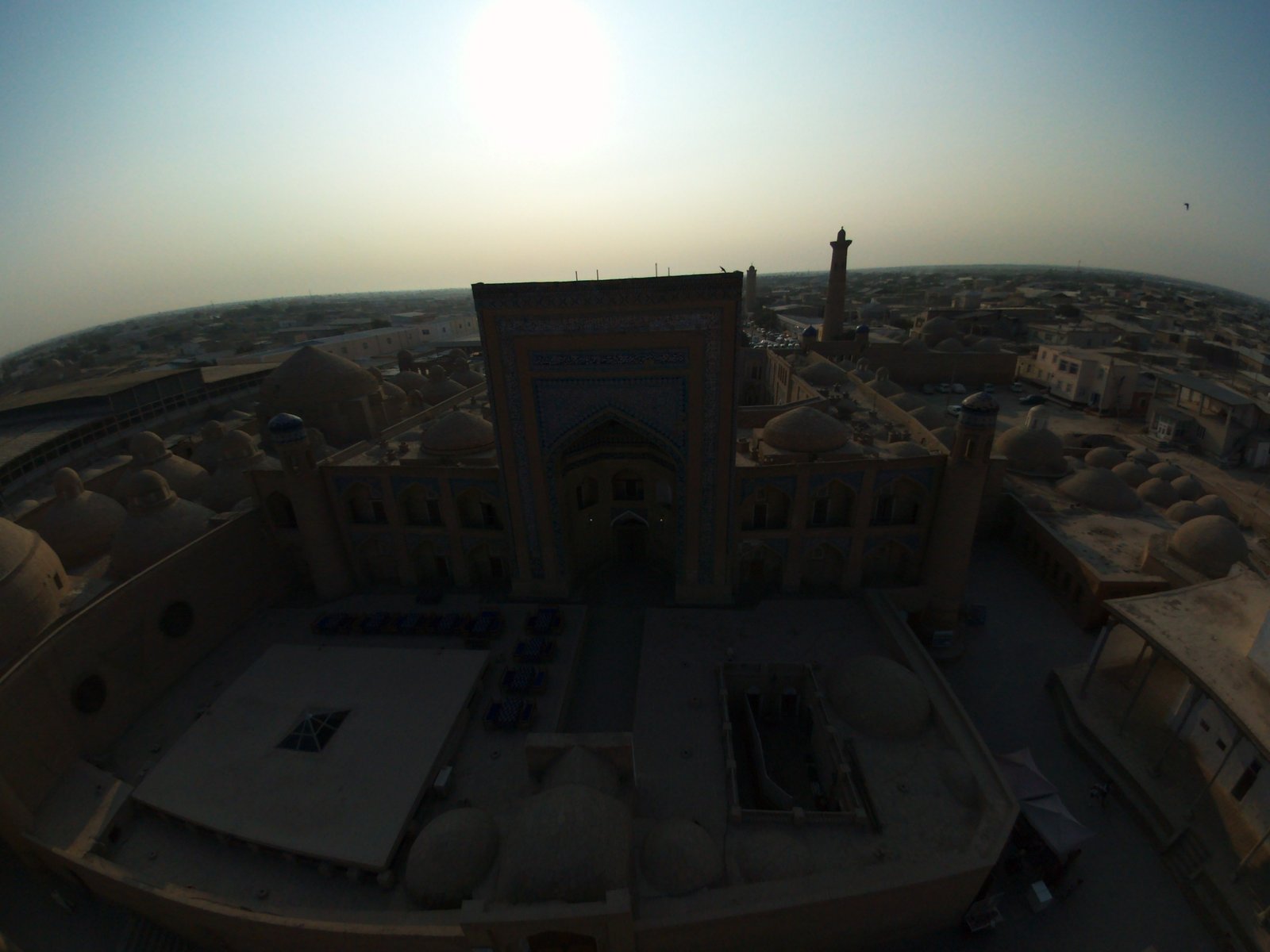
Itchan Kala, the walled inner city of Khiva, became Uzbekistan’s first UNESCO World Heritage Site in 1990. The inscription recognised an intact urban ensemble of more than fifty monuments within a mud-brick wall roughly 650 metres by 400 metres — a complete medieval city whose street pattern, building fabric and spatial relationships have survived largely unaltered. Khiva’s remoteness in the Khorezm oasis, on the edge of the Karakum desert, protected it from the development pressures that reshaped Samarkand and Bukhara.
The Juma mosque is one of the oldest places of worship in Central Asia; the current structure dates to the 18th century but incorporates earlier columns, and its forest of 213 carved wooden columns — each slightly different, some said to date from the 10th century — fills the hypostyle interior with a rhythm that feels more like standing in a grove than inside a building. The smell of old wood in there is distinctive: dry, resinous, faintly dusty. The Kuhna Ark, the old citadel, and the Islam-Khodja minaret (1910, the tallest in Khiva at 57 metres) complete the major monuments. At the top of the minaret stairs, the view across the old city’s rooftops to the surrounding desert is unlike anything else in Uzbekistan.
Khiva is the furthest of the four sites from Tashkent, and the logistics deserve attention. The flight to Urgench takes about an hour; road takes six. Because the city within the walls is small and largely pedestrianised, most visitors see it in a day, but the atmosphere after the day-trippers leave in the late afternoon is worth arranging an overnight stay for.
Getting there: Fly Tashkent to Urgench (approximately 1 hour), then 30 minutes by taxi to Khiva; or drive the full 450 km in approximately 6 hours. Allow: Full day; overnight inside the walls strongly recommended. Best for: Travellers interested in intact historic urban fabric, woodcarving traditions, and Central Asian khanate history.
Frequently Asked Questions
How many UNESCO World Heritage Sites are near Tashkent?
There are four UNESCO World Heritage Sites accessible from Tashkent: Samarkand — Crossroads of Cultures (inscribed 2001), the Historic Centre of Bukhara (1993), the Historic Centre of Shakhrisabz (2000) and Itchan Kala in Khiva (1990). All four are within 570 km of Tashkent. Samarkand and Bukhara are reached by Afrosiyob high-speed train; Khiva is fastest by domestic flight to Urgench.
What is there to see at Registan square in Samarkand, and how should I plan a visit?
Registan square brings together three Timurid madrasahs — Ulugbek (1417–1420), Sher-Dor (1619–1636) and Tilya-Kori (1646–1660) — facing each other across a large paved courtyard. Each facade is covered in mosaic tilework using traditional Central Asian geometric and calligraphic patterns. Plan to arrive by 9 am before group tours, and allow two to three hours to walk through the interiors, which house craft shops and small museums. Combine with the Gur-e-Amir mausoleum (about 15 minutes on foot) and Shah-i-Zinda necropolis (a 20-minute drive or shared taxi) in a single full-day itinerary.
Can I visit more than one UNESCO site in a single trip from Tashkent?
Yes. The most practical combination is Samarkand plus Shakhrisabz: take the morning Afrosiyob train to Samarkand, visit Registan and Gur-e-Amir, then on day two hire a taxi over the mountain pass to Shakhrisabz (2 hours each way) before returning to Tashkent. Bukhara is a natural extension — continue west from Samarkand on the same high-speed line. Khiva requires a separate trip: fly to Urgench from Tashkent or from Bukhara airport. Best travel months are April–May and September–October, when temperatures are moderate; summer midday heat in Bukhara and Khiva can reach 40°C.
What makes the Samanid Mausoleum in Bukhara significant?
The Samanid Mausoleum, built around 943 CE for Ismail Samani, is the oldest surviving Islamic mausoleum in Central Asia and one of the oldest intact Islamic buildings anywhere in the world. Its construction in baked brick predates the widespread use of glazed tile in the region, and the entire exterior surface is composed of interlocking geometric bond patterns that create visual texture through light and shadow rather than colour. The building survived the Mongol destruction of Bukhara in 1220, the later Timurid era, and centuries of neglect in part because it was buried under silt deposits that protected it until excavation in the 19th century.
Sources
- S1 — Knobloch, Edgar. Monuments of Central Asia: A Guide to the Archaeology, Art and Architecture of Turkestan. I.B. Tauris, 2001. ISBN 978-1-86064-590-7.
- S2 — Starr, S. Frederick. Lost Enlightenment: Central Asia's Golden Age from the Arab Conquest to Tamerlane. Princeton University Press, 2013. ISBN 978-0-691-15773-3.
Spotted an error? Write to editorial@culturalheritageonline.com and we correct it the same day.

.jpeg)
.jpg)
.jpg)
