Enrico Dall’Oglio’s Milanese imprint, pioneering modern European literature amid fascist censorship.
Taken over in Milan in 1923 by Enrico Dall’Oglio and partner Mario Banfo, Studio Editoriale Corbaccio transformed an existing imprint into a courageous independent publisher that introduced Italy to contemporary European literature.
Reorganization and International Vision
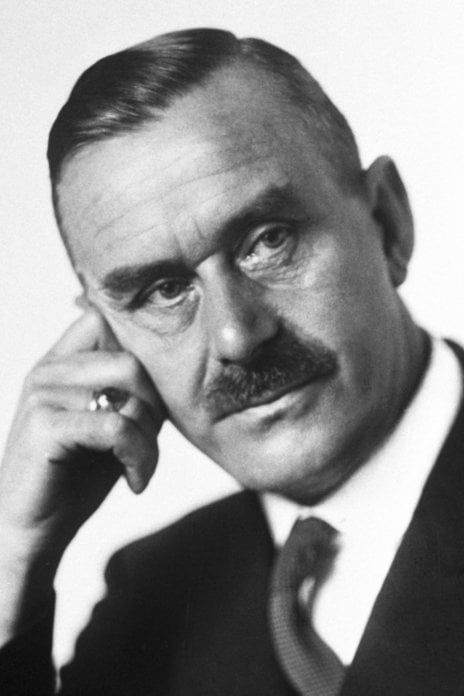
The origins of Corbaccio date back to 1918, when Paolo Nobile and Aristide Raimondi founded Studio Editoriale Corbaccio as a modest publishing enterprise in Milan. In 1923, Enrico Dall’Oglio, together with business partner Mario Banfo, acquired the editorial firm and its catalog, establishing a distinct cultural vision. Operating in Milan, Dall’Oglio reoriented the house toward modern intellectual discourse, launching the series ‘Cultura Contemporanea’ in 1924 to address history, philosophy, and political criticism. In 1928, Corbaccio made a decisive leap forward by acquiring the renowned series ‘Scrittori di tutto il mondo’ from writer and translator Gian Dàuli. Through this series, Corbaccio became the principal vehicle introducing major foreign modernist novels to Italian readers, publishing milestone first translations of authors such as Thomas Mann, Louis-Ferdinand Céline, John Dos Passos, Arthur Schnitzler, Georges Bernanos, and Katherine Mansfield.

Confronting Censorship and Archival Fate
Corbaccio’s uncompromising editorial independence placed the publishing house in direct opposition to fascist cultural controls throughout the late 1920s and 1930s. The regime subjected Dall’Oglio’s catalog to systematic scrutiny and frequent confiscations, beginning with the seizure of Giacomo Casanova’s memoirs in July 1925. In subsequent years, the Ministry of Popular Culture repeatedly targeted Corbaccio’s modern international roster, with Dall’Oglio ultimately recording the seizure of 108 titles across the interwar period. The mounting persecution culminated in 1944 when Dall’Oglio was forced to flee into exile in Switzerland. The pre-1943 administrative and editorial archives of Corbaccio remained in the private custody of the Dall’Oglio family following the war, while the modern trademark was acquired by Longanesi in 1992 and subsequently absorbed into the Mauri Spagnol publishing group.
Sources
- S1 — Treccani, Dizionario Biografico degli Italiani, vol. 32 (1986), voce «DALL'OGLIO, Enrico» di Alessandra Cimmino — https://www.treccani.it/enciclopedia/enrico-dall-oglio_%28Dizionario-Biografico%29/
- S2 — Lombardia Beni Culturali / ArchiVista, scheda soggetto produttore «Casa editrice Corbaccio srl (1923 – )», id MIDB0013CF — https://lombardiarchivi.servizirl.it/groups/CAI-/creators/1743
- S3 — Lombardia Beni Culturali / ArchiVista, fondo «Casa editrice Corbaccio srl (1992 – inizio sec. XXI)», id MIBA00DFE8 — https://lombardiarchivi.servizirl.it/groups/CAI-/fonds/1165
- S4 — Ada Gigli Marchetti, «Le edizioni Corbaccio. Storia di libri e di libertà», Franco Angeli, Milano 2001, ISBN 9788846425157
- S5 — Berta, Giuseppe. L'Italia delle fabbriche. Il Mulino, 2001. ISBN 978-88-15-25257-9.
Spotted an error? Write to editorial@culturalheritageonline.com and we correct it the same day.