Stockholm sits within reach of five UNESCO World Heritage Sites, connected to the city by metro, scheduled ferry, and regional rail. Two are accessible in under an hour; two require a full day; one lies far enough that an overnight stay is worth considering. This guide covers transport options, visit times, and what makes each site distinctive — from a Viking-Age trading island to a functionalist woodland cemetery. From Cultural Heritage Online.
Drottningholm Palace 30–50 min
Inscribed on the UNESCO World Heritage List in 1991, Drottningholm Palace stands on Lövön island in Lake Mälaren as the permanent residence of the Swedish royal family. The original building, erected in 1580 for King John III, burned in 1661. Queen Dowager Hedwig Eleonora immediately commissioned architect Nicodemus Tessin the Elder to design the present Baroque palace; his son Nicodemus Tessin the Younger completed the interiors after his father’s death in 1681. The ensemble includes formal French gardens, an English park, a Chinese Pavilion built in 1753 as a birthday surprise for Queen Louisa Ulrika, and the Drottningholm Palace Theatre — built in 1766 and still in active use, hosting summer opera productions on original 18th-century stage machinery. The pale ochre facades reflect in calm water on clear mornings, giving the palace an almost weightless quality from the ferry approach. The property has served as a royal residence since 1981, when King Carl XVI Gustaf and Queen Silvia moved in permanently.
Getting there: Metro to Brommaplan (T-bana line 17 or 18), then bus 301 to Drottningholm — approximately 30 minutes total. Alternatively, take the scenic Strömma ferry from Stadshuskajen (City Hall pier), which takes about 50 minutes and lands directly at the palace jetty. Allow: 2–3 hours for the palace state apartments, theatre exterior, and gardens. Best for: Baroque architecture and the rare opportunity to see a functioning 18th-century court theatre.
Birka and Hovgården Viking Age Settlement ~2 hrs by ferry (seasonal)
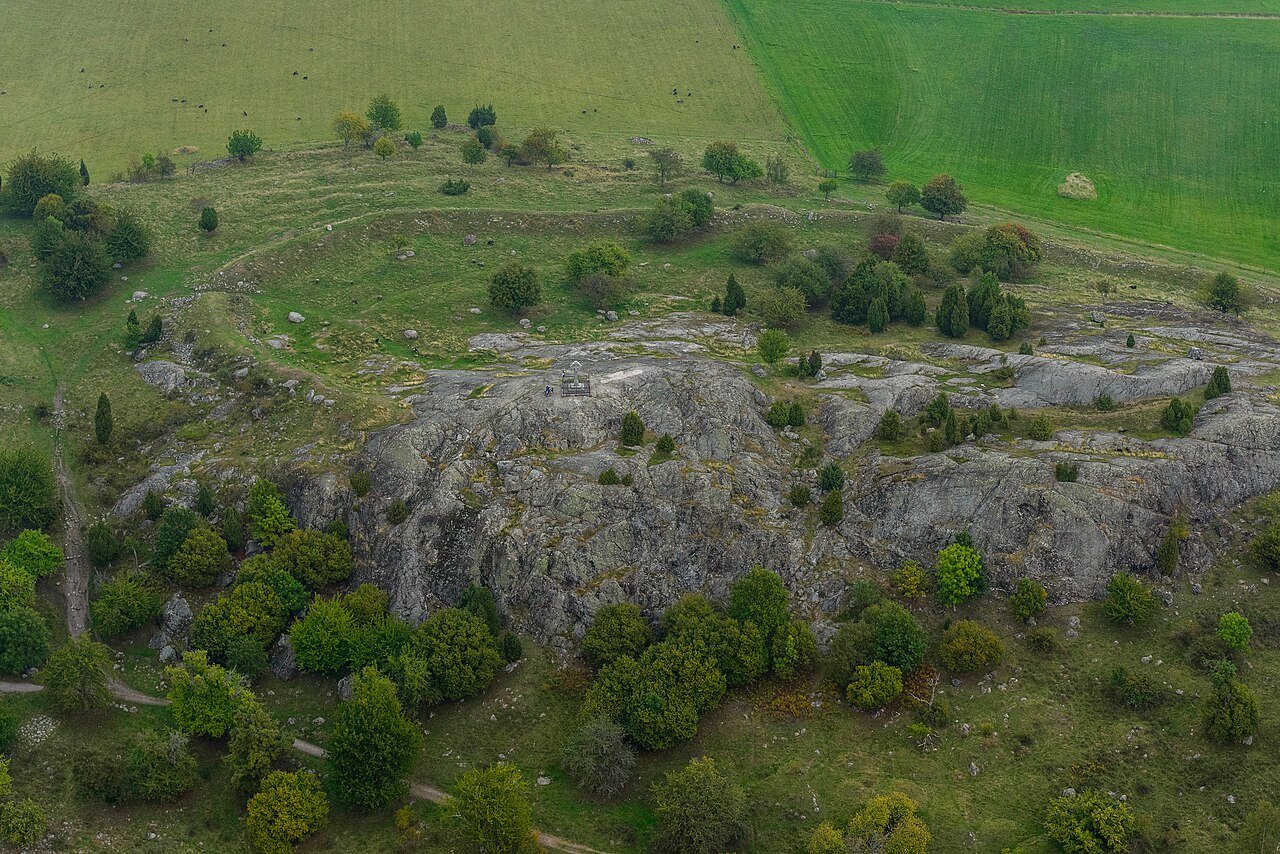
Birka, on the island of Björkö in Lake Mälaren, was founded around AD 750 and is widely regarded as Sweden’s oldest town. For more than two centuries it functioned as a major Baltic trading hub, connecting Scandinavia with the Byzantine Empire and the Abbasid Caliphate via the Dnieper Trade Route. At its peak the settlement held between 500 and 1,000 inhabitants. Merchants exchanged furs, walrus ivory, amber, and iron goods for Chinese silk, Byzantine gold-thread embroidery, Rhineland pottery, and dirham coins from the Middle East — coins that have since been recovered from some of the roughly 3,000 graves archaeologists have catalogued on the island. Birka was abandoned around AD 975, roughly when the Christian town of Sigtuna was founded 35 kilometres to the northeast. The neighbouring island of Adelsö contains Hovgården, a royal estate that complemented Birka’s commercial function. The site received UNESCO inscription in 1993. Walking the open grave fields, where low mounds stretch across a meadow above the lake, gives a palpable sense of scale: this quiet island once anchored a trade network spanning three continents.
Getting there: Strömma runs guided ferry tours from Stadshuskajen (Stadshusbron pier) — the return journey takes approximately 2 hours each way, with around 2–3 hours on the island. Ferries operate seasonally, May through September; check schedules and book in advance. Allow: A full day — plan for an early departure. Best for: Viking-Age history, open-air archaeology, and the quiet landscape of Lake Mälaren.
Skogskyrkogården (Woodland Cemetery) 15 min by Metro
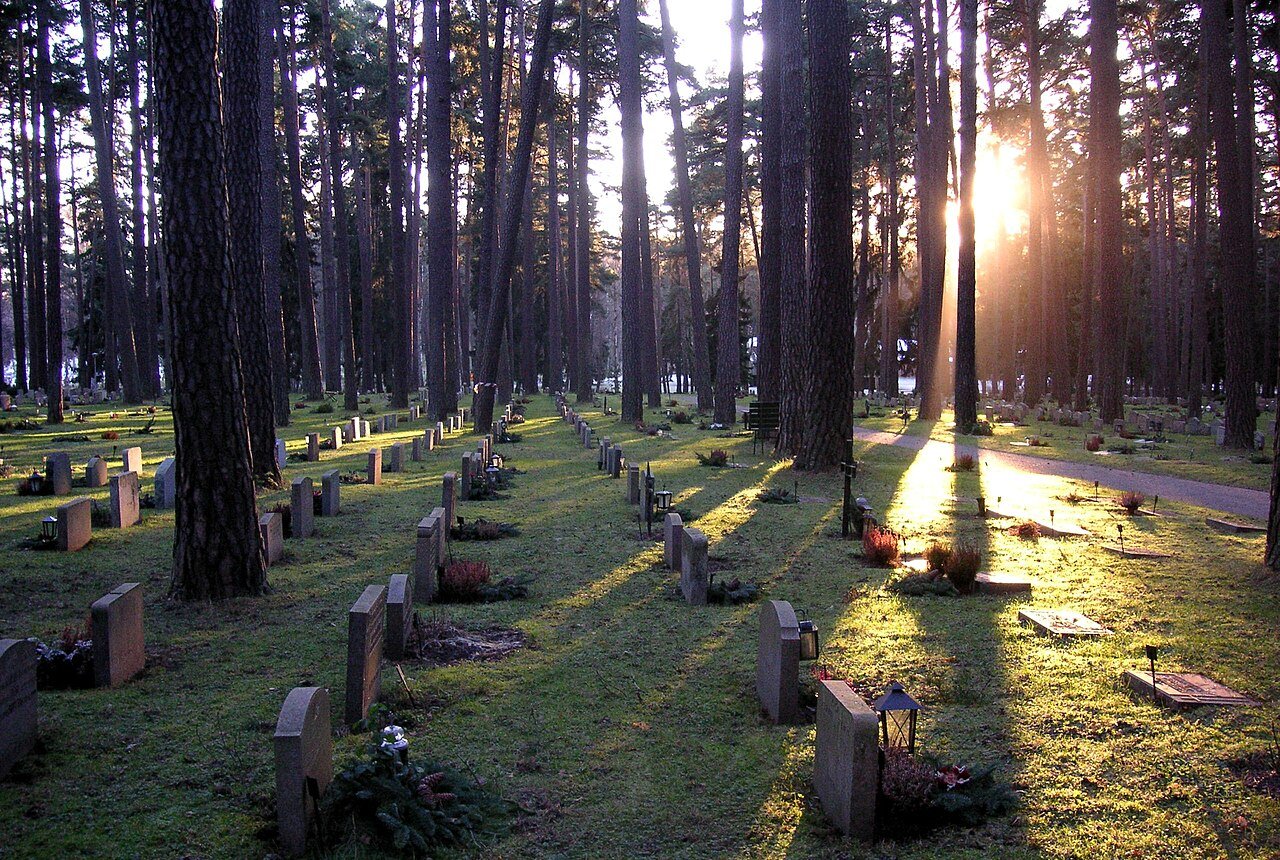
Skogskyrkogården — Swedish for “The Woodland Cemetery” — occupies a former gravel pit in the Gamla Enskede district south of Stockholm, and it is the most accessible UNESCO site on this list. The cemetery was inaugurated in 1920, designed by architects Gunnar Asplund and Sigurd Lewerentz following a 1915 competition. Their design traces an evolution from Nordic Classicism to mature Functionalism across more than two decades of building: Lewerentz’s early Chapel of the Resurrection (1925) sits in dialogue with Asplund’s later Woodland Crematorium (1940), with its famous portico of stark granite columns above a low granite plinth. Tall Scots pines shade the burial grounds. The air smells of resin and cut grass. Grave markers sit low in the turf, preserving long sightlines across meadow and forest. UNESCO inscribed the cemetery in 1994, recognising it as an outstanding example of the integration of landscape and architecture — one that influenced cemetery design internationally throughout the 20th century. It remains an active cemetery, and a place of genuine quiet in a busy city.
Getting there: Metro line 18 (T-bana green line) to Skogskyrkogården station — approximately 15 minutes from Slussen. The cemetery entrance is a short walk from the platform. Allow: 1–2 hours. Best for: Architecture, landscape design, and the unusual experience of a UNESCO site that is also a living, working place.
Engelsberg Ironworks ~2 hrs by regional train
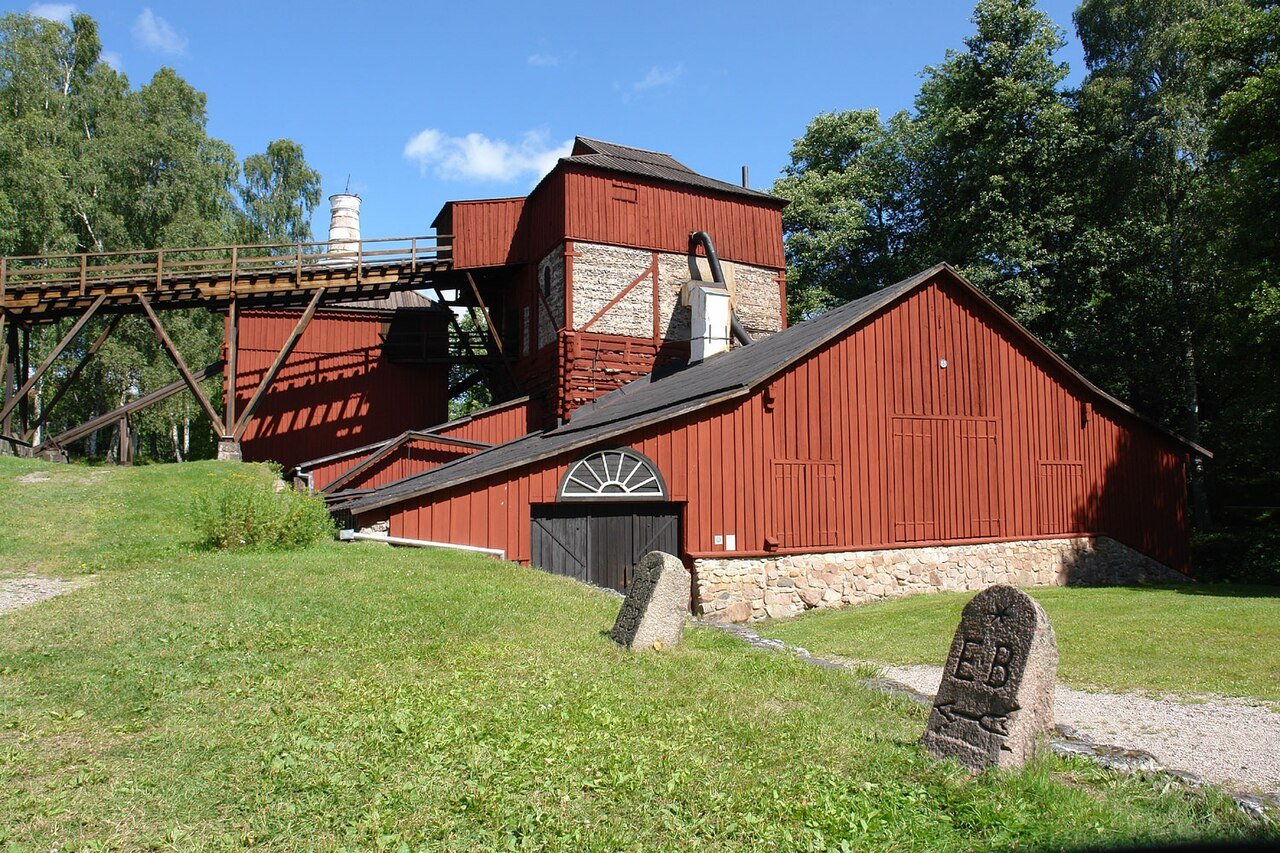
Engelsberg Ironworks, in the village of Ängelsberg within Fagersta Municipality, was established in 1681 by Per Larsson Gyllenhoök. It developed over the following century into what UNESCO describes as the best-preserved and most complete example of a Swedish ironworks from the era when Sweden led the world in high-grade iron production. UNESCO inscribed the site in 1993. Iron working in the area stretches back to at least the 13th century; the ironworks takes its name from Englika, a German-born worker who operated a furnace here in the 14th century. By the period 1700 to 1800, Engelsberg had become one of the most modern ironworks on earth, combining a blast furnace, smelting houses, and an integrated manor house within a compact, well-documented landscape. The preserved ensemble includes the inspector’s residence and workers’ housing alongside the production buildings, making it possible to read the full social hierarchy of an 18th-century industrial community. The smell of old iron and timber persists in the furnace buildings.
Getting there: SJ regional train from Stockholm Central to Västerås (approximately 1 hour), then a local bus or taxi to Ängelsberg (a further 40–50 minutes). Confirm bus connections in advance as frequency is limited. Allow: 2–3 hours on site, plus a full day for travel. Best for: Industrial heritage and visitors interested in the economic history of early modern Sweden.
Rock Carvings in Tanum ~3 hrs 30 min by train
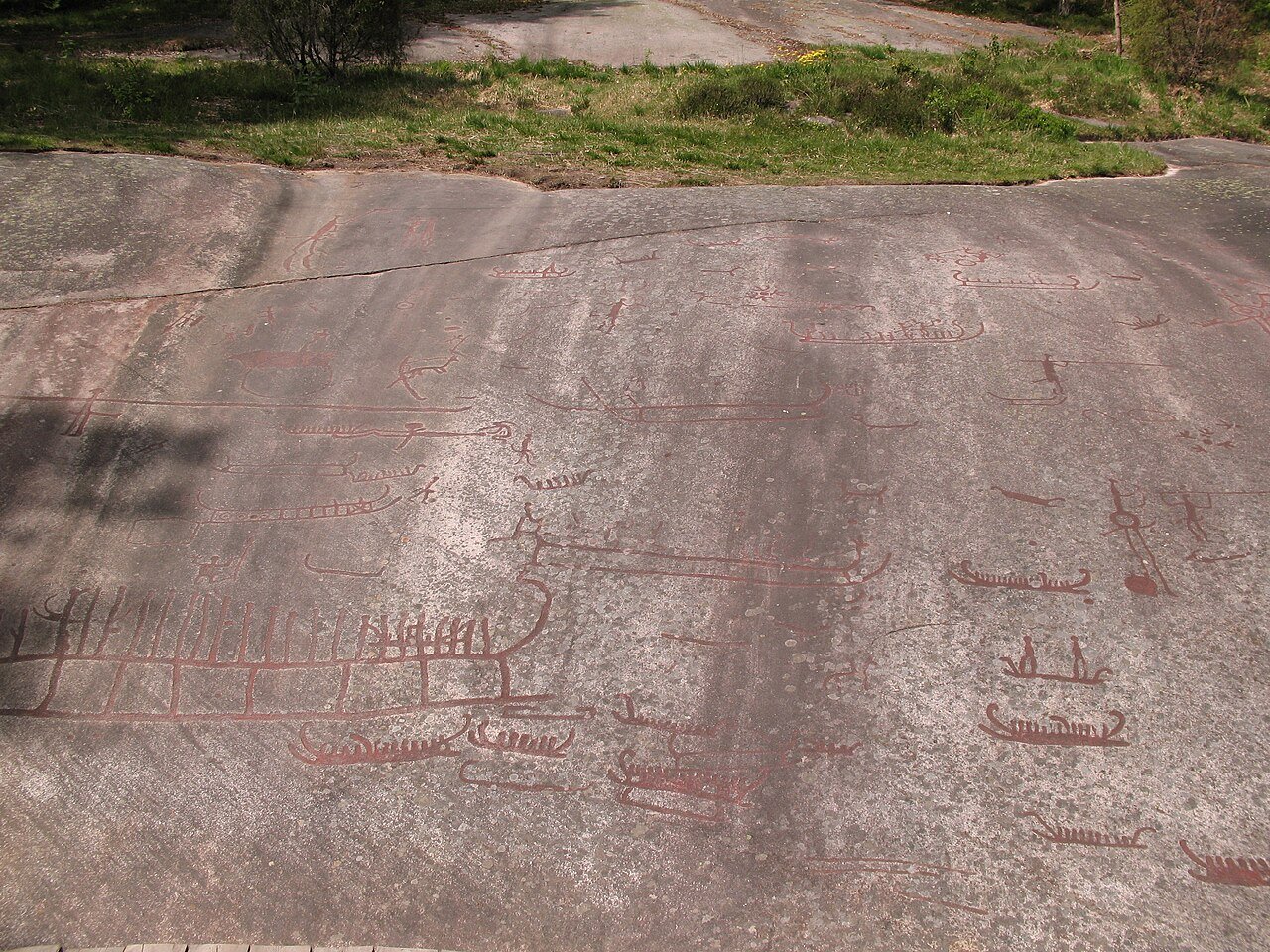
The Rock Carvings in Tanum, near Tanumshede in Bohuslän on Sweden’s west coast, represent one of the largest and most coherent concentrations of Bronze Age petroglyphs in Europe. UNESCO inscribed the site in 1994. The carvings cover approximately 51 hectares and are distributed across some 600 panels cut into smooth rock faces during the period roughly 1800 to 500 BC. The Vitlycke panel alone — 22 metres tall and 6 metres wide — contains nearly 300 individual figures, including ships, ploughmen with oxen, warriors carrying spears and axes, and hunting scenes. The images were carved by pressing and grinding stone tools into the soft coastal rock, which was then at or near sea level; the panels now sit well above the modern waterline, documenting ancient shore positions. The Vitlycke Museum provides scholarly context. The site is honest about scale: these carvings reward close attention, not a passing glance. Tanum is genuinely distant from Stockholm. At 3 hours 30 minutes by train each way, it is a very long day trip or, more sensibly, an overnight stop.
Getting there: SJ train from Stockholm Central to Tanum Gravarne (approximately 3 hours 30 minutes), with a change at Gothenburg or direct on some services; confirm the timetable. The Vitlycke panel is a short walk or taxi ride from the station. Allow: 2–3 hours for the main carving sites and the museum. Given travel time, an overnight stay in Tanumshede is strongly recommended. Best for: Prehistoric art and anyone combining the visit with Sweden’s west coast.
Frequently Asked Questions
How many UNESCO World Heritage Sites are near Stockholm?
Five UNESCO World Heritage Sites lie within reach of Stockholm. Skogskyrkogården is the closest, just 15 minutes by metro. Drottningholm Palace takes 30 to 50 minutes by bus or ferry. Birka and Hovgården require a full-day seasonal ferry trip, and Engelsberg Ironworks a two-hour train journey. Rock Carvings in Tanum, on Sweden’s west coast, is roughly 3.5 hours by rail — better suited to an overnight trip than a strict day trip from Stockholm.
What is the closest UNESCO World Heritage Site to Stockholm?
Skogskyrkogården, the Woodland Cemetery in the Gamla Enskede district, is the closest. Metro line 18 (T-bana green line) reaches the Skogskyrkogården station in around 15 minutes from Slussen. Inscribed in 1994, it was designed by architects Gunnar Asplund and Sigurd Lewerentz and is recognized for integrating landscape and architecture in a way that influenced cemetery design worldwide.
Is the ferry to Birka running all year?
No. Ferry services to Birka on Björkö island operate seasonally, typically from May through September. Outside these months the island is not accessible by public transport. Check current schedules with the ferry operator before planning your visit, and book in advance during peak summer months when tours fill quickly.
Can you visit Drottningholm Palace interior as a tourist?
Yes. Although Drottningholm is the permanent private residence of the Swedish royal family, the State Apartments are open to the public during most of the year. The Drottningholm Palace Theatre — built in 1766 and still operational with original 18th-century stage machinery — hosts guided tours and summer opera performances. Entry times and access areas may be restricted on certain royal occasions; check the Royal Palaces website before visiting.
Sources used in this article
- UNESCO World Heritage Centre — World Heritage List.
- Wikipedia — Drottningholm Palace.
- Wikipedia — Birka.
- Wikipedia — Skogskyrkogården.
- Wikipedia — Engelsberg Ironworks.
- Wikipedia — Rock Carvings in Tanum.
- CHO — Interactive heritage map.
Sources
- S1 — Nordberg, Tord O:son. Drottningholm: Slottet och dess konstskatter. Almqvist & Wiksell, 1975. ISBN 978-91-20-04473-6.
- S2 — Scott, Franklin D. Sweden: The Nation's History. Southern Illinois University Press, 1988. ISBN 978-0-8093-1489-8.
Spotted an error? Write to editorial@culturalheritageonline.com and we correct it the same day.