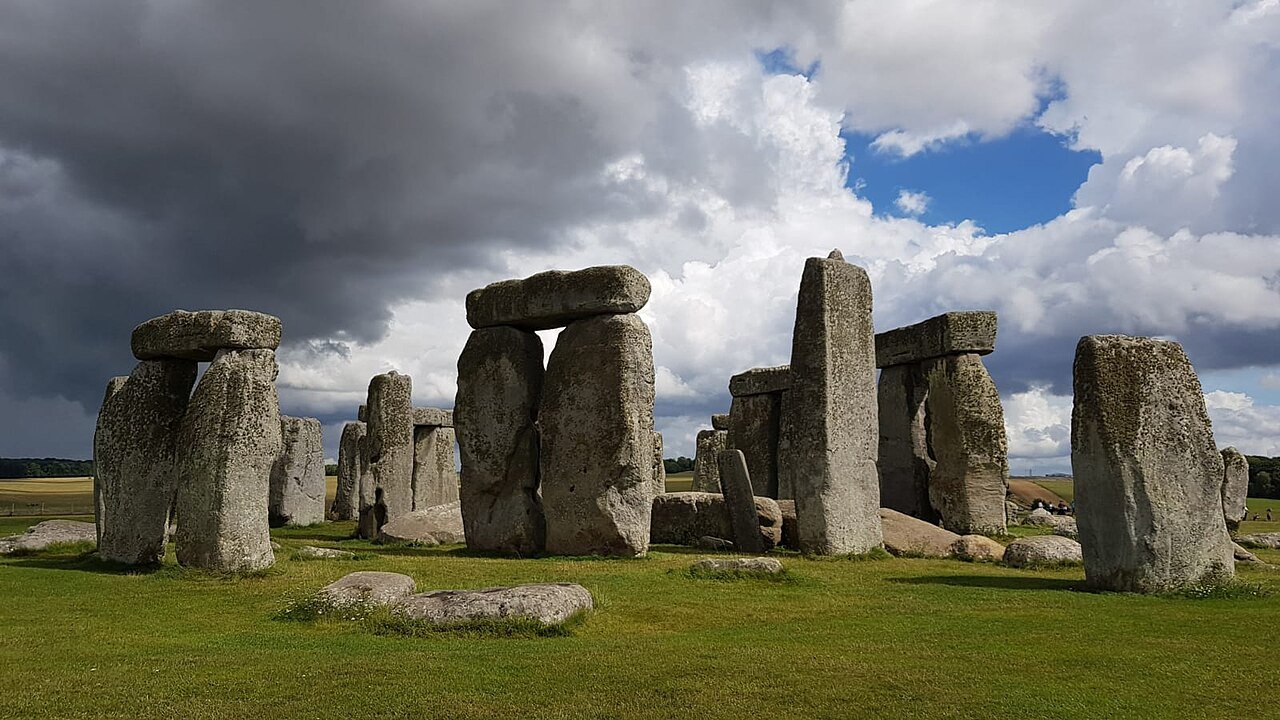
Within two hours of London, seven UNESCO World Heritage Sites span five thousand years of human endeavour — a prehistoric stone circle, a Roman spa city, a medieval cathedral soaked in pilgrimage history, two royal fortresses, a Baroque palace, and an entire riverside quarter that defined the idea of scientific modernity. From Cultural Heritage Online.
Palace of Westminster and Westminster Abbey 1 min from Westminster Tube
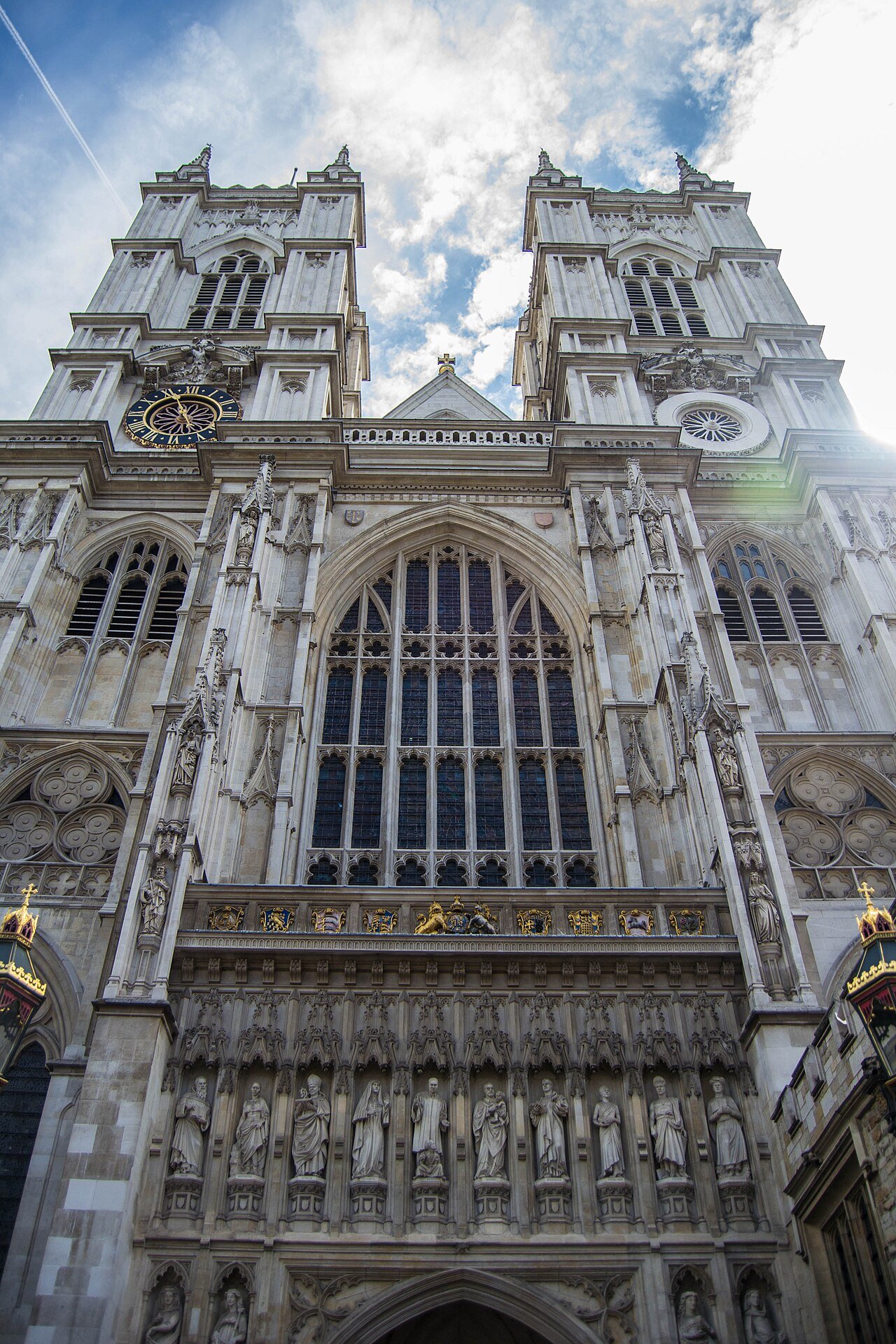
Inscribed in 1987, this UNESCO cluster groups three contiguous landmarks: the Palace of Westminster, Westminster Abbey, and St Margaret’s Church. The Palace as it stands today is a Perpendicular Gothic Revival commission won by Charles Barry in the 1830s, built in collaboration with Augustus Pugin — whose obsessive detailing of over two miles of tiled corridors and 1,100 rooms produced one of the most coherent Gothic interiors anywhere in Europe. Construction began in 1840 and ran three decades, outliving both architects. The Elizabeth Tower at the north end houses the bell known as Big Ben; its 96-metre silhouette is the most photographed view of the Thames. Westminster Hall, dating from 1097, survived the catastrophic fire of 1834 that consumed the rest of the medieval palace and remains the largest medieval timber-roofed structure in northern Europe. Its hammerbeam ceiling soars 21 metres above a stone floor that has witnessed the trials of Thomas More and Charles I. Westminster Abbey has been the coronation church of English and British monarchs since 1066.
Getting there: Westminster Underground station (Circle, District, Jubilee lines) is a one-minute walk; or cross Westminster Bridge on foot from Waterloo. Allow: 2–3 hours for the Abbey and a walk past the Palace exterior. Best for: Visitors who want a concentrated dose of English political and religious history without leaving central London.
Tower of London 5 min walk from Tower Hill Tube
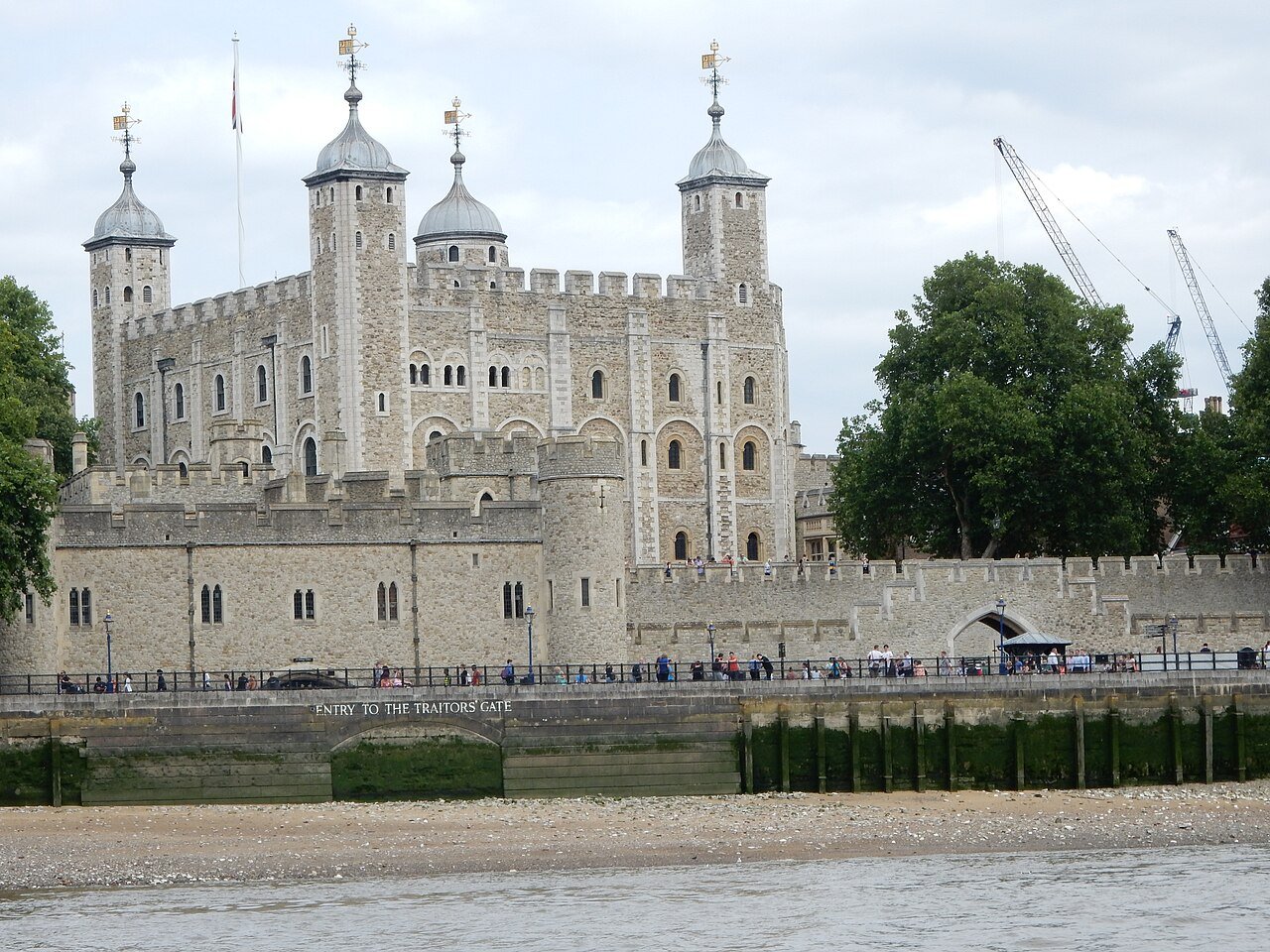
William the Conqueror ordered construction of the White Tower in 1078. That pale Caen-stone keep, rising 27 metres above the Thames foreshore, was a deliberate architectural statement of Norman power over a conquered city, and it remains the physical and symbolic core of a fortress that has barely paused in use across nine and a half centuries. Inscribed by UNESCO in 1988 under criteria ii and iv, the Tower is recognised as a landmark in the evolution of medieval military architecture: two concentric rings of curtain wall, expanded progressively under Richard I, Henry III, and Edward I, set a template for castle design across the Angevin empire. The complex served as royal palace, mint, record office, menagerie, and armoury before becoming primarily a prison during the Tudor period. The Crown Jewels — including the 530-carat Cullinan I diamond — have been housed here since the 17th century and remain among the most visited objects in Britain. The ravens that patrol the inner ward are, by statute, permanent residents.
Getting there: Tower Hill Underground station (Circle, District lines), then a five-minute walk; or Fenchurch Street overground. Allow: 2–3 hours, including the Jewel House queue. Best for: A layered reading of English history from the Norman Conquest to the Second World War, all within a single walled enclosure.
Maritime Greenwich 20 min by DLR from Bank
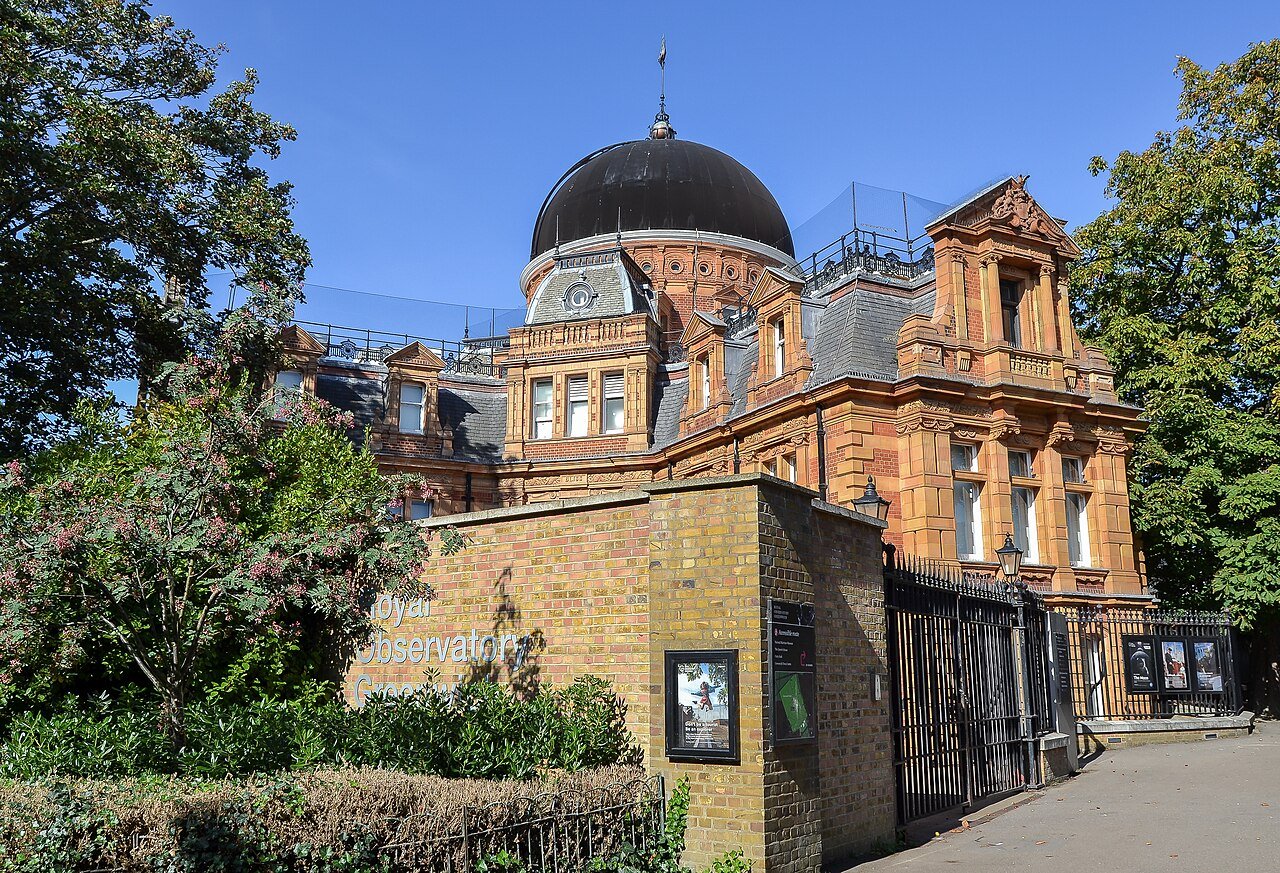
Maritime Greenwich was inscribed in 1995, extended in 2008, and UNESCO describes it as “the finest and most dramatically sited architectural and landscape ensemble in the British Isles.” The designation covers four overlapping elements that between them shaped global navigation, astronomy, and naval power. The Queen’s House, designed by Inigo Jones and completed in 1635, introduced Italian Renaissance classicism to England. Christopher Wren’s Old Royal Naval College — built between 1696 and 1712 as Greenwich Hospital — flanks it with twin Baroque domes whose painted interiors rival any in northern Europe; the Painted Hall in King William Court took James Thornhill nineteen years to complete. On the hill above, the Royal Observatory, founded by Charles II in 1675, housed the work of John Flamsteed, the first Astronomer Royal, and eventually gave the world the Prime Meridian at 0° longitude. Stand on that brass line and the planet’s timekeeping is underfoot. The National Maritime Museum on site holds the largest maritime collection in the world.
Getting there: DLR to Cutty Sark (20 minutes from Bank) or river ferry from central London piers. Allow: 2–4 hours across the museum, college grounds, and Observatory. Best for: Anyone interested in the history of global navigation, Baroque architecture, or the science of time — all in one riverside setting.
City of Bath 1 hr 25 min by GWR from Paddington
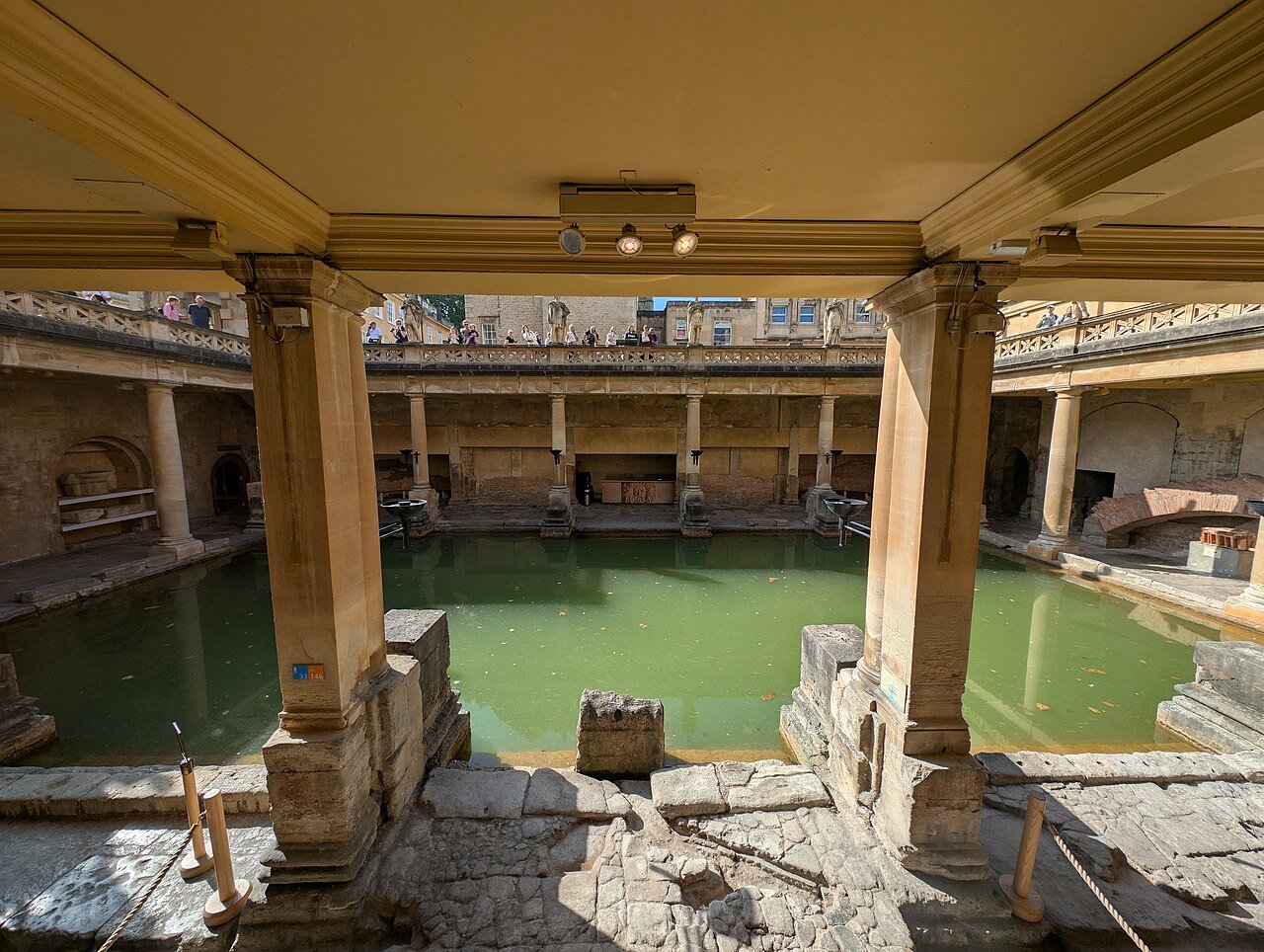
Bath received UNESCO inscription in 1987 and a second designation in 2021 as part of the “Great Spa Towns of Europe” transnational site. It earns both distinctions honestly. The Romans built a temple and bathing complex at Aquae Sulis between 60 and 70 AD, channelling a geothermal spring that still delivers 1.1 million litres of 45°C water daily into a lead-lined Great Bath whose original Roman stonework sits several metres below the Victorian street level. The museum, constructed between 1894 and 1897 by architect John Brydon, wraps the archaeology without obscuring it. Above ground, the Georgian overlay is equally remarkable: John Wood the Elder began laying out the Circus in 1754, a circular terrace of 33 houses that quotes Roman amphitheatre proportions in honey-coloured Bath stone. His son John Wood the Younger completed the Royal Crescent in 1775, a sweeping 150-metre arc of 30 terraced houses facing a broad lawn. The two crescents and the connecting streets constitute one of the most coherent planned urban landscapes of the 18th century.
Getting there: Great Western Railway direct from London Paddington, journey time approximately 1 hour 25 minutes; trains run frequently. Allow: Half a day minimum; a full day comfortably covers the Roman Baths, Royal Crescent, and Circus. Best for: The rare opportunity to read two thousand years of urban ambition — Roman engineering and Georgian town planning — within a ten-minute walk of each other.
Canterbury Cathedral 1 hr by Southeastern high-speed from St Pancras
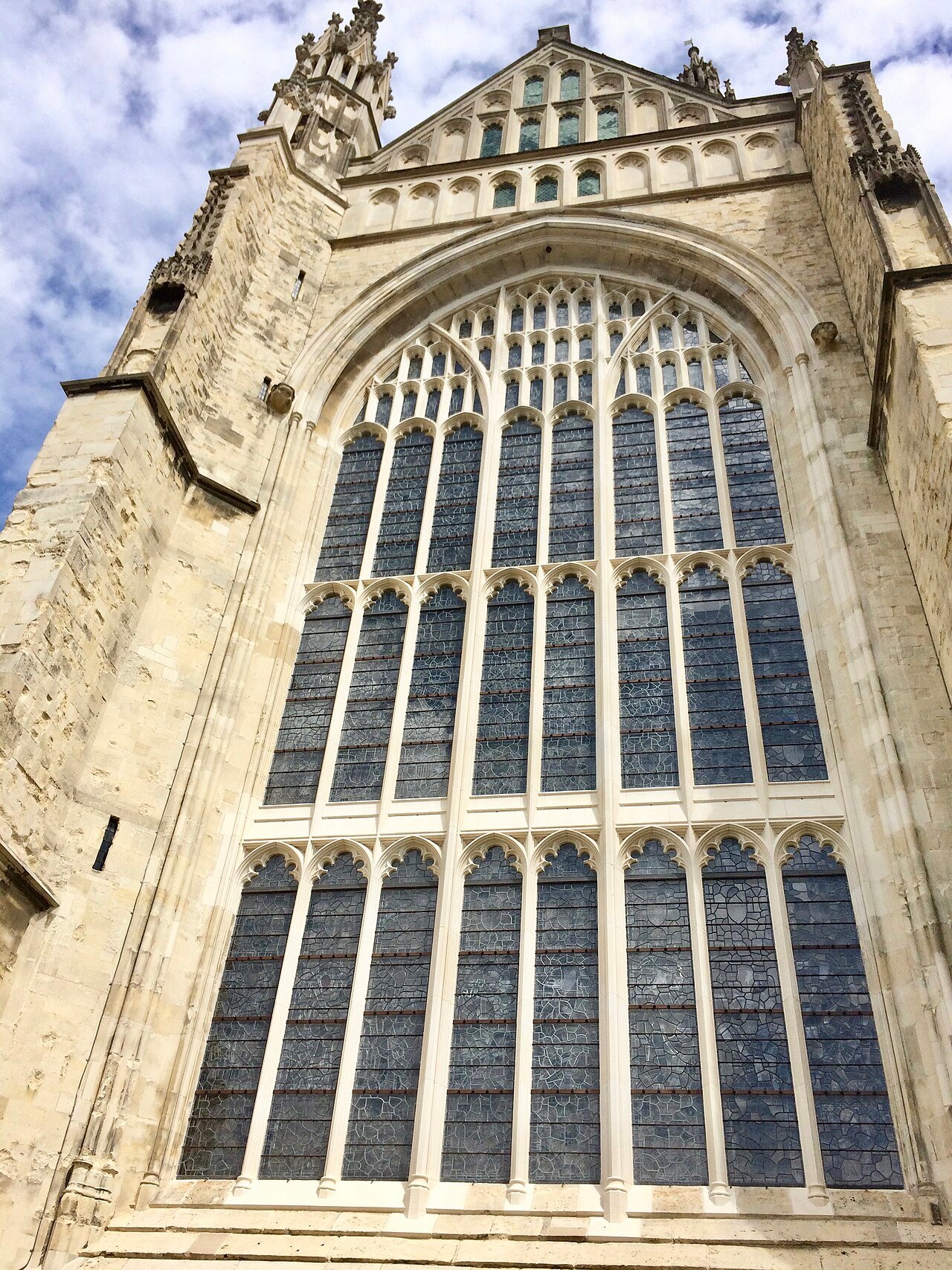
Canterbury Cathedral, St Augustine’s Abbey, and St Martin’s Church were inscribed together as a UNESCO World Heritage Site in 1988. The cathedral stands on a site of Christian worship since 597 AD, when Augustine arrived as papal legate to Anglo-Saxon England. The building visible today is predominantly medieval: the Normans rebuilt it completely between 1070 and 1077, and a catastrophic fire in 1174 triggered a Gothic reconstruction that produced the choir — among the earliest Gothic structures in England — along with the Trinity Chapel built to enshrine the relics of Archbishop Thomas Becket, murdered in the cathedral in 1170. Becket’s death turned Canterbury into the most important pilgrimage destination in medieval England, the journey that Chaucer’s Canterbury Tales documents. The central nave measures 525 feet in length; the Bell Harry Tower, completed around 1498, rises 72 metres and is audible, on a still morning, from well beyond the city walls. The medieval stained glass in the Trinity Chapel choir aisles ranks among the finest 12th-century glass surviving in Europe.
Getting there: Southeastern high-speed service from London St Pancras International to Canterbury West, approximately one hour; the cathedral is a 15-minute walk. Allow: 2–3 hours for the cathedral and precincts; add 30 minutes for St Augustine’s Abbey ruins. Best for: An encounter with medieval English Christendom at its most architecturally and historically concentrated, with the added convenience of a fast direct rail link.
Blenheim Palace 1 hr 25 min Oxford train + bus S3
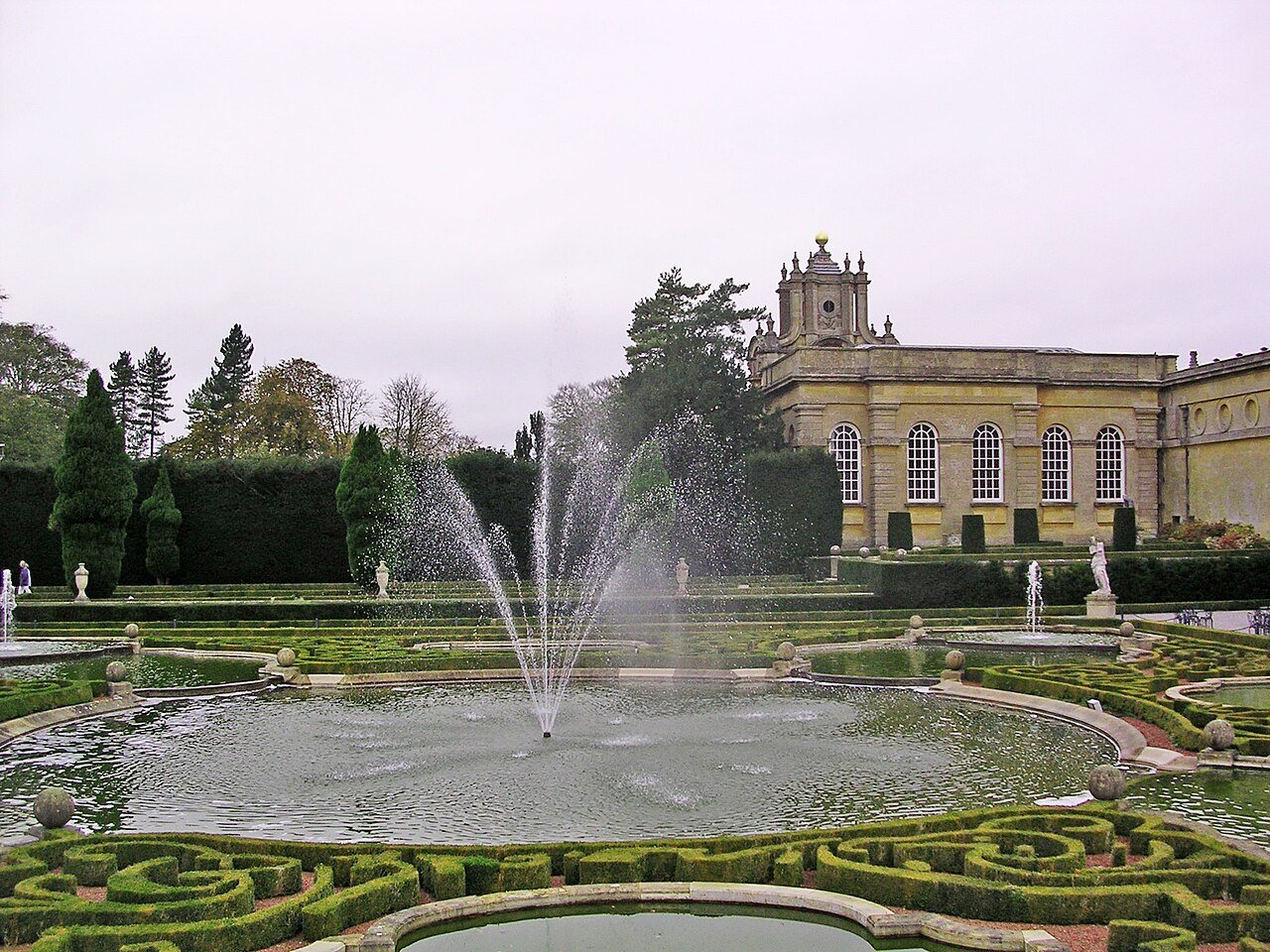
Blenheim Palace achieved UNESCO inscription in 1987, singled out as an outstanding example of English Baroque architecture and as the birthplace of Sir Winston Churchill. Parliament commissioned the palace in 1705 as a gift to John Churchill, 1st Duke of Marlborough, in recognition of his victory over Louis XIV at the Battle of Blenheim the previous year. The architects Sir John Vanbrugh and Nicholas Hawksmoor designed and built it between 1705 and 1722, producing a structure that covers over 2,000 hectares of parkland laid out by Henry Wise and later remodelled by Lancelot “Capability” Brown, who dammed the River Glyme in the 1760s to create the sweeping lake that now forms the palace’s southern prospect. The main block stretches 183 metres across its garden front. Inside, the Long Library runs 55 metres and the Great Hall rises 20 metres under a painted ceiling. Vanbrugh’s architecture operates at a scale calibrated for theatrical effect: the approach from Woodstock, through Nicholas Hawksmoor’s triumphal arch, frames the north façade across a distance of several hundred metres of open parkland.
Getting there: Chiltern Railways from London Marylebone to Oxford (approximately 1 hour), then Stagecoach S3 bus to Woodstock (25 minutes). Allow: 3–4 hours for the palace, formal gardens, and a walk to the Column of Victory. Best for: English Baroque architecture at its grandest scale, combined with Capability Brown’s landscape — a combination matched nowhere else in Britain.
Stonehenge and Avebury 2 hrs by National Express or car
Stonehenge and Avebury were inscribed together in 1986, recognised as the most architecturally sophisticated prehistoric stone circles in the world and as the centre of the densest concentration of Neolithic and Bronze Age monuments in England. Construction at Stonehenge unfolded across more than a millennium, from approximately 3100 BC to 1600 BC; the outer sarsen ring — each stone standing roughly 4 metres high, 2 metres wide, and weighing 25 tonnes — was raised between 2600 and 2400 BC, with the horizontal lintels fixed using mortise and tenon joints unique among monuments of their era. The bluestones, hauled from the Preseli Hills in Wales some 250 kilometres to the southwest, were repositioned between 2400 and 2200 BC. The monument aligns precisely with sunrise on the summer solstice and sunset on the winter solstice. Human cremation deposits date from 3000 BC, making Stonehenge one of the oldest continuously used ceremonial sites in Europe. Seventeen kilometres to the north, Avebury’s henge encloses a village and three stone circles; its outer circuit is the largest stone circle in the world at over 420 metres in diameter.
Getting there: National Express coach from London Victoria to Salisbury, then a connecting shuttle to the site (total approximately 2 hours); by car via the A303, park at the English Heritage visitor centre. Allow: 2–3 hours at Stonehenge; add a half-day if combining with Avebury. Best for: The encounter with a monument whose scale and astronomical precision still resists full explanation — most affecting at dawn or dusk, when the crowds thin and the stones cast long shadows across the plain.
Frequently Asked Questions
How many UNESCO World Heritage Sites are near London?
Seven UNESCO World Heritage Sites are reachable from central London within approximately two hours by public transport or car: the Palace of Westminster and Westminster Abbey, the Tower of London, Maritime Greenwich, the City of Bath, Canterbury Cathedral, Blenheim Palace, and Stonehenge and Avebury. Three of these — Westminster, the Tower, and Greenwich — are within Greater London itself and accessible by Underground or DLR in under 30 minutes.
What is the closest UNESCO World Heritage Site to London?
The Palace of Westminster and Westminster Abbey, inscribed in 1987, is the closest: Westminster Underground station places visitors at the gate in minutes from anywhere on the Circle, District, or Jubilee lines. The Tower of London, inscribed in 1988, is the next closest — five minutes from Tower Hill station. Maritime Greenwich, inscribed in 1995, follows at roughly 20 minutes by DLR from Bank.
Do I need to book tickets in advance for these sites?
For the Tower of London, booking online in advance is strongly recommended, particularly during peak summer months, to avoid long queues at the Jewel House. Blenheim Palace and Stonehenge also benefit from advance booking, as timed entry slots can sell out on busy weekends. Westminster Abbey, Canterbury Cathedral, and the Roman Baths in Bath generally admit walk-ins, though pre-booked tickets save time at the entrance.
Can I combine two UNESCO sites in a single day trip from London?
Westminster and the Tower of London are easily combined in a single day: both are in central London, within a 20-minute walk or one Tube stop of each other. Canterbury Cathedral pairs well with a morning in the city’s medieval centre. Stonehenge and Avebury are designed for a combined visit, with regular shuttle connections between the two sites; set aside a full day for both.
Sources used in this article
- UNESCO World Heritage Centre — World Heritage List.
- Wikipedia — Palace of Westminster.
- Wikipedia — Tower of London.
- Wikipedia — Old Royal Naval College (Maritime Greenwich).
- Wikipedia — Roman Baths, Bath.
- Wikipedia — Canterbury Cathedral.
- Wikipedia — Blenheim Palace.
- Wikipedia — Stonehenge.
- CHO — Interactive heritage map.
Sources
- S1 — Chippindale, Christopher. Stonehenge Complete. Thames & Hudson, 2004. ISBN 978-0-500-28481-0.
- S2 — Summerson, John. Georgian London. Yale University Press, 2003. ISBN 978-0-300-08988-2.
Spotted an error? Write to editorial@culturalheritageonline.com and we correct it the same day.