The Holy Trinity Column of Olomouc, inscribed in 2000, is the largest Baroque plague column in Central Europe — a 35-metre gilded sandstone monument on the Upper Square of Moravia’s historic capital, completed in 1754. Olomouc itself preserves one of the most complete Baroque university cities in the Czech Republic, and the nearby Kroměříž Gardens and Castle extend the Moravian heritage itinerary south along the Morava River.
Holy Trinity Column: Central Europe’s Greatest Baroque Monument Horní náměstí (Upper Square), Olomouc city centre
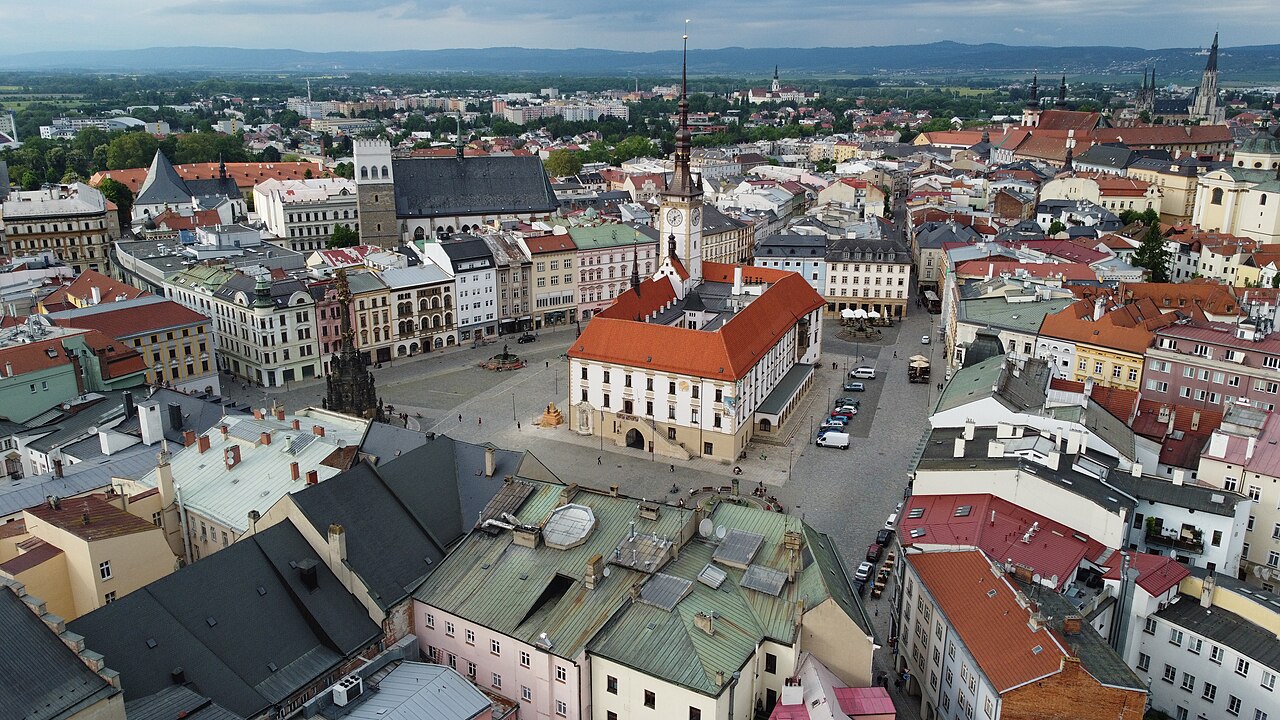
The Holy Trinity Column in Olomouc, inscribed in 2000 under criteria (i) and (iv), is the largest and most richly decorated Baroque plague column in Central Europe — a 35-metre sandstone monument built 1716–1754 on the Upper Square of Olomouc (formerly the capital of Moravia) in thanksgiving for the end of the great plague epidemic of 1714–1715, which killed nearly a quarter of the city’s population. The column is unusual in scale and ambition: it was not built by a ruler or institution but by a private citizen, Jan Ignác Rokyta, a merchant who began funding the project in 1716 and died in 1734 without seeing it completed. The city administration continued his project; it was completed at a total cost of approximately 17,000 florins (an enormous sum for a private devotional monument) and consecrated in the presence of Emperor Francis I. The column’s three tiers contain chapels with 18 golden Baroque statues of saints (by Olomouc sculptors Jan Sturmer and Filip Sattler and others), culminating in a gilded bronze figure of the Holy Trinity at the apex. The base chapel contains a fresco cycle of the Trinity by the Olomouc painter Johann Christoph Handke (1694–1774); unusually, the base is large enough to serve as a small chapel accessible to pilgrims (capacity approximately 10 standing). The column stands in the centre of the Upper Square, one of the largest baroque squares in Moravia, surrounded by the Town Hall (with its Renaissance exterior and an astronomical clock with socialist-realist mosaic panels added in 1955), and the Baroque and Renaissance townhouses of the burgher families of the Moravian capital.
Olomouc: Baroque Moravian Capital and University City City centre
Olomouc was the capital of Moravia (the eastern region of the Czech Republic) from the eleventh century to 1641 CE — when the city was so devastated by the Swedish siege during the Thirty Years’ War (1618–1648) that the Moravian estates moved the capital permanently to Brno. The loss of capital status paradoxically preserved Olomouc: it was not rebuilt on a new scale (as Brno would be under Maria Theresa), instead retaining its medieval street plan and Baroque overlay intact. The city’s Baroque character is defined by its Jesuit university (founded 1573, the second oldest in the Czech lands after Prague), its six Baroque fountains (the largest collection of Baroque fountains in Bohemia and Moravia — including the Caesar, Hercules, Arion, and Neptune fountains), its four preserved Baroque monasteries, and the Cathedral of Saint Wenceslas (founded eleventh century, rebuilt Gothic in the twelfth and thirteenth centuries, neo-Gothic in the 1880s) with its 101-metre neo-Gothic spire. The Olomouc Archdiocesan Museum in the Premonstratensian Palace (the most important museum of Baroque art in Moravia) and the Olomouc Art Museum complete the cultural offer. Olomouc is also renowned for its tvarůžky (Olomouc cheese, a pungent soft cheese made since the fifteenth century and legally protected as a Czech geographical indication).
Kroměříž Gardens and Castle: Imperial Baroque Paradise 🚗 ~30 mins south
The Gardens and Castle of Kroměříž, inscribed in 1998 under criteria (ii) and (iv), is 50 km south of Olomouc — a country estate of the Bishops and Archbishops of Olomouc that was developed by Bishop Karl Eusebius von Liechtenstein-Castelcorno in the 1660s–1690s as the most ambitious Baroque garden composition in Moravia. The castle (rebuilt 1664–1675 after the Swedish destruction during the Thirty Years’ War) contains the Bishops’ Picture Gallery — one of the most important collections of Dutch, Flemish, and Italian Baroque painting in Central Europe, including Titian’s Apollo and Marsyas (c. 1570–1576, one of the last works of Titian and one of the most debated paintings in European art, now interpreted as a meditation on the relationship between art, power, and cruelty) and Guido Reni’s large-format canvases. The Archbishop’s Garden (Arcibiskupský Sad, the enclosed garden) is an example of Baroque garden design of the 1660s, retaining much of its original geometric plan; the Flower Garden (Kvtná Zahrada, 1666–1675, 1.7 km north of the castle, accessible by a Baroque colonnade alley of 244 columns with 251 statues) is the largest surviving Baroque ornamental garden in the Czech Republic.
Practical information
Olomouc is 230 km east of Prague and 75 km northeast of Brno; trains from Prague take approximately 2 hours (RegioJet or ČD fast trains) and from Brno 1 hour. The Upper Square, Holy Trinity Column, and Baroque fountains are all within a 10-minute walk. Kroměříž is 50 km south by train (1 hour, direct from Olomouc) or car (30 minutes). The Archbishop’s Castle at Kroměříž requires an entry ticket; Titian’s Apollo and Marsyas is in the Picture Gallery (additional entry). The best season for Olomouc is May–September; the Festival of Choral Singing in Olomouc (June, the largest such festival in the Czech Republic) attracts large audiences. The Olomouc tvarůžky cheese can be bought directly from the Niva producer’s shop in the city centre or at any market.
Frequently Asked Questions
Is the Holy Trinity Column in Olomouc a UNESCO World Heritage Site?
Yes. The Holy Trinity Column was inscribed as a UNESCO World Heritage Site in 2000 under criteria (i) and (iv). The inscription covers the column itself — the central monument of the Upper Square of Olomouc — as the outstanding example of the Central European Baroque plague column tradition: an architectural and sculptural form developed in the Austrian, Bohemian, and Moravian lands from the late seventeenth century as a collective votive response to recurring plague epidemics, of which the Olomouc column is the largest and most elaborate example.
What is Kroměříž’s significance in Czech cultural history?
Kroměříž gained international attention twice in the nineteenth century: in 1848–1849, when the Austrian imperial parliament (Reichstag) moved there from Vienna during the revolution and debated — ultimately without result — a constitutional framework for the Austrian Empire that would have established civic and national rights; and as the location of the 1975 film Amadeus (directed by Miloš Forman) where the Archbishop’s Palace was used as the Archbishop of Salzburg’s court (though Forman’s film has dramatic liberties with Mozart’s history). The Kroměříž film festival (Zlín Film Festival) is one of the oldest in the Czech Republic, and the palace and gardens are active venues for classical music performances in summer.
Why is Titian’s Apollo and Marsyas in Kroměříž?
The painting was acquired by the Bishop of Olomouc at a time when the Bishops’ Picture Gallery at Kroměříž was being assembled as one of the most important private art collections in Central Europe. Titian’s late work depicts the Ovidian myth of the satyr Marsyas, who challenged Apollo to a music contest and was flayed alive by the god for losing — a theme Titian returned to at the very end of his life (he was in his late 80s or 90s when he painted it). The painting’s dark, unfinished quality and disturbing subject matter (the flaying is shown in explicit biological detail) have generated extensive art-historical debate about whether Titian intended it as a meditation on artistic suffering, on the relationship between power and creativity, or on his own imminent death. Its presence at Kroměříž, far from the major art centres, has paradoxically helped it survive in excellent condition.