

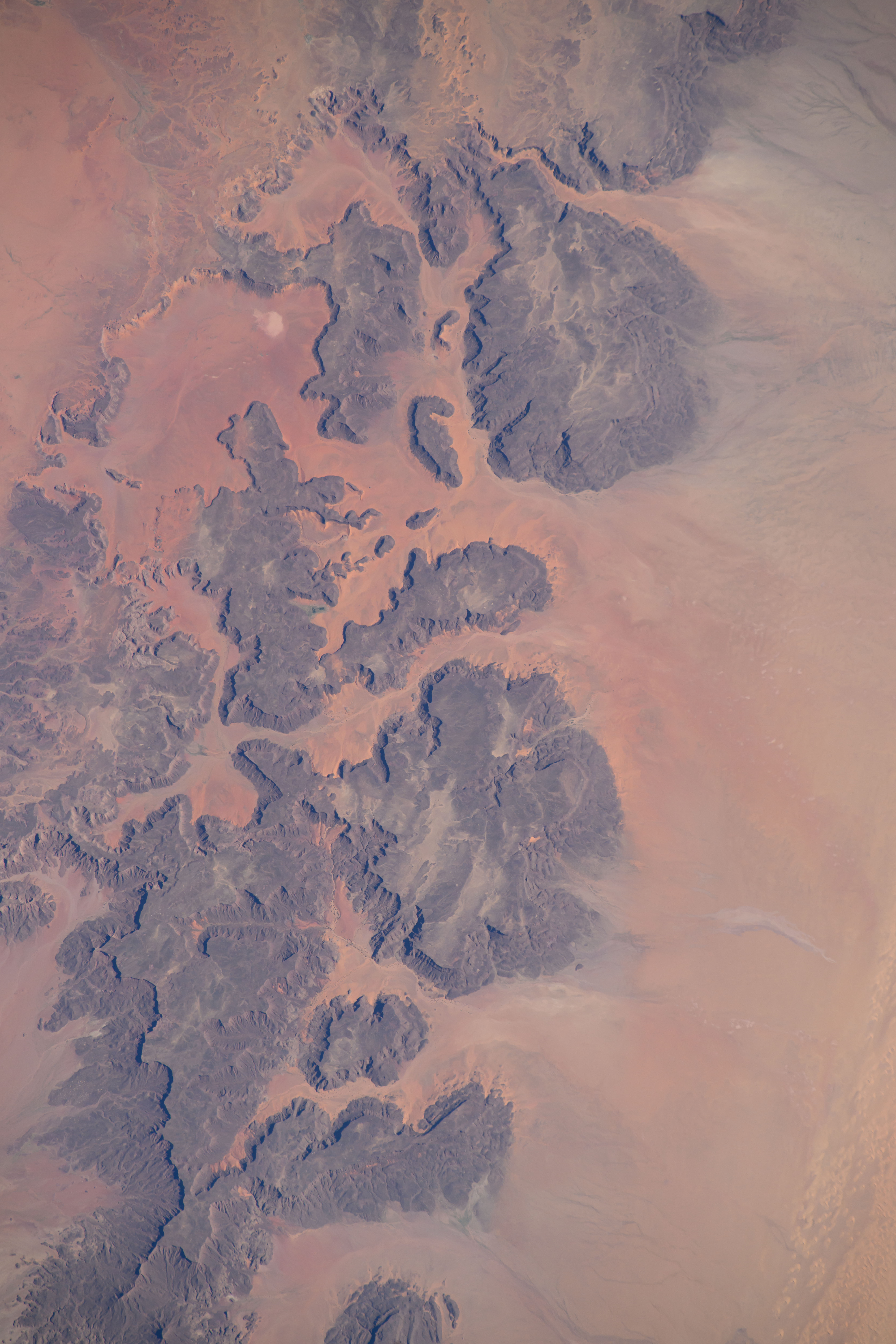
Chad holds two UNESCO World Heritage Sites, both in the northeastern Sahara: the Lakes of Ounianga, an improbable system of 18 desert lakes fed by fossil groundwater, and the Ennedi Massif, a sandstone plateau of sculpted canyons, prehistoric rock art, and desert crocodiles. Both require commitment to reach from N’Djamena, and both reward it. From Cultural Heritage Online.
Ennedi Massif: Natural and Cultural Landscape 900 km NE — 2 hr flight + 4 hr road
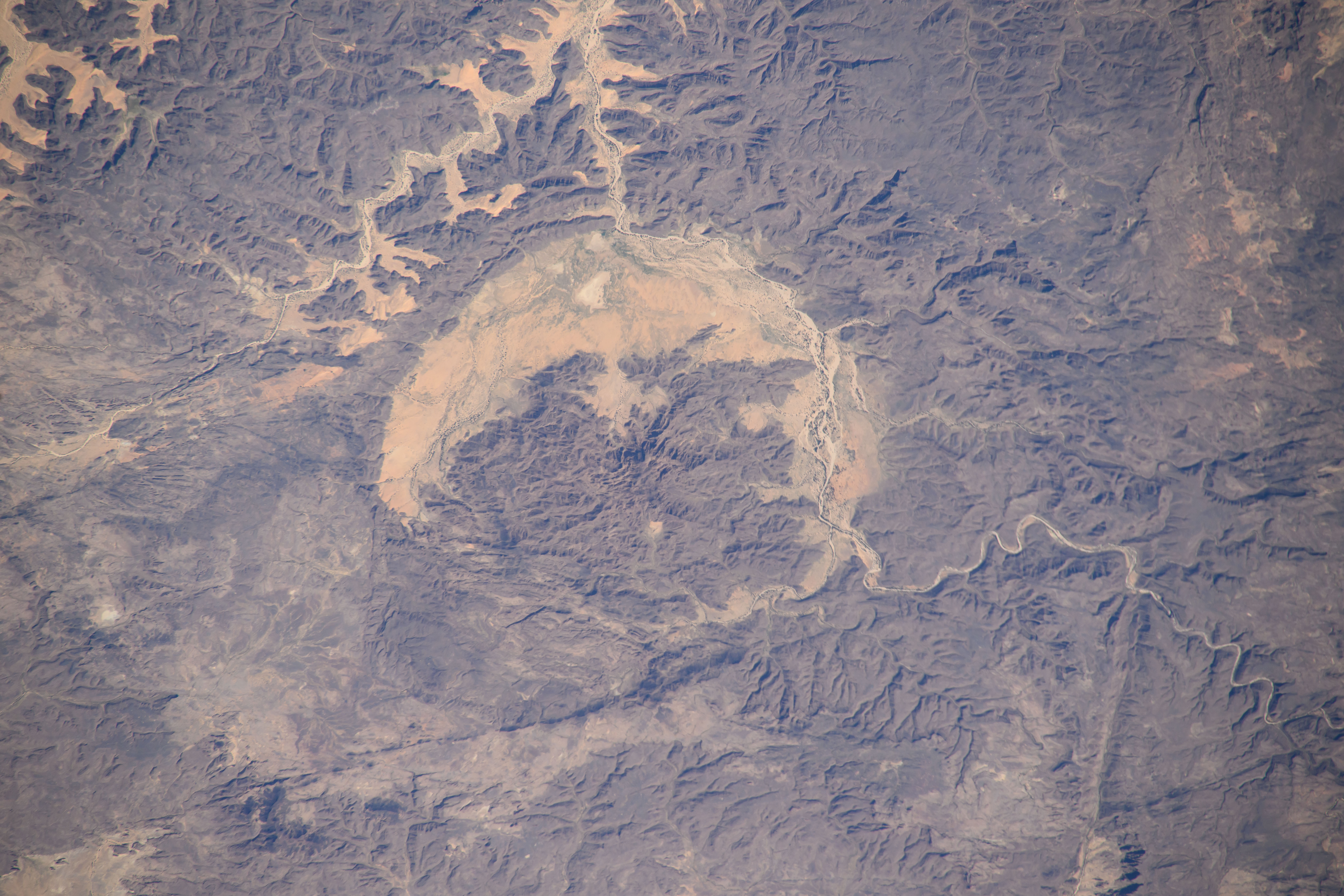
The Ennedi Massif rises from the Sahara floor as a sandstone plateau reaching 1,450 metres, its surface fractured by millennia of erosion into a labyrinth of canyons, natural arches, free-standing towers, and orange-red pillars. UNESCO inscribed the site in 2016 as a combined natural and cultural landscape — a designation that reflects the exceptional duality of what is here: a geological spectacle fused with one of Africa’s densest concentrations of prehistoric rock art. The scale and solitude are difficult to convey. There are no paved roads, no tourist infrastructure, and in many parts of the massif, no human presence at all beyond the nomadic Toubou and Arab herders who have used these corridors for generations.
The rock paintings and engravings cover canyon walls and sheltered overhangs throughout the massif. Many date to the Green Sahara period, roughly 8000 to 4500 BC, when the region received reliable rainfall and supported wildlife that has long since vanished: hippopotamuses, crocodiles, cattle, and large bovids rendered in ochre and white with a precision that speaks to close, sustained observation. These were not marginal people leaving scattered marks; they were inhabitants of a functioning savannah ecosystem. The contrast between the art’s subject matter and the current hyperarid landscape constitutes one of the most vivid records of Holocene climate change anywhere on Earth.
The Archei Guelta, a permanent water pocket deep within the massif, shelters one of the last surviving populations of African desert crocodiles — a relict population cut off from other crocodile populations for thousands of years as the Sahara dried. The animals survive on fish, insects, and carrion, drinking the same water source used by camel caravans that still pass through. Nomadic communities continue to graze livestock across the plateau, maintaining a relationship with this landscape that has few parallels on the continent.
Getting there: Domestic flight from N’Djamena to Abéché (approximately 2 hours), then 4WD road transfer of around 4 hours to the massif edge; a local guide and 4WD vehicle are essential. Allow: A minimum of 4 days in the massif to reach the major canyon systems; 7–10 days for a serious exploration. Best for: Travellers with experience of remote desert terrain, an interest in prehistoric art, and tolerance for basic camping conditions.
Lakes of Ounianga 1,000 km NE — 2 hr flight + road transfer
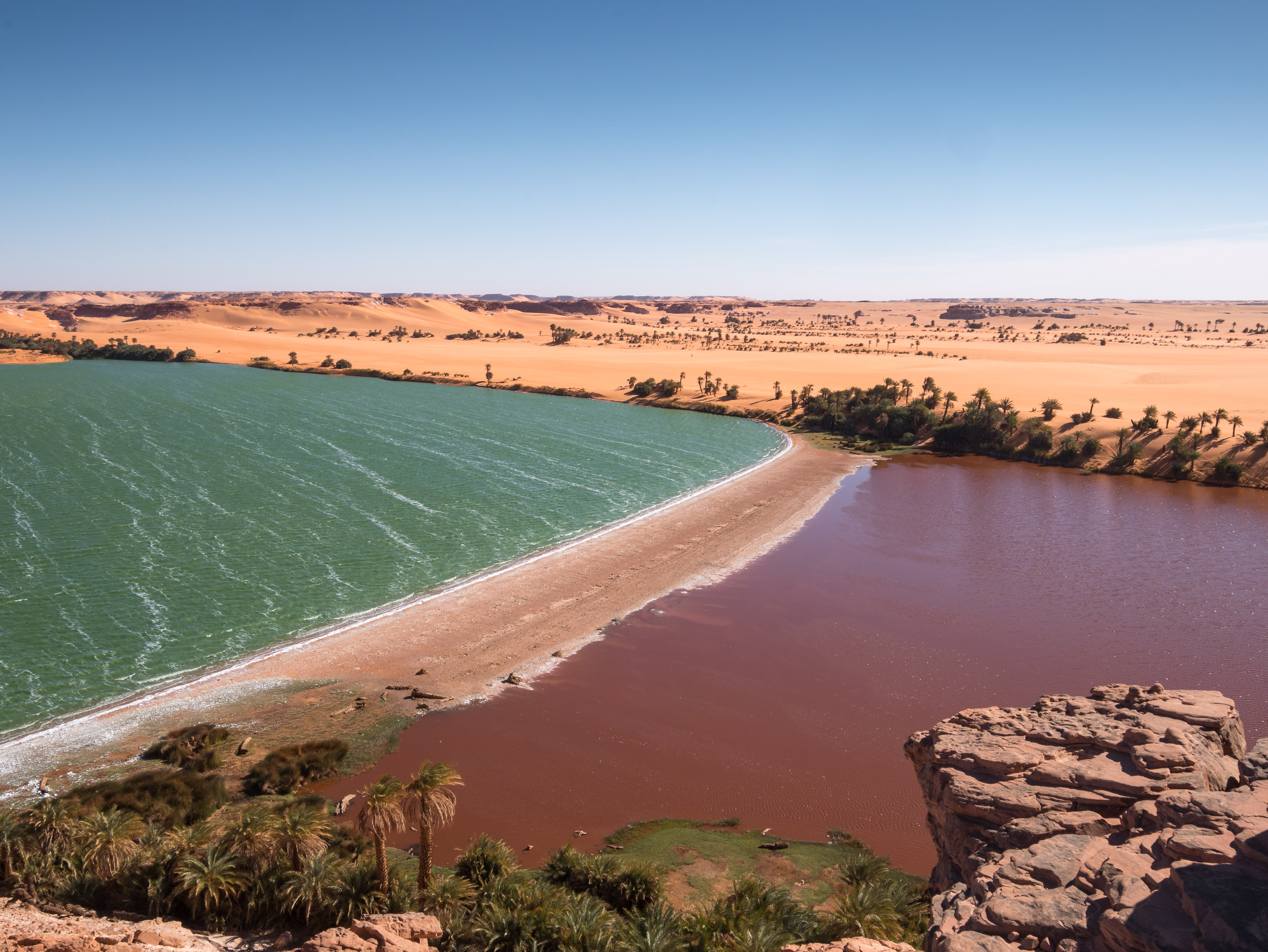
The Lakes of Ounianga comprise 18 lakes distributed across two clusters — Ounianga Kebir and Ounianga Serir — in the Ennedi region of northern Chad, roughly 1,000 kilometres from N’Djamena. They exist because an ancient underground aquifer, charged during the humid periods of the Sahara’s past, continues to discharge freshwater into the desert surface. The surrounding landscape is one of the driest places on Earth, receiving less than 2 millimetres of rain per year; the lakes receive none of their water from rainfall at all. They are a direct expression of the Sahara’s buried hydrological past.
What makes the system visually extraordinary is its variety. Different lakes have different chemistry, salinity, and biological communities, and this is legible in their colour: the freshwater lakes run deep blue, the saline ones shift toward green or milky turquoise, and Lake Motro, one of the most saline, carries a red tinge from the halophilic organisms in its water. Papyrus swamps separate some of the lakes at Ounianga Serir, and these reed beds reduce evaporation enough to maintain the water balance of the cluster as a whole. The system has been stable for approximately 5,000 years, since the Sahara’s last major drying phase cut off formerly connected surface water bodies across the region.
UNESCO inscribed the Lakes of Ounianga in 2012 as an outstanding example of desert lake systems sustained by subsurface hydrology — a category with no close parallel anywhere in the world at this scale. The freshwater lakes support fish populations. The site is remote, sparsely visited, and largely undeveloped, which means the experience of arriving at a blue lake fringed with reeds in the middle of the Sahara carries genuine force.
Getting there: Domestic flight from N’Djamena to Faya-Largeau (approximately 2 hours), then road transfer to Ounianga Kebir; total ground transfer time varies by route and vehicle but typically runs 3–5 hours. A 4WD vehicle is required. Allow: At least 2 full days to visit both the Kebir and Serir clusters. Best for: Travellers drawn to extreme natural phenomena, desert landscapes, and sites where geology and hydrology intersect in visible, legible ways.
Frequently Asked Questions
How many UNESCO World Heritage Sites are near N’Djamena?
Chad has two UNESCO World Heritage Sites, and both are accessible from N’Djamena: the Lakes of Ounianga (inscribed 2012), approximately 1,000 km to the northeast, and the Ennedi Massif: Natural and Cultural Landscape (inscribed 2016), approximately 900 km to the northeast. Neither is close — both require domestic flights and 4WD road transfers — but both are within reach of N’Djamena as a base for international arrivals.
What is the best way to travel from N’Djamena to the Ennedi Massif?
The standard route combines a domestic flight from N’Djamena to Abéché (around 2 hours) with a 4WD road transfer of roughly 4 hours to the massif. Hiring a reliable 4WD vehicle with an experienced local driver-guide is not optional — the terrain requires it, and navigation in the massif itself depends on local knowledge. Organised expeditions from specialist outfitters familiar with the region offer the most practical access for independent travellers.
What is the best season to visit the Lakes of Ounianga and the Ennedi Massif?
The cooler dry season, from October through February, is the most comfortable period for travel in northern Chad. Daytime temperatures in the desert can still be significant, but nights are cool and conditions for overland travel are generally stable. The summer months bring extreme heat across the Sahara, with temperatures regularly exceeding 45°C. If combining both sites in a single trip, the dry season offers the most reliable window for road transfers and outdoor exploration at both locations.
What are the rock paintings of the Ennedi Massif, and why are they significant?
The Ennedi rock paintings and engravings are among the most substantial bodies of prehistoric art in Africa. Created over thousands of years beginning around 8000 BC, during the Green Sahara period when the region was grassland and savannah, they depict animals — hippos, crocodiles, cattle, large bovids — that no longer exist in the area. They also record human figures, domestic scenes, and pastoral activities. The images document the ecological conditions of a fundamentally different climate phase and represent a continuous artistic tradition that spans from the humid Sahara to the beginnings of the current arid period. Their presence in the Ennedi, preserved by the dry climate of the canyon walls, makes the site an irreplaceable archive of Holocene environmental and cultural history.
Sources
- S1 — Kröpelin, Stefan. Lakes in the Sahara: The Ounianga Serir Limnology. Springer, 2008. ISBN 978-1-4020-6540-8.
- S2 — Reader, John. Africa: A Biography of the Continent. Alfred A. Knopf, 1998. ISBN 978-0-679-40979-3.
Spotted an error? Write to editorial@culturalheritageonline.com and we correct it the same day.


.jpg)
.jpg)
