
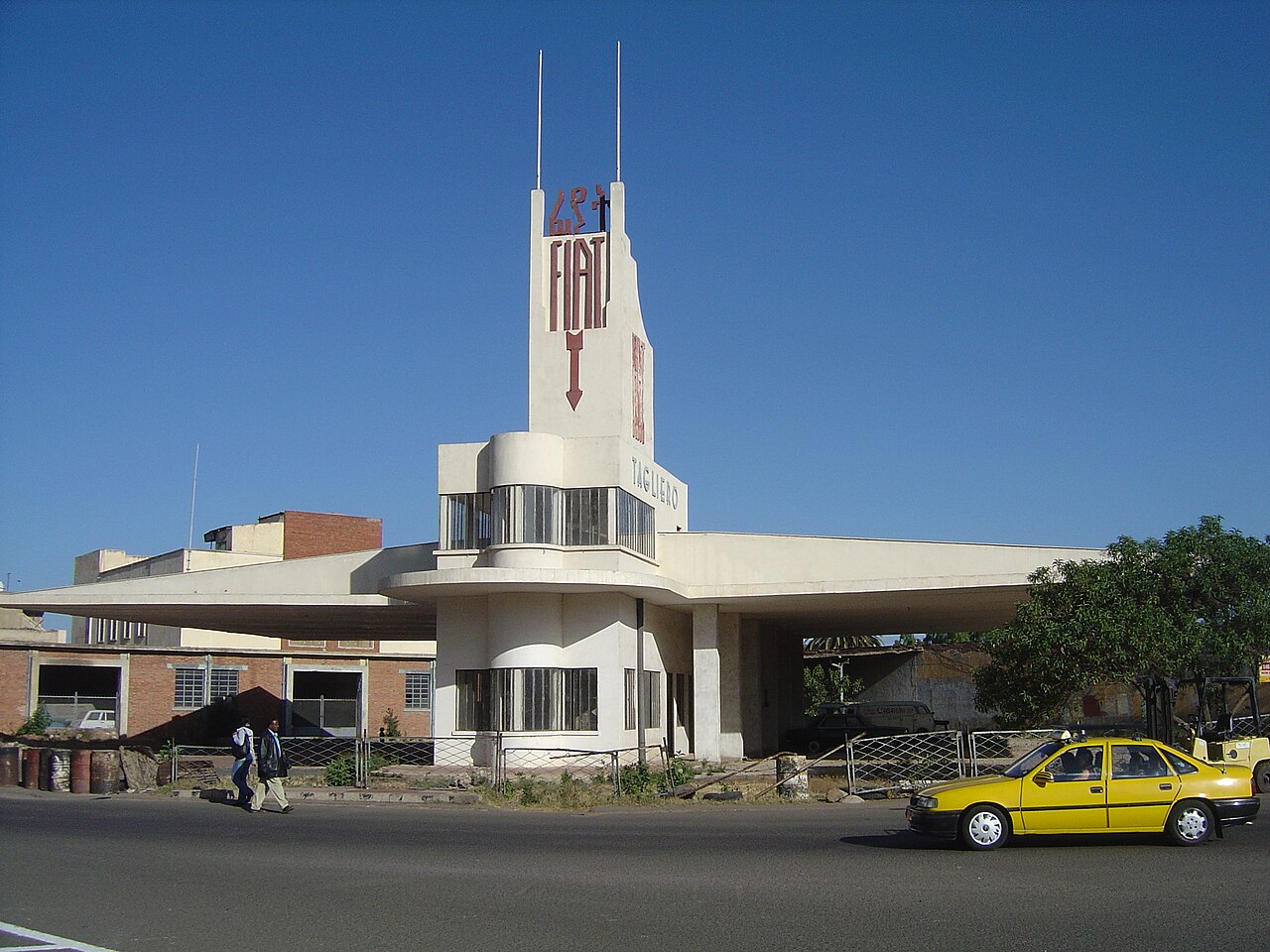
Asmara, the highland capital of Eritrea, is itself a UNESCO World Heritage Site — an extraordinary open-air museum of early twentieth-century modernist architecture preserved almost intact. Visiting it means walking streets where Futurist, Rationalist, Art Deco, and Novecento buildings stand side by side, largely unchanged since Italian colonial construction ended in 1941. From Cultural Heritage Online.
Asmara: A Modernist African City Inscribed 2017 — the city itself
Asmara sits at 2,325 metres on the Eritrean plateau, a city of roughly 800,000 people that the Italian colonial administration rebuilt almost from scratch between 1893 and 1941. What distinguishes it from other colonial-era cities is the sheer concentration and state of preservation of its modernist built fabric: approximately 400 buildings in Futurist, Rationalist, Art Deco, Novecento, and neo-medieval styles remain standing in their original condition, earning the city UNESCO inscription in 2017 as an Outstanding Example of a modernist city of the early twentieth century.
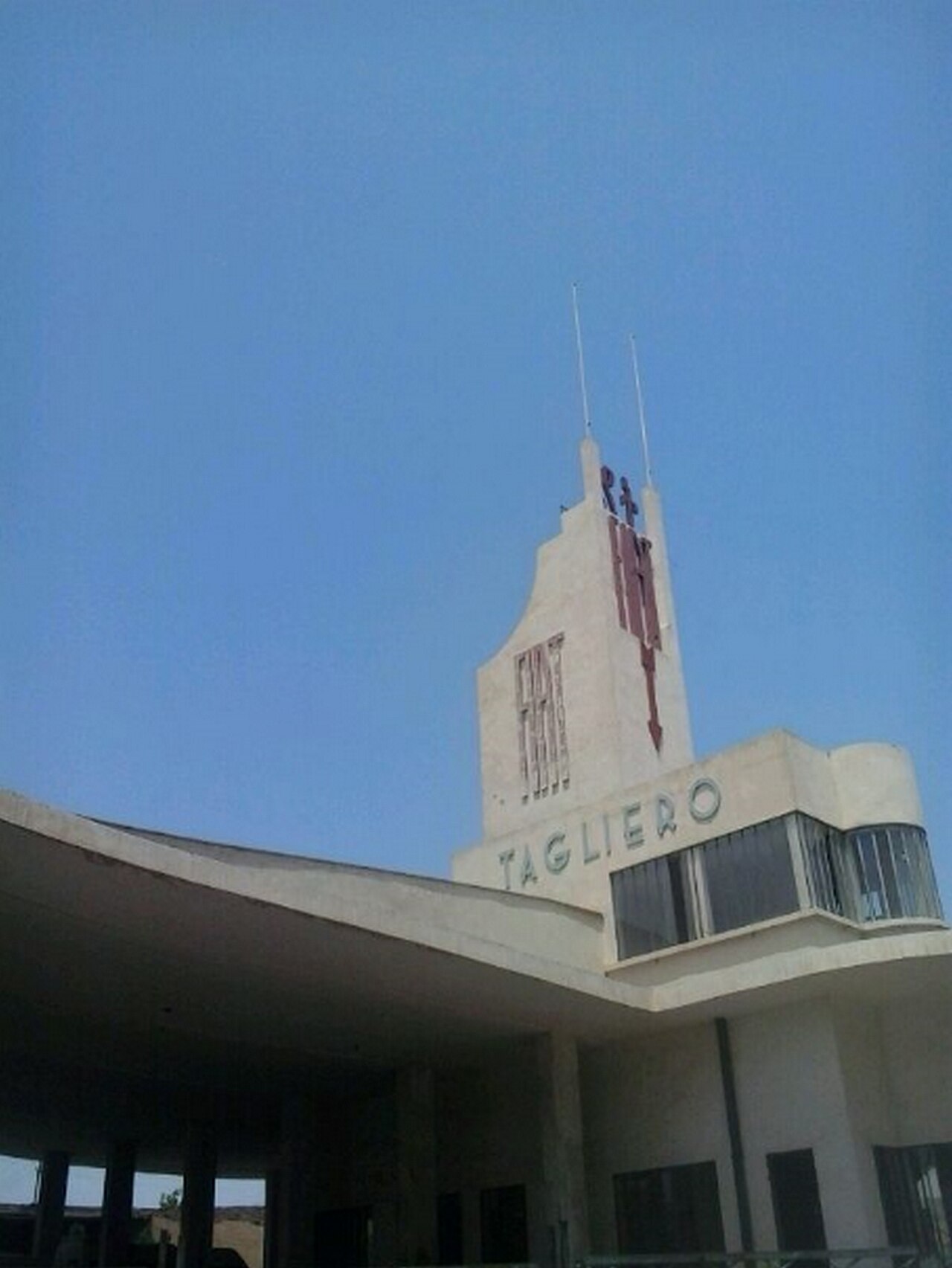
The single most discussed building is the Fiat Tagliero Service Station (1938), designed by engineer Giuseppe Pettazzi. The structure takes the form of an aircraft — two cantilevered concrete wings, each spanning 30 metres, with no visible intermediate supports. According to local tradition, Pettazzi threatened to shoot the construction foreman if the temporary supports were not removed after the concrete cured, since his superiors refused to believe the design was structurally sound. Whether the story is true or apocryphal, the building stands. Equally arresting is the Cinema Impero (1937), an Art Deco picture house on Harnet Avenue that still screens films to paying audiences, its original neon signage intact. The nearby Bar Impero and Bar Vittoria continue as functioning cafes. The covered central market (1937, Rationalist) remains the commercial hub of the city. The Baroque Catholic Cathedral of Our Lady of the Rosary (1923), the Enda Mariam Coptic Cathedral, and the Grand Mosque of Asmara (1938, Moorish revival) stand within walking distance of one another along Harnet Avenue, the main thoroughfare.
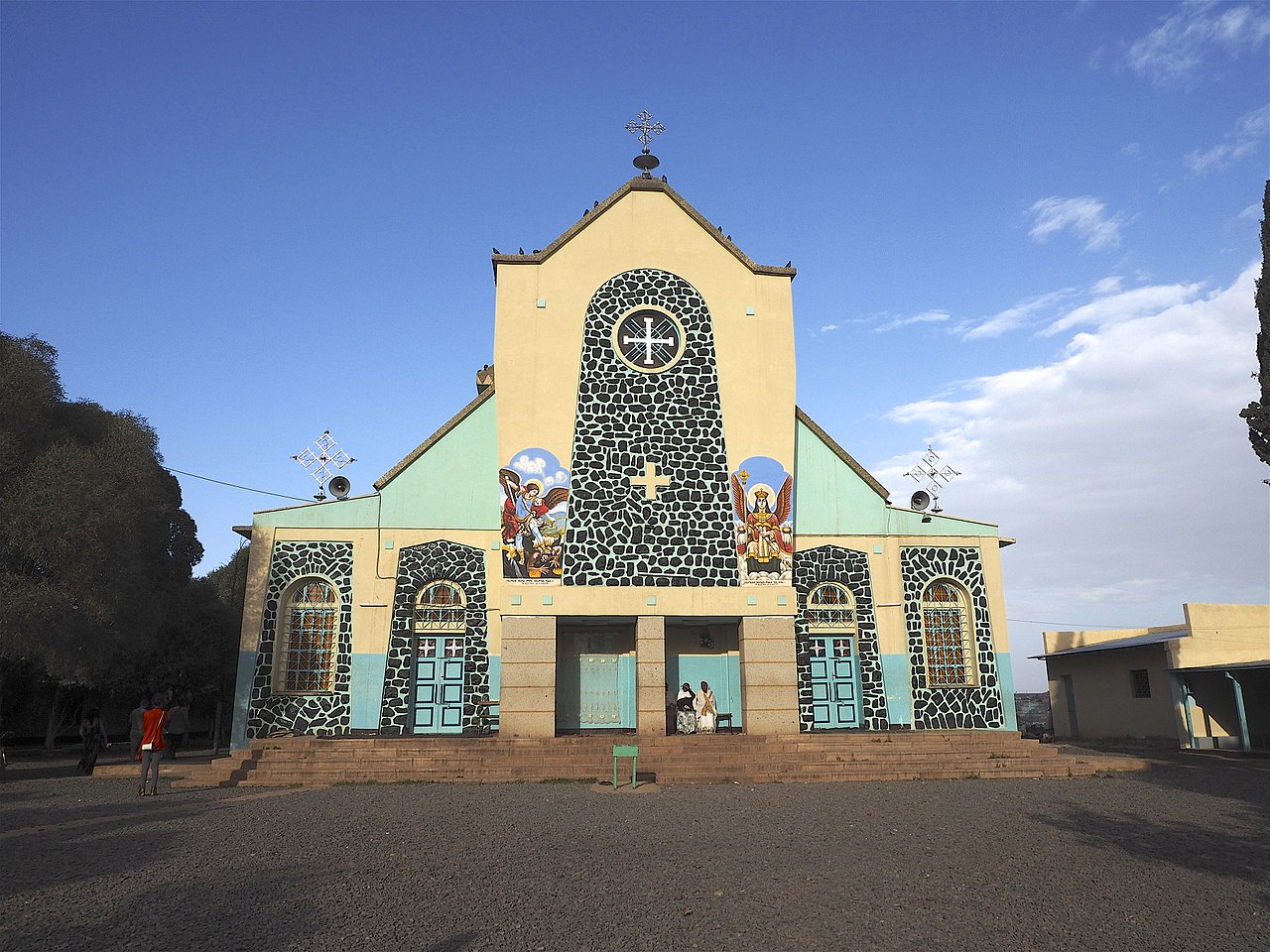
Asmara’s preservation owes less to deliberate conservation than to economic and political circumstance. Eritrea fought a thirty-year independence war against Ethiopia, gaining independence in 1993. The subsequent decades of international isolation, United Nations sanctions (lifted in 2018), and restricted foreign investment meant that the pressure to demolish and redevelop that transformed other African capitals never materialised here. Walking the Cubist apartment blocks of the residential quarters, or the palm-lined boulevard past the Opera House, feels less like visiting a heritage site and more like moving through a functioning city that time happened to skip.
Practical note — Eritrea’s unusual situation: Eritrea operates one of the world’s most restricted entry regimes. Visitors require a tourist visa (obtain from an Eritrean embassy before arrival; on-arrival visas are not available), a travel permit for any movement outside Asmara, and must exchange a minimum amount of foreign currency into nakfa at the official rate upon entry. The nakfa is not convertible outside the country and cash is the only practical means of payment; card transactions are not accepted in most establishments. Independent movement outside Asmara requires a separate permit from the Ministry of Tourism, and travel to some regions (including the ancient Aksumite sites of Qohaito, approximately 130 km south of Asmara) requires both a guide and a permit. Photography of military installations, government buildings, the airport, and uniformed personnel is prohibited.
Getting there: Asmara is served by Asmara International Airport (ASM) with connections via Cairo (EgyptAir), Dubai (flydubai), and a limited number of regional routes; direct service from Europe is not available as of mid-2026. From the airport to the city centre is approximately 7 km by taxi. Allow: A minimum of three full days to cover the inscribed urban core on foot, ideally four or five; add two days for a permitted excursion to Qohaito or the coastal town of Massawa (also historically significant, though not UNESCO-inscribed). Best for: Architecture historians, travellers interested in Italian colonial history, and those seeking a genuinely off-circuit African capital with no mass-tourism infrastructure.
Frequently Asked Questions
How many UNESCO World Heritage Sites are near Asmara?
Eritrea has one UNESCO World Heritage Site: Asmara itself, inscribed in 2017 under the title “Asmara: A Modernist African City.” The inscribed property covers the historic urban core of the capital and encompasses approximately 400 modernist buildings from the Italian colonial period (1893–1941). There are no other UNESCO-inscribed sites in Eritrea, though the Aksumite-era ruins at Qohaito (roughly 130 km south) are on Eritrea’s Tentative List and are archaeologically significant.
Do I need a visa and special permits to visit Asmara?
Yes. Visitors must obtain a tourist visa from an Eritrean embassy or consulate before travelling — on-arrival visas are not issued. Movement outside Asmara requires a separate travel permit from the Ministry of Tourism, and visiting sites such as Qohaito or the port of Massawa additionally requires hiring a government-approved guide. Currency restrictions apply: a minimum amount of foreign currency must be exchanged into non-convertible nakfa upon entry. Visitors should check current entry requirements with the Eritrean embassy in their country of residence, as regulations change.
When is the best time to visit Asmara?
Asmara’s altitude (2,325 m) moderates temperatures year-round, making it one of the more comfortable capitals in the Horn of Africa. The dry season runs from October to May, which is the preferred window for visitors: skies are clear, temperatures hover between 15°C and 25°C, and the city’s architecture is most easily photographed in bright light. The main rainy season (June to September) brings afternoon downpours but keeps the surrounding highlands green. Avoid major religious and national holidays if you want consistent access to sites, as some venues close without notice.
What makes Asmara’s modernist architecture historically significant?
Between 1935 and 1941 — after Italy’s invasion of Ethiopia and the consolidation of Italian East Africa — Asmara became a laboratory for Italian modernist urban design at a scale rarely attempted elsewhere. The Mussolini government used the city to demonstrate the vitality of the fascist state, commissioning buildings from some of Italy’s leading architects and engineers in styles that ranged from orthodox Rationalism to the most radical Futurism. The Fiat Tagliero Building in particular has no close parallel anywhere in the world. Because Eritrea’s post-independence development was constrained by war, sanctions, and limited foreign capital, this built environment was never substantially altered, and the inscribed area retains a coherence — of scale, material, and urban layout — that makes it uniquely legible as a document of its era.
Sources
- S1 — Denison, Edward, et al. Asmara: Africa's Secret Modernist City. Merrell Publishers, 2003. ISBN 978-1-85894-200-1.
- S2 — Phillipson, David W. Ancient Ethiopia: Aksum, Its Antecedents and Successors. British Museum Press, 1998. ISBN 978-0-7141-2763-7.
Spotted an error? Write to editorial@culturalheritageonline.com and we correct it the same day.


.jpg)