
On April 3, 1926, by Royal Decree No. 556 signed in Rome, the Italian State established AGIP (*Azienda Generale Italiana Petroli*). Born out of the urgent necessity to secure autonomous hydrocarbon resources in a nation devoid of significant coal reserves, Agip ventured into the Po Valley, the Tuscan subsoil, and the Mediterranean basin, laying the institutional and geological bedrock for what Enrico Mattei would transform into Eni.

The Geologists of the Subsoil and Rationalist Distribution
In the spring of 1926, Italy was almost completely dependent on foreign oil trusts for gasoline, heavy fuel oil, and lubricants. Agip was mandated to explore domestic geology, construct modern coastal storage depots in Genoa, Naples, and Venice, and establish a unified distribution network. Young Italian geologists and drillers endured harsh field conditions in the Apennine foothills, pioneering seismic exploration and deep rotary drilling techniques.
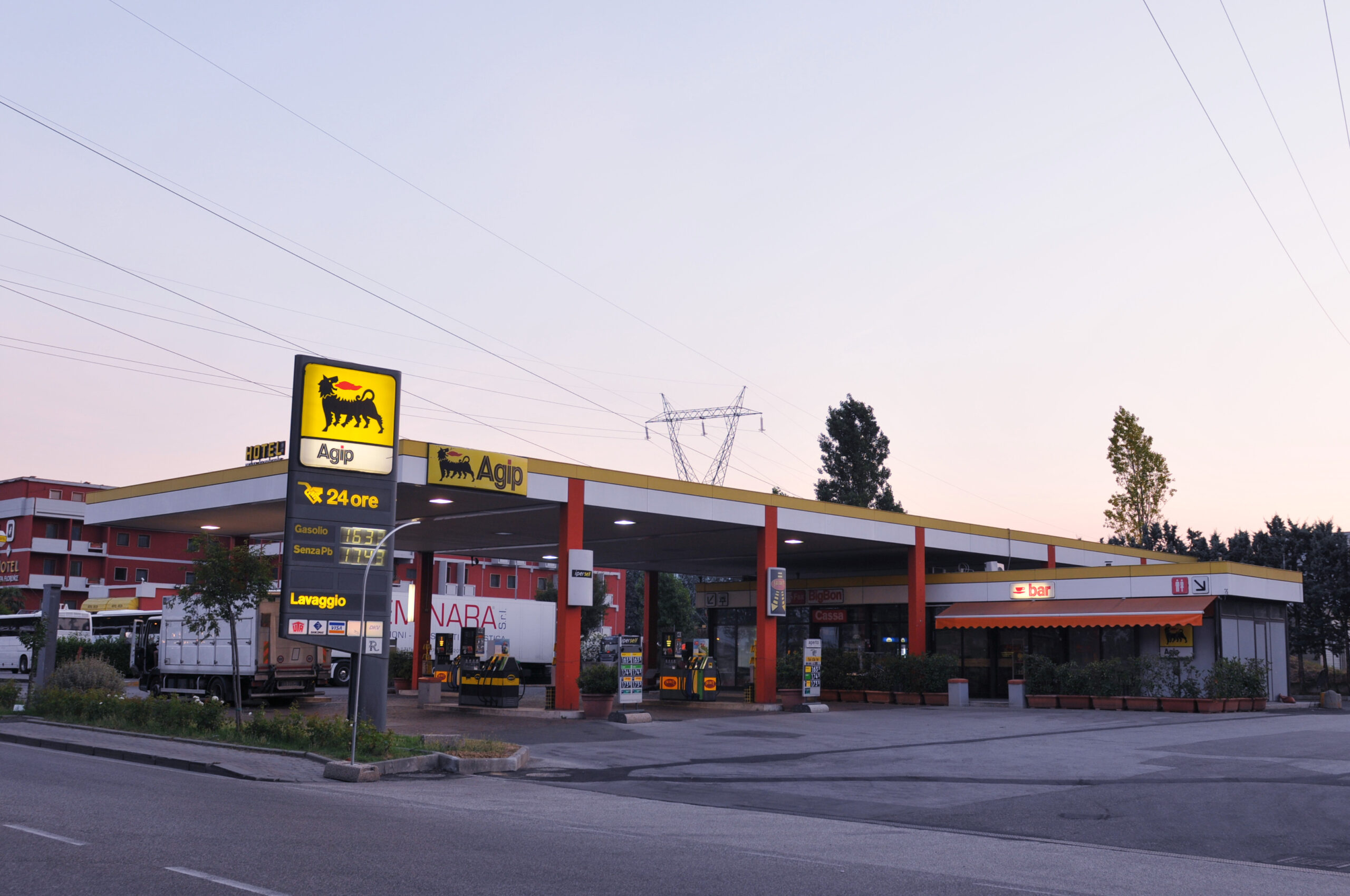
Simultaneously, Agip revolutionized roadside architecture. Abandoning ramshackle curbside pumps, the company engaged leading architects to construct streamlined, rationalist service stations with cantilevered concrete canopies, integrated maintenance bays, and gleaming enameled pumps that brought modern functionalist design to Italy’s nascent highways.
From Mattei’s Defiance to the Six-Legged Dog
Though scheduled for liquidation after the Second World War, Agip found an extraordinary savior in Enrico Mattei (1906–1962). Defying governmental liquidation orders, Mattei ordered clandestine drilling at Caviaga and Cortemaggiore, striking massive natural gas reserves that powered Italy’s postwar economic miracle. In 1953, Agip became the exploration and refining arm of the newly established Eni, adopting Luigi Broggini’s immortal Six-Legged Dog (*cane a sei zampe*) emblem—a symbol of Italian industrial dynamism.
Today, the Eni Historical Archive in Castel Gandolfo and the architectural monument of Piazzale Mattei in Rome’s EUR district guard this century-old odyssey, chronicling the transition from a precarious 1926 state experiment into a global energy leader.
Le prime ricerche petrolifere e le perforazioni minerarie in Italia
Cinegiornale storico dell'Istituto Luce che mostra le torri di trivellazione nei campi petroliferi emiliani e la fondazione dei depositi carburante negli anni Venti e Trenta. (Fonte: Archivio Storico Istituto Luce Cinecittà)
Interactive 360° Heritage View: Historic Eni / Agip Headquarters Area
Historical Location: Piazzale Enrico Mattei 1 / Viale dell'Arte, 00144 Roma RM, Italy (Coordinates: 41.83154, 12.4724)
Historical Archive Gallery
Sources
- S1 — Pozzi, Daniele. Dai gatti selvaggi al cane a sei zampe: Tecnologia e impresa all'Agip. Marsilio, 2009. ISBN 978-88-317-9712-2.
- S2 — Colitti, Marcello. Energia e sviluppo in Italia: La vicenda di Enrico Mattei. De Donato, 1979. ISBN 978-88-326-0012-4.
Spotted an error? Write to editorial@culturalheritageonline.com and we correct it the same day.


