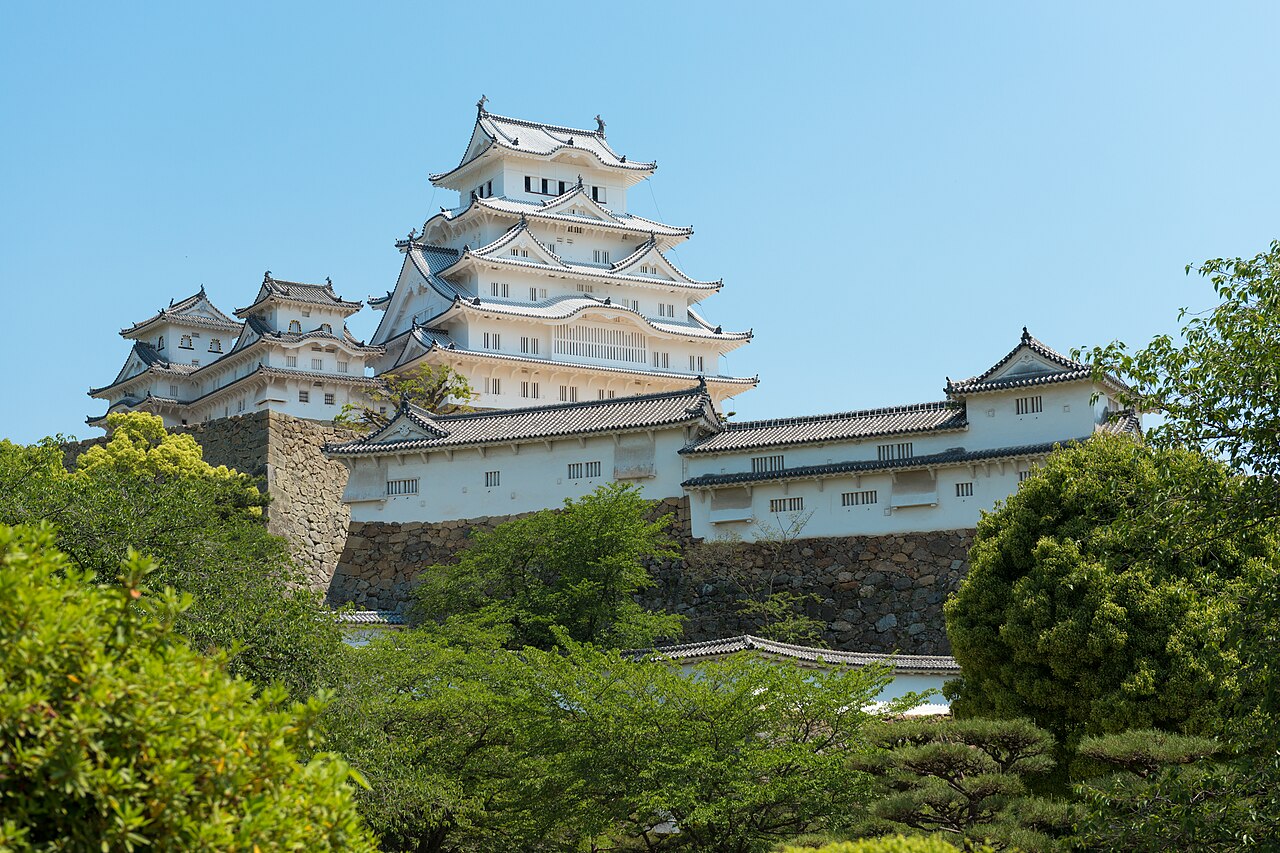
The nearest World Heritage site to Himeji Castle is the Mozu-Furuichi Kofun Group, 78 km away in a straight line, followed by Historic Monuments of Ancient Kyoto (91 km) and the Buddhist Monuments in the Horyu-ji Area (97 km), all in Japan. Himeji-jo itself is the castle that UNESCO calls the finest surviving example of early 17th-century Japanese castle architecture. It was inscribed in 1993 under criteria (i) and (iv).
Which World Heritage sites are close to Himeji?
The distances below are straight lines between the reference points UNESCO publishes for each property. They show what is close, not how long the journey takes by rail or road.
| Site | Country | Distance | Inscribed | Type |
|---|---|---|---|---|
| Mozu-Furuichi Kofun Group: Mounded Tombs of Ancient Japan | Japan | 78 km | 2019 | Cultural |
| Historic Monuments of Ancient Kyoto (Kyoto, Uji and Otsu Cities) | Japan | 91 km | 1994 | Cultural |
| Buddhist Monuments in the Horyu-ji Area | Japan | 97 km | 1993 | Cultural |
| Sacred Sites and Pilgrimage Routes in the Kii Mountain Range | Japan | 98 km | 2004 | Cultural |
| Historic Monuments of Ancient Nara | Japan | 101 km | 1998 | Cultural |
| Ancient Capitals of Asuka and Fujiwara | Japan | 108 km | 2026 | Cultural |
Wood is the common thread. UNESCO says several of the Horyu-ji monuments date from the late 7th or early 8th century, making them some of the oldest surviving wooden buildings in the world. It says Kyoto illustrates the development of Japanese wooden architecture, and ICOMOS describes Himeji as the culmination of Japanese castle architecture in wood. The table therefore reads, loosely, as a timeline: Mozu-Furuichi preserves earthen tombs of the 3rd to 6th century, Asuka and Fujiwara the first capitals of 588 to 710, Nara the capital of 710 to 784, and Himeji the early 17th century. The castle’s official Japanese site adds that the castle and Horyu-ji became Japan’s first World Heritage cultural sites together, in December 1993.
Who built the castle we see today?
The site is older than the castle. The castle’s official history pages say the earliest surviving contemporary reference to a fortress at Himeji dates from 1561, when it was held by the Kuroda clan. Toyotomi Hideyoshi later made Himeji his base for taking the west of Honshu and built a three-storey keep inside stone walls. ICOMOS puts this in a wider plan: a network of castles across Japan, built to secure the country’s unification.
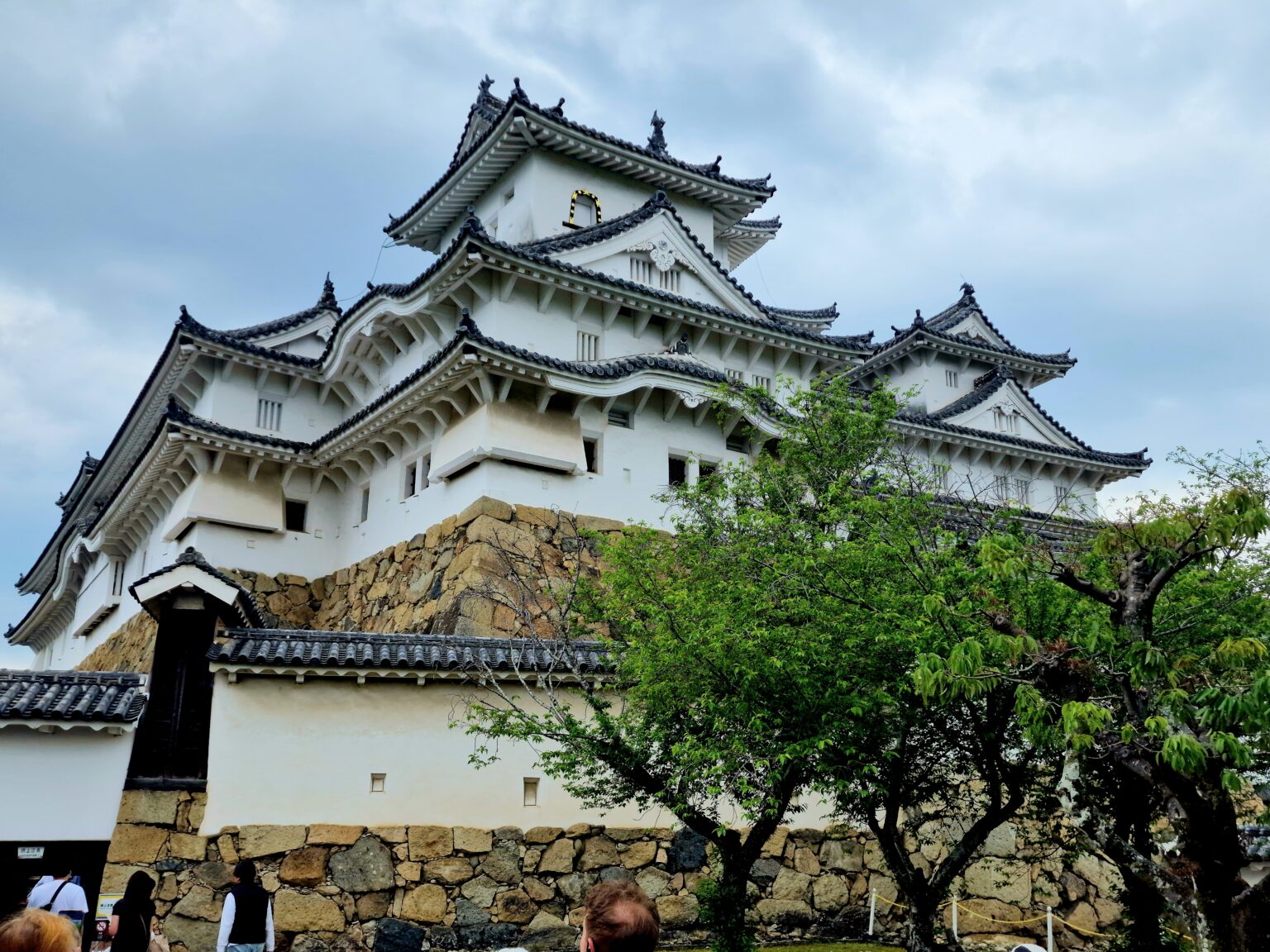
After the Battle of Sekigahara in 1600, Tokugawa Ieyasu gave Himeji and the surrounding province of Harima to his son-in-law Ikeda Terumasa. Between 1601 and 1609 Terumasa replaced, repaired and expanded the fortifications, ringing the adjoining town with moats and earthen embankments and building a larger keep. ICOMOS is precise about what is left of Hideyoshi’s work: only the east gate of one section of the second bailey. The rest dates from 1601 to 1609, plus the towers of the West Bailey, which Honda Tadamasa remodelled in 1617 as quarters for his wife, a daughter of Ieyasu.
Why is Himeji white, and what holds the keep up?
The nickname Shirasagi-jo, White Heron Castle, comes from the plaster. The castle’s history pages explain that the lime plaster is fire-resistant, a serious matter in a castle of wood, and that Himeji’s is applied more extensively than at other Japanese castles: the keep’s walls are covered on both sides, and the plaster also goes on the earthen perimeter walls and the joints between roof tiles. A typical recipe mixed lime from stone and from shellfish with ground hemp fibre and a paste of boiled seaweed.
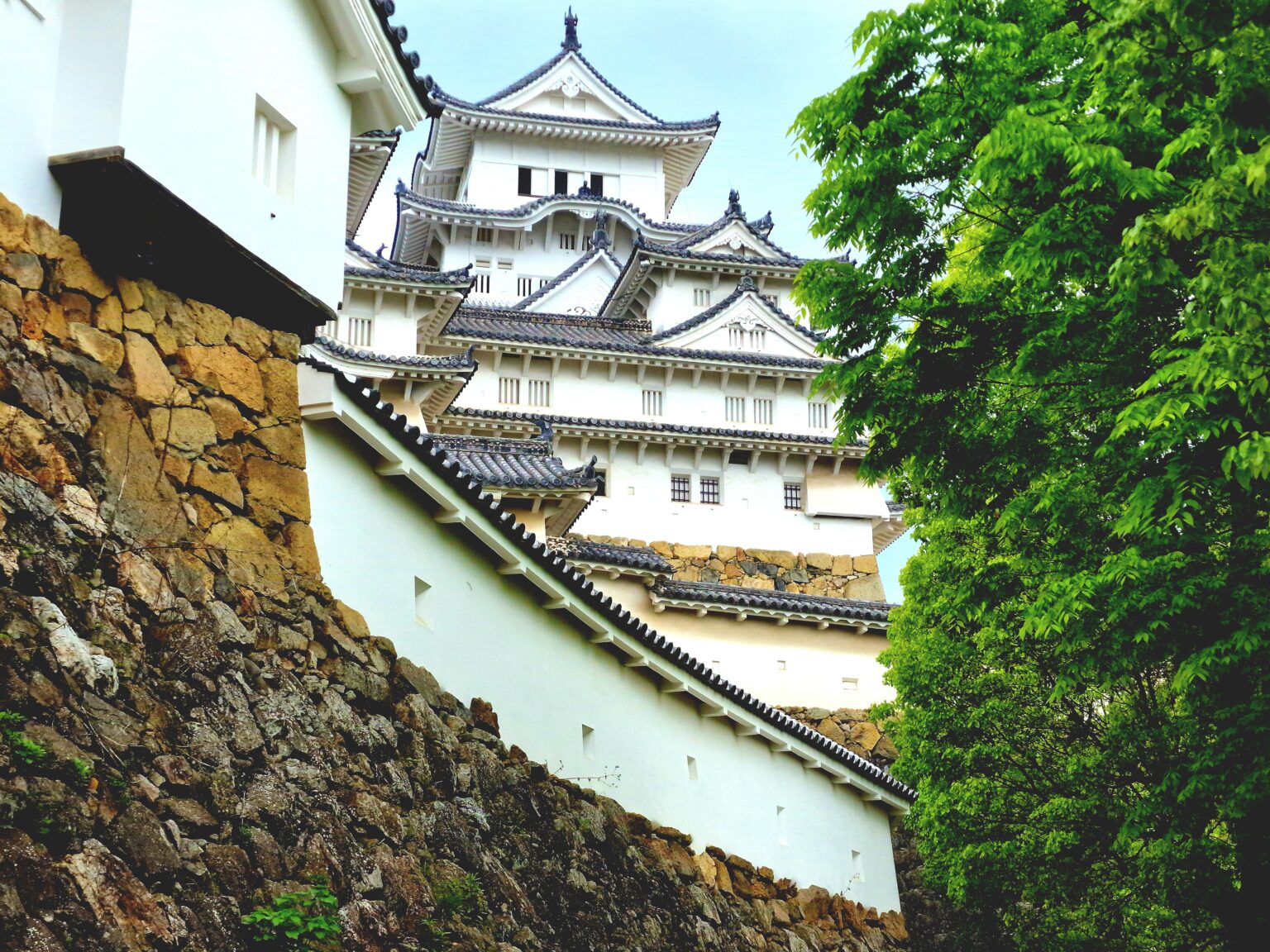
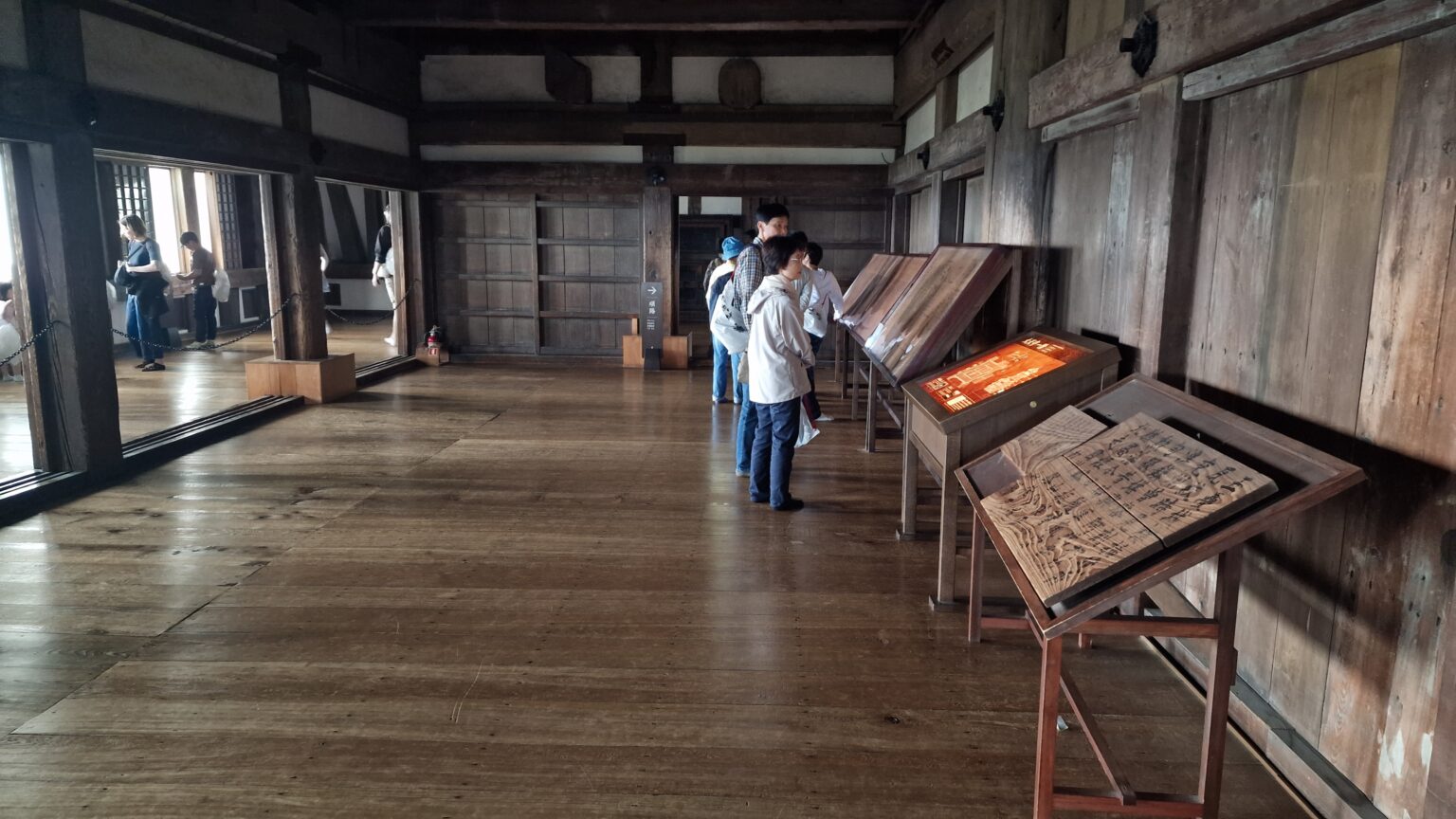
The main keep has seven floors, six above ground and a basement in the stone foundation. The same pages say it is carried by a lattice of posts and beams rather than thick outer walls, with two central columns, each 24.5 m tall and close to a metre across, running from the basement to the bottom of the sixth floor. The west column is built from two trunks joined at the third floor; the east column is the trunk of a single tree. ICOMOS considered the whole an outstanding wooden structure of great complexity and strength.
ICOMOS recommended inscription under criteria (i), (iii) and (iv). The criterion it proposed for the castle as a symbol of feudalism, (iii), does not appear in UNESCO’s final listing, which names only (i), a masterpiece of construction in wood, and (iv), the culmination of Japanese castle architecture in wood.
How did the castle survive the end of the shogunate and the war?
The lords of Himeji kept the castle in good order, with repair campaigns in the 17th, 18th and 19th centuries, according to UNESCO. In 1868 the national government took the site over as a military establishment, and part of the West Bailey and the samurai houses were demolished for military buildings. Conscription in 1873 made the castle a base for the Imperial Army’s 10th Regiment. In 1882 a fire destroyed the castle lord’s residential compounds. ICOMOS credits army officers such as Colonel Nakamura Shigeto with preventing the loss that befell many other feudal castles.
Neglect followed. A restoration approved in the 1930s was interrupted by the Second World War. The castle’s history pages say American air raids destroyed the city of Himeji in 1945, but the castle escaped mostly unscathed. Work resumed in 1950 and ended in 1964, with the keep dismantled, repaired and reassembled. ICOMOS records that the soil under the keep could not carry its weight and that a reinforced concrete foundation raft was installed, the only modern intrusion it found, which it judged fully justified.
Frequently Asked Questions
Which UNESCO World Heritage sites are near Himeji Castle?
The Mozu-Furuichi Kofun Group is nearest, 78 km in a straight line, then Ancient Kyoto (91 km), the Horyu-ji area (97 km), the Kii Mountain sacred sites (98 km), Ancient Nara (101 km) and Asuka and Fujiwara (108 km). These are distances between reference points, not travel times.
Who built Himeji Castle?
Ikeda Terumasa built the castle as it stands, in a major overhaul between 1601 and 1609 after Tokugawa Ieyasu gave him Himeji. Hideyoshi had earlier built a keep there, but only the east gate of one section of the second bailey survives from his castle, according to ICOMOS.
Why is Himeji Castle called the White Heron Castle?
The name Shirasagi-jo comes from the white plaster that covers the walls. UNESCO says the white plastered earthen walls give the castle its elegant, unified appearance. The castle’s history pages add that the plaster resists fire and is applied more extensively here than at other Japanese castles.
Did Himeji Castle survive the Second World War?
Yes. The city of Himeji was destroyed by American air raids in 1945, but the castle, according to the castle’s official history pages, escaped mostly unscathed. The military buildings around it were demolished that year, while the inner buildings kept their 17th-century form, ICOMOS notes.
Sources
- UNESCO World Heritage Centre, Himeji-jo (inscribed 1993). https://whc.unesco.org/en/list/661/
- ICOMOS, Advisory Body Evaluation of the nomination of Himeji-jo (No 661), October 1993. https://whc.unesco.org/document/153975
- Himeji Castle official site, Himeji Castle History (Journey to Himeji Castle). https://www.himejicastle.jp/en/guide/history/
- Himeji City, Himeji Castle official site (Japanese). https://www.city.himeji.lg.jp/castle/
- UNESCO World Heritage Centre, Mozu-Furuichi Kofun Group (1593), Ancient Kyoto (688), Horyu-ji Area (660), Kii Mountain Range (1142), Ancient Nara (870), Asuka and Fujiwara (1757). https://whc.unesco.org/en/list/
Spotted an error? Write to editorial@culturalheritageonline.com and we correct it the same day.