
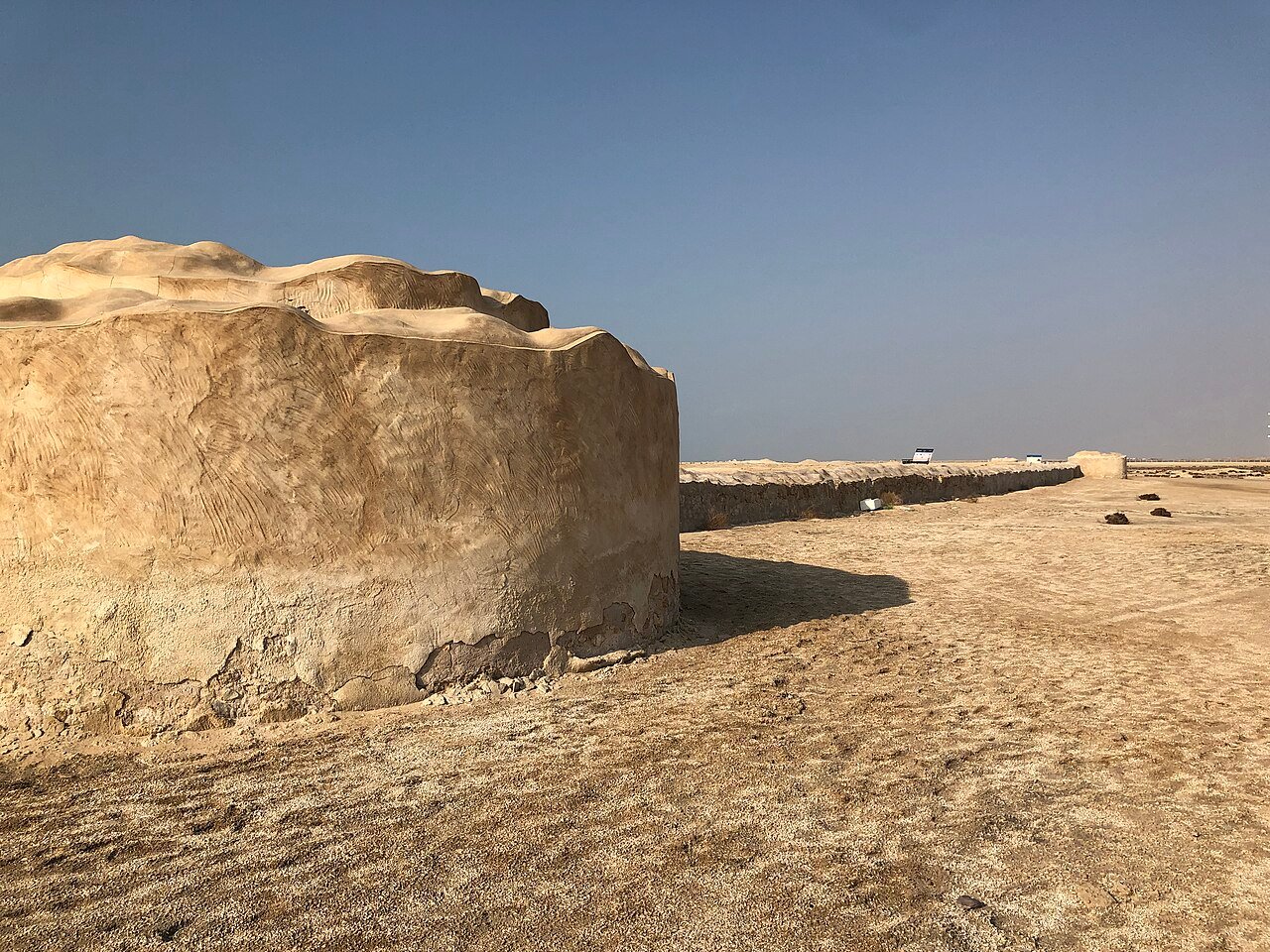
Qatar holds one UNESCO World Heritage Site — Al Zubarah, a hauntingly preserved pearl-fishing town abandoned nearly two centuries ago on the Gulf’s northwestern shore. Just over an hour’s drive from Doha, it is one of the most intact examples of an 18th-century Arab trading port anywhere in the world. From Cultural Heritage Online.
Al Zubarah Archaeological Site 105 km · ~1 hr 15 min by road
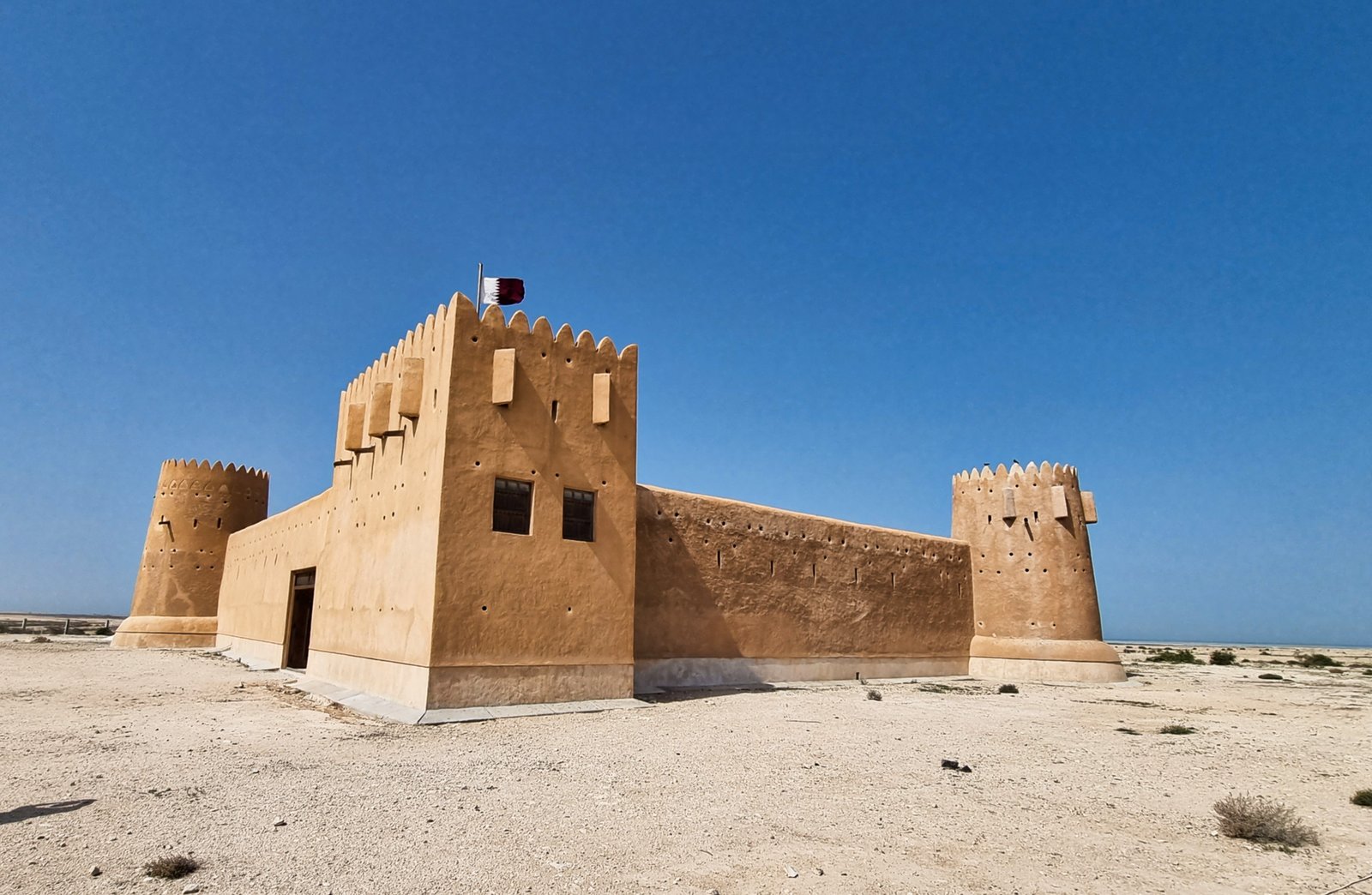
Al Zubarah sits on Qatar’s flat, sun-bleached northwest coast, where the Gulf stretches away in every direction and almost nothing interrupts the horizon. The archaeological zone covers roughly 60 hectares of compacted earth and low stone walls — the footprint of a walled town that once held mosques, houses, souks, and a caravanserai, served by two shallow harbours. UNESCO inscribed it in 2013 as an outstanding example of the short-lived but intensive pearl-trading economy that shaped the Arabian Gulf between the mid-18th and early 19th centuries.
The town was founded around 1760 and grew quickly into a prosperous entrepôt, drawing pearl divers, merchants, and their families to a coastline that had little to recommend it beyond proximity to rich oyster beds. At its height, Al Zubarah may have housed between 6,000 and 8,000 people. A military defeat in 1811, and again in the 1830s, ended that chapter abruptly. The inhabitants left, the sand drifted in, and the walls began their long, quiet subsidence. Most of the site remains unexcavated, which is precisely why archaeologists prize it: the stratigraphy is nearly undisturbed, preserving a rare record of Gulf domestic and commercial life from that era.
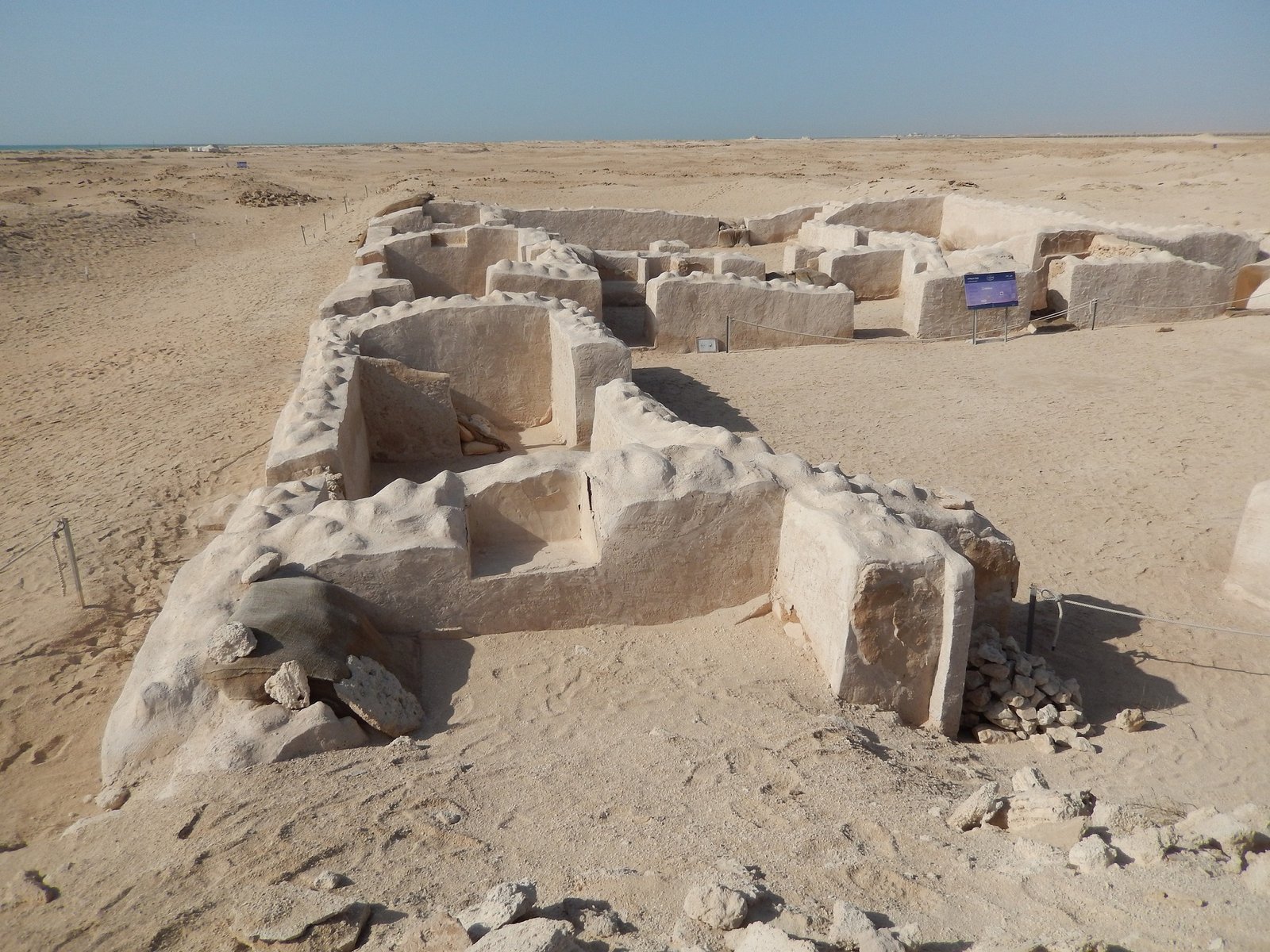
The visual anchor of the site is Al Zubarah Fort, a square tower-and-bastions structure built in 1938 by the Qatari government — not a historic building in its own right, but the administrative emblem of the protected zone and now home to the site museum. Inside, the displays trace the archaeology, the pearl trade, and Qatar’s tribal history with enough depth to orient a first-time visitor. Walk out to the ruins themselves and the scale becomes clear: low mud-brick and stone walls mark out room after room, street after street, the plan of an entire town pressed into the ground. The silence and the heat are both considerable. There is almost nobody else here.
Getting there: Self-drive north on the E71 (Shamal Road), approximately 1 hour 15 minutes from central Doha. No public transport serves the site; hire a car or arrange a private transfer. Allow: 2–3 hours including the fort museum. Best for: History travellers, archaeology enthusiasts, and anyone seeking a landscape radically different from Doha’s skyline.
Frequently Asked Questions
How many UNESCO World Heritage Sites are near Doha?
Qatar has one UNESCO World Heritage Site: Al Zubarah Archaeological Site, inscribed in 2013. It lies approximately 105 kilometres northwest of Doha on Qatar’s Gulf coast. Nearby countries hold additional inscribed sites — Bahrain’s Qal’at al-Bahrain (2005) and Dilmun Burial Mounds (2019) are accessible by short flight, and Saudi Arabia’s Al-Ahsa Oasis (2018) is reachable by road with the appropriate visa.
How do you get from Doha to Al Zubarah and how long does the visit take?
The only practical route is by car. Drive north from Doha on the Shamal Road (E71) for roughly 105 kilometres; the journey takes about 1 hour 15 minutes in normal traffic. The site has no public transport connection, so hire a car or arrange a private driver. Allow 2 to 3 hours at the site, including time in the fort museum and a walk through the ruins. Admission is free.
What is the best time of year to visit Al Zubarah?
November through March offers the most comfortable conditions, with daytime temperatures between 18°C and 26°C. The site is entirely outdoors and exposed, with no shade beyond the fort building itself. Summer visits (June–September) are possible in the early morning but temperatures routinely exceed 40°C by mid-morning. Bring water regardless of season; the surrounding landscape is flat, arid, and unpopulated.
Why was Al Zubarah abandoned, and why does that matter for archaeology?
Al Zubarah was a prosperous pearl-trading port founded around 1760, but military conflicts — culminating in an attack in the 1830s — drove the population away permanently. Because the site was never rebuilt or resettled, its streets, houses, mosques, and commercial buildings were buried rather than demolished. The vast majority of the 60-hectare site remains unexcavated as of 2025, preserving intact stratigraphy that gives researchers a rare window into Gulf urban life during the height of the pearl trade. UNESCO cited this exceptional completeness and integrity as central reasons for inscription.
Sources
- S1 — Richter, Thomas, et al. Al Zubarah: Pearl of the Past. Bloomsbury Qatar Foundation, 2014. ISBN 978-9927-101-27-4.
- S2 — Fromherz, Allen J. Qatar: A Modern History. Georgetown University Press, 2012. ISBN 978-1-58901-910-2.
Spotted an error? Write to editorial@culturalheritageonline.com and we correct it the same day.

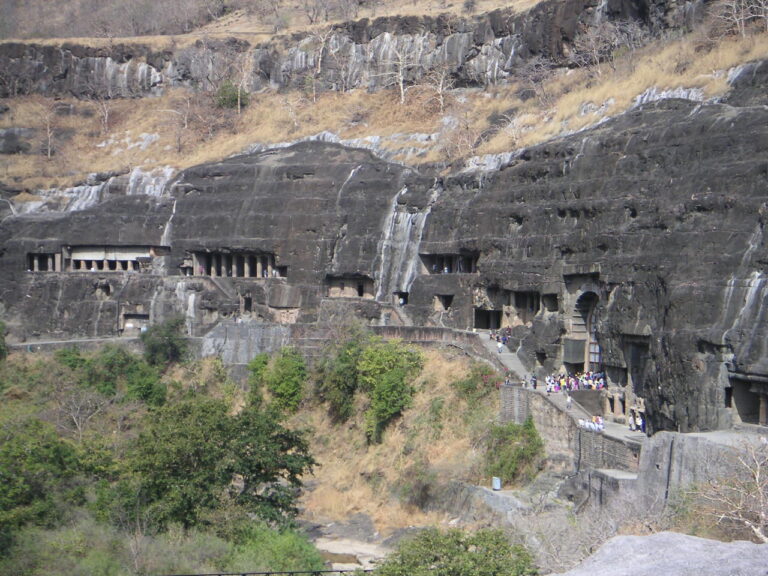



,_ruined_city.JPG)