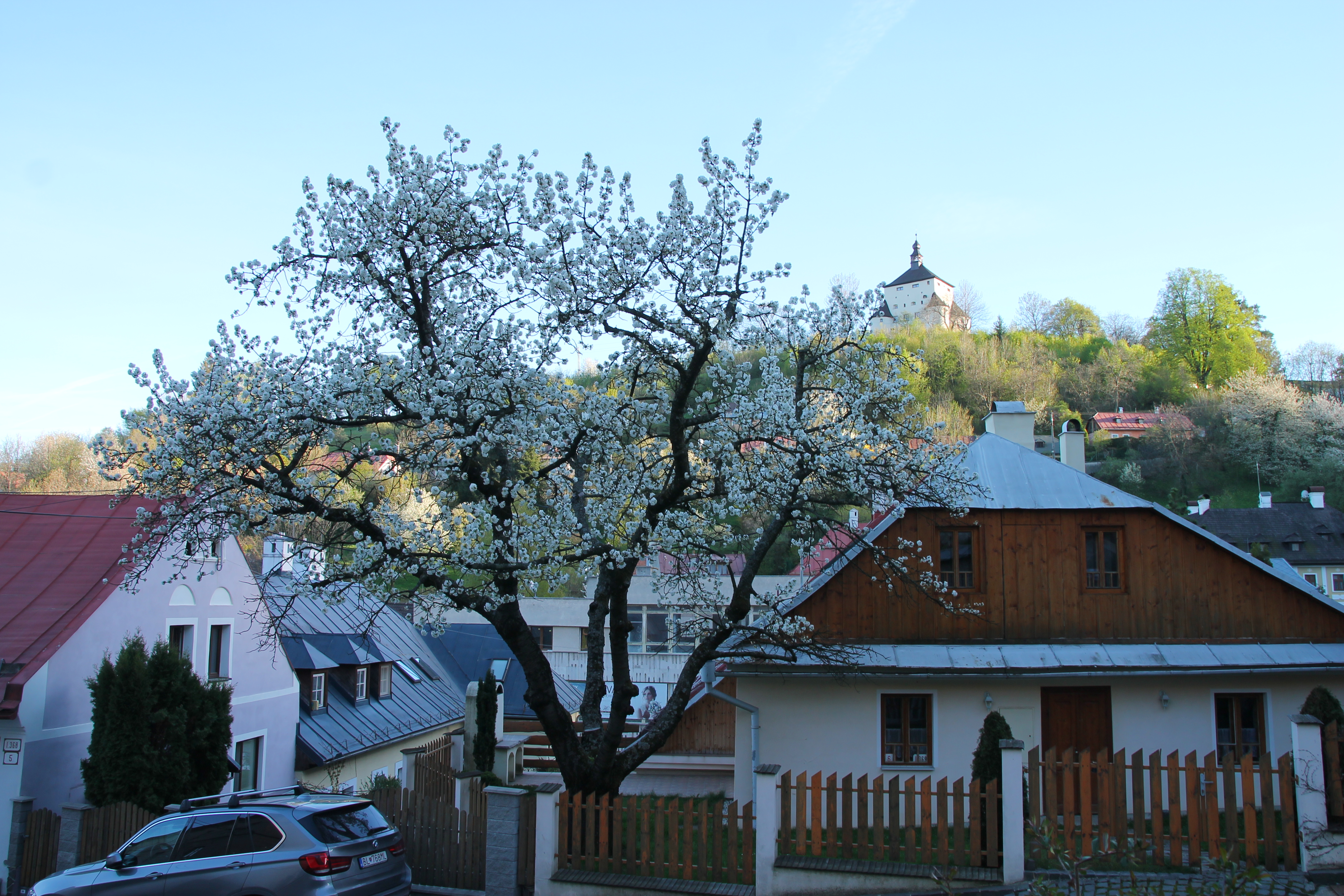
Slovakia holds eight UNESCO World Heritage Sites, and three of them lie within driving distance of Bratislava — from a medieval silver-mining capital buried in volcanic hills to one of Europe’s last intact mountain villages of log houses. Detailed itineraries, GPS coordinates, and sourced editorial content for all three are available through Cultural Heritage Online.
Historic Town of Banská Štiavnica 100 km · 1.5 hr by road
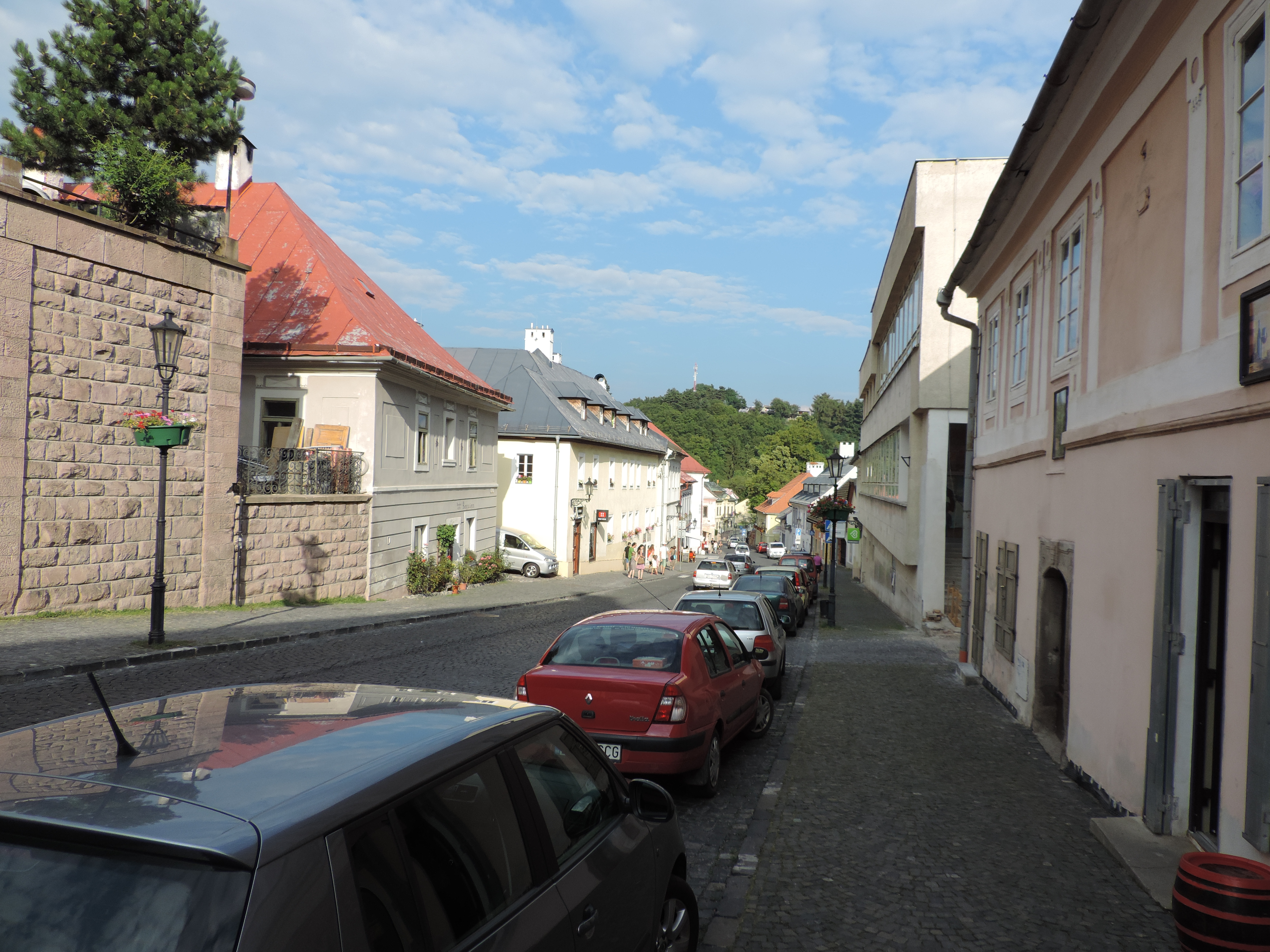
Banská Štiavnica sits in the eroded crater of an ancient volcano, which happens to contain some of the richest silver and gold deposits in Central Europe. From the 12th to the 18th century it was among the most productive mining centres on the continent, and the Habsburg court treated it accordingly: the town received royal privileges, attracted engineers from across Europe, and eventually housed the world’s first mining academy, founded in 1762. The architecture that funded this prosperity still shapes the townscape — Renaissance burgher houses, Baroque plague columns, and two castles occupying the heights.
The Old Castle began as a Romanesque church in the 12th century and was converted into a fortified complex when Ottoman raids threatened the region. The New Castle, built between 1564 and 1571, served not as a residence but as a watchtower and refuge during the plague years — an unusual dual function that gives it a distinctly austere profile above the town. The surrounding hills contain the most remarkable engineering legacy: a system of 60 artificial reservoirs, called tajchy, constructed in the 18th century to provide hydraulic power and drainage for the mines. Many are still filled and accessible by trail.
The town centre retains a largely unaltered urban fabric from the 16th and 17th centuries. The main square, Trinity Square, is ringed by coloured facades and anchored by a plague column dating to 1764. Climbing the Calvary hill above town passes a sequence of 19th-century chapels that function as an open-air devotional landscape. The mining monuments in the surrounding countryside — shafts, engine houses, and the reservoir network — are inscribed together with the town as a single property.
Getting there: By car via D1/R1 motorway, approximately 1.5 hours northeast of Bratislava. No direct rail link; buses run from Bratislava with one change. Allow: A full day minimum; two days to cover the reservoir trails and outlying monuments. Best for: History and architecture travellers, industrial heritage enthusiasts, hikers.
Vlkolinec 150 km · 2.5 hr by road
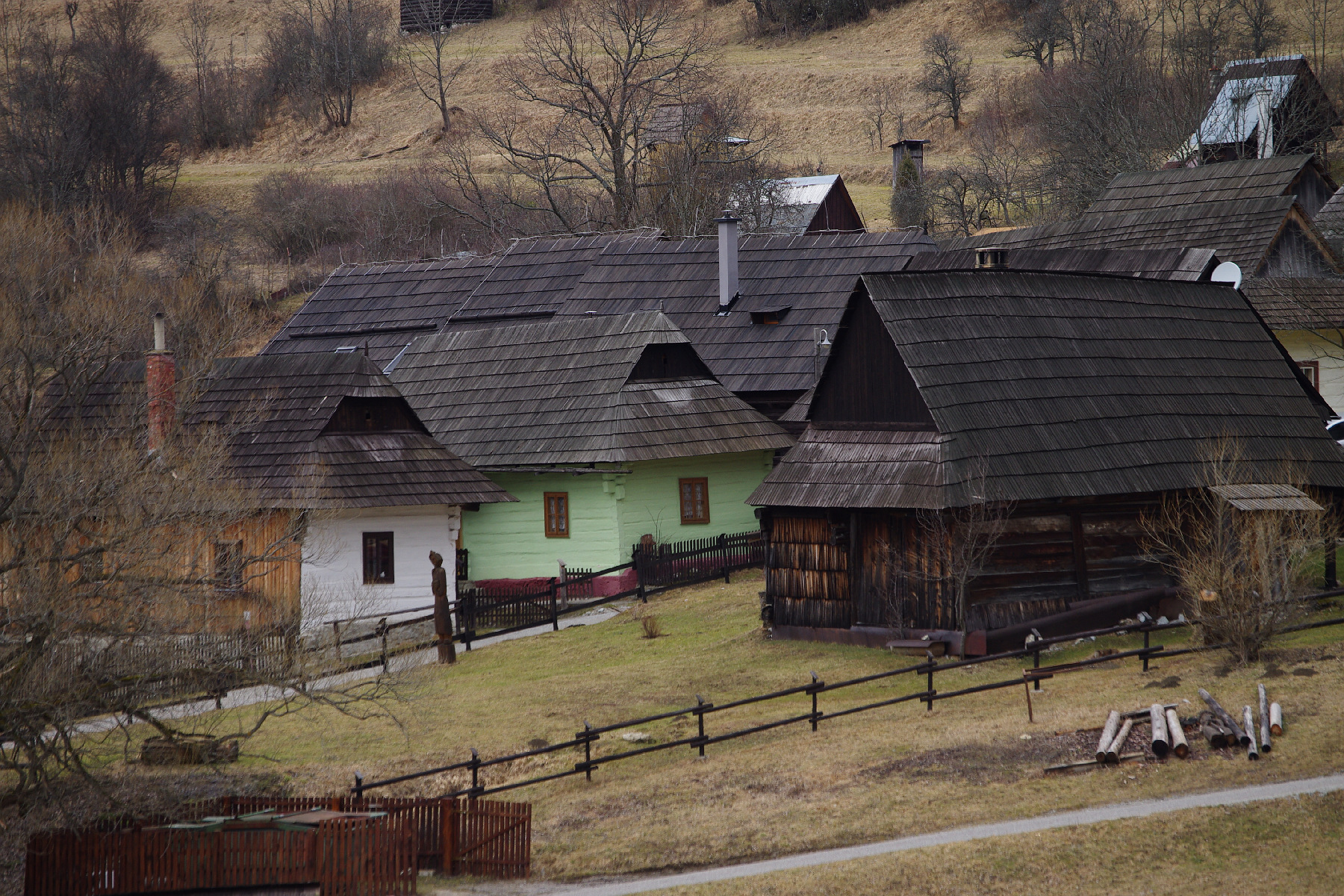
Vlkolinec is a settlement of 47 buildings on a hillside above the Váh valley near Ružomberok, and it has been continuously occupied since the 14th century without a single structure being demolished or rebuilt in a modern style. The log construction technique, using squared horizontal timbers with corner joints, was once standard across the Slovak mountain regions; Vlkolinec is its best-surviving example. The facades are lime-washed in white or pale yellow, and the low pitched roofs and enclosed courtyards give the village a uniformity that reads as a single architectural composition rather than an accumulation of individual houses.
The ensemble includes a log-built bell tower dated to 1770, a communal fountain, and several farm buildings that retain their original layouts. About 25 families still live in the village year-round, making Vlkolinec a working community rather than a preserved ruin or open-air museum. UNESCO inscribed it in 1993 as an exceptional example of a Central European mountain village type that has otherwise disappeared. There is no modern construction within the inscribed boundary.
Getting there: By car via D1 motorway to Ružomberok, then 6 km by road up to the village; approximately 2.5 hours from Bratislava. No public transport reaches the village directly; local taxis from Ružomberok cover the last stretch. Allow: 2–3 hours on site. Best for: Vernacular architecture enthusiasts, travellers seeking an uncrowded UNESCO site, those combining with a Tatra mountain itinerary.
Levoča, Spišský Hrad and the Associated Cultural Monuments 280 km · 4 hr by road
At the eastern end of the inscription list sits the joint property covering the Gothic town of Levoča and the ruins of Spišský Hrad. Levoča’s main church, the Gothic Basilica of St James, contains the tallest wooden Gothic altarpiece in the world: a carved and gilded structure 18.62 metres high, completed between 1508 and 1517 by Master Paul of Levoča. The town itself preserves a complete circuit of medieval walls and a square lined with Renaissance and Gothic burgher houses in excellent condition.
Spišský Hrad, several kilometres to the east, was one of the largest castle complexes in Central Europe before a fire in 1780 left it as a ruin. The silhouette of its tiered walls and towers on a dolomite ridge above the Spiš plain is one of the most reproduced images in Slovak heritage photography. The property was first inscribed in 1993 and extended in 2009 to include additional associated monuments in the region. The distance from Bratislava makes a same-day return trip demanding; an overnight stay in the Spiš region is worth planning for.
Getting there: By car via D1 motorway, approximately 4 hours northeast of Bratislava. Train connections exist via Poprad-Tatry (around 3.5 hours), with onward bus or taxi to Levoča and the castle. Allow: A full day or an overnight stop in Levoča or Spišská Nová Ves. Best for: Gothic art and medieval architecture travellers, those combining with the High Tatras.
Frequently Asked Questions
How many UNESCO World Heritage Sites are near Bratislava?
Three UNESCO World Heritage Sites are reachable as day trips or short excursions from Bratislava: the Historic Town of Banská Štiavnica and the Technical Monuments in its Vicinity (inscribed 1993), the mountain village of Vlkolinec (1993), and Levoča, Spišský Hrad and the Associated Cultural Monuments (1993, extended 2009).
How do I get from Bratislava to Banská Štiavnica?
The most practical option is by car: take the D1 motorway east then the R1 expressway towards Zvolen, turning off towards Banská Štiavnica — approximately 100 km and 1.5 hours. Bus connections from Bratislava exist but require a change and take around 2.5 hours. There is no direct rail link to the town.
What is the best season to visit Banská Štiavnica and Vlkolinec?
Late spring and early autumn offer the best conditions for both sites. Banská Štiavnica’s reservoir trails and Calvary hill are most rewarding when the paths are clear of snow, typically April through October. Vlkolinec sits at around 840 metres elevation and can be cold and inaccessible in winter; spring (April–May) shows the village at its most photogenic, with the surrounding hills still green. Summer brings the most visitors; September and October offer quieter conditions and good light for photography.
What made Banská Štiavnica’s silver mines historically significant?
At their peak in the 18th century, the mines around Banská Štiavnica produced roughly a quarter of Europe’s silver output. The engineering challenges of deep-shaft mining — principally flooding — drove major technological innovation: the water management system developed here, using 60 artificial reservoirs connected to the mines by underground channels, was one of the most sophisticated hydraulic systems in the pre-industrial world. The town’s Academy of Mining and Forestry, founded in 1762, became an internationally influential centre for mining science and trained engineers who went on to work across Europe and the Americas.
Sources
- S1 — Dvořák, Pavel. The Golden Book of Banská Štiavnica. Vydavateľstvo Rak, 2006. ISBN 978-80-85501-34-6.
- S2 — Kirschbaum, Stanislav J. A History of Slovakia: The Struggle for Survival. St. Martin's Griffin, 1996. ISBN 978-0-312-16125-5.
Spotted an error? Write to editorial@culturalheritageonline.com and we correct it the same day.