Bassari Country — formally designated as the Bassari, Fula and Bedik Cultural Landscapes — occupies the forested hills of the Kédougou Region in southeastern Senegal and adjacent northwestern Guinea, at altitudes between 400 and 600 metres near the Fouta Djallon foothills. UNESCO inscribed it as a Cultural Landscape World Heritage Site in 2012, recognising the coexistence of three ethnically distinct peoples — Bassari, Bedik, and Fula — whose separate agricultural, pastoral, and ritual systems have shaped the same landscape for centuries. The site is approximately 700 kilometres from Dakar, making it one of Senegal’s most remote heritage destinations.
Three peoples, one landscape: Bassari, Bedik, and Fula Kédougou Region, southeastern Senegal, ~700 km from Dakar
The Bassari Country designation covers territory where three culturally and religiously distinct groups have coexisted without merging. The Bassari number approximately 10,000 people in Senegal and Guinea combined. They speak a language belonging to the Atlantic branch of the Niger-Congo family and maintain animist religious practices that structure all major life transitions. Their villages are typically situated on hillsides, and their agricultural system is based on mixed cultivation in the surrounding forest and hills.
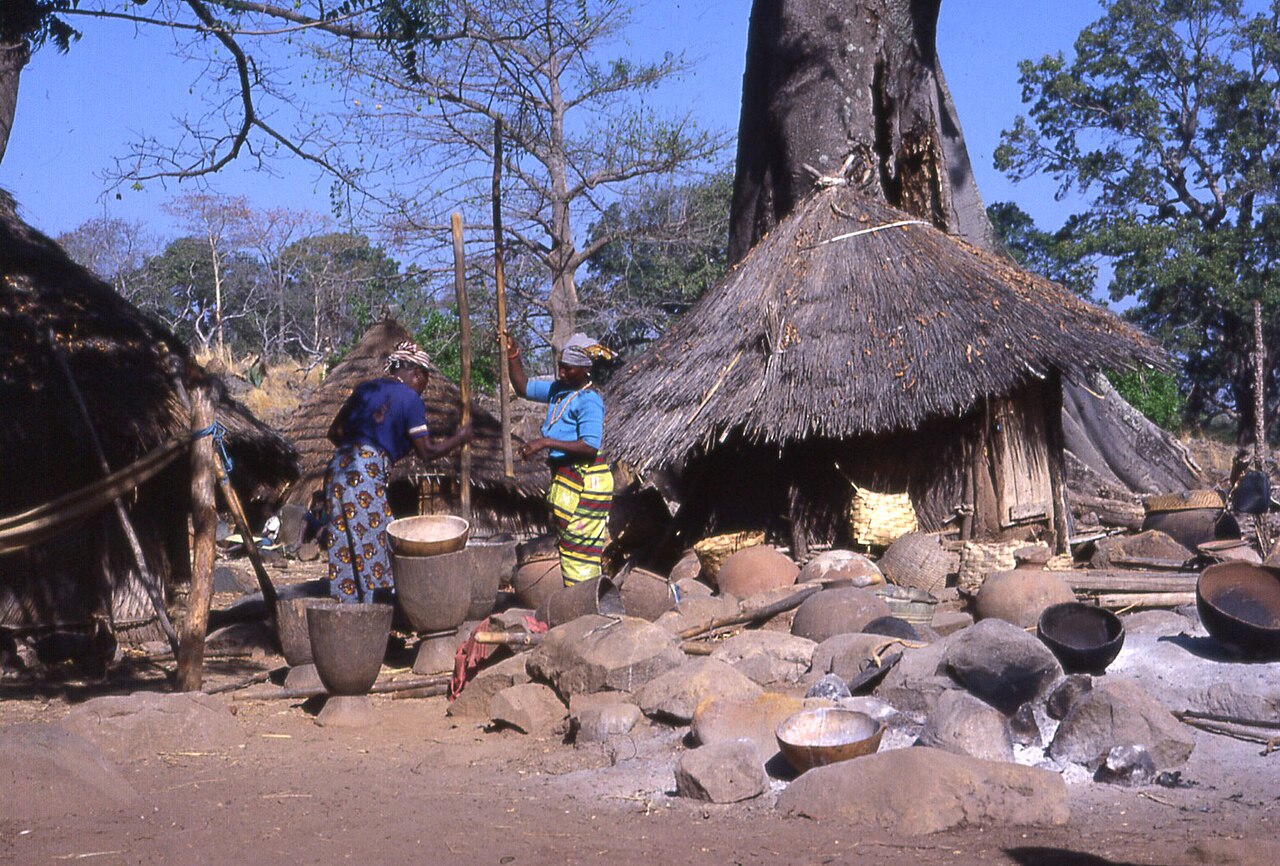
The Bedik are smaller in number — approximately 3,000 people — and speak a Tenda language that places them within a different branch of the Niger-Congo family from the Bassari. Like the Bassari they are animist, and their religious practices share certain structural features with Bassari ritual, but the two communities are linguistically and culturally distinct. The most immediately striking feature of Bedik settlement is architectural: their villages consist of circular thatched huts clustered tightly on hilltops and rocky outcrops, connected by narrow winding paths. The hillside location was originally defensive — providing visibility over the surrounding forest and limiting access routes — and has been maintained as a defining characteristic of Bedik identity. The huts are constructed from local materials, with cylindrical mud walls and steep conical thatch roofs that shed rainwater efficiently during the long rainy season.
The third group, the Fula (also called Peul or Fulani in different regional contexts), bring a contrasting cultural system into the same landscape. Predominantly Muslim and pastoralist, Fula herders move Fulani cattle — identifiable by their lyre-shaped horns — through the area seasonally, following grass availability between the forest margins and the open Sahel. Their presence introduces a pastoral economy that articulates with, and sometimes creates friction with, the sedentary agricultural communities of the Bassari and Bedik. The resulting landscape is not the product of a single culture but of three distinct groups negotiating shared space over long periods, and UNESCO’s inscription explicitly recognised this multi-cultural dynamic as the site’s defining value.
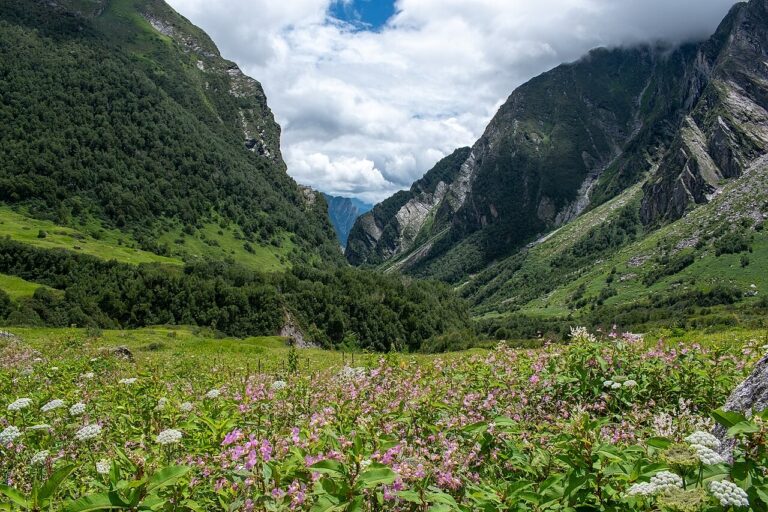
The forested hills at 400 to 600 metres altitude support greater plant diversity than the open Sahel to the north, with gallery forest along watercourses, woodland on the hillsides, and more open agricultural zones around villages. The landscape retains its form largely because the low population density and the traditional land-use systems of all three groups have not driven large-scale clearance. This integrity of landscape — maintained not through external conservation intervention but through continuing cultural practice — was central to the UNESCO assessment.
The Bassari Koré initiation and living intangible heritage Sacred forest groves, Bassari and Bedik villages
The single most distinctive cultural practice associated with Bassari Country, and the one most emphasised in the UNESCO citation, is the Bassari Koré initiation ceremony. This is a male initiation ritual through which young men — the ekontondé — transition from adolescence to recognised adult status within Bassari society. It is not a private or occasional event: it involves the participation of the entire village community and takes place in multiple stages over several days, some in public and some in restricted sacred locations within the surrounding forest.
The visual dimension of the ceremony is immediate and documented: initiates wear full-body costumes constructed from leaves and plant fibre, with geometric body paint applied in white and red. Carved wooden masks are worn during specific ritual stages. The combination creates a collective visual identity for the initiates that signals their liminal status — between their former social category and their new one — and separates them physically and symbolically from uninitiated members of the community. Women are excluded from the innermost ritual stages conducted in the sacred forest groves, though the public aspects of the ceremony are community-wide events in which women participate fully.
The ceremony is not merely theatrical performance but a system for transmitting social knowledge: knowledge of rules, obligations, relationships, and the ethical frameworks that govern Bassari adult life. UNESCO’s inscriptions of this type emphasise that the physical landscape and the intangible practices that occur within it are inseparable — the sacred grove sites, the paths between them, and the overall topography of a Bassari village territory are meaningful specifically because of the ritual practices they contain. This is what makes Bassari Country a Cultural Landscape rather than simply a natural area or an architectural monument: the value resides in the ongoing relationship between people and place.
Related ceremonies exist among the Bedik, with analogous structures of initiation and community participation. The Fula maintain their own ritual calendar oriented around Islamic practice and the pastoral cycle. The three systems coexist in the same hills without collapsing into a single hybrid — a form of long-term cultural pluralism that UNESCO identified as particularly significant and increasingly rare.
Practical information
Kédougou, the regional capital, is the gateway to Bassari Country and is located approximately 700 kilometres from Dakar by road — a journey of 10 hours or more by bush taxi or private vehicle, depending on road conditions. Air Senegal operates a weekly flight between Dakar and Kédougou (approximately one hour), making air access by far the most practical option for visitors with limited time. The flight schedule changes seasonally; verify current schedules before planning. From Kédougou, Bassari and Bedik villages are reached by 4×4 vehicle over laterite and dirt tracks; road conditions deteriorate significantly during the rainy season (June–September).
The dry season, October through May, is the recommended visiting period for both road access and cultural visits. The Koré initiation ceremony does not occur on a fixed calendar date visible to outsiders; visiting during April and May increases the likelihood of encountering ceremonial activity, but advance contact with local guides in Kédougou is necessary to determine timing in any given year. Kédougou has a range of basic guesthouses and a small number of eco-lodges near Bassari and Bedik villages. Guides who speak Bassari and Bedik languages, in addition to Wolof and French, are available through operators in Kédougou town and are essential for meaningful interaction with village communities. Dress modestly for village visits and seek permission before photographing individuals or ceremony preparations.
Frequently Asked Questions
What makes Bassari Country a UNESCO World Heritage Site rather than simply a natural park or ethnic reserve?
Bassari Country was inscribed under the Cultural Landscape category, which UNESCO applies to areas where the interaction between human communities and their physical environment has produced a landscape of outstanding universal value. The key distinction from a natural park is that the landscape’s value depends on the continuing cultural practices of the three resident peoples — Bassari, Bedik, and Fula. The forested hills of the Kédougou Region are not inscribed because they contain exceptional biodiversity or geological formations, though the environment is ecologically rich. They are inscribed because three culturally distinct groups — differing in language, religion, subsistence strategy, and architectural tradition — have shaped and maintained the same landscape through coexisting but non-merged systems of land use and ritual practice over several centuries. The Bassari Koré initiation ceremony, the Bedik hilltop village organisation, and the Fula pastoral routes through the hills are all expressions of this ongoing relationship between culture and landscape. UNESCO noted specifically that the site demonstrates how communities with very different cultural frameworks can coexist in the same territory while maintaining distinct identities — a condition that is globally rare and increasingly under pressure from economic migration, religious change, and integration into national market economies. The site is not an ethnic reserve: the communities live and govern themselves according to their own systems, and the UNESCO designation does not restrict movement, land use, or cultural change. It recognises the value of what exists and supports the conditions under which it can continue.
What is the Bassari Koré ceremony, and can visitors witness it?
The Koré is a male initiation ceremony central to Bassari social organisation. It marks the transition of young men — the ekontondé — from adolescent status to full adult membership in the community, with all the rights, obligations, and knowledge that entails. The ceremony takes place in multiple stages over several days. The public stages occur in the village and involve the entire community, including women and children; the restricted stages take place in sacred forest groves and are attended only by initiated men. Initiates wear full-body costumes of leaves and plant fibre, with geometric body paint in white and red and carved wooden masks during specific phases. The visual and acoustic impact of the ceremony — costumes, music, movement, the participation of the whole village — is substantial, and photographs and documentary film of the public stages exist in ethnographic archives. Whether visitors can witness the ceremony depends on timing and community permission. The Koré does not occur on a date fixed in advance by a public calendar; it is called by community elders according to internal criteria. Visiting Bassari Country with a local guide who has existing relationships with village communities, and timing the visit to April or May when initiation seasons historically cluster, improves the probability of being present during ceremonial activity. However, witnessing the ceremony is not guaranteed and should not be treated as a tourist product to be booked and consumed. Respectful presence at the invitation of the community, with a guide who can navigate protocols, is the appropriate framework.
How remote is Bassari Country, and what is the realistic travel plan from Dakar or another major city?
Bassari Country is one of the most remote UNESCO World Heritage Sites in West Africa that is nonetheless accessible to independent travelers. Kédougou, the regional capital and the practical gateway to the site, lies approximately 700 kilometres from Dakar by road. The overland journey by bush taxi or private 4×4 takes 10 to 12 hours under dry-season conditions and significantly longer when roads are affected by rain. The alternative is the weekly Air Senegal flight from Dakar to Kédougou, which takes approximately one hour and makes the destination realistic for a 3–5 day visit without losing a full day at each end to ground transport. From Kédougou, reaching Bassari or Bedik villages requires a 4×4 vehicle; the tracks are not passable by standard car, particularly in the months surrounding the rainy season. Kédougou itself has basic accommodation options — guesthouses and small hotels — and a number of eco-lodges have been established closer to the villages, offering simple but comfortable facilities within walking distance of cultural sites. A realistic itinerary for a first visit is 4 to 5 nights in the region: one night in Kédougou, two to three nights based in or near a Bedik or Bassari village, and a return night in Kédougou before the return flight. Local guides hired in Kédougou are essential for village access, linguistic interpretation, and understanding the cultural context of what you observe.
Sources
- S1 — Gessain, Monique. Les Bassari du Sénégal: Rituels et traditions. L'Harmattan, 2006. ISBN 978-2-296-00412-2.
- S2 — Ferry, Marie-Paule. Les dits de la nuit: Contes bassari du Sénégal. Karthala, 1983. ISBN 978-2-86537-071-9.
Spotted an error? Write to editorial@culturalheritageonline.com and we correct it the same day.