
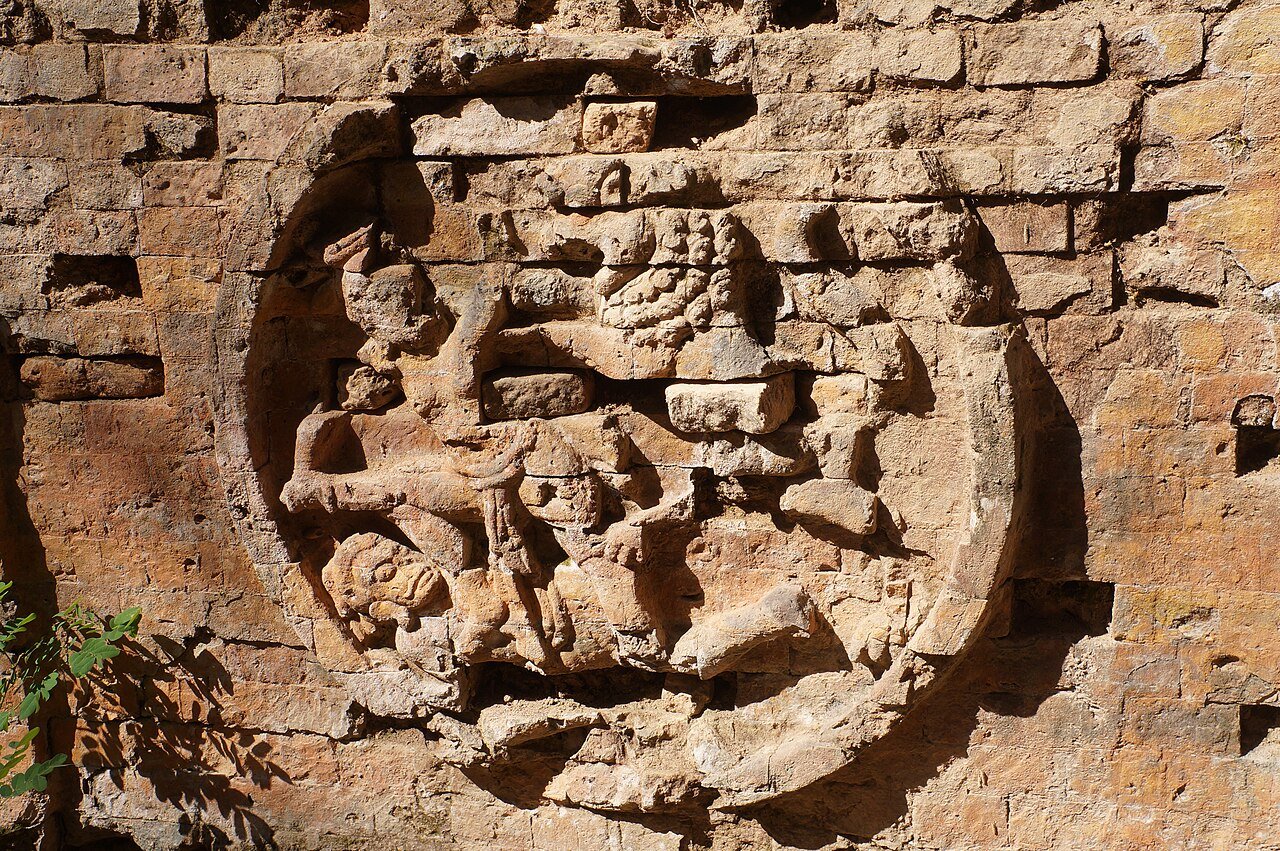
Three UNESCO World Heritage Sites lie within a day’s drive of Phnom Penh — each a chapter in Khmer civilisation that predates or rivals Angkor in historical significance. Together they trace a millennium of temple-building, from the pre-Angkorian brick sanctuaries of Sambor Prei Kuk to the cliff-edge drama of Preah Vihear. From Cultural Heritage Online.
Sambor Prei Kuk 170 km north · 3 hr by road
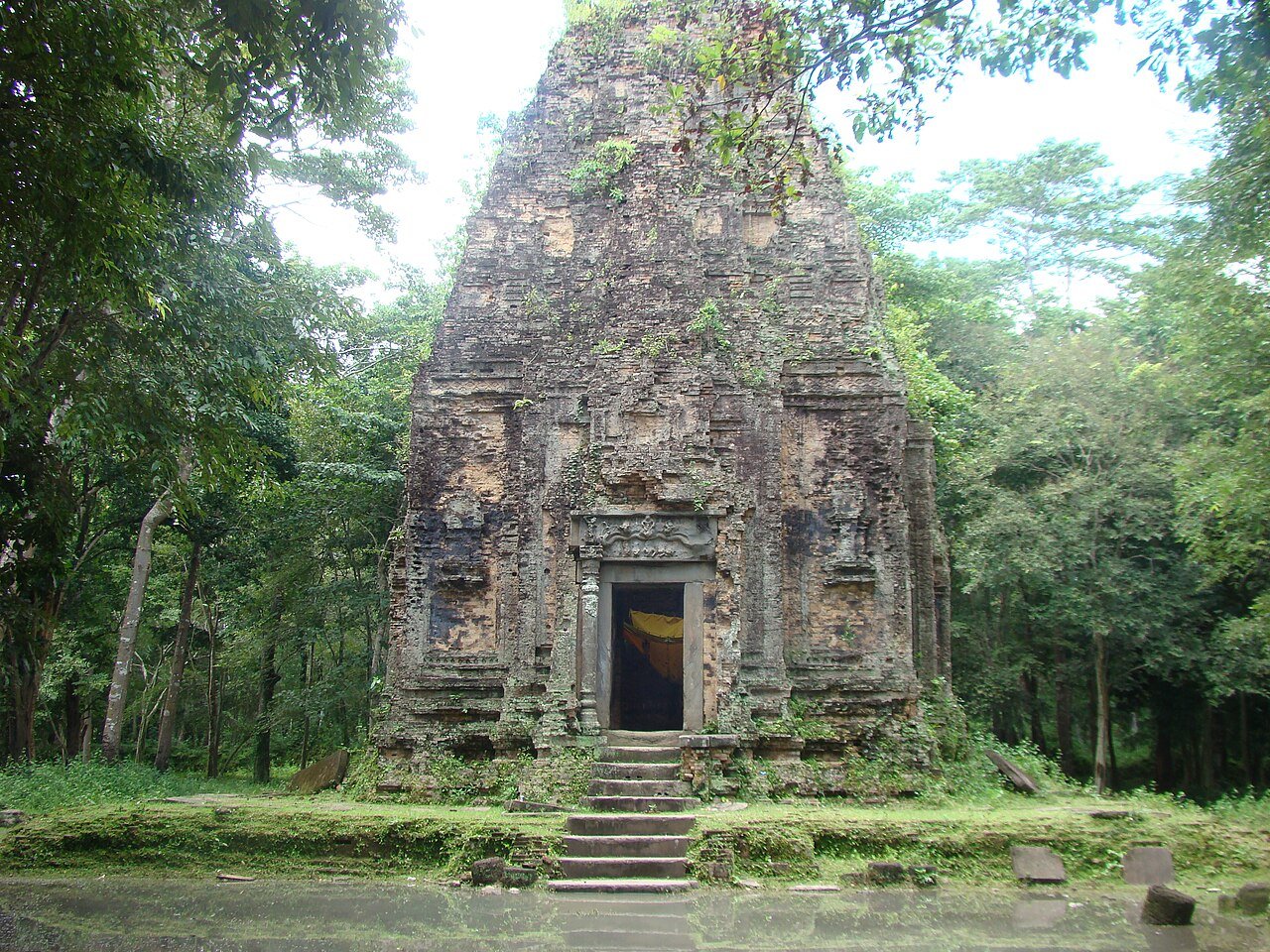
Sambor Prei Kuk — “the temple in the rich forest” — is the oldest large brick temple complex in Southeast Asia. The site was inscribed by UNESCO in 2017 as the capital of the Chenla Kingdom, which controlled much of mainland Southeast Asia between the 6th and 8th centuries, a full two centuries before Angkor rose to power. More than 150 sanctuaries survive, arranged in three main groups: Prasat Sambor, Prasat Tao and Prasat Yeay Peau, each preserving a distinct spatial logic that would later influence the great Angkorian builders.
The temples are built in dark-red laterite and brick, their surfaces etched with devotional carvings that have weathered fourteen hundred years of monsoon and forest growth. Octagonal towers — an architectural form unique to this period — stand alongside rectangular prasats wrapped in strangler fig roots. The air is heavy with humidity and birdsong; in the early morning, shafts of light fall through the canopy onto stone that no longer receives many visitors, which gives the place a quality of genuine discovery that Angkor cannot offer.
Getting there: 170 km north of Phnom Penh via National Road 6; approximately 3 hours by car or shared taxi. Buses to Kampong Thom town run regularly from Phnom Penh; the temple complex is 30 minutes by tuk-tuk from the town centre. Allow: Half a day for the main groups; a full day to explore outlying sanctuaries. Best for: History enthusiasts, archaeology travellers, anyone seeking a UNESCO site without crowds.
Koh Ker 200 km north · 3.5 hr by road
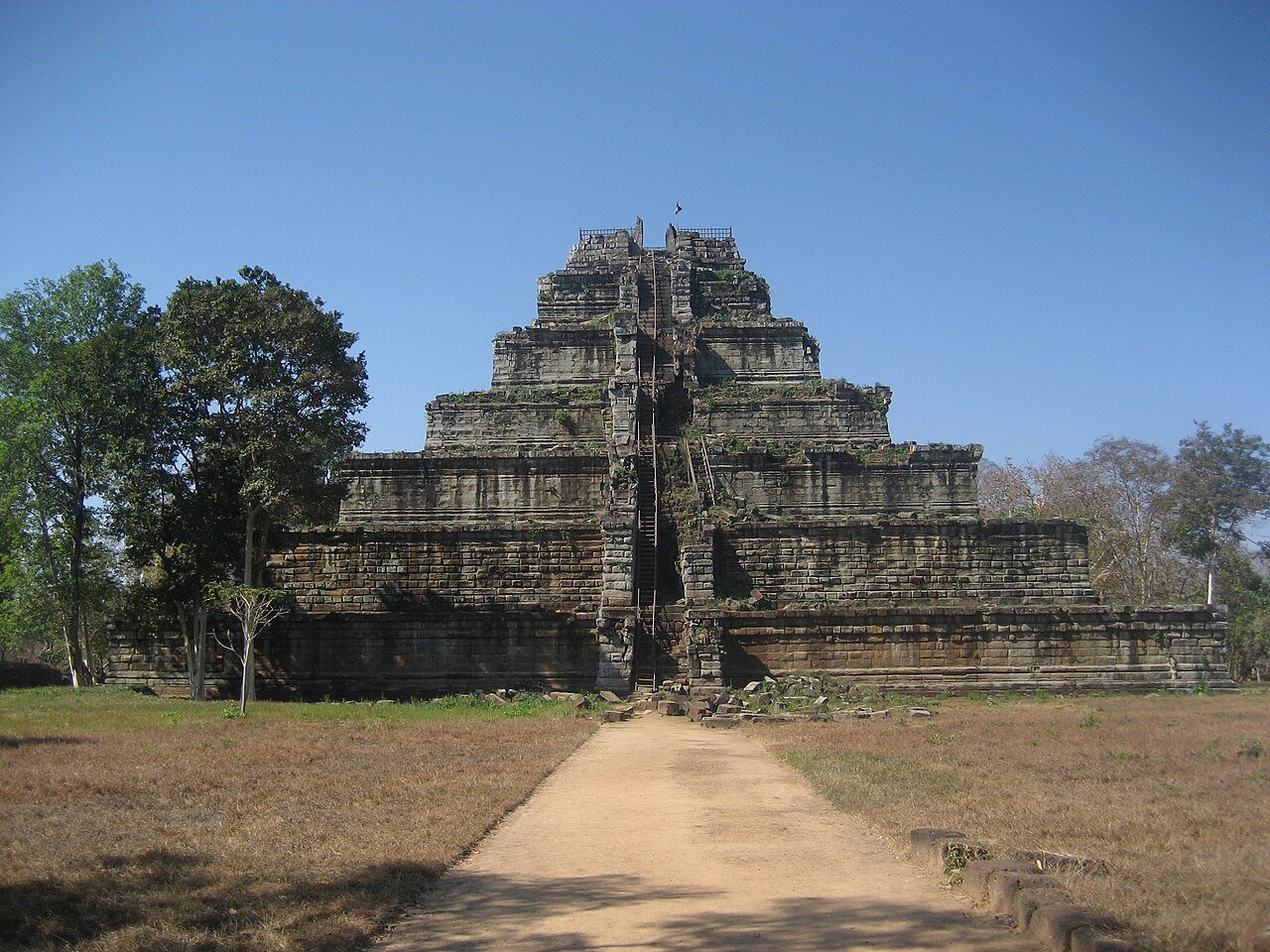
In 921 CE, Jayavarman IV moved the Khmer capital away from Angkor to a remote jungle site he called Lingapura. For two decades it was the centre of an empire, and the monuments he built there reflect the ambition of a king who had something to prove. Koh Ker received UNESCO World Heritage inscription in 2023. At its heart stands Prasat Thom, a seven-tiered sandstone pyramid rising 36 metres from the forest floor — the largest such structure in the Khmer world. Seventy-eight smaller temples and shrines surround it, scattered through dense woodland across a site that was only recently cleared of landmines.
The climb to the top of Prasat Thom involves steep, unrailed steps and rewards visitors with a 360-degree view across an unbroken jungle canopy. The complex is far less visited than Angkor, and the silence at the summit has an unusual quality — wind, birds, and occasionally the distant crack of a bamboo thicket. Sculptures removed from Koh Ker during the looting of the 1970s and 1990s have been repatriated from international museums in recent years, but what remains in situ is still considerable.
Getting there: 200 km north of Phnom Penh; the most practical route runs via Skuon and Tbeng Meanchey, approximately 3.5 hours by car. Koh Ker pairs naturally with Sambor Prei Kuk on a two-day loop: visit Sambor Prei Kuk on day one (overnight in Kampong Thom), then continue north to Koh Ker on day two before returning south. Allow: 3–4 hours on site. Best for: Travellers combining two UNESCO sites in a single overnight circuit; those drawn to Angkor-era architecture without the Siem Reap crowds.
Temple of Preah Vihear 380 km north · 6 hr by road
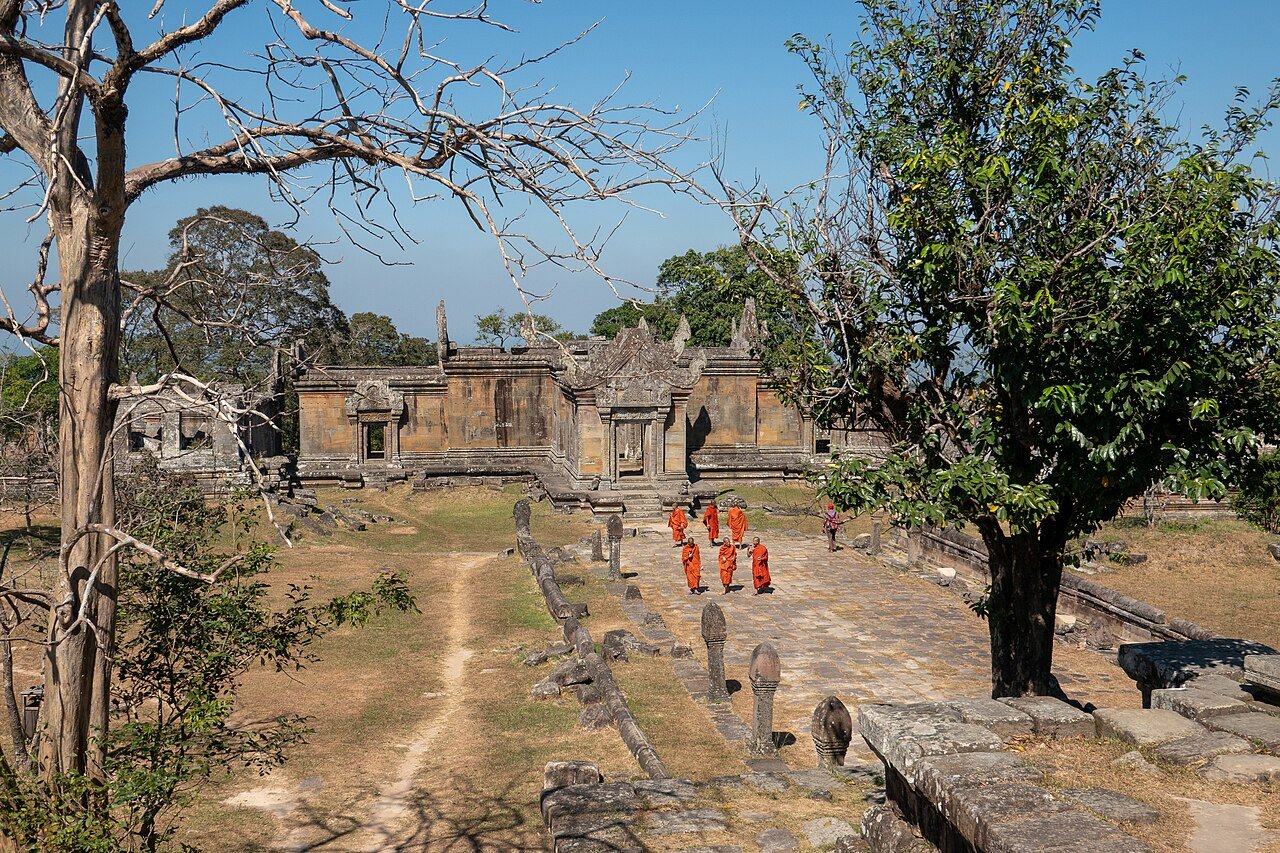
Preah Vihear occupies the most dramatic site of any Khmer monument: a narrow spur of the Dangrek escarpment, 525 metres above the Cambodian plain, on the border with Thailand. Construction began in the early 9th century and continued under successive Khmer kings through the 11th and 12th centuries; the temple was dedicated to the Hindu god Shiva. UNESCO inscribed it in 2008. The layout is axial and uncompromising — a series of gopuras (monumental gateways) and courtyards strung along a 800-metre causeway that rises steadily toward the sanctuary, which hangs over the cliff edge like a prow.
The cliff-side location is not incidental to the experience; it defines it. Standing at the southern end of the temple, the land drops sheer away and the Cambodian plain stretches to the horizon without interruption. The territorial dispute with Thailand over a 4.6 km² zone around the temple led to armed conflict in 2008 and 2011. The International Court of Justice ruled in Cambodia’s favour in 2013, and the site has since been stable and accessible from the Cambodian side via Anlong Veng. The most important carved lintels and pediments at the site remain in place, making Preah Vihear one of the best-preserved examples of classical Khmer decorative stonework outside of Angkor.
Getting there: 380 km north of Phnom Penh via National Roads 6 and 64, through Skuon and Tbeng Meanchey to Anlong Veng; approximately 6 hours by private car. Public transport is indirect and requires an overnight in Tbeng Meanchey or Anlong Veng. No direct buses from Phnom Penh. The Thai approach from Si Sa Ket province remains complicated by border politics. Allow: A full day on site; plan for a two-day trip with an overnight near Anlong Veng. Best for: Serious heritage travellers willing to make the journey; those interested in the intersection of archaeology and modern geopolitics.
Frequently Asked Questions
How many UNESCO World Heritage Sites are near Phnom Penh?
Three UNESCO World Heritage Sites are accessible from Phnom Penh: Sambor Prei Kuk (inscribed 2017), Koh Ker (inscribed 2023), and the Temple of Preah Vihear (inscribed 2008). Cambodia’s fourth World Heritage Site, Angkor, is usually visited from Siem Reap rather than Phnom Penh, as it lies 315 km to the northwest and is served by a domestic airport.
How do I visit Sambor Prei Kuk from Phnom Penh?
The most straightforward option is to hire a private car from Phnom Penh for around USD 60–80 return; the drive takes approximately 3 hours each way via National Road 6. Shared taxis and buses run regularly to Kampong Thom town, from where a tuk-tuk to the temple complex costs around USD 10–15 for the day. A day-trip from Phnom Penh is feasible but leaves little time on site; spending a night in Kampong Thom is preferable, and allows an early-morning visit before tour groups arrive from Siem Reap.
Can I combine Sambor Prei Kuk and Koh Ker in one trip?
Yes, and this is the recommended approach. The two sites complement each other historically — Sambor Prei Kuk represents the pre-Angkorian Chenla period, while Koh Ker was a brief 10th-century capital that bridges Chenla and classical Angkor. A two-day loop works well: drive north from Phnom Penh to Sambor Prei Kuk, overnight in Kampong Thom, then continue north to Koh Ker on day two before returning south. The dry season (November to March) is the most comfortable time to travel, with paved roads passable throughout; the rainy season (June to October) makes some jungle paths at Koh Ker difficult.
Why is Preah Vihear historically significant?
Preah Vihear is significant for two distinct reasons. Architecturally, it is one of the finest surviving examples of the Khmer sanctuary-on-a-mountain form — a sacred geography in which the temple represents Mount Meru, the Hindu cosmic axis, rising above the world below. Construction spanned several reigns from the 9th to the 12th century, with the most important work completed under Suryavarman I and Suryavarman II, the same king who built Angkor Wat. Politically, the temple became a flashpoint for Cambodian-Thai territorial disputes in the 20th and 21st centuries; the International Court of Justice first ruled in Cambodia’s favour in 1962, and confirmed that ruling in 2013, settling the sovereignty question over the temple itself while leaving the surrounding buffer zone complex.
Sources
- S1 — Chandler, David. A History of Cambodia. Westview Press, 2008. ISBN 978-0-8133-4363-1.
- S2 — Coe, Michael D. Angkor and the Khmer Civilization. Thames & Hudson, 2003. ISBN 978-0-500-28442-1.
Spotted an error? Write to editorial@culturalheritageonline.com and we correct it the same day.



.jpg)

.jpg)
