Samoa has no inscribed UNESCO World Heritage Sites, but the islands hold cultural and natural heritage of genuine international significance — from a Scottish novelist’s jungle estate and mountain grave to volcanic lava tubes that rank among the Southern Hemisphere’s longest. From Cultural Heritage Online.
Vailima — Robert Louis Stevenson Museum 4 km south of Apia, 15 min by taxi
Tucked into the foothills south of Apia, Vailima is a two-storey colonial villa surrounded by gardens that Robert Louis Stevenson (1850–1894) built and inhabited from 1890 until his death. The Scottish novelist arrived in Samoa seeking relief from the tuberculosis that had shadowed him for decades; the warm climate gave him four of his most productive years, and the country gave him something he had never quite found in Edinburgh, London, or the French Riviera — a sense of belonging. He learned Samoan, intervened in the islands’ civil wars on behalf of Samoan sovereignty, and adopted the name Tusitala, meaning Story-Teller.
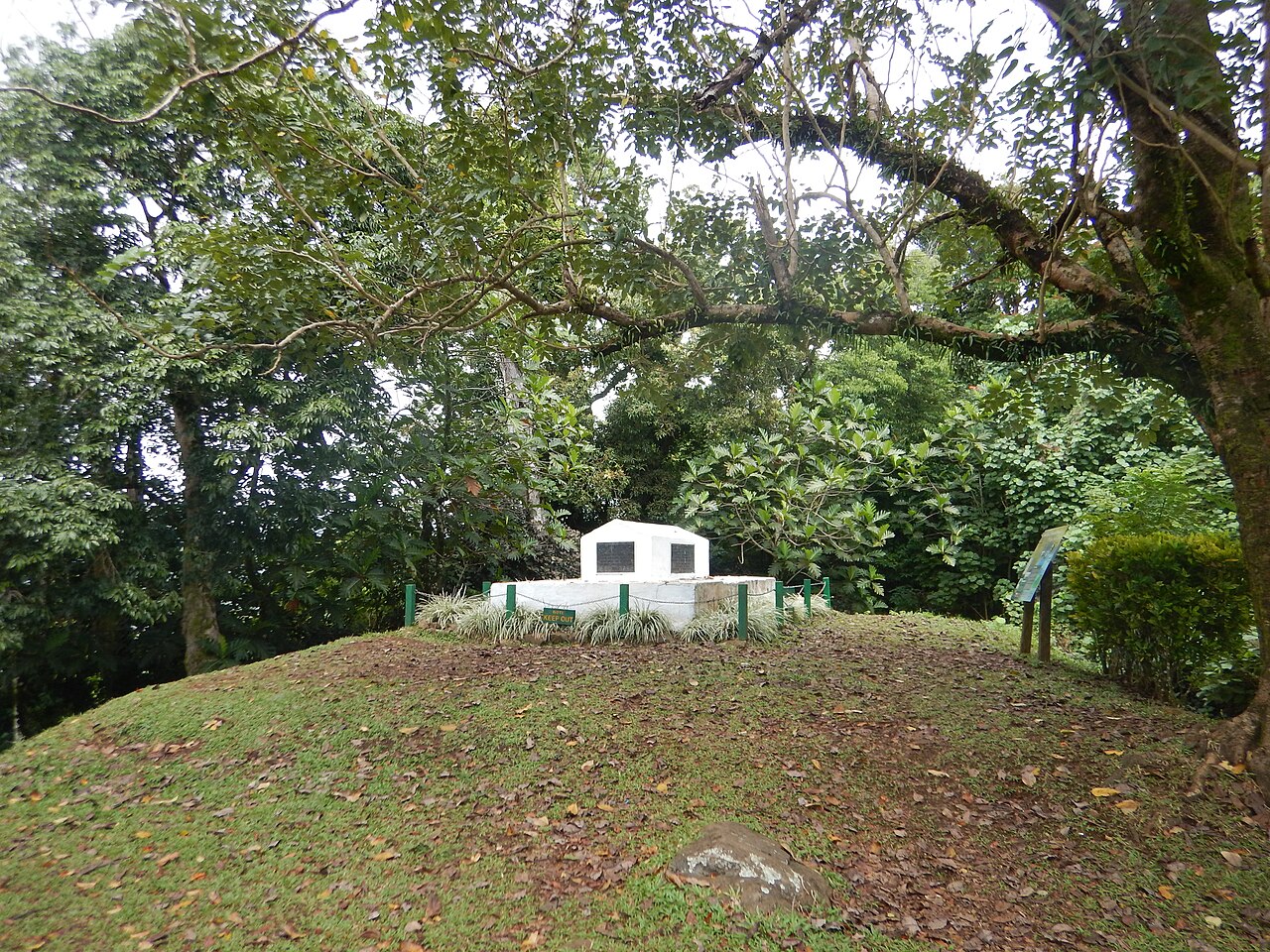
Stevenson died suddenly in December 1894, most likely from a cerebral haemorrhage, at the age of forty-four. On the day of his death, two hundred Samoans cut a path through dense jungle to carry his body up Mount Vaea, honouring him as a chief. His grave at the summit bears the lines he had written years earlier in his poem Requiem: “Under the wide and starry sky / Dig the grave and let me lie.” The Samoan community’s devotion to Stevenson was not sentimental — he had risked his reputation defending their leaders in print and in person.
The villa passed through several owners and served at various points as the official residence of the Head of State of Samoa. A major restoration in the 1990s returned it to its Stevensonian-era appearance, and it now operates as a museum. The rooms are preserved with period furnishings, manuscripts, and personal effects that convey the unlikely late-Victorian domesticity of a man who spent his final years on a Pacific island writing fiction. The adjacent 2 km trail to the summit grave on Mount Vaea is one of the Pacific’s most significant literary pilgrimage routes — a steep but manageable climb through forest, rewarded by a view that Stevenson describes, indirectly, in much of his late South Seas writing.
Vailima meets several criteria for UNESCO World Heritage consideration — outstanding universal value as the creative home of a figure of global literary importance, exceptional integrity of the restored structures, and living cultural association with Samoan identity — but Samoa has not yet submitted a formal nomination dossier. The site is protected under Samoan national law.
Getting there: Taxi from central Apia, approximately 15 minutes and 4 km south along the Cross Island Road; arrange return transport in advance as the area has limited passing vehicles. Allow: 2–3 hours for the museum and the Mount Vaea trail combined; the trail gains roughly 160 m in elevation and takes 45–60 minutes each way. Best for: Readers of Stevenson, literary travellers, anyone interested in Pacific colonial history and Samoan political culture.
Taga Blowholes Savai’i island — 45 min domestic flight or 1 hr ferry from Upolu, then 1.5 hrs by road

On the southern coast of Savai’i, Samoa’s larger and less developed island, the Taga blowholes are widely considered among the most powerful naturally occurring blowholes in the world. The mechanism is geological: lava flows from ancient volcanic eruptions created an extensive system of tubes beneath the basalt shoreline. When ocean swells roll in, compressed air and water find their only exit through narrow openings in the rock, erupting upward in columns that regularly reach 20–30 metres in height during moderate swell conditions and considerably higher during cyclone season.
The force of the eruptions is theatrical enough that local vendors have long offered visitors the spectacle of coconuts thrown into the openings, launched skyward by the blast. The surrounding coastline is raw basalt, black and sharp, with no sand — the geology is unmistakably volcanic, and the scale of the lava field that extends inland reinforces that Savai’i sits over one of the most volcanically active zones in the Pacific. The most recent major eruption on the island occurred in 1911.
Getting there: Fly from Faleolo International Airport (near Apia) to Maota Airport on Savai’i with Samoa Airways, or take the Samoa Shipping ferry from Mulifanua Wharf on Upolu to Salelologa on Savai’i (approximately 1 hour). From Salelologa, drive south and west along the coast road to the Taga village area, roughly 1.5 hours. Local guides and village fees apply at the site. Allow: Half a day minimum; a full Savai’i day trip or overnight is strongly recommended. Best for: Travellers with an interest in volcanic geology, photographers, those combining with the Pe’ape’a Cave lava tube nearby.
Pe’ape’a Cave Savai’i island — accessible from Taga on the same day trip
Pe’ape’a Cave, also on Savai’i, is one of the longest accessible lava tubes in the Southern Hemisphere, with approximately 2 kilometres open to visitors. The name refers to the swiftlet (pe’ape’a) — small birds that nest inside the cave in significant numbers and which gave the cave its name long before it became a site of geological interest.
The tube was formed when the outer crust of a lava flow cooled and solidified while molten lava continued to flow beneath, eventually draining and leaving a hollow channel. The interior dimensions vary considerably — some sections are tall enough to walk upright, others require crouching — and the floor retains features characteristic of lava tube formation, including smooth pahoehoe surfaces and occasional lava stalactites formed by drips of cooling molten rock. The darkness inside is absolute; guides provide torches, and visitors should wear closed shoes.
The cave has no formal UNESCO inscription, but it meets the natural heritage criteria for Outstanding Universal Value as a geological feature of regional significance. Samoan oral tradition associates the cave with the spirit world, and community protocols around the site reflect its dual status as a natural and cultural landmark.
Getting there: Located in the interior of Savai’i; access is via the Pulemelei Archaeological Site road and then a short walk. Best combined with the Taga blowholes on a single Savai’i circuit. Local guides are required and bookable through Savai’i guesthouses. Allow: 1.5–2 hours at the cave. Best for: Geology enthusiasts, cavers, travellers combining natural and cultural heritage on Savai’i.
Frequently Asked Questions
How many UNESCO World Heritage Sites are near Apia?
As of 2026, Samoa has no inscribed UNESCO World Heritage Sites. The country has cultural and natural heritage that meets international significance thresholds — including Vailima, the preserved home of Robert Louis Stevenson, and the volcanic lava tube systems of Savai’i — but has not yet submitted formal nomination dossiers to UNESCO. Travellers should not confuse the absence of inscription with an absence of heritage worth visiting.
Is the Robert Louis Stevenson Museum open to the public, and how much does it cost?
Yes. The Robert Louis Stevenson Museum at Vailima is open to visitors most days of the week; hours can vary, so confirm locally or with your accommodation before travelling out. An entrance fee applies and supports the museum’s maintenance. The Mount Vaea trail to Stevenson’s grave is accessible from the museum grounds and requires no separate ticket, though the hike itself is strenuous in Samoa’s heat and humidity.
When is the best time to visit Samoa for heritage and natural sites?
The dry season, from May to October, offers the most comfortable conditions for hiking the Mount Vaea trail and exploring the Savai’i lava fields. The wet season (November to April) brings heavy rainfall and the risk of cyclones, which can make road access to Savai’i’s southern coast difficult. However, the blowholes at Taga are most dramatic during periods of high ocean swell, which occur more frequently in the wet season — so the choice involves a real trade-off between comfort and spectacle.
What was Robert Louis Stevenson’s connection to Samoan political life?
Stevenson arrived in Samoa during a period of acute political instability in which Germany, the United States, and Britain were competing for influence over the islands, with Samoan chiefs divided between rival factions. He became deeply involved in advocating for Samoan self-determination, writing letters to newspapers and officials in Britain and the United States, and corresponding directly with Samoan leaders. His book A Footnote to History: Eight Years of Trouble in Samoa (1892) documented the colonial intrigue with the impartiality of a journalist and the moral clarity of a man who had chosen to live with the consequences of what he described. When he died, Samoans mourned him not as a visiting literary celebrity but as a chief who had, within his means, taken their side.