Sources
- S1 — Cologni, Franco. Tudor Anthology. Mondani Editore, 2013. ISBN 978-88-903723-9-1.
- S2 — Dowling, Colin, and Jeffrey Hess. The Best of Time: Rolex and Tudor Wristwatches. Schiffer Publishing, 2001. ISBN 978-0-7643-1367-7.
In February 1926, in the watchmaking capital of Geneva, Hans Wilsdorf—the visionary creator of Rolex—registered the trademark "The Tudor" through dealer and watchmaker Philippe Hüther. Conceived to offer the waterproof durability and mechanical precision of an Oyster watch at an accessible price point for working professionals and explorers, Tudor became an enduring Swiss manufacture whose tool watches accompanied polar expeditions and naval divers across the globe.
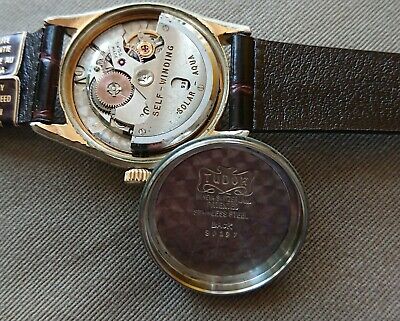
Hans Wilsdorf's Vision: The Accessible Masterpiece
Having conquered international chronometry with Rolex, Hans Wilsdorf (1881–1960) recognized that extreme reliability should not remain the exclusive privilege of wealthy elites. On February 12, 1926, Wilsdorf formally acquired the trademark rights to "The Tudor", named in homage to England’s dynamic Tudor dynasty. In 1936, Wilsdorf took personal control of the brand, adopting the rose of the Tudor heraldic emblem—symbolizing aesthetic grace—before later uniting it with the defensive shield of mechanical resilience.
On March 6, 1946, Wilsdorf established Montres TUDOR S.A. as an autonomous manufacture in Geneva, guaranteeing that each Tudor timepiece would benefit from Rolex’s patented waterproof Oyster case and perpetual rotor technology while incorporating dedicated Swiss ebauches.
From Greenland Expeditions to Combat Divers: The Tool Watch Legacy
Tudor’s reputation as an unyielding instrument watch was forged in demanding real-world conditions. Between 1952 and 1954, thirty British scientists embarking on the British North Greenland Expedition were equipped with the newly launched Tudor Oyster Prince, proving that the watches maintained chronometric precision under Arctic gales. Soon after, in 1954, Tudor unveiled its defining diving tool: the Tudor Submariner (Reference 7922), tested and subsequently adopted as official military equipment by the French Marine Nationale (through the Toulon G.E.R.S. undersea research group in 1956) and evaluated by the US Navy Underwater Demolition Teams (UDT) during rigorous submersible equipment trials.
As Tudor approaches its milestone centenary in 2026, the company operates from its registered headquarters in Geneva and its state-of-the-art manufacture opened in 2023 in Le Locle alongside movement-maker Kenissi. Owned entirely by the non-profit Fondation Hans Wilsdorf, the shield emblem stands as an internationally revered symbol of Swiss functionalist horology.
Heirs to Master Artisans: High Horology and Precision Waterproof Watchmaking
Original historical newsreel from the Istituto Luce Cinecittà Archive capturing microscopic escapement assembly, noble metallurgy, and precision watchmaking craftsmanship; this is period footage illustrating the 1920s watchmaking era and does not show Tudor. (Source: Historical Archive Istituto Luce Cinecittà / Period Newsreels)
Interactive 360° Heritage View: Tudor World Headquarters & Geneva Campus
Historical Location: Rue François-Dussaud 3-5, 1211 Geneva, Switzerland (Coordinates: 46.1915, 6.1305)