In 1925, at the crossroads of French transportation canals in Fresnoy-le-Grand, two Belgian industrialists—foundry casting specialist Armand Desaegher and enamelling master Octave Aubecq—established Le Creuset. By cloaking heavy metallurgical cast iron in radiant, vitreous porcelain enamel, they invented the modern French *cocotte*, igniting a culinary revolution that united metallurgical durability with the finest traditions of French gastronomy.
The Meeting of Two Crafts: Molten Iron and Vitreous Glaze
Following their fortuitous meeting at the 1924 Brussels Fair, Armand Desaegher, who understood the thermal heat retention of molten cast iron, and Octave Aubecq, an expert in acid-resistant vitreous enamels, recognized an extraordinary culinary opportunity. Bare cast-iron cookware of the period was notorious for rusting, reacting with acidic ingredients like wine and tomatoes, and requiring tedious seasoning. By fusing powdered glass enamel directly to glowing cast iron at 840°C, they produced an impervious, hygienic, and non-reactive cooking vessel.
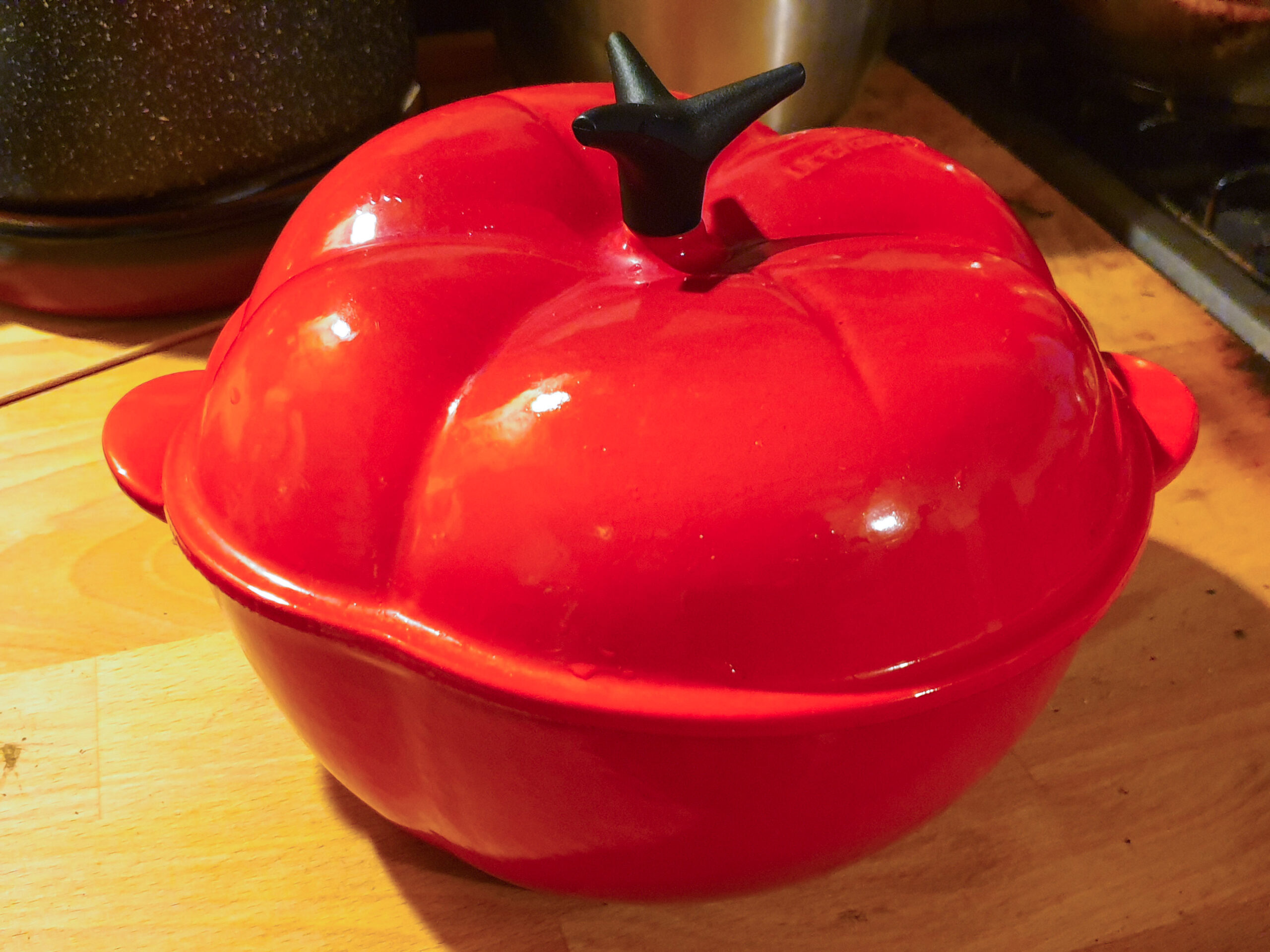
Choosing Fresnoy-le-Grand in Picardy for its strategic proximity to iron ore, coal, and sand, they established their foundry in 1925. Their inaugural creation was tinted in a fiery, incandescent orange glaze dubbed Volcanique (Flame)—inspired by the vibrant orange hue of molten cast iron pouring from the foundry’s crucible (*creuset*).
The Cocotte as Cultural Monument: From Picardy to Global Kitchens
During the postwar culinary renaissance, Le Creuset expanded into global gastronomy, collaborating with industrial design pioneers like Raymond Loewy (who designed the sleek “Coquelle” in 1958) and Enzo Mari. Beloved by legendary chefs from Julia Child and Elizabeth David to Michelin-starred French masters, the Le Creuset cocotte became an heirloom passed down through generations of home cooks.
Operating continuously from its original 1925 foundry in Fresnoy-le-Grand, each piece is cast in an individual sand mold that is broken after use, ensuring that no two pieces are identical. As Le Creuset marks a century of flame and enamel, it stands as an enduring emblem of French culinary art and industrial savoir-faire.
Gli alti forni e la fusione della ghisa
Immagini d'archivio storico dell'Istituto Luce che mostrano la potenza della metallurgia, le colate di ghisa incandescente e la maestria delle storiche fonderie europee. (Fonte: Archivio Storico Istituto Luce Cinecittà)
Interactive 360° Heritage View: Fonderie Historique Le Creuset & Manufacturing Campus
Historical Location: 902 Rue Olivier Deguise, 02230 Fresnoy-le-Grand, Hauts-de-France, France (Coordinates: 49.9472, 3.4215)
Sources
- S1 — Aubecq, Paul. Le Creuset: L'art de la fonte émaillée depuis 1925. Paris, 2005. ISBN 978-2-9524512-0-8.
- S2 — Mason, Laura. Food Culture in Great Britain and France. Greenwood Press, 2004. ISBN 978-0-313-32798-8.
Spotted an error? Write to editorial@culturalheritageonline.com and we correct it the same day.