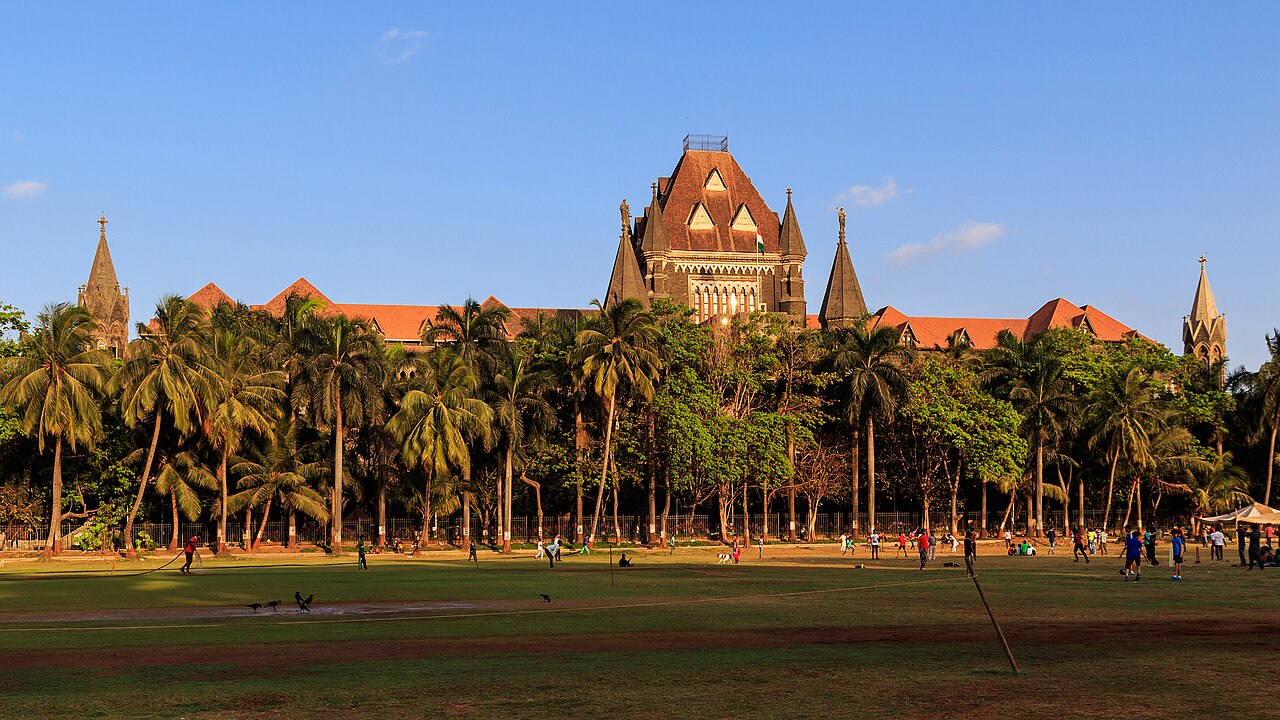
The Victorian Gothic and Art Deco Ensembles of Mumbai (मुंबई के विक्टोरियन गोथिक और आर्ट डेको समूह), inscribed by UNESCO in 2018, is a serial inscription comprising two groups of buildings on the Oval Maidan (a cricket ground in South Mumbai) that together constitute the largest surviving concentration of Victorian Gothic civic architecture outside Great Britain and the largest Art Deco urban ensemble in Asia — representing two separate phases of Mumbai’s urban development as the primary port and commercial city of colonial India. The Victorian Gothic group (approximately 1860–1900 CE, on the eastern side of the Oval Maidan and extending into the Fort neighbourhood) comprises the Bombay High Court (1878 CE, by Colonel J.A. Fuller, in Venetian Gothic style with a spire topped by a statue of Themis), the University of Bombay with the Rajabai Clock Tower (1878–1888 CE, by Sir George Gilbert Scott in the late English Gothic tradition, the library modelled on the Oxford University Bodleian and the tower modelled on Bruges’ belfry), the Bombay Municipal Corporation headquarters (1893 CE, by Frederick William Stevens, in a Indo-Saracenic interpretation of Gothic that blends Mughal dome forms with Gothic towers), the Public Works Department Building, and the Western Railway Headquarters (1899 CE). The Art Deco group (approximately 1930–1950 CE, on the western side of the Oval Maidan along Marine Drive) comprises approximately 94 apartment buildings and commercial structures in Art Deco and Art Moderne style — making the Oval Maidan the axial space around which Mumbai’s two major urban design eras face each other: Gothic from 1860–1900 to the east, Art Deco from 1930–1950 to the west.
The Mumbai UNESCO ensemble and the South Mumbai heritage walking circuit Oval Maidan · Chhatrapati Shivaji Terminus · Marine Drive · Elephanta ferry from Gateway of India — 0 to 12 km
The Victorian Gothic buildings along the Oval Maidan’s eastern edge form the most concentrated ensemble of Gothic civic architecture in South Asia — a deliberate statement of imperial British urban identity in the city that was the primary commercial and administrative centre of British India from approximately 1858 (when the East India Company was dissolved and the British Crown assumed direct administration of India following the 1857 Rebellion) to 1947. The Bombay High Court (Mahatma Gandhi Road, the most photogenic of the Victorian Gothic buildings, built 1871–1878 CE in a Gothic Revival style adapting Venetian Gothic tracery and pointed arches to the tropical building requirements of Bombay — with wide verandahs on the upper floors to provide shade, and a generally more open building section than its British equivalents to allow air circulation in the Mumbai humidity and heat) is notable for the statue of Themis at its northern apex and for the still-active legal practice within: the Bombay High Court is one of the oldest and most prestigious High Courts in India (established 1862 CE), and the Victorian Gothic building remains its working court complex. The Rajabai Clock Tower (approximately 85 m in height, completed 1878 CE, on the University of Bombay campus, designed by George Gilbert Scott in the late Gothic Revival tradition derived from his work on the Albert Memorial and St Pancras station in London — the tower was funded by a Parsi merchant Premchand Raychand in memory of his mother Rajabai, who was blind and who needed to hear the clock chimes to know the time for prayer) and the university library building (a separate building in the same Gothic vocabulary, the circular reading room based on the Radcliffe Camera at Oxford) are accessible on the University campus with advance permission, or from the gate on Dr. D.N. Road. The Art Deco buildings on Marine Drive (Netaji Subhash Chandra Bose Road, approximately 3.6 km from the Air India Building in the north to Nariman Point in the south, also called the “Queen’s Necklace” for the appearance of its streetlights as a string of pearls visible from the Malabar Hill ridge at night) include approximately 94 apartment towers and commercial buildings built 1930–1950 CE in a distinctive Mumbai interpretation of the international Art Deco style that incorporates Indian decorative motifs (temple tower profiles, lotus flower ornament, Jali screen windows) into the stepped Art Deco massing and streamlined surface treatment, creating a hybrid “tropical Art Deco” or “Indo-Deco” style unique to Mumbai. The Chhatrapati Shivaji Maharaj Terminus (UNESCO-inscribed separately in 2004, approximately 1 km east of the Oval Maidan — the main railway station of Mumbai, built 1878–1888 CE by Frederick William Stevens in an extraordinarily lavish Gothic Revival style blending English Gothic with Indian Mughal and Hindu architectural elements in a synthesis the architect called “an Indian Gothic”) is the most visited UNESCO monument in Mumbai and the busiest railway station in Asia, serving approximately 3 million passengers daily.
The Gateway of India (approximately 2 km south of the Oval Maidan by the seafront road Shahid Bhagat Singh Marg, the triumphal arch built 1924 CE to commemorate King George V’s 1911 India visit — the last monument of British imperial Mumbai and the point from which the last British troops left India by sea in 1948) is the departure point for the Elephanta Caves ferry (UNESCO 1987, approximately 1 hour across Mumbai Harbour from the Gateway jetty, 11 km). The Knesset Eliyahoo Synagogue (1884 CE, approximately 300 m from the Bombay High Court, one of the oldest active synagogues in Asia, serving the Baghdadi Jewish community that was an important commercial and professional community in colonial Bombay) and the Keneseth Eliyahoo Synagogue are within walking distance of the Victorian Gothic ensemble for a South Mumbai heritage walking circuit.
Practical information
The Victorian Gothic and Art Deco Ensembles are in South Mumbai (Colaba/Fort area and Marine Drive), easily accessible from Chhatrapati Shivaji Terminus station (CSMT) by walking (the CST, Bombay High Court, and Rajabai Tower are all within 15 minutes’ walk of each other). The buildings are largely active civic institutions (working court, working university, working government offices) and are not open for interior tourist visits except through arranged Heritage Walks. The Bombay Heritage Walks (run by the INTACH Mumbai chapter and several private operators) provide guided walking tours of the Victorian Gothic buildings and the Art Deco Marine Drive, combining architectural history with the social history of colonial Bombay — strongly recommended for contextualising the ensemble. The Marine Drive Art Deco buildings (western face of the Oval Maidan, approximately 3.6 km of seafront promenade) are best experienced on foot in the morning or evening (when temperatures are moderate — Mumbai’s humidity and temperature 28–34°C year-round makes midday walks uncomfortable). Viewing times: 2–3 hours for a serious walking tour of the Victorian Gothic core (Bombay High Court, Rajabai Tower exterior, Municipal Corporation headquarters, CSMT); add 1 hour for Marine Drive Art Deco walk. Combine with Elephanta Caves (ferry from Gateway of India, 1 hour crossing, 4–5 hour total day trip) for a complete Mumbai UNESCO experience. No specific admission required for exterior viewing of the Victorian Gothic buildings; the CSMT has an entry gate but visitors can walk through the station exterior platform side. Best visiting season: November–February (cooler and drier, 20–32°C; pre-monsoon March–May is hot and humid; monsoon June–September is the rainy season with very heavy rainfall).
Frequently Asked Questions
Why does Mumbai have the largest Art Deco ensemble in Asia?
Mumbai’s extraordinary concentration of Art Deco buildings (approximately 200 Art Deco structures in South Mumbai, with the most concentrated cluster along Marine Drive and the Oval Maidan western face — approximately 94 buildings in the UNESCO-inscribed zone) is the result of a specific alignment of timing, economic circumstances, and the particular architectural ambitions of Mumbai’s commercial and professional elite in the 1930s. The timing: Art Deco emerged as the dominant international modern architectural style in the late 1920s–1930s, just as Mumbai was experiencing its most intensive phase of private residential construction in the Fort and Churchgate neighbourhoods south of the Maidan. The economic circumstances: the cotton and textile industry that had made Mumbai the most prosperous commercial city in British India through the 19th and early 20th centuries had generated a large class of wealthy Gujarati, Parsi, Jewish, and Muslim merchants who needed residential accommodation near the commercial centre, and who had the resources to commission the most fashionable contemporary international architectural style — Art Deco. The architectural profession: Mumbai in the 1930s had a substantial community of trained Indian architects who had studied in London, and who had access to international architectural journals and pattern books showing the Art Deco work being produced in New York, Miami, London, and Paris. The specific Mumbai Art Deco style that emerged (called “Bombay Deco” or “Indo-Deco” in architectural scholarship) combines the stepped setback massing and streamlined ornament of international Art Deco with Indian decorative elements — temple tower profiles, lotus flower capitals, peacock motifs, and stylised Jali screen windows — creating a distinctive regional variant that is recognisably Indian while also recognisably Art Deco. The contrast between the Victorian Gothic buildings on the Oval Maidan’s eastern side (British imperial authority expressed in Gothic Revival stone, 1860–1900 CE) and the Art Deco buildings on the western side (Indian commercial affluence expressed in modern streamlined ornament, 1930–1950 CE) encapsulates the entire arc from colonial dependency to emerging Indian economic autonomy in a single urban space — the Oval Maidan is a 400-metre cricket pitch around which the complete political history of modern Mumbai can be read architecturally.
What is the Chhatrapati Shivaji Maharaj Terminus and what makes it architecturally exceptional?
Chhatrapati Shivaji Maharaj Terminus (CSMT, formerly Victoria Terminus, UNESCO-inscribed separately in 2004) is the main railway terminus of Mumbai’s Central Railway network, built 1878–1888 CE by the architect Frederick William Stevens (1848–1900, an English architect who came to India as a Public Works Department engineer and whose masterwork the Terminus was built over 10 years with an attention to decorative detail unprecedented in Indian railway architecture). The building’s exterior is among the most architecturally lavish railway terminals in the world: a long facade approximately 250 m in length with a central dome flanked by two towers, all in polychrome Rajpipla buff sandstone from Gujarat and blue-black basalt from the Deccan, decorated with an extraordinary profusion of sculptural ornament in a style Stevens himself described as “Indian Gothic” — pointed Gothic arches from the English High Victorian Gothic tradition combined with turrets in the profile of Mughal corner towers, stone tracery in the windows derived from both Gothic screen tracery and Indian jali screen carving, gargoyles in the Western Gothic tradition and peacock decorations on the corner turrets in the Indian sculptural tradition. The dome (approximately 47 m in height) is topped by a female figure in the attitude of Progress, carrying a flaming torch — the original “Progress” was later renamed “Industria” and is now restored and visible. The interior (the station’s waiting halls, booking hall, and passenger areas — functional and serving approximately 3 million daily passengers as Asia’s busiest terminus) retains Victorian Gothic detailing in the stained-glass windows, the ornamental ironwork of the staircases and platforms, and the carved stone ceilings of the principal booking hall. The Victoria Terminus commission established Stevens as the leading architect of the high imperial style in Bombay; his subsequent buildings (the Bombay Municipal Corporation headquarters of 1893, across the road from CSMT, in a similar Indo-Saracenic Gothic mix) continued the same style at civic-building scale.
EXCERPT: Victorian Gothic and Art Deco Ensembles of Mumbai, UNESCO-inscribed in 2018, includes the Bombay High Court (1878 CE) and 94 Art Deco Marine Drive apartments — the largest Victorian Gothic civic ensemble outside Britain and the largest Art Deco urban ensemble in Asia — 2 km from the Elephanta Caves ferry (UNESCO 1987), 1 km from Chhatrapati Shivaji Terminus (UNESCO 2004).
META: UNESCO World Heritage Sites near Victorian Gothic Art Deco Mumbai India: Elephanta Caves 11 km offshore (UNESCO 1987), Chhatrapati Shivaji Maharaj Terminus 1 km east (UNESCO 2004), Ellora Caves 340 km east (UNESCO 1983) — Mumbai UNESCO heritage circuit from Elephanta Island to Victorian Gothic Oval Maidan to Art Deco Marine Drive.
Sources
- S1 — UNESCO World Heritage Centre — Victorian Gothic and Art Deco Ensembles of Mumbai (Ref. 1480) — https://web.archive.org/web/20230601000000/https://whc.unesco.org/en/list/1480/
- S2 — UNESCO World Heritage Centre — Statement of Outstanding Universal Value (Ref. 1480) — https://whc.unesco.org/en/list/1480/
Spotted an error? Write to editorial@culturalheritageonline.com and we correct it the same day.