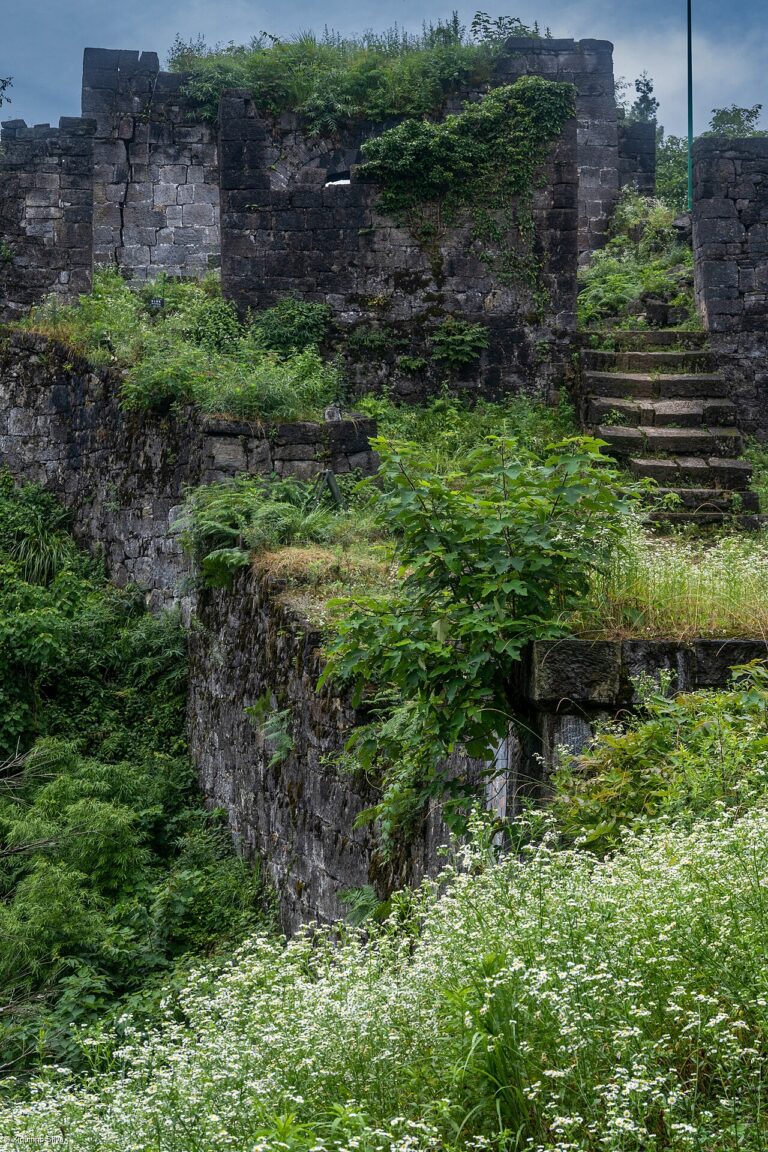
Ombilin Coal Mining Heritage of Sawahlunto (Indonesian: “Warisan Pertambangan Batu Bara Ombilin Sawahlunto” — from “warisan” = heritage/inheritance + “pertambangan batu bara” = coal mining + “Ombilin” = the name of the river and mining area, from the Minangkabau language; “Sawahlunto” = “sawah” [wet rice field] + “lunto” [a word of uncertain meaning in Minangkabau, possibly a personal name or a geographic feature description]), inscribed by UNESCO in 2019, is a UNESCO World Heritage designation that recognises the Ombilin coal mining complex in Sawahlunto, West Sumatra Province (Indonesia) as an outstanding example of 19th-century Dutch colonial industrial mining heritage — a remarkably intact ensemble of coal mine infrastructure (mine shafts, mine ventilation systems, mine railway, coal washing facilities), transportation infrastructure (a narrow-gauge railway of approximately 155 km connecting the inland mines to the coast), worker housing (the “dapur” [kitchen] barracks of the forced labour workers and the European-style housing of the Dutch colonial mining engineers and administrators), port facilities (the Muaro Port at Emmahaven, now Teluk Bayur, near Padang on the West Sumatra coast), and the social infrastructure of the mining town of Sawahlunto — all built by the Dutch colonial government between approximately 1868 and 1939 CE using a combination of European engineering expertise and Sumatran forced labour.
Dutch colonial coal extraction and the forced labour system of Ombilin Sawahlunto Mines · Narrow-Gauge Railway · Muaro Port · Padang 90 km · Bukittinggi 70 km
The Ombilin coal deposit (located in the highland valley of the Ombilin River, approximately 90 km east of Padang at approximately 600 m altitude in the Minangkabau highlands of West Sumatra) was identified by the Dutch mining engineer Willem Hendrik de Greve in 1867–1868 CE during a geological survey of the interior of Sumatra — a survey that de Greve described in his report as revealing “the most important coal deposit in the Dutch East Indies”, with coal seams of high calorific value suitable for fuelling the steam-powered ships of the Dutch colonial fleet, the locomotives of the East Sumatra railway, and the growing industrial economy of the Dutch colonial territory. The decision to develop the Ombilin coal deposit required solving an extraordinary engineering problem: the coal was located in an isolated highland valley with no river access to the coast and no pre-existing road infrastructure beyond the traditional Minangkabau horse paths. The Dutch colonial government’s solution was to construct a narrow-gauge railway (the “Staatsspoorwegen ter Sumatra’s Westkust” — the West Sumatra State Railways, with a track gauge of 1,067 mm [3 ft 6 in], the same gauge used in Japan, South Africa, New Zealand, and much of the Dutch colonial railway network in the East Indies) from the coast at Padang (the principal port of West Sumatra) through the Padang Panjang mountain pass and the Minangkabau highlands to Sawahlunto — a route of approximately 155 km through exceptionally challenging mountainous terrain, including the spectacular gorge section of the Anai River valley (where the railway crosses the river multiple times on iron bridges and passes through tunnels cut through the volcanic rock) and the climb to the Padang Panjang plateau at approximately 880 m altitude. The railway was constructed between 1887 and 1894 CE, using a combination of Dutch engineering design, Chinese contractor management, and Javanese and local Sumatran forced labour. The first coal from the Ombilin mines arrived at Padang by railway in 1894 CE. The labour system of the Ombilin mines during the colonial period (approximately 1892–1940 CE, when the mines operated under Dutch colonial management) was the “coolie system” (Dutch: “koeliestelstel” — the system of indentured contract labour codified in the “Koelieordonnantie” [Coolie Ordinance] of 1880 CE, which created a legally enforceable labour contract for workers in Dutch colonial plantations and mines that obligated contracted workers to complete their contract period — typically 3 years — under conditions that were effectively coercive, with criminal penalties for contract breach, physical punishment for “laziness” or “insubordination”, and no meaningful mechanism for workers to exit the contract voluntarily). The Ombilin mines employed a mixed workforce: some free workers (paid cash wages for skilled or supervisory roles), but a large proportion of “contract coolies” brought from Java (which had a large landless peasant population vulnerable to labour recruitment, often through misleading or coercive recruitment methods) and from the Netherlands East Indies penal system (convicted criminals were transported to the Ombilin mines to serve their sentences as forced mine labour — the “dipo tahanan” [prisoner workers], who constituted a significant fraction of the Ombilin workforce at the peak of the mines’ production in the 1920s–1930s CE). The coal output of the Ombilin mines peaked in the 1930s CE at approximately 560,000 tonnes per year, making it the largest coal producer in the Dutch East Indies and one of the largest coal mines in Southeast Asia. The UNESCO inscription specifically notes the significance of the Ombilin heritage as documentation of “the extraction, processing and transportation of a significant natural resource, and its related labour system, social infrastructure, and built environment” — explicitly including the forced and coerced labour system as an integral part of the heritage significance, in the tradition of the designation of other sites of forced labour (the Zeitz fortifications in South Africa, the Wieliczka salt mine in Poland) as World Heritage sites whose significance includes the memory of human suffering and exploitation alongside the engineering achievement. After Indonesian independence (1945 CE), the Ombilin mines were nationalised and continued to operate under PT Bukit Asam (the state-owned coal company) using modern mechanised methods until declining reserves and profitability led to the mines’ partial closure and the transition of Sawahlunto’s economy toward tourism based on the colonial mining heritage.
Practical information
Sawahlunto is approximately 90 km east of Padang (Minangkabau International Airport, approximately 2 hours by road via Padang Panjang) and approximately 70 km south of Bukittinggi (the principal cultural and tourism centre of the West Sumatra highlands, approximately 1.5 hours). The Ombilin Coal Mining Museum (Museum Tambang Batu Bara Ombilin) in central Sawahlunto is the primary visitor centre, housed in the former colonial mining administration building. The narrow-gauge “Heritage Train” (the tourist steam locomotive service that operates sections of the original Ombilin railway on scheduled tourist excursion days) offers the most immersive experience of the colonial mining infrastructure. The former mine entrance, the coal washing facility, and the “Lubang Mbah Soero” mine tunnel (open to visitors for guided underground tours) are the primary industrial heritage components. Best combined with a visit to Bukittinggi (the Minangkabau royal palace, the traditional market, the “Lobang Jepang” [Japanese wartime underground shelter]) and the Harau Valley limestone gorge.
Frequently Asked Questions
What was the “Coolie Ordinance” and how did it define the labour conditions of the Ombilin mines?
The “Koelieordonnantie” (Dutch: “Coolie Ordinance” — first promulgated in 1880 CE for the Deli tobacco plantations of North Sumatra and extended to the Ombilin coal mines and other major colonial enterprises in the following decades) was the legal framework that defined the employment relationship between the Dutch East Indies colonial enterprises and the Indonesian workers who laboured in them during the late 19th and early 20th centuries CE. The ordinance created a legally binding contract (“koeliecontract” = coolie contract) between an employer (a colonial plantation or mine company) and an Indonesian worker, typically for a period of 3 years, under which: (1) the employer provided the worker with transport from their home area (typically Java or Madura) to the work site, an advance on wages for the worker’s family before departure, accommodation in the employer’s housing (typically communal barracks — the “pondok” in plantation terminology, the “dapur” [kitchen barracks] in Ombilin mining terminology), and a fixed daily wage substantially lower than the equivalent free-market labour rate; (2) the worker was legally obligated to complete the full contract period, perform all duties assigned by the employer, and obey all orders of the employer’s supervisors; and (3) any violation of the contract by the worker (including “work refusal”, “laziness” as defined by the employer’s supervisors, “insubordination”, or “desertion” [attempting to leave the work site without completing the contract]) was a criminal offence under the ordinance, punishable by fines, corporal punishment (the ordinance specifically authorised “lijfstraf” [corporal punishment] — flogging — for contract violations, applied at the discretion of the colonial courts), and extension of the contract period as punishment for the time lost during the violation. The practical effect of the Coolie Ordinance was to create a legal framework that was functionally indistinguishable from debt bondage or indentured servitude: the advance payments to the worker’s family before departure created a debt that the worker was legally obligated to work off; the criminal penalties for contract violations prevented workers from exercising any leverage against abusive conditions; and the worker’s geographic isolation (transported hundreds of kilometres from their home to a remote highland valley with no independent access to transportation home) eliminated practical opportunities for exit. The Coolie Ordinance was widely criticised by European humanitarian organisations and journalists from the 1890s CE onward (most influentially in the 1902 exposé “De millioenen uit Deli” [The Millions from Deli] by C. van Boetzelaer, which documented the conditions on the Deli tobacco plantations), but was not formally repealed until 1941 CE — one year before the Japanese occupation of the Dutch East Indies, which effectively ended the Dutch colonial labour system by other means. The UNESCO World Heritage inscription of the Ombilin site (2019 CE) explicitly includes the coerced labour system as a significant dimension of the site’s “Outstanding Universal Value”, noting that the site represents “one of the most complete assemblages of a colonial era coal-mining and related infrastructure in the world” that documents “not only the technical achievement but also the social and human dimensions of 19th-century colonial resource extraction”.
How has Sawahlunto transformed from a coal mining town into an industrial heritage tourism destination?
The transformation of Sawahlunto from an active coal mining town (population peak approximately 30,000–40,000 during the 1930s–1950s CE mining boom) to a post-industrial heritage city (population approximately 60,000 in 2020 CE, with coal mining reduced to a minor economic activity and tourism as the primary growth sector) represents one of the most deliberate urban reinvention strategies in Indonesian urban planning history. The process began in the early 2000s CE under the leadership of the Sawahlunto regional government, which recognised that the town’s extraordinarily intact colonial mining heritage — the mine infrastructure, the railway station, the colonial-era housing stock of both European engineers and Indonesian workers, the town plan designed around the mining operations, and the unique “mining city” identity in an island dominated by agrarian and commercial cities — constituted a distinctive cultural asset that could be leveraged for tourism development in the context of the decentralisation of Indonesian government after the fall of Suharto (1998 CE) and the transfer of cultural and economic development responsibilities to regional governments. The specific heritage tourism strategy pursued by Sawahlunto included: (1) the conservation and adaptive reuse of the principal colonial heritage buildings (the mine administration office → Museum Tambang Batu Bara Ombilin; the power station → arts and performance venue; the worker barracks → heritage accommodation and youth hostel); (2) the opening of the “Lubang Mbah Soero” mine tunnel (one of the original horizontal mine adits — “lubang” = hole/tunnel in Indonesian — excavated in the late 19th century CE and named after the Javanese worker “Mbah Soero” who was the first person to enter the tunnel on its completion, a name that memorialises the human labour that built the infrastructure rather than the Dutch engineer who designed it) to underground tourist visits with guided lighting and safety installations; (3) the rehabilitation of a section of the original narrow-gauge railway for tourist steam locomotive excursions (the “kereta wisata” or “heritage train”) operating on the track section between Sawahlunto and the Muaro Kalaban station (approximately 12 km of the original 1894 CE alignment); and (4) the “Sawahlunto International Songket Silungkang Festival” (the annual cultural festival celebrating the traditional Minangkabau silk weaving tradition of Silungkang village adjacent to Sawahlunto, which is simultaneously the town’s most significant living intangible cultural heritage and one of its most commercially viable cultural products — the Silungkang songket [silk fabric woven with gold and silver thread in the traditional Minangkabau patterns] is sold at premium prices in tourist markets across West Sumatra and is featured prominently in the Sawahlunto heritage tourism programme). The UNESCO World Heritage inscription of 2019 CE validated and accelerated this transformation: the designation brought international recognition that increased overseas tourist arrivals and motivated additional conservation investment, while simultaneously creating the management obligations (preparation of a conservation management plan, establishment of a heritage monitoring committee, reporting to the UNESCO World Heritage Committee) that professionalised the heritage management function of the Sawahlunto regional government.
EXCERPT: Ombilin Coal Mining Heritage of Sawahlunto, West Sumatra, Indonesia, UNESCO-inscribed 2019 — the most intact colonial industrial mining heritage in Southeast Asia: Dutch colonial coal mines, the 155-km narrow-gauge railway through the Minangkabau highlands to Muaro Port, the Lubang Mbah Soero tunnel, and the labour history of the Coolie Ordinance documented in a post-colonial heritage city 90 km from Padang.
META: UNESCO World Heritage Sites near Ombilin Sawahlunto Indonesia: Tropical Rainforest Heritage of Sumatra Indonesia (UNESCO 2004), Bali Subak Indonesia (UNESCO 2012) — Ombilin Coal Mining Heritage Sawahlunto West Sumatra Indonesia UNESCO 2019, Dutch colonial mining narrow gauge railway Minangkabau, Coolie Ordinance forced labour, Museum Tambang Batu Bara, Lubang Mbah Soero mine tunnel, Padang 90km Bukittinggi 70km.
Sources
- S1 — UNESCO World Heritage Centre — Ombilin Coal Mining Heritage of Sawahlunto (Ref. 1610) — https://web.archive.org/web/20230601000000/https://whc.unesco.org/en/list/1610/
- S2 — Directorate General of Culture Ministry of Education and Culture Indonesia — https://kebudayaan.kemdikbud.go.id/
Spotted an error? Write to [email protected] and we correct it the same day.