
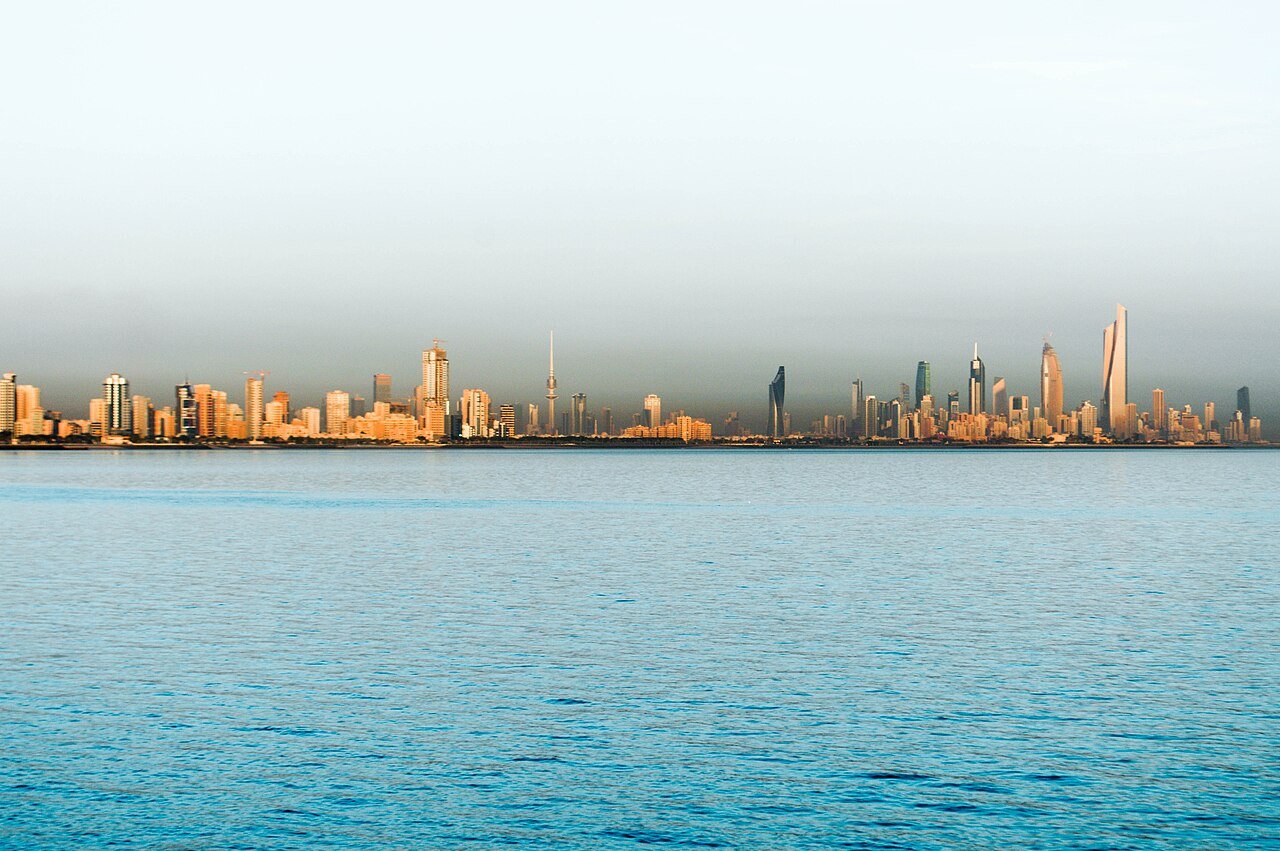
Kuwait City has no UNESCO World Heritage Sites within its own borders, but the Gulf routes that made Kuwait a trading power for centuries radiate outward to some of the Arabian Peninsula’s most significant inscribed sites — Al-Ahsa Oasis to the south, Hegra to the southwest, and the Wadi Rum desert to the northwest.
Al-Ahsa Oasis: World’s Largest Natural Oasis 🚗 ~3 hrs to Dammam then Al-Hofuf
Al-Ahsa Oasis in eastern Saudi Arabia, inscribed in 2018 under criteria (iii), (iv), and (v), is the largest natural oasis on earth. More than three million date palms grow here, fed by artesian springs that have supported agricultural settlements for five thousand years. The site includes the historic city of Al-Hofuf with its Ottoman market, Al-Qarah Mountain’s cave landscape, Al-Jawatha Mosque — one of the earliest mosques in Arabia — and Qaisariah Market, a covered bazaar in continuous operation since the seventeenth century. From Kuwait City, the drive south through Saudi Arabia takes roughly three hours; a Saudi e-visa is required but widely available.
Hegra: Arabia’s First UNESCO Site ✈ ~2 hrs to Tabuk or AlUla
Hegra (ancient Mada’in Salih), inscribed in 2008 as Saudi Arabia’s first UNESCO World Heritage Site under criteria (ii) and (iii), is a Nabataean city contemporary with Petra in Jordan. The site preserves 111 monumental rock-cut tombs, with facades elaborately carved in sandstone outcrops rising from the Hejaz desert plain. The Nabataeans controlled the Incense Road and maintained a sophisticated hydraulic system in an arid landscape. Hegra is now accessible via Al-Ula airport from Riyadh or Jeddah, with an onward short drive to the excavation area. It is significantly less visited than Petra and accordingly more intimate.
Wadi Rum: Desert Landscape of Jordan ✈ ~2 hrs to Amman then 4 hrs by road
Wadi Rum Protected Area in southern Jordan, inscribed in 2011 under criteria (iii) and (vii), is a desert landscape of granite and sandstone carved by wind and water over millions of years. Rock inscriptions from the Nabataean, Thamudic, and Lihyanite periods document nomadic cultures that moved through these canyons for three millennia. T. E. Lawrence described the wadi in Seven Pillars of Wisdom after his time here during the Arab Revolt. The rust-red desert stretching to the horizon, punctuated by vertical cliff faces and natural stone arches, is among the most visually arresting landscapes in the Middle East. Aqaba (two hours from Wadi Rum) connects to Kuwait by air.
Failaka Island: Kuwait’s Archaeological Heart 🚢 40 mins by ferry from Kuwait City
Failaka Island, accessible by ferry from Kuwait City, holds the densest concentration of archaeological remains in Kuwait — Greek settlement remains from the time of Alexander the Great, Bronze Age Dilmun temples, and Islamic-era structures span more than four thousand years of continuous occupation. The island is not yet inscribed on the UNESCO World Heritage List, but it appears on Kuwait’s Tentative List and is considered the country’s most significant heritage site. Excavations by Danish, French, Italian, and Kuwaiti teams since the 1950s have established Failaka as an important node in the ancient Gulf trading network. The island was evacuated during the Iraqi occupation of 1990–91 and abandoned buildings from that period remain as an inadvertent monument.
Practical information
Kuwait International Airport offers direct connections to Riyadh, Jeddah, and Amman, making Saudi Arabia and Jordan’s UNESCO sites straightforward from Kuwait City. Saudi Arabia requires a visa; Jordan offers visa-on-arrival to most nationalities. October to April is the optimal travel season across the Arabian Peninsula. Failaka Island ferries run from Ras Al-Ard terminal in Kuwait City; weekends are popular with Kuwaiti families. Visitors to Saudi heritage sites should wear modest clothing and be prepared for conservative social customs in rural areas.
Frequently Asked Questions
Does Kuwait have any UNESCO World Heritage Sites?
No. Kuwait has no inscribed UNESCO World Heritage Sites as of 2025, though Failaka Island appears on Kuwait’s UNESCO Tentative List as a candidate for future nomination.
What is the nearest UNESCO site to Kuwait City?
Al-Ahsa Oasis in eastern Saudi Arabia, roughly 300 kilometres south of Kuwait City, is the nearest inscribed UNESCO site. A road trip through Dammam makes it accessible in about three hours with a Saudi visa.
Is Hegra worth visiting from Kuwait City?
Yes, especially for travellers who have already seen Petra in Jordan. Hegra offers the same Nabataean rock-cut tomb architecture in a less-visited setting. A flight from Kuwait to Tabuk or AlUla airport takes about two hours, with an onward drive to the site.
Sources
- S1 — Ansary, A. R. Qaryat al-Fau: A Portrait of Pre-Islamic Civilisation in Saudi Arabia. Croom Helm, 1982. ISBN 978-0-7099-0150-1.
- S2 — Taylor, Jane. Petra and the Lost Kingdom of the Nabataeans. Harvard University Press, 2001. ISBN 978-0-674-00849-6.
Spotted an error? Write to editorial@culturalheritageonline.com and we correct it the same day.
.jpg)