The pioneering origins of technical aviation eyewear and precision optics in Turin.
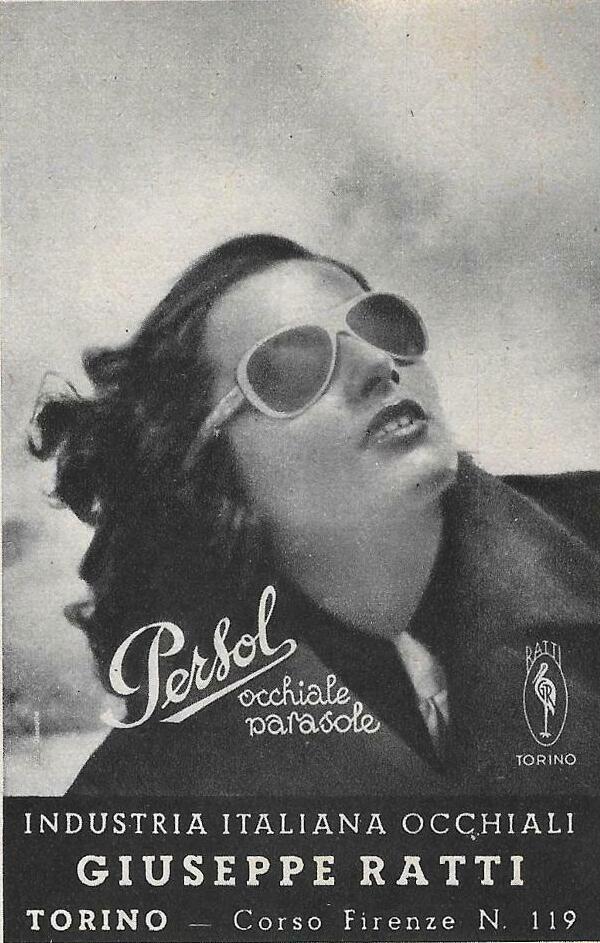
Founded in 1917 in Turin by photographer and optical specialist Giuseppe Ratti, the enterprise that would later achieve worldwide fame under the Persol brand began not as a luxury fashion house, but as a technical laboratory dedicated to solving a critical military and industrial safety problem during the First World War.
The Birth of the Protector in Via Caboto
In 1910, Giuseppe Ratti and his brother Odardo took over Ottica Berry, a distinguished optical establishment founded in 1875 under the arcades of Via Roma near Piazza Castello in central Turin. By 1917, observing the severe ophthalmic hazards faced by pilots in open cockpits exposed to wind, blinding sun glare, and dust, Ratti established an experimental workshop in a small courtyard on Via Caboto. There, he developed the pioneering “Protector” goggles, engineered with round smoked crystal lenses ground from pure silica, surrounded by flexible vulcanized rubber rims and secured with broad elastic headbands.
From Wartime Aviators to Global Renown
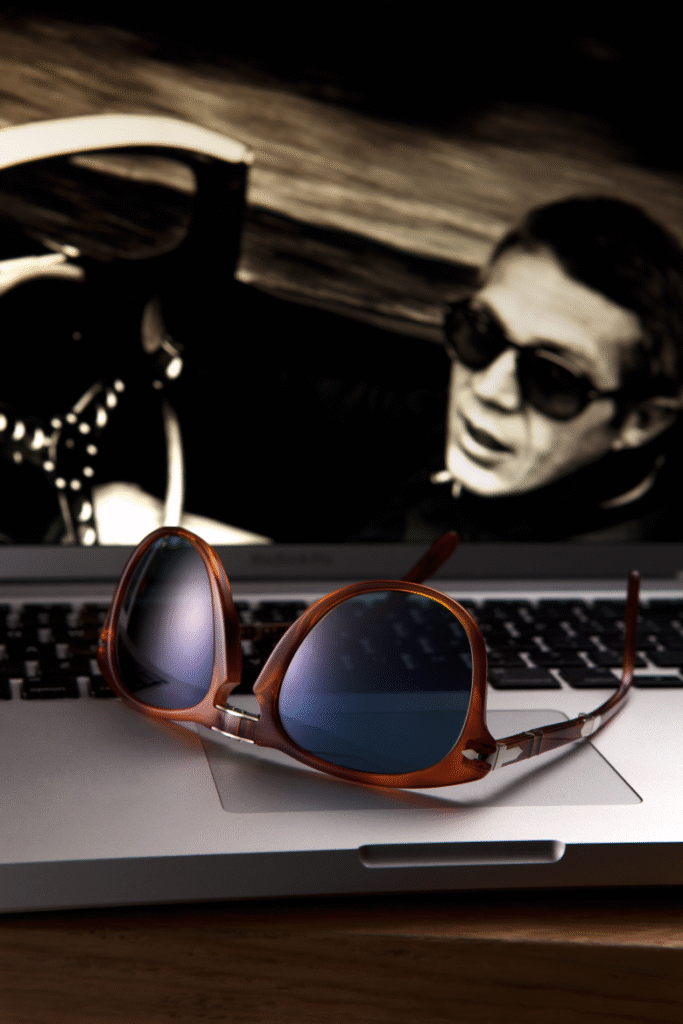
The Protector goggles were immediately embraced by the Italian Military Aviation service and quickly gained international acclaim, being adopted by Swiss and American air squadrons. Famed aviator Francesco De Pinedo wore them during his transatlantic flights, while poet-aviator Gabriele d’Annunzio and racing drivers championed their optical clarity. In 1924, expanding far beyond the artisanal courtyard in Via Caboto, Ratti erected a purpose-built manufacturing complex on Lungo Dora Firenze 63 (later renumbered 119). It was within these expanded workshops that Ratti perfected the flexible “Meflecto” stem system—the world’s first flexible sunglass arm—and in 1938 officially registered the trademark “Persol”, meaning “per il sole” (for the sun).
The historical factory on Lungo Dora Firenze remained the operational heart of the company for decades, enduring heavy wartime aerial bombing in 1943 before being rebuilt in 1946. Production continued at the site until 1995, when the Persol brand was acquired by Luxottica and operations were consolidated elsewhere. Today, the industrial buildings at Lungo Dora Firenze 119 have been decommissioned and thoroughly converted into a modern residential and socio-healthcare community complex.
Historic Site & Location
Historic Address: Lungo Dora Firenze 119, Torino, TO, Italy
Nearby in the archive
Sources
- S1 — MuseoTorino, scheda «Ex Stabilimento G. Ratti (Persol)», Lungo Dora Firenze 119 — http://www.museotorino.it/view/sito/7f5c53f3e1b14b8a8bb231a4cf4d6bb0
- S2 — MuseoTorino, scheda «Ottica Berry», via Roma angolo piazza Castello — http://www.museotorino.it/view/sito/5fa169f4ea5444859942a78f2aa2a84e
- S3 — Camera di Commercio di Torino, Registro Storico Marchi e Brevetti, brevetto «Protector» (1917) e marchio «Persol» (1938) — https://www.to.camcom.it/
- S4 — Museo dell’Occhiale, Pieve di Cadore, Documentazione storica sull’occhialeria tecnica italiana — https://www.museodellocchiale.it/
Spotted an error? Write to editorial@culturalheritageonline.com and we correct it the same day.