Founded in Milan in 1929 during the global financial tempest, LESA engineered miniature electric motors and precision phonograph turntables, becoming the acoustic heartbeat of Italian living rooms and international design exhibitions.
The autumn of 1929 saw the global economy shaken to its core by the Wall Street crash. In Milan, banks retrenched and traditional mechanical factories braced for contraction. Yet amidst this financial storm, thirty-one-year-old electrical engineer Luigi Camilli (1898–1977) saw an extraordinary opening: the birth of modern electrical sound reproduction. Gramophones were shedding their mechanical spring-wound clockwork mechanisms in favour of continuous electric induction motors, and radio broadcasting was turning the home parlour into an acoustic auditorium.
That year, Camilli established the Laboratori Elettrotecnici Società Anonima (LESA) in Milan. Beginning in a small laboratory on Via Carlo Pisacane before expanding into a sprawling manufacturing complex on Via Bernardino Verro in southern Milan (Vigentino), LESA dedicated itself to high-precision electromechanical components: potentiometers, fractional-horsepower motors, and phonograph pickups.
The silent revolution of the electric turntable
Before LESA, mechanical phonographs suffered from severe pitch flutter and audible motor rumble caused by erratic spring tension and gear tooth vibration. Camilli engineered microscopic synchronous electric motors suspended on elastic rubber grommets, coupled with precisely balanced cast-iron and die-cast zinc alloy platters. The LESA turntable spun with silky, silent regularity at 78 rpm (and later 33 and 45 rpm), providing the stable platform needed for high-fidelity electrical transcription.
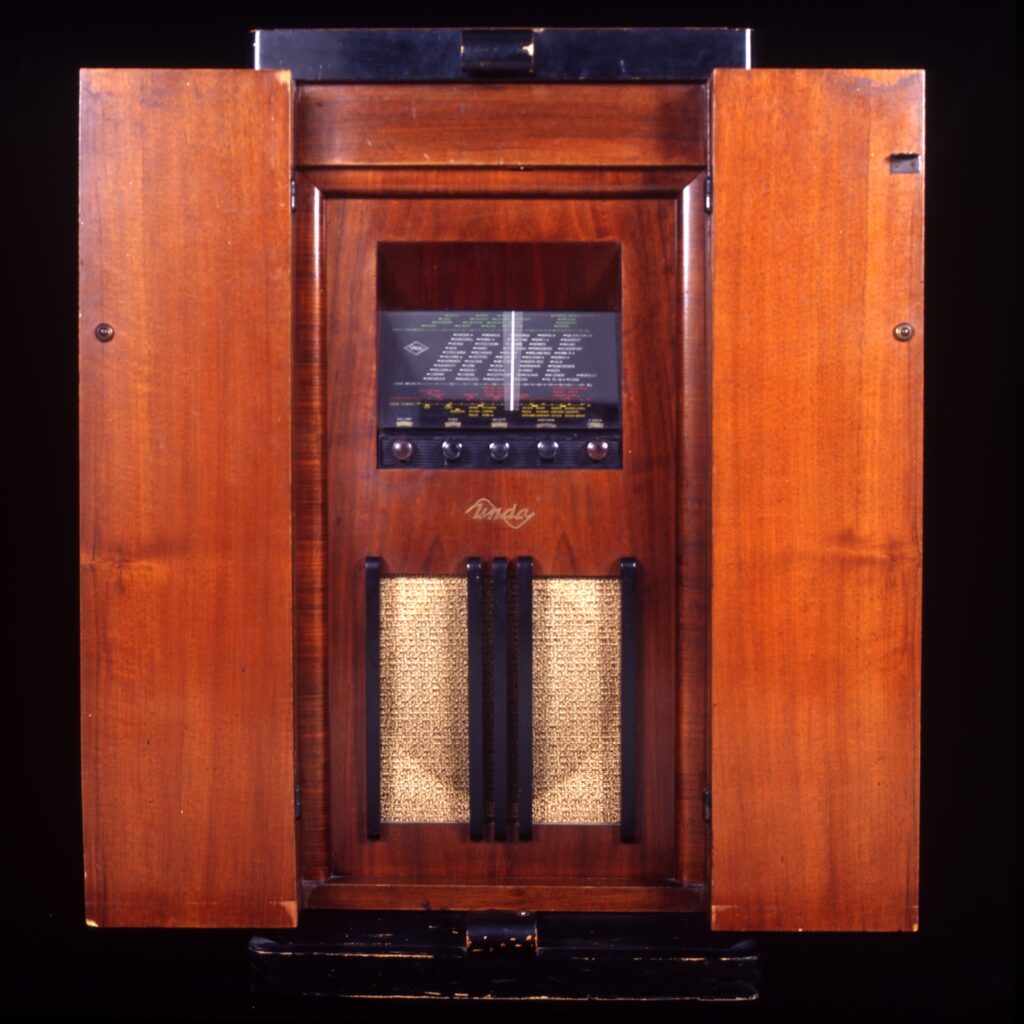
By the 1930s, virtually every major Italian radio manufacturer—including Magneti Marelli, Phonola, and CGE—relied on LESA motors and tone-arms inside their luxury radiogram cabinets. During the autarky period, when imported American and German pickups were barred, LESA engineered its own piezo-electric crystal pickups and magnetic transducers, keeping Italian music playing through turbulent decades.
Design icons and the portable vinyl culture
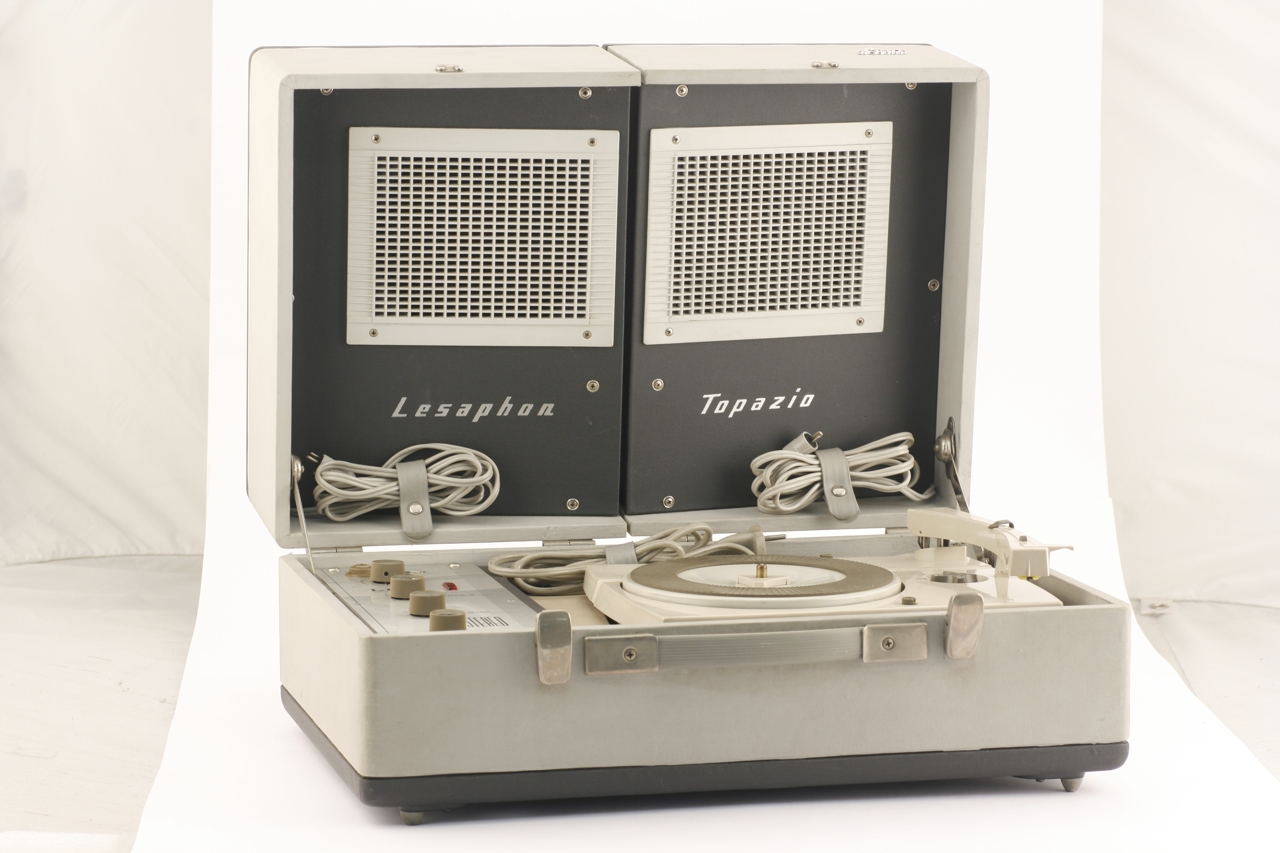
In the postwar economic boom, LESA became a world leader in portable sound. Collaborating with leading Milanese industrial designers, the company launched the legendary Mady, Diamante, and Lesaphon series: portable record players housed in colourful plastic suitcases with integrated tube amplifiers. Millions of European teenagers bought their first 45-rpm vinyl singles to play on portable LESA turntables at picnics, beach cabins, and student flats.
By the mid-1960s, LESA operated factories in Milan, Saronno, and Tradate, employing over two thousand specialized workers and exporting over seventy percent of its output to Europe, the United States, and Latin America.
The consumer sunset and the museum memory
The dawn of the 1970s brought unforgiving structural disruption. The rapid influx of low-cost, direct-drive Japanese consumer electronics (Sony, Technics, Pioneer), combined with domestic labour unrest and corporate restructuring, hit European electromechanical producers with devastating force. In 1972, LESA slipped into receivership, and its roaring assembly lines fell silent.
Today, LESA is remembered as a cornerstone of Italian industrial design and acoustic engineering. Masterpiece turntables and radio-phonograph consoles produced by LESA are permanently exhibited in the Museo Nazionale della Scienza e della Tecnologia ‘Leonardo da Vinci’ in Milan and featured in Triennale design retrospective catalogues. Along Via Bernardino Verro, the surviving red-brick industrial sheds stand as evocative monuments to the era when Milanese precision motors first translated vinyl grooves into the soundtrack of modern Italy.
Historic Views & Archives
From the Archives: Historical Newsreels
Milano anni Trenta: la vita cittadina, tecnica e innovazioni sonore
Period documentary footage surveying the bustling industrial atmosphere of Milan in the 1930s: precision workshops, radio broadcasting halls, and the mechanical culture that fueled electromechanical pioneers like LESA.
Visiting the Site: Street View & Modern Geography
Via Bernardino Verro in southern Milan hosted LESA’s primary industrial complex. Here, over two thousand technicians engineered precision electric phonograph motors, miniature potentiometers, and portable record changers that were exported across five continents.
Historic Address: Via Bernardino Verro 35 (Vigentino / Ripamonti), 20141 Milano, Italy
Sources
- Museo Nazionale della Scienza e della Tecnologia ‘Leonardo da Vinci’, Fondo Elettroacustica e Comunicazioni: Catalogo LESA (1929–1972), Milan
- SIUSA (Sistema Informativo Unificato per le Soprintendenze Archivistiche), Fondo Laboratori Elettrotecnici Società Anonima (LESA)
- Treccani, Dizionario Biografico degli Italiani, entry on Luigi Camilli
- Sergio Canazza & Mauro Casadei Turroni Monti, La riproduzione del suono in Italia: Storia dell’industria fonografica ed elettroacustica, Milan, 2006