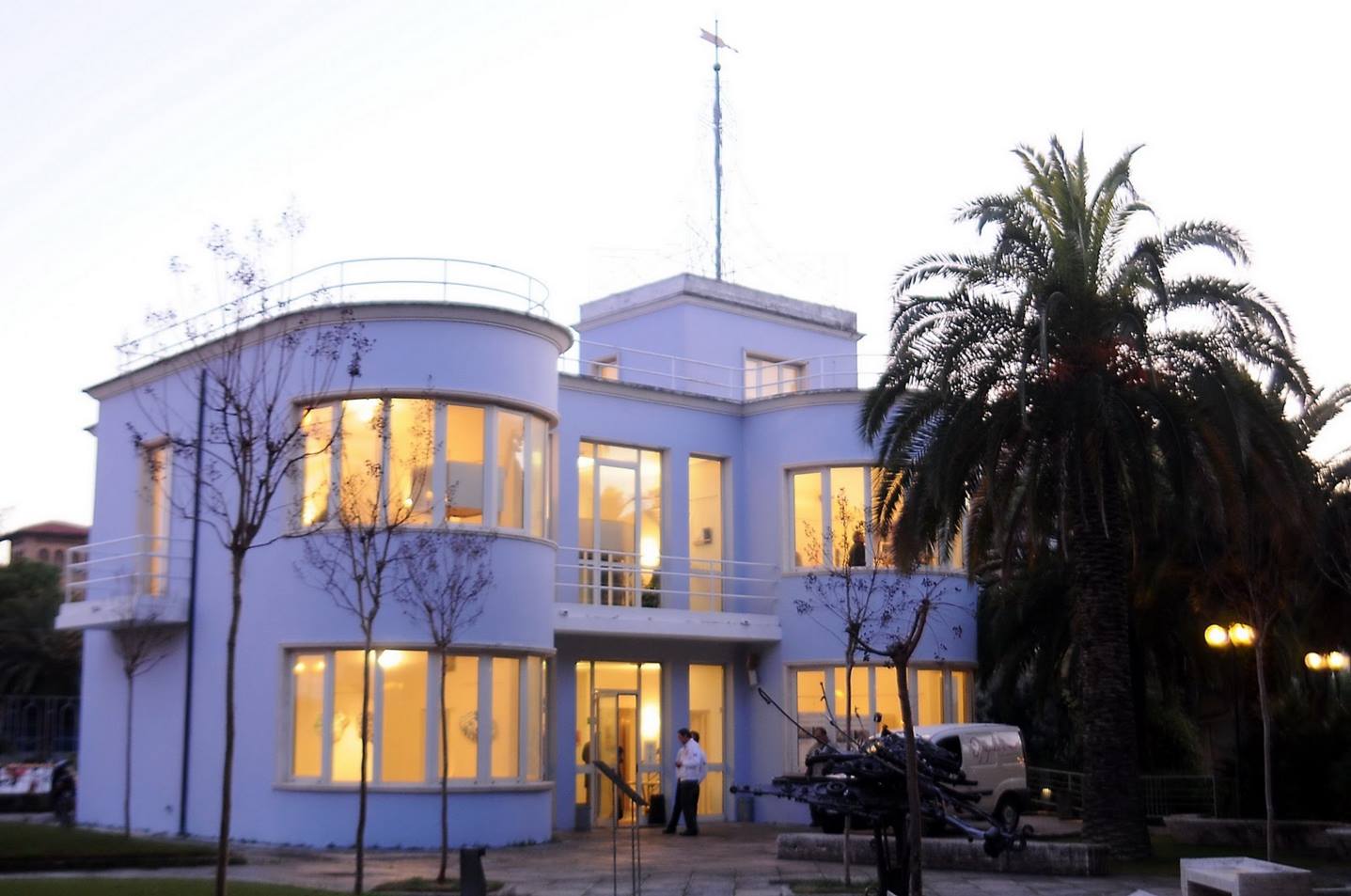
The Palazzina Azzurra is a Rationalist building designed by engineer Luigi Onorati and completed in 1934 in San Benedetto del Tronto, Ascoli Piceno, located along Viale Bruno Buozzi and Viale Olindo Pasqualetti near the Albula stream.
Constructed between 1930 and 1934, the building was commissioned by the Azienda Autonoma di Cura, Soggiorno e Turismo (the autonomous tourism and hospitality authority) to enhance the town’s leisure facilities and create a gathering place for social and recreational activities. Inaugurated on 1 September 1934, the project gained professional recognition when it was published in April 1935 in Architettura, one of the period’s most prestigious technical journals.
Following the Second World War, during which San Benedetto del Tronto endured substantial bombing, the building became a principal evening meeting point and ballroom for the community through the 1980s. After a period of decline, municipal restoration efforts under Mayor Paolo Perazzoli (from 20 July 1996) returned the structure to public use.
About Luigi Onorati
Luigi Onorati held the position of chief engineer for the Municipality of San Benedetto del Tronto and was instrumental in shaping the town’s early twentieth-century urban development through Rationalist design principles.
Details
- Architect: Luigi Onorati, chief engineer, Municipality of San Benedetto del Tronto
- Year completed: 1934 (construction 1930–1934)
- Inauguration: 1 September 1934
- Location: Viale Bruno Buozzi and Viale Olindo Pasqualetti, San Benedetto del Tronto, Ascoli Piceno, Marche
- Architectural movement: Italian Rationalism
- Original use: Leisure complex, social gathering and ballroom venue
- Published: Architettura magazine, April 1935
Frequently asked questions
Who designed the Palazzina Azzurra?
The building was designed by Luigi Onorati, engineer-in-chief of the Municipality of San Benedetto del Tronto, and commissioned by the town’s tourism and hospitality authority.
What was the building’s original purpose?
It was created as a leisure complex to serve as a gathering place and venue for social activities and recreation for the coastal community.
How did the building fare during and after the Second World War?
San Benedetto del Tronto experienced heavy bombing during the war. Following the conflict, the Palazzina Azzurra became a prominent evening meeting point and ballroom through the 1980s, subsequently underwent a period of decline, and was restored by municipal administration beginning in 1996.
Sources
- S1 — Ciucci, Giorgio. Gli architetti e il fascismo: architettura e città 1922-1944. Einaudi, 2002. ISBN 978-88-06-16310-5.
- S2 — Nicoloso, Paolo. Mussolini architetto: Propaganda e paesaggio urbano nell'Italia fascista. Einaudi, 2008. ISBN 978-88-06-19086-6.
Spotted an error? Write to editorial@culturalheritageonline.com and we correct it the same day.