
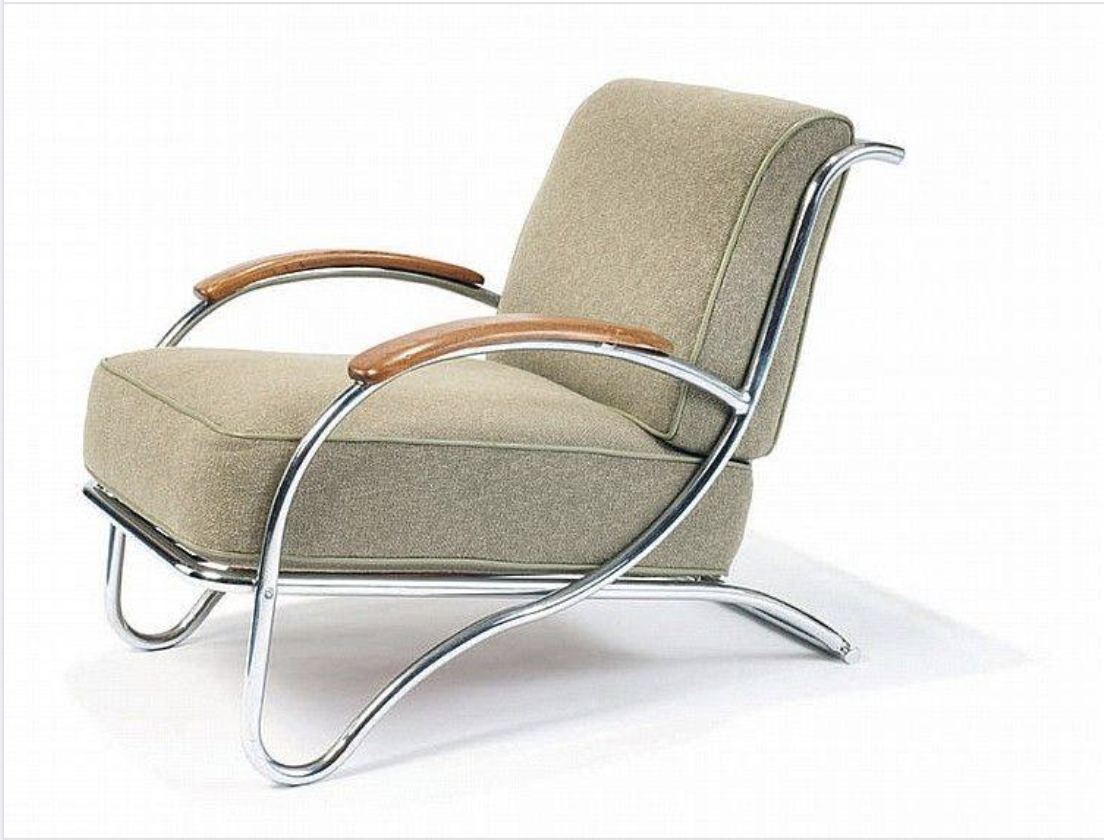
A chrome-steel and oak upholstered armchair designed by KEM Weber in 1934. The work exemplifies the Streamline aesthetic that defined the designer’s practice in early twentieth-century industrial design.
Weber, a German architect and designer, worked extensively in southern California, where he developed a distinctive modernist vocabulary emphasizing fluid forms and industrial materials. The 1934 poltrona combines tubular chromium-plated steel with solid oak and upholstery, balancing geometric precision with ergonomic comfort. Its structural clarity and machine-age materiality position it within the international Streamline movement of the interwar period.
About KEM Weber
Karl Emanuel Martin Weber (1889–1963) was a German-born designer and architect whose career flourished in California. Working across furniture, interiors, and architectural projects, Weber became known for translating European modernist principles into an accessible American idiom. His designs exemplified the Streamline style through their integration of chrome, tubular steel, and exotic woods.
Details
- Date: 1934
- Designer: KEM Weber
- Materials: Chromium-plated steel, oak, upholstery
- Movement: Streamline modernism
Frequently asked questions
Who designed this chair?
The poltrona was designed by KEM Weber (Karl Emanuel Martin Weber), a German-born architect and designer active in southern California who created several iconic Streamline furniture designs.
What movement does this chair belong to?
The chair exemplifies the Streamline style, an international modernist movement of the interwar period that emphasized fluid forms, industrial materials, and machine-age aesthetics.
What materials were used?
The chair combines chromium-plated steel tubing with solid oak wood and upholstery, reflecting the period’s embrace of both machine-age metals and natural materials.
Sources
- S1 — De Fusco, Renato. Storia del design. Laterza, 2002. ISBN 978-88-420-6623-1.
- S2 — Sparke, Penny. Italian Design: 1870 to the Present. Thames & Hudson, 1988. ISBN 978-0-500-23531-7.
Spotted an error? Write to editorial@culturalheritageonline.com and we correct it the same day.


