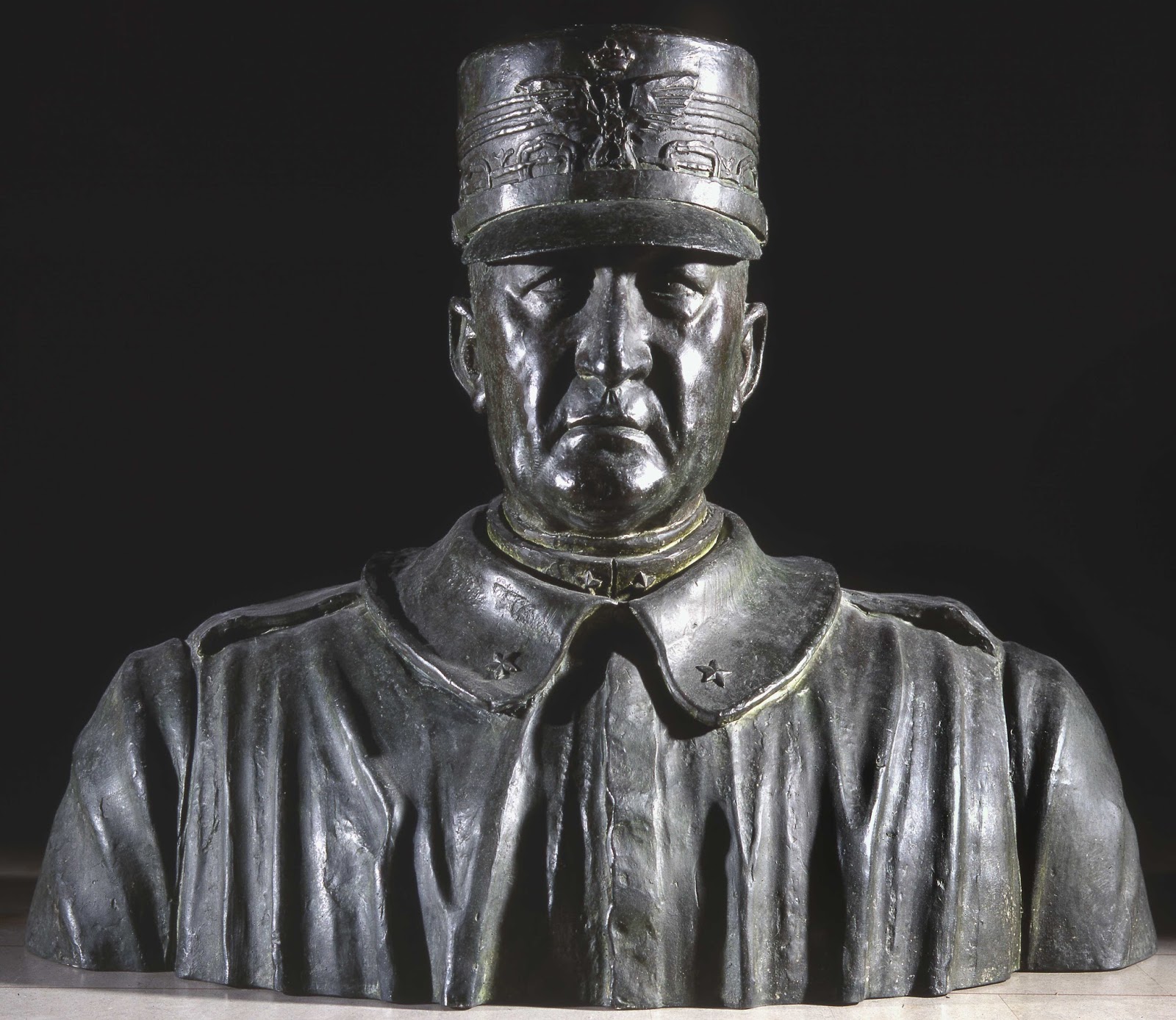
The Duca d’Aosta is a sculptural work by Arturo Martini, created in 1934. Martini was an Italian sculptor active between the world wars, whose practice moved between vigorous classicism and modernist approaches.
During the interwar period, Martini became a major figure in public sculpture, receiving numerous commissions for monuments, memorials, and commemorative works across Italian institutions including universities, courthouses, and churches. His works from this era combined traditional formal vocabulary with what scholars have identified as irony, agility, and an eclectic capacity to reinterpret historical sources. The Duca d’Aosta exemplifies the monumental sculptural practice for which Martini was sought after during fascist Italy.
About Arturo Martini
Born in Treviso in 1889 to a working-class family, Martini pursued art education through night classes before becoming one of the most prolific sculptors of his generation. In his early career, he engaged with Futurism between 1914 and 1918, producing modernist works marked by archaic tendency and polychrome effects. His mature practice developed a distinctive synthesis of classical form and contemporary sensibility that made him central to Italian sculptural culture of the 1920s and 1930s.
Details
- Creator: Arturo Martini
- Year: 1934
- Medium: Sculpture
- Period: Italian interwar period
Frequently asked questions
Who was Arturo Martini?
Arturo Martini (1889–1947) was an Italian sculptor who worked between the world wars, moving between classicism and modernism. He became a leading figure in public monumental sculpture during the 1920s and 1930s.
What characterized Martini’s work during the 1930s?
During this period, Martini received extensive commissions for monuments and memorials across Italian institutions. His works combined classical formal traditions with an eclectic, ironic approach to reinterpreting historical sources.
What happened to Martini after the 1930s?
Martini later renounced sculpture altogether, marking a significant rupture with his earlier prolific practice in monumental public art.