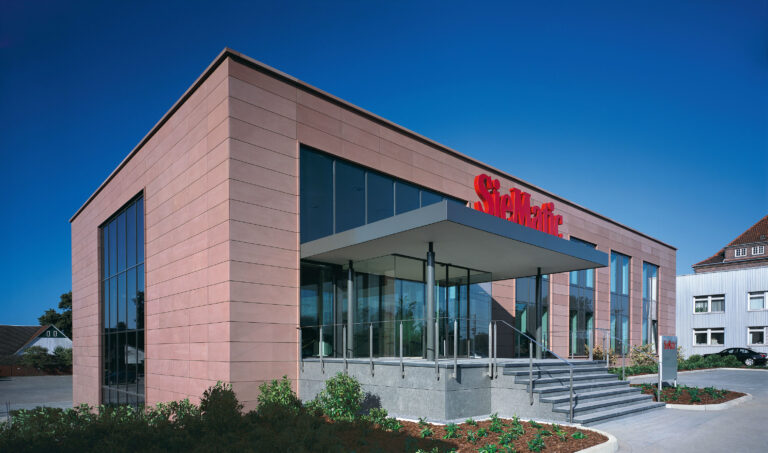
In 1930, in the historic university town of Heidelberg along the Neckar River, former Parker Pen sales representative C. Josef Lamy established Orthos Füllfederhalter-Fabrik. Guided by functionalist industrial principles, Lamy liberated the fountain pen from ornamental nostalgia, culminating in the 1966 Lamy 2000—a timeless writing instrument engineered according to Bauhaus doctrine where form unswervingly follows function.

Heidelberg Beginnings: From Orthos to the Streamlined Lamy 27
Having managed German sales operations for American penmakers, C. Josef Lamy (1899–1986) recognized that European writing culture was encumbered by delicate celluloid bodies, erratic ink bladders, and decorative filigree. In 1930, he founded his independent manufacturing atelier in Heidelberg under the brand name Orthos. Utilizing precision brass lathe turning and vulcanized ebonite, Lamy engineered robust, leak-resistant fountain pens tailored for university scholars, civil servants, and commercial accountants.
In 1948, the firm reorganized as C. Josef Lamy GmbH, adopting the founder’s surname. In 1952, Lamy unveiled the groundbreaking Lamy 27 fountain pen, equipped with a revolutionary “Tintomatik” multiple-fin collector that neutralized atmospheric pressure shifts and guaranteed an unbroken, blot-free ink flow, vaulting the Heidelberg manufacture into international prominence.
Gerd A. Müller and the Bauhaus Manifesto of the Lamy 2000
In 1966, under the visionary leadership of founder’s son Dr. Manfred Lamy, the company initiated a radical aesthetic departure from traditional luxury writing pens. Partnering with former Braun industrial designer Gerd A. Müller (co-creator of the iconic Sixtant electric razor), Lamy created the Lamy 2000. Fabricated from matte-brushed Makrolon (a fiberglass-reinforced polycarbonate) and brushed stainless steel, with a semi-hooded 14-karat gold nib, the pen contained zero unnecessary ornament.
The Lamy 2000 proved that an everyday writing tool could achieve the stature of high industrial art, earning permanent exhibition in the Museum of Modern Art (MoMA) in New York. Operating continuously from its design ateliers in Heidelberg-Wieblingen, Lamy enters its approach to 2030 as a global exemplar of German functionalist writing heritage.
Relazione sull'acciaio e forgia meccanica di precisione
Immagini d'archivio storico dell'Istituto Luce che testimoniano la precisione metallurgica, la lavorazione dell'acciaio e la nascita dell'alta ingegneria industriale europea. (Fonte: Archivio Storico Istituto Luce Cinecittà)
Interactive 360° Heritage View: Lamy Global Design Atelier & Heidelberg Flagship
Historical Location: Hauptstraße 164, 69117 Heidelberg, Germany (Coordinates: 49.4122, 8.7058)