Turin’s grand ambition to establish a premier national piano manufacturing industry.
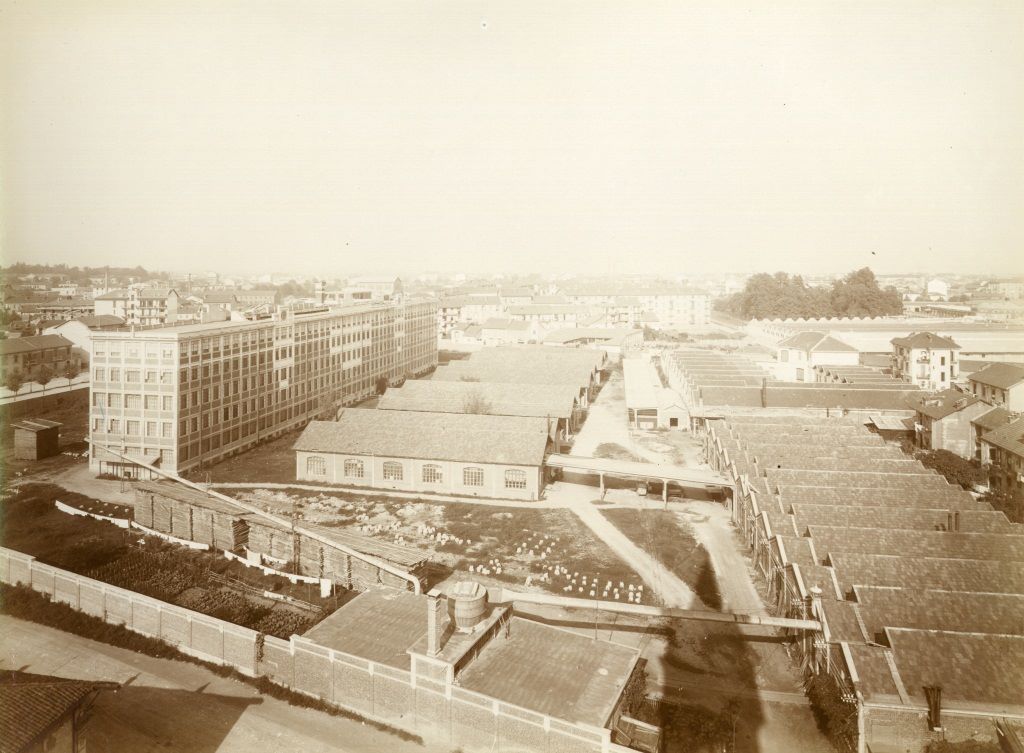
Established in Turin in 1917, the Fabbrica Italiana Pianoforti (FIP) represented one of the most ambitious industrial ventures in early twentieth-century Italian musical instrument manufacturing, designed to replace Austrian and German piano imports cut off during the Great War.
The Industrial Architecture of the Lingottino
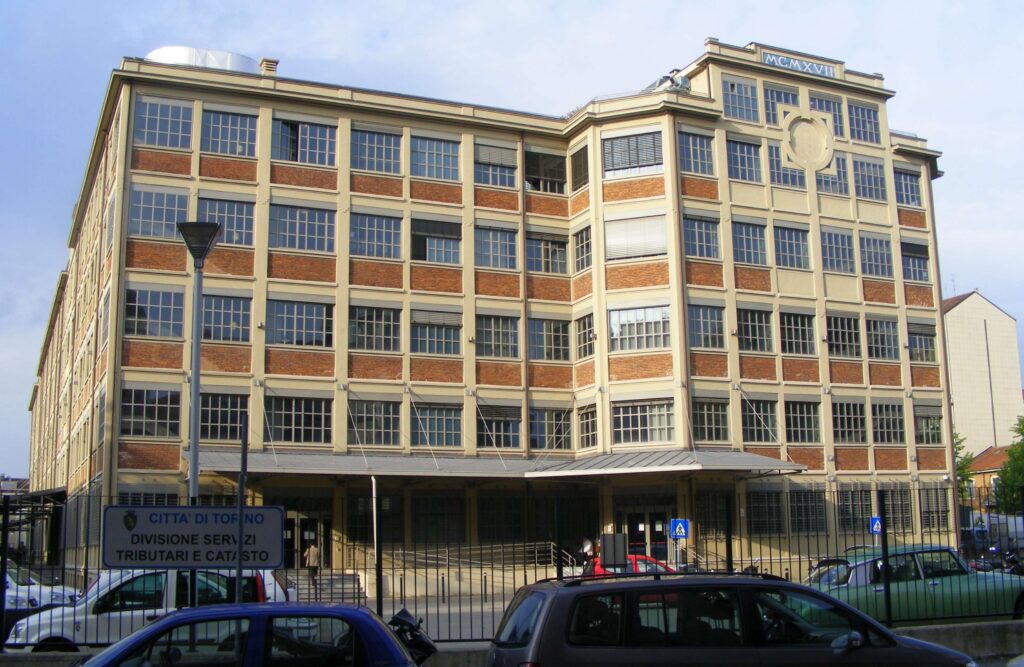
The enterprise was promoted in 1917 by attorney Paolo Cattaneo with the financial backing of the Banca Italiana di Sconto, bringing together several artisanal workshops, including that of master piano builder Francesco Romani. Rather than maintaining scattered craft ateliers, the company constructed an imposing multi-story reinforced-concrete plant between Corso Racconigi 51 and Via Moretta in the working-class district of Borgo Cenisia. Designed with sleek modular bays and prominent industrial glazing reminiscent of the contemporary FIAT automotive works, the factory was quickly dubbed “Il Lingottino” (The Little Lingotto) by Turin residents.
Gualino’s Patronage and Rationalist Design
By 1920, FIP expanded with a second production site in nearby Alpignano, employing more than 800 skilled craftsmen and producing nearly 3,000 instruments annually, ranging from vertical domestic pianos to concert grands and pneumatic player pianos (autopiani). Following the post-war financial collapse of the Banca Italiana di Sconto, the company was acquired in 1925 by financier and cultural patron Riccardo Gualino. Gualino reoriented part of the factory’s woodworking and metal machinery toward producing vanguardist office furnishings designed by rationalist architects Giuseppe Pagano and Gino Levi-Montalcini for the landmark Palazzo Gualino.
Despite its technical excellence and modern marketing, the economic depression of the late 1920s and the financial crisis of Gualino’s holding forced the enterprise into liquidation in 1929. The monumental factory building in Borgo Cenisia escaped demolition; today, the restored Lingottino on Corso Racconigi 51 is preserved as municipal public offices, serving as the headquarters for the civic tax and revenue department of Turin.
Historic Site & Location
Historic Address: Corso Racconigi 51, Torino, TO, Italy
Nearby in the archive
Sources
- S1 — MuseoTorino, scheda «Ex Fabbrica Italiana Pianoforti (Il Lingottino)», corso Racconigi 51 — http://www.museotorino.it/view/sito/e0be218c728e461b95b34bcba0d2d312
- S2 — Politecnico di Torino, Dipartimento di Architettura e Design, Censimento dell’archeologia industriale torinese — https://www.polito.it/
- S3 — Archivio Storico della Città di Torino, Licenze edilizie e insediamenti industriali in Borgo Cenisia (1917-1920) — http://www.comune.torino.it/archiviostorico/
Spotted an error? Write to editorial@culturalheritageonline.com and we correct it the same day.