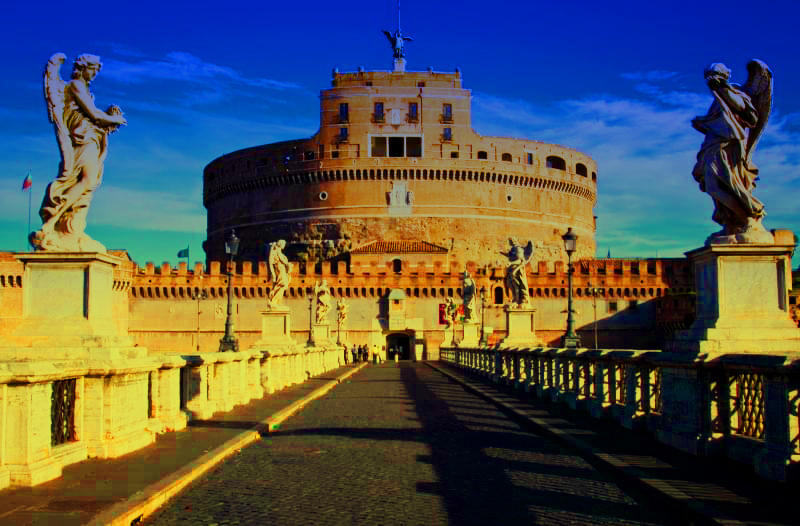
Castel Sant’Angelo stands on the right bank of the Tiber River in Rome, Lazio, positioned near the Vatican and connected to it by a fortified corridor. Modified repeatedly over centuries, the fortress served as both a papal residence and a state prison, housing cells designed for various classes of prisoner.
The Prison and Its Cells
Numerous rooms within the castle were converted into prison cells. The most notorious was the Sammalò cell, where condemned prisoners were lowered from above into such confined quarters that they could neither stand upright nor lie down. Other cells were reserved specifically for political prisoners and notable detainees. A luxury cell existed for prisoners of higher status. All cells were designed to prevent escape.
The Angel and the Plague
The castle’s name derives from a vision experienced by Pope Gregory the Great of the Archangel Michael sheathing his sword. This vision was interpreted as an omen of the imminent end of the plague, which subsequently ended. An angel statue crowns the building as a commemoration of this event.
Cultural Presence
Castel Sant’Angelo has featured prominently in modern culture. Composer Giacomo Puccini set the final act of his opera “Tosca” within the castle. Author Dan Brown included it as a setting in “Angels and Demons.” The fortress also appears in the video game “Assassin’s Creed.”
On video
On the heritage map: Castel Sant’Angelo — Mausoleo di Adriano, Roma
Frequently asked questions
Why is the castle named after an angel?
Pope Gregory the Great reported a vision of the Archangel Michael sheathing his sword, which was interpreted as a sign that the plague would end. An angel statue was placed atop the building to commemorate this event.
What was the Sammalò cell?
The Sammalò was the castle’s most infamous prison cell, designed so restrictively that prisoners lowered into it could neither stand nor lie down due to lack of space.
How is Castel Sant’Angelo connected to the Vatican?
A fortified corridor links the castle on the Tiber’s right bank directly to the Vatican, allowing papal access to the fortress.